Why Miami Pool Remodeling Bids Vary by Tens of Thousands of Dollars
If you’ve collected three bids for a Miami pool remodeling project and they’re all wildly different numbers, you’re not imagining things. In South Florida, pool remodeling costs are genuinely volatile — not because contractors are guessing, but because the underlying concrete substrate, the age of the shell, the deck configuration, and the permit environment all push costs in directions that aren’t visible from a surface-level inspection. As a senior concrete consultant who has worked on hundreds of pool demolition, resurfacing, and deck reconfiguration projects across Miami-Dade and Broward counties, I can tell you that the difference between a $18,000 remodel and a $55,000 remodel often comes down to what’s happening three inches below the waterline tile. This post breaks down the real cost drivers, honest timeline windows, and the technical bidding factors that separate a precise estimate from a ballpark guess.
Concrete Shell Condition Assessment Before Any Number Gets Written Down
The single most important pre-bid activity for any Miami pool remodeling project is a proper concrete shell assessment. South Florida’s aggressive sulfate-rich soils, high water table fluctuations, and salt air environment accelerate spalling, delamination, and rebar corrosion in ways that don’t show up on a visual walkaround. Experienced bidders will use a chain drag test across the shell floor and walls to identify hollow spots, and they’ll probe the coping edge for vertical crack propagation that signals differential settling.
A shell with minor surface crazing and sound concrete behind it is a fundamentally different project than a shell showing active structural cracks, exposed rebar, or hydrostatic pop-out damage. The former might require a standard plaster or pebble-finish resurfacing at $8,000–$14,000 for a mid-size residential pool. The latter may require diamond grinding to remove failed coatings, hydraulic cement injection into cracks, and epoxy rebar treatment before any finish coat is applied — pushing that same pool toward $22,000–$35,000 before the deck is even touched. Understanding how to extend concrete lifespan before cutting or replacement becomes necessary is critical context for any pool owner entering a remodel negotiation.
Pool Deck Cutting and Removal Costs Specific to Miami Conditions
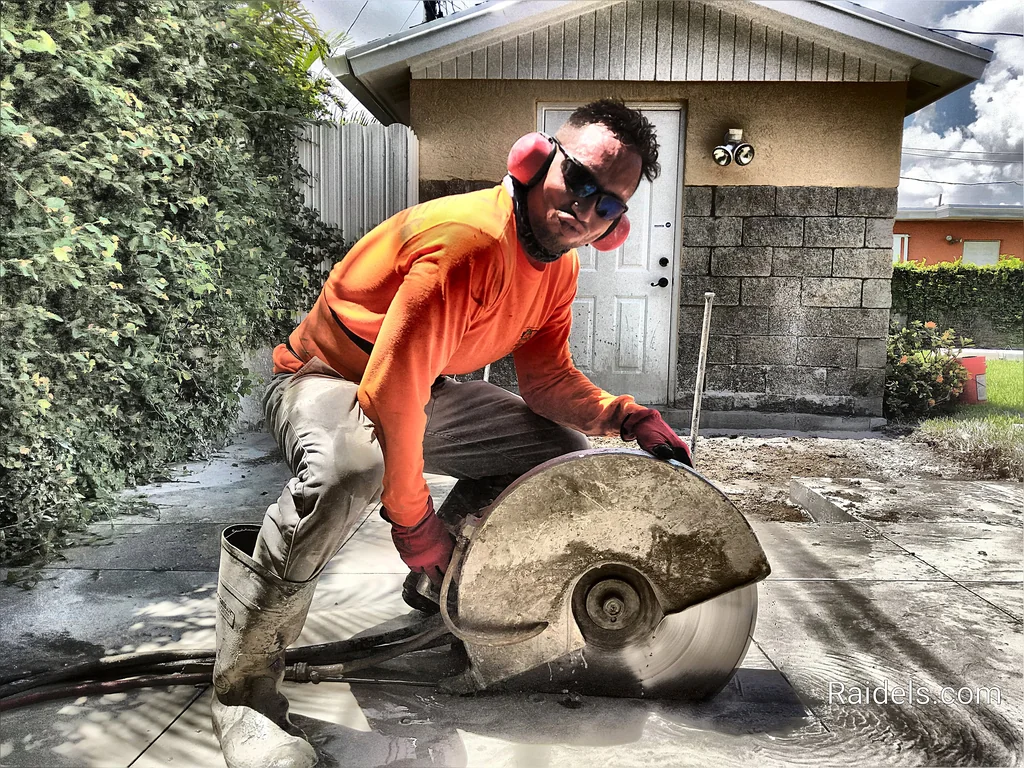
Pool deck work is where concrete cutting expertise directly intersects with remodeling budgets. Miami’s older residential pools — particularly those built between 1965 and 1990 — often have decks poured directly over compacted fill with no isolation joint between the deck slab and the pool shell bond beam. When those decks settle, crack, or need to be reconfigured for new pavers or cool-deck systems, you can’t just break them out with a jackhammer without risking shell damage.
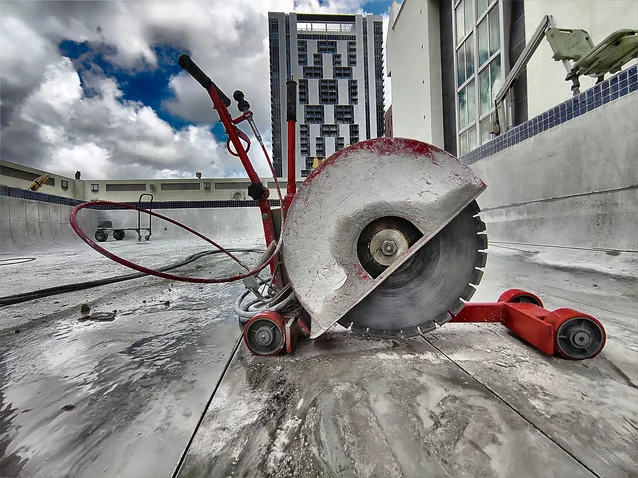
Flat saw cutting along the perimeter of a pool deck, creating clean separation lines before removal, typically runs $3.50–$6.50 per linear foot in Miami depending on slab thickness and aggregate hardness. A standard 1,200-square-foot pool deck with a 120-linear-foot perimeter cut, interior expansion joint cutting, and controlled slab removal will carry a concrete cutting line item of $1,800–$3,200. That’s a real number — not a guess — and it should appear as a discrete line item in any professional bid. Our pool deck services documentation outlines the specific cutting methodologies we deploy for deck removal and reconfiguration.
What inflates this number fast is encountering post-tension cable systems in older commercial pool decks or finding that the slab is 6–8 inches thick rather than the standard 4 inches. Post-tension cable identification requires GPR scanning before any blade touches the concrete — add $400–$800 for that scan, and adjust your cutting rates upward for the additional slab thickness.
Miami-Dade Permit Timelines and How They Wreck Project Schedules
Any honest timeline discussion for Miami pool remodeling has to start with permits — because Miami-Dade County’s building department review cycles are one of the biggest schedule variables in the entire project. Residential pool alteration permits for structural work (shell repair, coping replacement, equipment pad relocation) currently run 4–8 weeks for standard review. Expedited review is available but adds $500–$1,500 to permit fees and doesn’t guarantee faster approval if the plans are flagged for revisions.
Cosmetic-only remodels — replastering within the same footprint, equipment replacement in kind, non-structural tile work — often fall under the contractor’s license without a full structural permit, which eliminates that wait entirely. This is a critical bidding factor that homeowners frequently miss: a contractor who correctly classifies your project as cosmetic can start in two weeks, while a contractor who over-permits the same scope adds two months to your timeline.
Realistic total project timelines for Miami pool remodeling break down roughly as follows. A cosmetic resurfacing with deck cleaning and sealing runs 5–10 business days of active work. A mid-scope remodel involving new tile, coping, plaster, and partial deck replacement runs 3–6 weeks including permit time. A full structural remodel with shell repair, full deck demolition and replacement, new equipment, and feature additions (sun shelf, water features, LED lighting) runs 8–16 weeks when permit processing is included. These windows assume no material supply chain delays — which in post-2020 South Florida is never a safe assumption for specialty tiles or custom coping stones.
Equipment Pad Demolition and Utility Rerouting as Hidden Cost Centers
One of the most consistently underestimated cost centers in Miami pool remodeling bids is the equipment pad and associated utility work. Pool equipment pads — the concrete slabs housing pumps, filters, heaters, and automation systems — are often 15–25 years old in Miami’s existing residential pool stock. When a remodel involves upgrading to variable-speed pumps, salt chlorination, or heat pump systems, the existing pad is frequently undersized, cracked, or positioned in a way that conflicts with new plumbing runs.
Cutting out and replacing an equipment pad runs $800–$2,200 depending on size and access. Rerouting PVC plumbing lines to accommodate new equipment positions adds $1,500–$4,000 for a typical residential system. Electrical rerouting to meet current NEC requirements for pool equipment — particularly the 2020 NEC bonding updates that Miami-Dade has adopted — adds another $800–$2,500 depending on panel proximity and conduit runs. None of these line items are exotic, but they’re frequently bundled into vague “miscellaneous” categories in low-ball bids and then presented as change orders mid-project.
OSHA Compliance and Dust Control Requirements That Affect Bidding
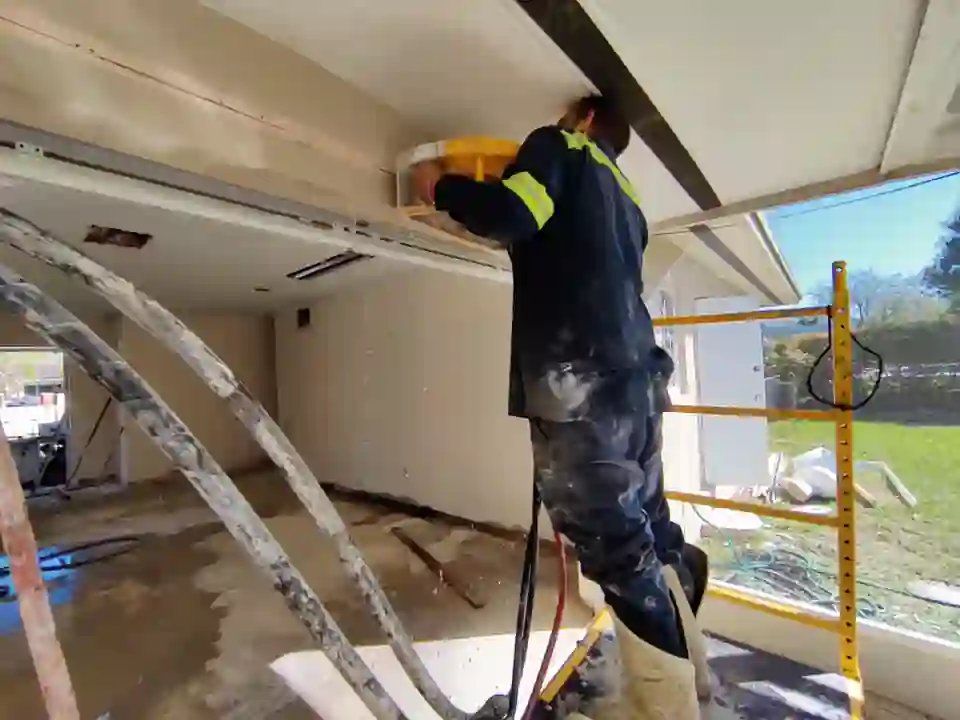
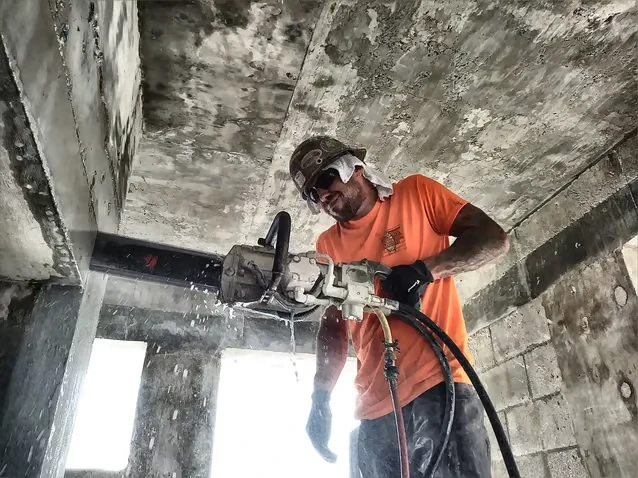
Miami pool remodeling involves significant concrete cutting, grinding, and demolition — all of which generate respirable silica dust at levels that trigger OSHA’s Silica Standard (29 CFR 1926.1153). Any contractor performing diamond grinding on pool plaster, flat sawing deck concrete, or core drilling for new returns and inlets must have a written exposure control plan and deploy engineering controls. OSHA compliance requirements for silica-generating operations are non-negotiable, and they have real cost implications.
Proper HEPA vacuum systems for dust collection during grinding operations add equipment overhead to every cutting day. Wet cutting methods for deck saw work require water management and slurry containment — especially important in Miami where pool deck runoff into storm drains is regulated. Bids that don’t reflect these compliance costs are either absorbing them invisibly (reducing crew quality elsewhere) or planning to skip them entirely. Either scenario is a red flag.
Breaking Down a Realistic Mid-Scope Miami Pool Remodel Budget
To make this concrete, here’s how a realistic mid-scope Miami pool remodeling budget structures out for a 15,000-gallon residential pool with a 1,000-square-foot deck, built in the 1980s, requiring new plaster, tile, coping, partial deck replacement, and equipment upgrade.
- Shell prep and plaster removal (diamond grinding, pressure washing): $1,800–$2,800
- Structural crack repair and rebar treatment: $1,200–$4,500 (condition-dependent)
- New pebble or quartz plaster finish: $6,500–$10,000
- Waterline tile replacement (6-inch band): $2,800–$5,500
- New travertine or poured concrete coping: $3,500–$7,000
- Deck concrete cutting, removal, and replacement (partial, ~400 sq ft): $5,500–$9,000
- Equipment upgrade (variable-speed pump, new filter, automation): $4,500–$8,500
- Permit fees and inspections: $800–$1,800
- Total realistic range: $26,600–$49,100
That range is wide because shell condition is unknown until the plaster comes off. Any contractor giving you a firm single number before seeing the bare shell is pricing optimistically — and optimistic pricing becomes your change order problem. Our infrastructure construction services team builds contingency line items into every pool remodel bid precisely to avoid mid-project cost surprises.
How to Evaluate a Pool Remodeling Bid Like a Technical Professional
When you receive a pool remodeling bid in Miami, look for these specific technical indicators of a serious contractor. First, the bid should list concrete cutting and demolition as separate line items with unit pricing — not bundled into a generic “demo” category. Second, permit costs should be itemized, not absorbed into overhead. Third, the bid should explicitly state the plaster or finish product by manufacturer and product name, not just “pebble finish.” Fourth, any structural repair scope should include a conditional clause tied to actual shell conditions after prep, with a defined unit rate for additional repair work.
A bid that passes these four tests is a bid from a contractor who has done this before and understands that Miami pool remodeling is a technical concrete operation — not a cosmetic upgrade. The pools that end up in litigation or with failed finishes within two years are almost always the ones where the concrete substrate work was rushed, under-scoped, or performed by crews without proper diamond grinding and cutting equipment. In South Florida’s aggressive environment, the concrete work underneath the finish is the only thing that matters long-term.