Why the phrase concrete contractors in Miami FL covers at least three completely different businesses
When someone searches for concrete contractors in Miami FL, the search engine cannot tell whether they need a contractor to pour a new concrete driveway, to cut a door opening through an existing concrete wall, or to demolish and remove an old concrete patio. Those are three different services requiring three different sets of equipment, skills, certifications, and insurance policies. The concrete contractor who pours beautiful stamped concrete patios in Pinecrest is not the same contractor you want cutting an 8-foot opening through a shear wall in your Coral Gables commercial building. The contractor who removes concrete driveways with a skid steer and dump truck is not the same contractor who core-drills precise 6-inch holes through a 12-inch slab for plumbing risers. And yet all three are accurately described as concrete contractors in Miami FL.
This is not a semantic quibble — it has real consequences for property owners who hire the wrong type of concrete contractor for their project. We have been called to fix situations where a concrete pouring contractor attempted a wall cutting job and produced a jagged opening with spalled edges, exposed rebar, and structural damage to the surrounding wall. We have been called to fix situations where a general demolition contractor attempted precision core drilling and produced holes that were oversized, off-location, and unsuitable for the plumbing rough-in that needed to pass through them. Hiring the right concrete contractors in Miami FL starts with understanding which type of concrete contractor your project actually requires, and verifying that the contractor you are considering actually specializes in that type of work — not just lists it on their website.
The three categories of concrete contractors in Miami FL and what each one does
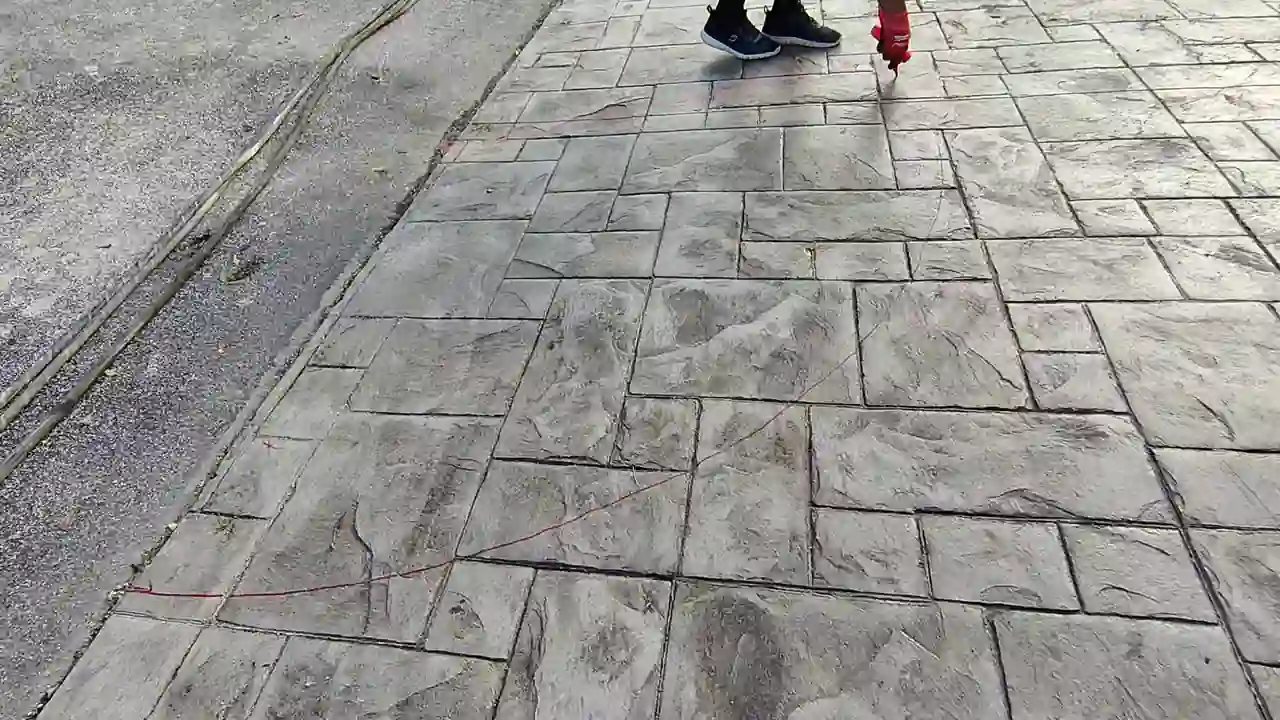
Concrete pouring and finishing contractors
These contractors place new concrete — foundations, slabs, driveways, patios, sidewalks, and structural concrete for buildings. They handle formwork, rebar placement, concrete placement and consolidation, finishing, curing, and jointing. In Miami, concrete pouring contractors must understand local conditions — limestone aggregate concrete behavior, the effect of high humidity on finishing timing, hurricane code requirements for structural concrete, and Miami-Dade building permit requirements for concrete construction. A qualified pouring contractor carries a Florida Certified General Contractor or Registered General Contractor license appropriate for the scope of their work. They own or have access to formwork systems, concrete pumps, finishing tools, power trowels, and curing equipment. They are not typically equipped for concrete cutting — their equipment inventory is built around placing concrete, not modifying it after it has hardened.
Concrete cutting and drilling contractors
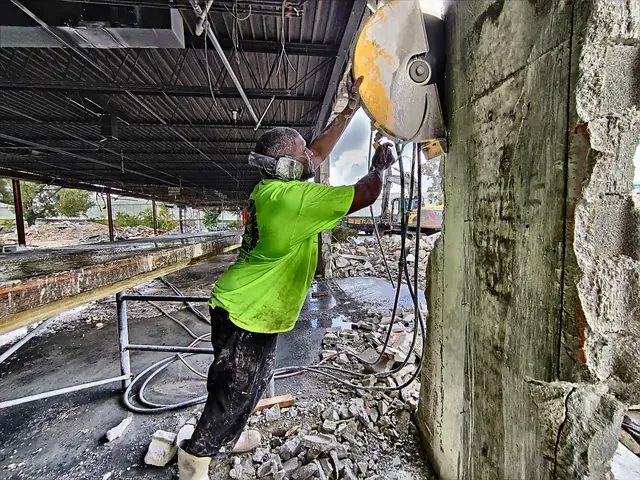
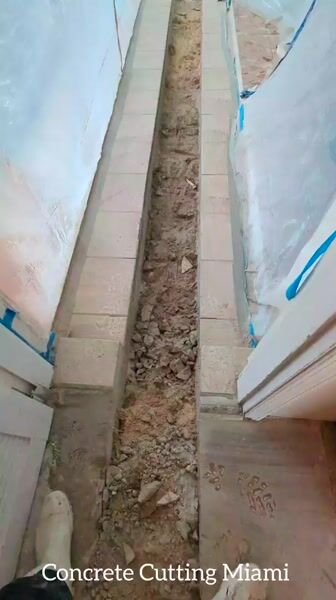
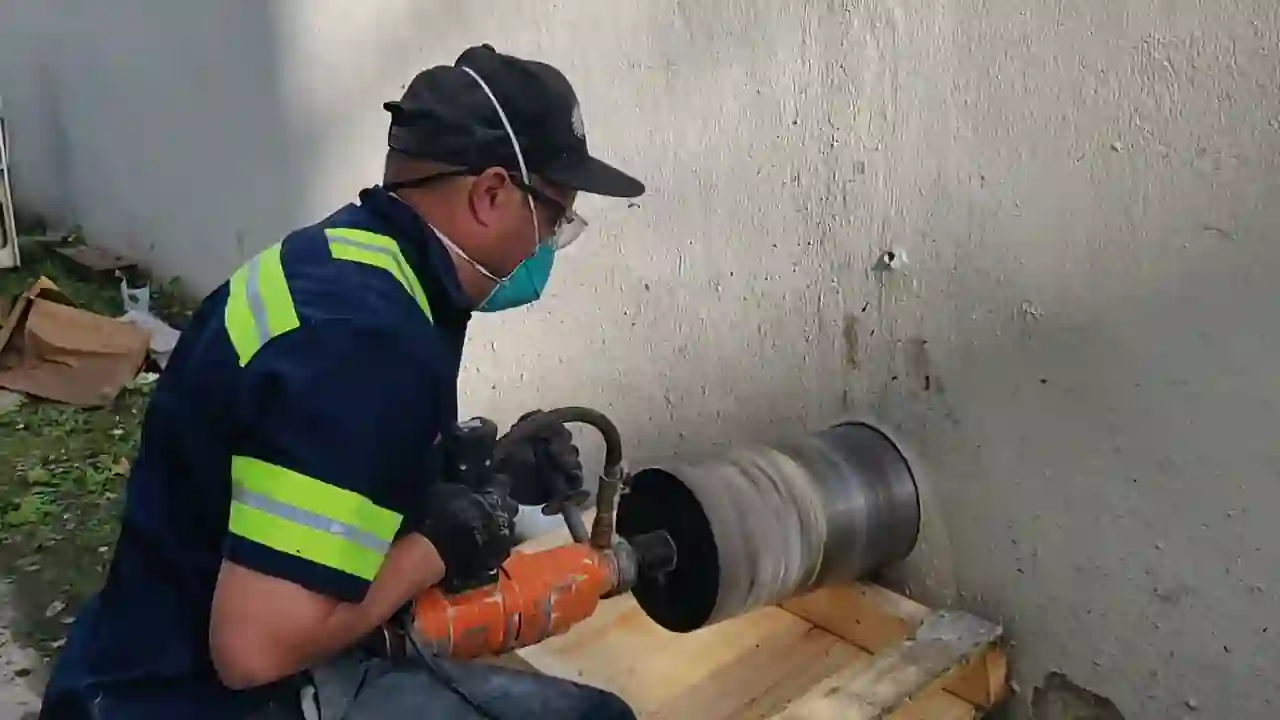
This is our category. Concrete cutting contractors modify existing hardened concrete — cutting openings in walls and slabs, core drilling penetrations for utilities, sawing control joints, trenching slabs for plumbing and electrical, and preparing concrete for selective demolition. The equipment inventory includes flat saws, wall saws with track systems, wire saws, hand saws, core drilling rigs, and GPR scanning equipment. Concrete cutting contractors in Miami must understand post-tension slab construction, the behavior of limestone aggregate under diamond blades, slurry containment requirements specific to Miami-Dade County, and how to perform precision cutting in occupied buildings where dust and noise control are critical.
Concrete demolition and removal contractors
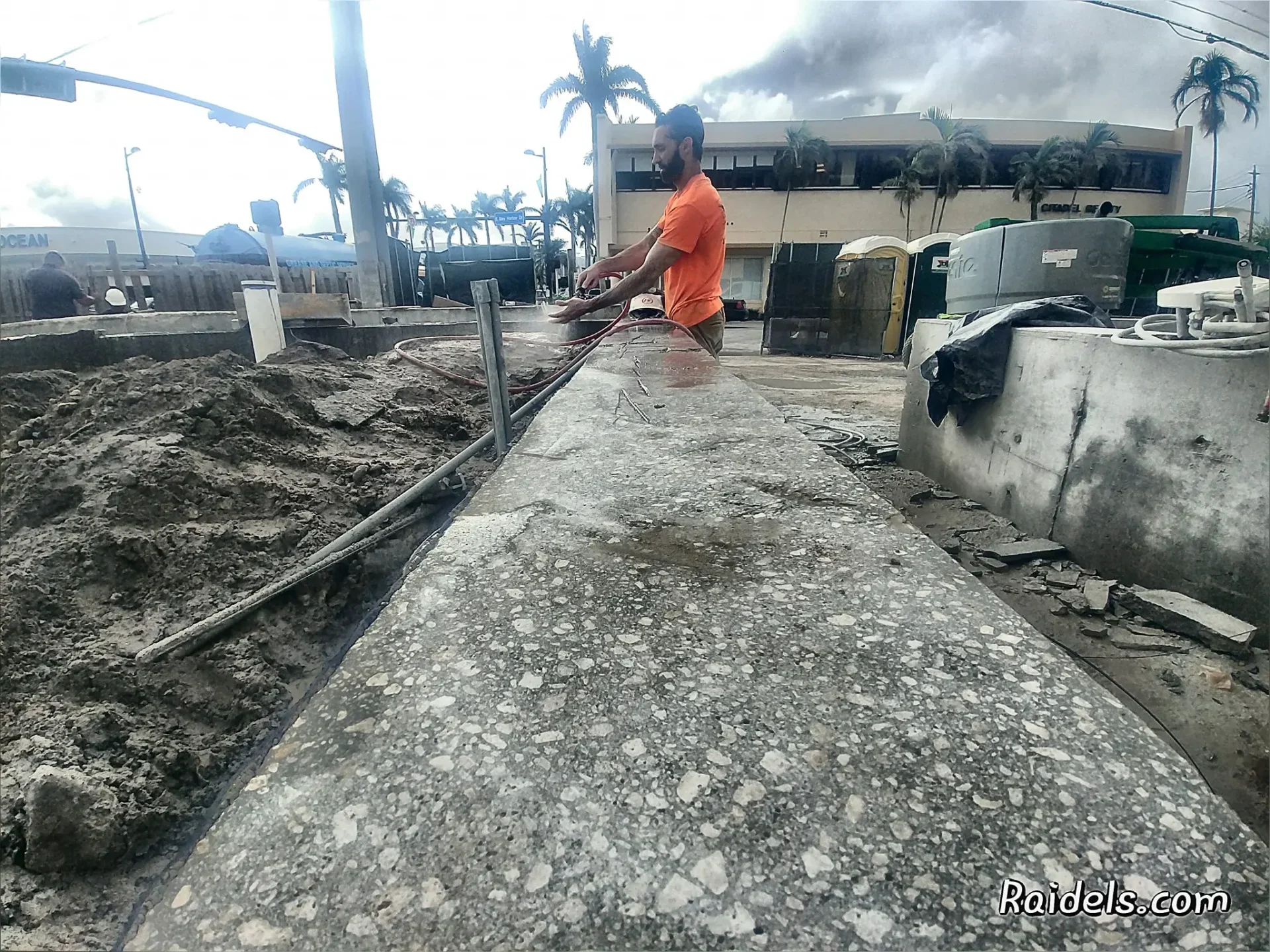
These contractors remove existing concrete — slabs, walls, foundations, driveways, patios, pool decks, and entire structures. Their equipment inventory is built around breaking and loading — excavators with hydraulic breakers, skid steers with breaker and bucket attachments, pneumatic hand breakers, dump trucks, and roll-off containers. Concrete demolition contractors in Miami must understand Miami-Dade demolition permitting requirements, C&D debris disposal regulations, asbestos and lead paint abatement requirements for older structures, and the importance of cutting before breaking to prevent vibration damage to adjacent structures. The best demolition contractors either perform concrete cutting in-house or maintain close relationships with cutting contractors to ensure that separation cuts are made before breaking force is applied.
How to verify concrete contractors in Miami FL are qualified for your project
Once you have identified which type of concrete contractor your project needs, the next step is verifying that specific contractors are qualified, licensed, and insured. Here is the verification checklist we recommend.
- Verify the Florida contractor license: Go to the Florida Department of Business and Professional Regulation website and search the contractor’s license number. Confirm that the license is active, that it covers the type of work you need, and that there are no disciplinary actions or complaints on file. Do not rely on a license number printed on a business card or website — verify it yourself in the state database.
- Verify general liability insurance: Request a certificate of insurance directly from the contractor’s insurance agent — not a photocopy from the contractor. Confirm that the policy includes coverage for the specific type of concrete work you are hiring them to perform. Ask to be named as an additional insured on the policy for the duration of your project.
- Verify workers compensation insurance: Concrete work is physically demanding and carries real injury risk. If a worker is injured on your property and the contractor does not carry workers comp, you may be liable for medical costs and lost wages. Verify that workers comp coverage is current and that it covers all employees who will be on your property.
- Ask for Miami-specific project references: A portfolio of work performed in other states or in other parts of Florida does not demonstrate experience with Miami-Dade County conditions. Ask for references from projects performed in Miami-Dade County within the past two years, and call those references. Ask about adherence to schedule, site cleanliness, how unexpected conditions were handled, and whether the final cost matched the quoted price.
- Ask about their GPR scanning protocol: If concrete cutting is part of your project, the contractor should have a defined procedure for GPR scanning before cutting begins. If they do not perform scanning in-house, they should have an established relationship with a scanning subcontractor. A concrete contractor who does not scan before cutting is gambling — and it is your concrete they are gambling with.
Red flags when evaluating concrete contractors in Miami FL
- They claim to do everything — pouring, cutting, demolition, finishing, decorative work. Very few contractors genuinely have the equipment, crew expertise, and licensing to perform all concrete services at a professional level. Diversification is normal, but a contractor who says yes to every service without asking detailed questions about the scope is probably subcontracting the work they do not actually perform — and you are paying their markup on top of the subcontractor’s price.
- They cannot produce photographs of completed projects similar to yours. Every legitimate contractor documents their work. If a contractor cannot show you images of concrete cutting projects they have completed in Miami — not stock photos, not project images from other cities — they have not done the work they are proposing to do for you.
- They do not mention permitting. Many concrete projects in Miami-Dade County require building permits. A contractor who does not bring up permitting during the initial conversation is either unaware of local requirements — which is disqualifying — or is planning to perform unpermitted work — which exposes you to code enforcement action and complications when you sell the property.
- Their quote is dramatically lower than others. Concrete work pricing is driven by labor hours, equipment costs, material consumption, disposal fees, and insurance overhead. A bid that is significantly below market is not a bargain — it is an indication that the contractor has omitted something that the other bidders included. The omitted item is usually insurance, permitting, or the cleanup phase.
- They ask for full payment upfront. Industry standard for concrete work is a deposit — typically 30 to 50 percent — with the balance due upon completion. A demand for full payment before work begins suggests a contractor who has trouble with cash flow, supplier credit, or customer satisfaction — none of which are problems you want to share.
The advantage of hiring a specialized Miami concrete cutting contractor
At Concrete Cutting Miami, we are not a full-service concrete contractor. We do not pour concrete. We do not finish concrete. We do not build formwork or tie rebar. We cut concrete — and that focused specialization is exactly why property owners, general contractors, and project managers hire us. Wall sawing, slab sawing, core drilling, and concrete demolition is all we do. Our equipment is purpose-built for cutting and drilling. Our crews are trained specifically in diamond cutting technology and GPR interpretation. Our insurance covers concrete cutting operations specifically, not general construction. When you hire concrete contractors in Miami FL for cutting and drilling, hire the ones who do nothing else. Contact us to discuss your project.