How a Diamond Chain Cuts Concrete
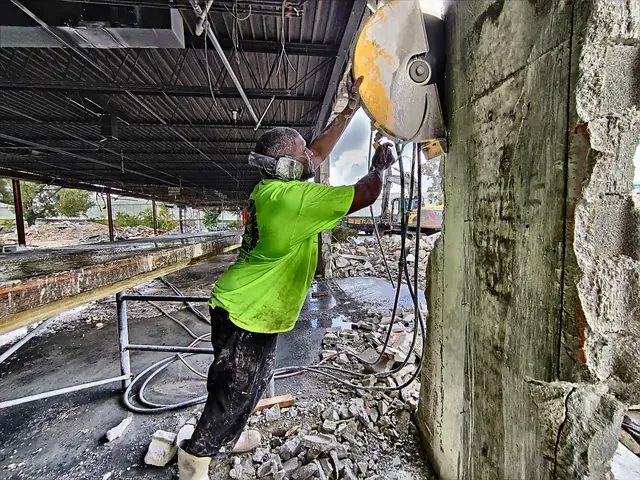
Concrete chain sawing uses a bar and a diamond-impregnated chain, much like a wood chainsaw, but the chain is studded with diamond segments that grind through concrete. Because the bar can plunge straight into the material and cut to its full length, the chain saw reaches depths and corners that a circular blade physically cannot.
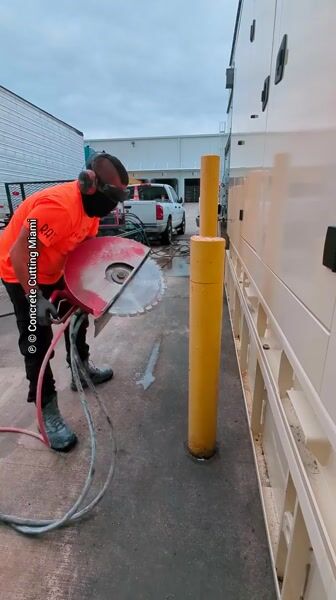
The chain runs wet, with water fed through the bar to cool the chain and flush the cut, which keeps the diamond sharp and the dust down. The result is a deep, narrow cut with square inside corners, something no circular saw can produce. Hydraulic and gas chain saws are the machines behind this method.
Where Chain Sawing Beats a Circular Blade
The chain saw’s advantage is the square corner. A circular blade is round, so every inside corner it cuts comes out rounded, and that rounded corner has to be chipped square by hand. A chain saw cuts the corner square the first time, which saves hours on jobs where a beam or a frame has to seat precisely.
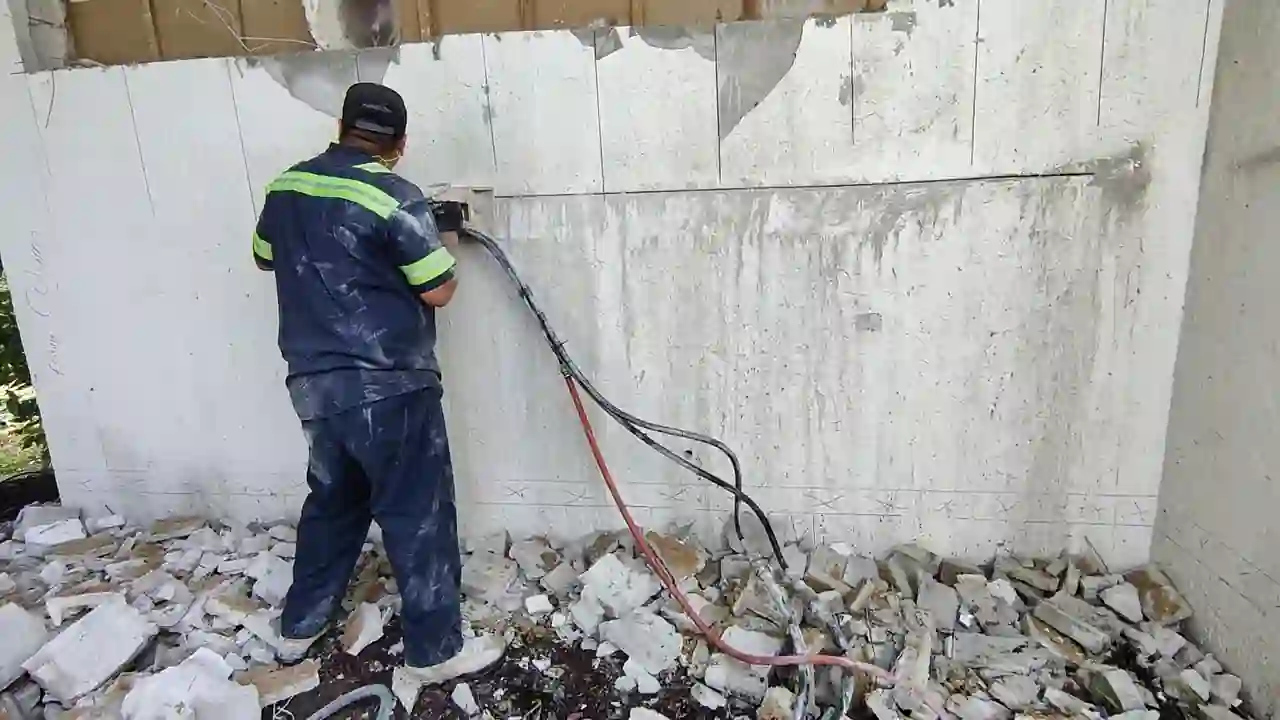
Chain sawing also wins on deep plunge cuts. When you need to cut a square opening in a thick wall, or plunge through a slab for a penetration, the chain saw goes straight in and cuts the full depth without overcutting the corners. Wall openings that need square corners are chain saw work.
The Jobs That Need Chain Sawing
Beam pockets are the classic chain saw job. Cutting a pocket in a wall for a steel beam needs a square corner and a precise depth, and the chain saw delivers both. Door and window openings in thick walls are the same story, the square corner means the frame seats cleanly.
Chain sawing also handles deep utility penetrations, elevator shaft openings, and any cut where a circular saw would overcut to reach the corner. It is the precision tool for deep concrete work.
The Power Behind the Chain
Concrete chain saws come in hydraulic, gas, and electric versions. Hydraulic saws are the most powerful and are the choice for deep, heavy cuts, powered by a separate hydraulic power pack. Gas saws are more portable and handle most field work, while electric saws serve indoors where exhaust is a problem.
The right power source depends on the job. A deep cut in a thick wall wants hydraulic power, while a smaller opening can be handled with gas. We match the saw to the material and the depth.
Safety and Water Management
Chain sawing concrete is wet, loud, and demanding. The operator runs a powered bar under load, the chain can kick back, and the water and slurry have to be managed. Eye, hearing, and hand protection are mandatory, and the slurry is captured and disposed of properly.
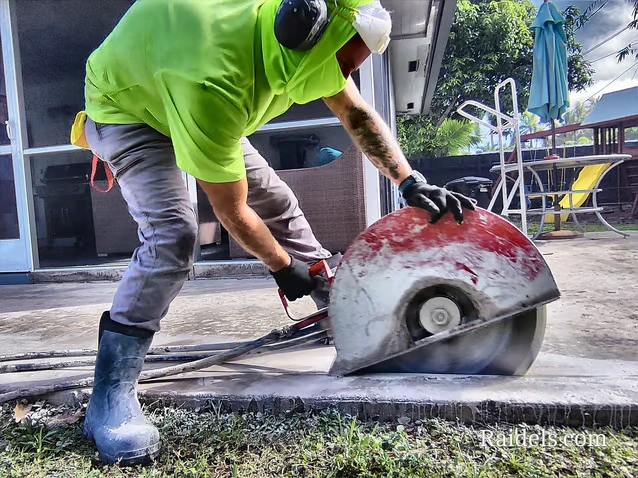
The water is what keeps the chain alive and the silica down, and it is why chain sawing is compliant with silica safety rules where dry cutting would not be.
Why the Operator Matters Most
A concrete chain saw is a specialized tool, and the operator is the expensive part. The chain has to be kept sharp and properly tensioned, the bar has to be guided square, and the depth has to be controlled. A chain saw in the wrong hands is slow and dangerous, and in the right hands it is the fastest way to a precise, square opening.
Chain Sawing Versus Hand Chipping for Corners
Before chain saws were common, a square corner in concrete meant cutting with a circular saw and then chipping the rounded corner square by hand. That works, but it is slow and the result is never as clean as a corner that was cut square from the start. The chain saw changed that by cutting the corner square on the first pass.
The difference matters on jobs where a beam or a frame has to seat precisely. A hand-chipped corner is close, but it needs shims and grout to make up the difference. A chain-sawed corner is square and true, and the beam seats on the first try. For the cuts where precision is the point, the chain saw is the better tool.
When the Chain Saw Is the Right Call
- Beam pockets: square corners and exact depth for a clean seat.
- Door and window openings: plumb, square jambs for the frame.
- Deep penetrations: full-bar-depth cuts a circular saw cannot make.
- Elevator and shaft openings: precision openings in thick walls.
- Thick-wall corners: where hand chipping would take hours.
The chain saw earns its keep on the cuts that have to be square and deep, and it is the tool we reach for when precision is non-negotiable.
Water Is What Makes the Chain Cut
A concrete chain saw runs wet, and the water is not optional, it is what makes the cut work. The water cools the diamond chain and flushes the cut, carrying away the slurry and keeping the diamonds sharp. Without water, the chain overheats, the diamonds glaze, and the cut slows to a crawl while the chain wears out fast.
The water also does the dust control. Cutting concrete dry throws silica into the air, and that is a health hazard and a compliance violation in Miami-Dade. The wet chain keeps the silica in the slurry, where it can be captured and disposed of properly instead of inhaled. The water is the difference between a clean, compliant cut and a dusty, dangerous one.
Managing the slurry is part of the job. The wet cutting produces a slurry that has to be contained and disposed of properly, not washed down a drain. A professional chain saw crew runs the water, captures the slurry, and leaves the site clean. The water makes the cut possible, and the slurry management keeps the job compliant.
The chain is a consumable with a real learning curve. A diamond chain cuts by grinding, and it wears with every pass, so the operator has to keep it tensioned and watch for wear. A loose chain walks off the bar and ruins the cut, while an over-tensioned chain binds and burns out. The operator is constantly reading the chain, and that attention is what keeps a deep cut straight and square.
Plunge cuts are where the method really earns its keep. To cut a square opening, the operator plunges the bar straight into the concrete and cuts to the corners, something a circular blade cannot do without overcutting. That plunge cut is the whole reason the chain saw exists, and it is also the moment a novice is most likely to bind the bar or wander off the line. For a beam pocket or a door opening, the square corner is the point, and it is not a place to learn.
The slurry from a wet chain saw cut is heavy and has to go somewhere. A deep cut produces a steady stream of slurry that has to be captured and disposed of properly, not washed into a drain. On an occupied or finished space, that slurry management is a big part of keeping the job clean. It is the unglamorous half of chain sawing, and it is why the method is a professional one.
The plunge cut is the method’s signature move, and it is also where a novice gets into trouble. The operator plunges the bar straight into the concrete and cuts to the corners, and doing that without binding the bar or wandering off the line takes real feel. For a beam pocket or a door opening, the square corner is the whole point, and the chain saw is what makes a square opening possible without hours of hand chipping. It is the tool that finishes what a hand saw starts on the detail work.
Get the Deep Cut Done Right
If you need a deep penetration or a square opening cut in concrete anywhere in Miami-Dade, call us. We will bring the right chain saw and an operator who runs it every week.
Concrete chain sawing is the method for the cuts that have to be square, deep, and right the first time. Let us put it on your job.