Why Coconut Creek Concrete Fence Projects Carry Unique Job-Site Hazards
Concrete fence work in Coconut Creek gets underestimated constantly. Contractors roll up expecting a straightforward panel removal or post-cutting job, and within the first hour they’re already creating airborne silica concentrations that exceed OSHA’s Permissible Exposure Limit (PEL) of 50 micrograms per cubic meter. The residential density of Coconut Creek neighborhoods — particularly the gated communities along Lyons Road and Sample Road — means you’re often working within feet of occupied structures, pedestrian pathways, and active landscaping crews. That proximity compounds every hazard. Silica doesn’t just threaten your own workers; it drifts. Vibration from cutting doesn’t just affect the panel you’re working on; it transmits through interconnected post systems. Understanding the full hazard profile of a coconut creek concrete fence job is the first step toward running it correctly.
Pre-Job Hazard Assessment Protocols Before a Single Blade Spins
Every coconut creek concrete fence job at Concrete Cutting Miami, LLC begins with a documented Job Hazard Analysis (JHA). This isn’t a checkbox exercise — it’s a technical review of the site conditions that dictates every operational decision that follows. The JHA covers structural integrity of existing fence panels, embedded rebar or post-tension cable identification, proximity to underground utilities, overhead line clearance, and soil stability around post footings. In Coconut Creek specifically, many precast concrete fence systems were installed in the late 1990s and early 2000s, meaning you’re often dealing with aging concrete that may have carbonated surface layers or micro-cracking that changes how the material fractures under blade contact.
Utility marking is non-negotiable. Florida 811 call-before-you-dig requirements apply even to fence post footing excavations, and the consequences of skipping that step near irrigation systems or low-voltage landscape lighting can escalate quickly. Our crews conduct a secondary visual sweep with a cable locator after the official utility mark-out, because third-party marking is not always accurate to the tolerances required for concrete cutting operations.
Structural Pre-Assessment for Precast Panel Systems
Precast concrete fence panels common throughout Coconut Creek communities slot into vertical posts with a tongue-and-groove or channel system. Before cutting begins, each panel must be assessed for load transfer — specifically whether adjacent panels are bearing against the target panel or whether the post footing has shifted, creating an unexpected lateral load. A panel that looks freestanding can be under significant compressive stress from neighboring sections. Releasing that stress without proper bracing creates a sudden movement hazard that has caused serious injuries on South Florida job sites. Temporary panel bracing using adjustable steel shores rated for the panel weight must be placed before any cutting commences.
OSHA 1926 Subpart CC and Silica Table 1 Compliance on Fence Cutting Operations
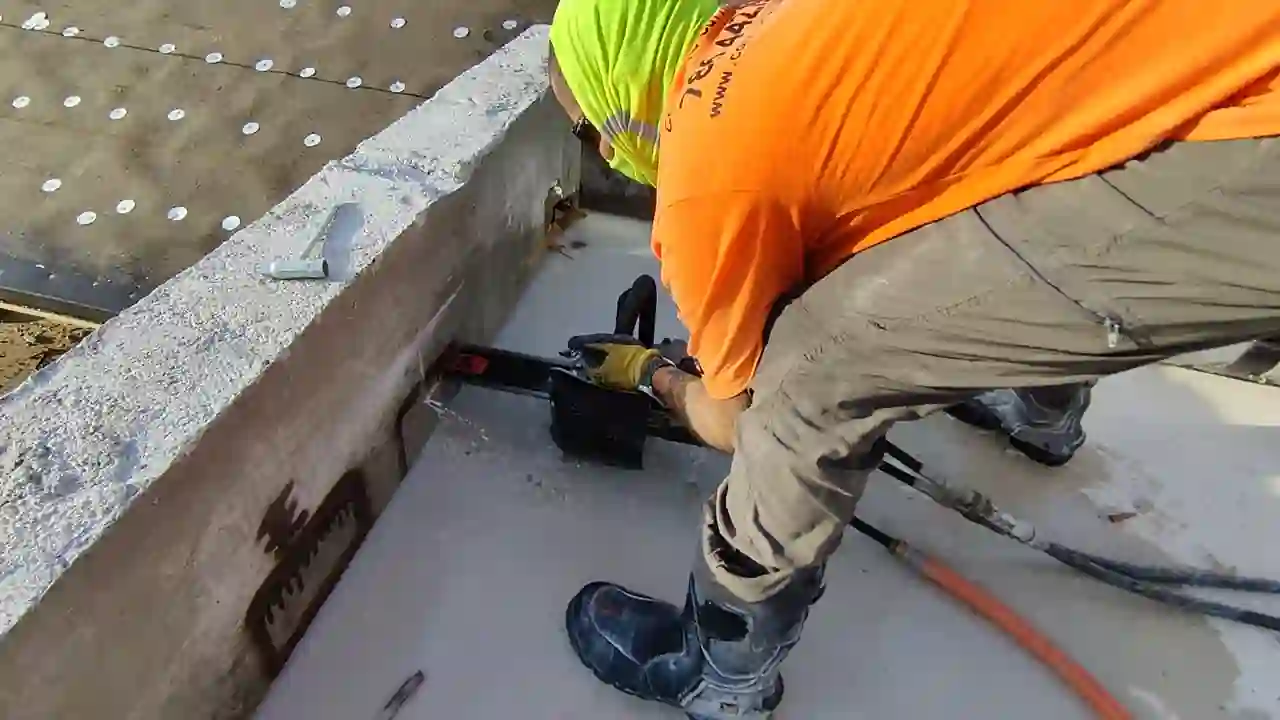
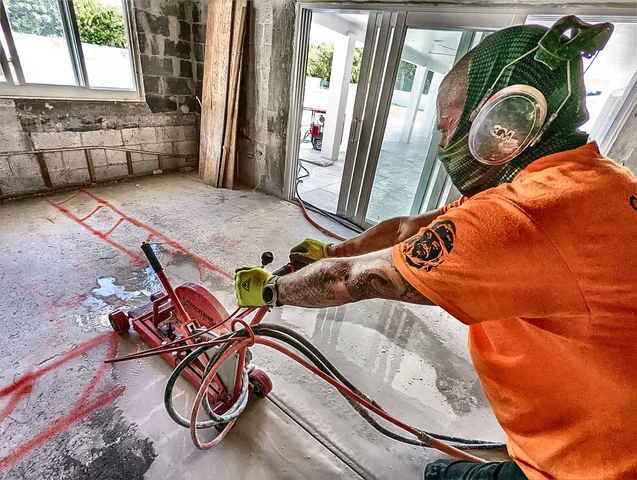
OSHA’s silica standard for construction — 29 CFR 1926.1153 — is the governing regulation on every concrete fence cutting job we run. The Table 1 compliance pathway for handheld grinders and walk-behind saws requires wet cutting methods or local exhaust ventilation (LEV) systems that capture dust at the point of generation. On a coconut creek concrete fence job, this typically means operating diamond blade saws with integrated water suppression delivering a minimum of 0.5 gallons per minute at the blade-material interface. Water flow must be continuous — intermittent wet cutting does not meet Table 1 requirements and still generates hazardous silica spikes.
For situations where wet cutting is impractical — such as cutting near electrical panel bases or in areas where water runoff would create a slip hazard — we deploy HEPA-filtered vacuum systems with shrouded blade guards that maintain airborne silica below the action level of 25 micrograms per cubic meter. Workers in the cutting zone wear half-face respirators with P100/OV combination cartridges as a secondary control, never as the primary one. The reality is that most job sites have no idea how much silica they’re generating, and that ignorance is costing workers their lung capacity over time.
Personal Protective Equipment Specifications for Fence Cutting Crews
- Respiratory protection: NIOSH-approved half-face respirator, minimum N95 for bystanders, P100 for operators within 10 feet of the cut
- Eye and face protection: ANSI Z87.1-rated safety glasses plus full-face shield for operators; safety glasses minimum for all personnel within the debris exclusion zone
- Hearing protection: Foam earplugs or earmuffs rated to achieve exposure below 85 dBA — concrete fence cutting with a 14-inch blade generates 98-104 dBA at the operator position
- Hand protection: Anti-vibration gloves meeting ISO 10819 to reduce Hand-Arm Vibration Syndrome (HAVS) risk during extended cutting operations
- Foot protection: Steel-toed boots with metatarsal guards; concrete panel drops are a leading cause of foot injuries on fence removal jobs
- High-visibility vests: Class 2 minimum when operating within 10 feet of any active roadway or community driveway
Exclusion Zone Management and Third-Party Hazard Control
One of the most frequently violated safety protocols on coconut creek concrete fence jobs is exclusion zone enforcement. The cutting exclusion zone must extend a minimum of 15 feet from the blade in all directions, with hard barricading — not just cones — on the side facing occupied property or pedestrian access. In Coconut Creek’s HOA-governed communities, this often requires coordination with the association’s property manager to temporarily close adjacent walking paths or redirect residents during active cutting phases.
Flying debris from concrete fence cutting is not a theoretical hazard. Blade contact with embedded rebar, aggregate pockets, or surface irregularities can launch fragments at velocities exceeding 100 feet per second. Our crews use blade guards rated for the specific blade diameter in use, and we never operate a blade beyond its rated RPM. Blade inspection before each use — checking for cracks, segment loss, or core warping — is a written requirement in our operating procedures, not a suggestion. A full breakdown of our safety measures in concrete cutting explains how these protocols connect across different operation types.
Noise and Vibration Mitigation in Residential Coconut Creek Settings
Coconut Creek’s noise ordinances restrict construction activity to specific daytime hours, but OSHA’s concern with noise goes beyond community relations — it’s an occupational health standard. Sustained exposure above 90 dBA over an 8-hour TWA triggers OSHA’s hearing conservation program requirements under 29 CFR 1910.95, including audiometric testing and a written program. For fence cutting operations that run multiple hours, we schedule mandatory quiet periods and rotate operators to manage cumulative noise dose. Vibration monitoring for Hand-Arm Vibration Syndrome risk uses the ISO 5349 daily vibration exposure calculation, and operators approaching the action value of 2.5 m/s² A(8) are rotated off powered tools for the remainder of the shift.
Waste Slurry Management and Environmental Compliance on Wet Cutting Jobs
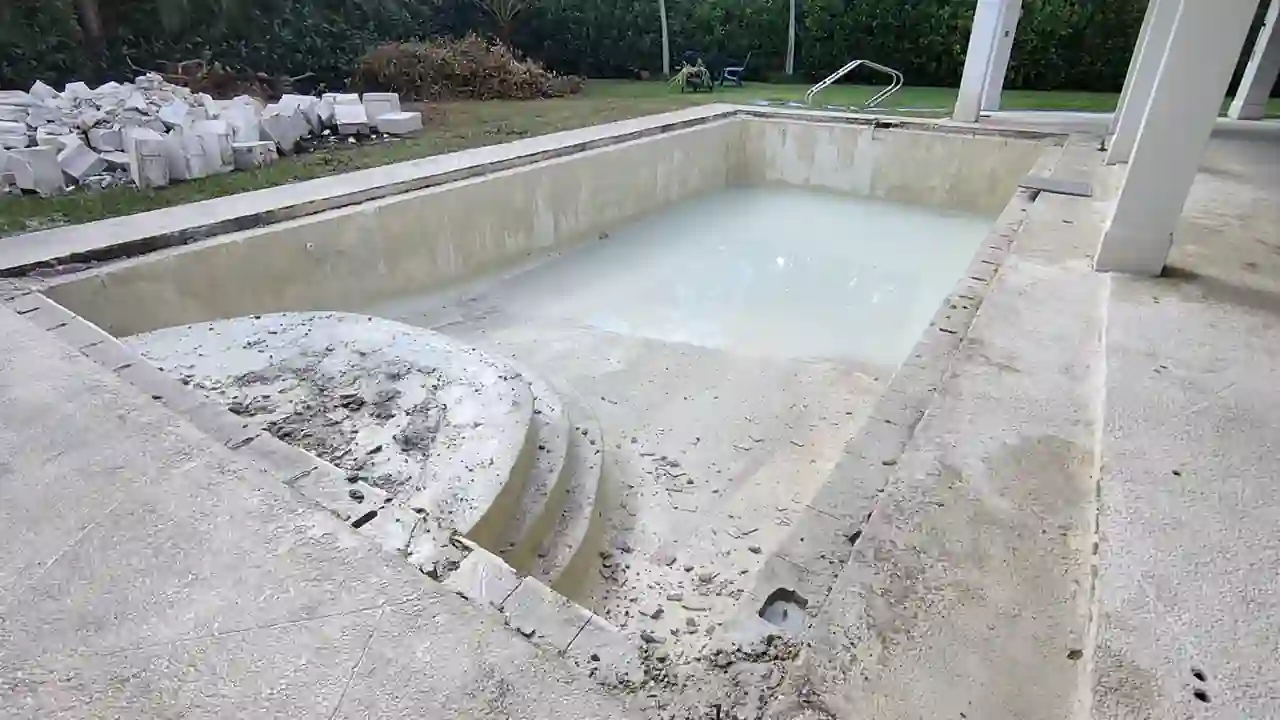
Wet cutting generates concrete slurry — a high-pH waste stream that cannot be discharged to storm drains under the Clean Water Act’s NPDES permit requirements or Florida DEP regulations. On coconut creek concrete fence jobs, we contain slurry using bermed containment mats and portable sumps, then allow the solids to settle before disposing of the dried material as construction debris. The water fraction, once tested for pH neutralization, is either neutralized on-site or transported for proper disposal. This isn’t just environmental compliance — alkaline slurry runoff onto landscaping destroys turf and ornamental plants, which creates immediate liability with HOA communities.
The operational discipline required to run a coconut creek concrete fence project safely mirrors what we bring to high-profile urban jobs. Our work on projects like Brickell Flatiron required the same layered hazard controls at a different scale, and the underlying principles don’t change based on zip code. Every Miami contractor dealing with site clearance needs to understand that concrete fence removal carries the same regulatory weight as any other demolition operation.
Post-Cut Structural Stability and Panel Handling Procedures
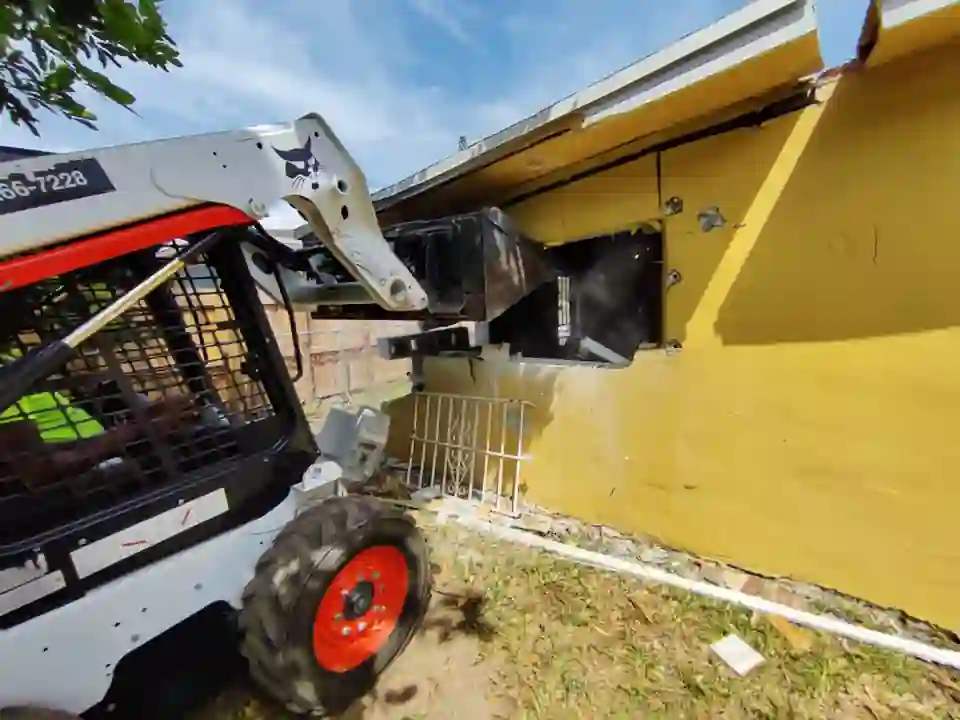
After cutting, panel handling introduces a new set of hazards. Precast concrete fence panels typically weigh between 200 and 600 pounds depending on thickness and length. Manual handling of panels above 50 pounds violates ergonomic best practices and creates acute musculoskeletal injury risk. Our crews use mechanical lifting aids — vacuum lifters, panel clamps, or mini-excavators with panel forks — for all panel removal operations. Rigging equipment is inspected before each lift, and lift plans are documented for any panel exceeding 400 pounds or any lift occurring within 10 feet of an overhead obstruction.
Post footings that remain in place after panel removal must be marked and barricaded immediately. Exposed footing stubs at grade or slightly below grade are a serious trip-and-fall hazard, particularly in community settings where non-construction personnel may enter the work area during off-hours. We cap or flag every exposed footing before leaving the site at the end of each work day, and we document that action in our daily safety log.
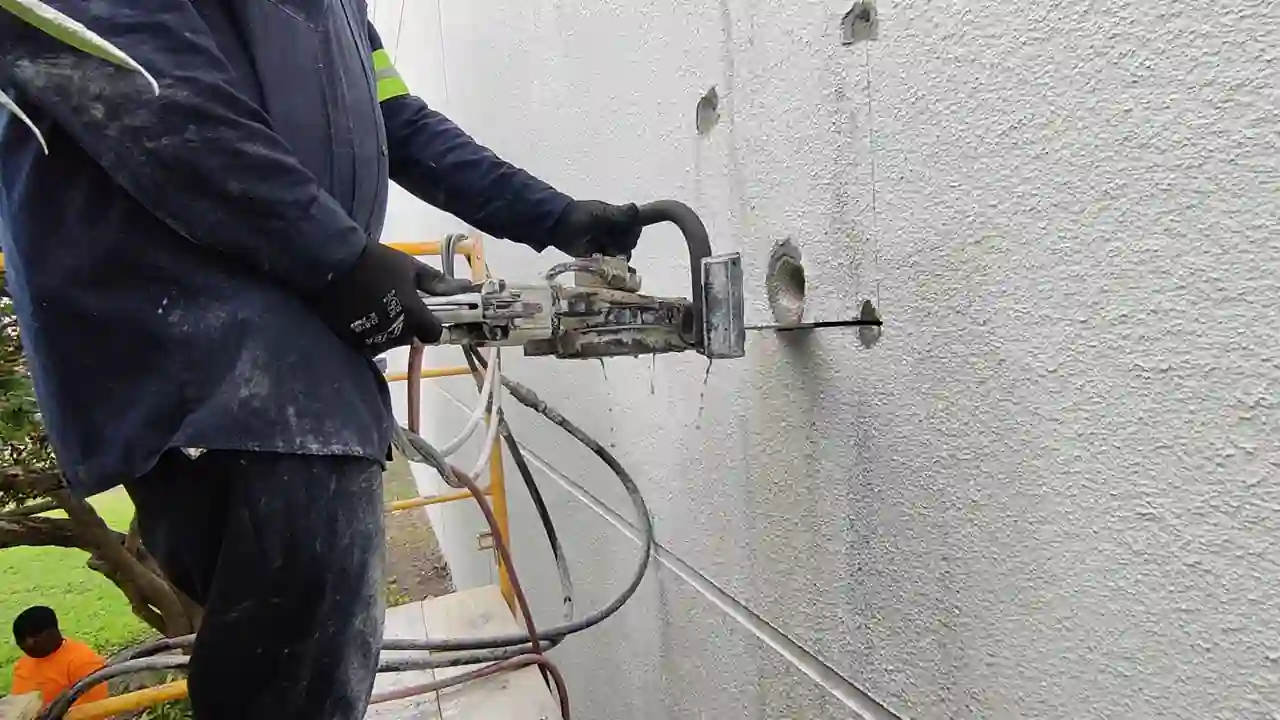
Building a Safety Culture That Outlasts Any Single Coconut Creek Fence Job
The technical protocols described here are only effective when they’re embedded in a genuine safety culture — one where workers feel empowered to stop work when conditions change and where supervisors treat hazard identification as a sign of competence, not weakness. Toolbox talks before every coconut creek concrete fence operation review the specific hazards of that day’s work, not generic safety reminders. Near-miss reporting is encouraged and documented without punitive consequences, because near misses are the most valuable safety data a crew can generate.
OSHA compliance on concrete fence jobs is not a ceiling — it’s a floor. The goal is zero incidents, and achieving that requires treating every panel removal, every blade change, and every slurry cleanup operation with the same disciplined attention to hazard control. In Coconut Creek’s residential environment, where your crew’s work is visible to homeowners, HOA boards, and competing contractors every day, the way you run your safety program is also the most powerful statement you can make about the quality of your work overall.