Why South Miami Heights Concrete Removal Jobs Require a Different Playbook Entirely
South Miami Heights is not a forgiving job site. Densely packed residential blocks, aging infrastructure, narrow side yards that barely clear a wheelbarrow, and slabs that have been poured in layers over decades — this is the kind of environment where a standard demolition approach falls apart before the first cut is made. As a concrete removal contractor operating across Miami-Dade, we’ve learned that this specific corridor demands a pre-job site logistics strategy that most operators skip entirely. That oversight costs time, damages adjacent structures, and in some cases, creates liability that no insurance policy covers cleanly. What follows is a frank, technical breakdown of how experienced crews approach concrete removal in South Miami Heights — from the moment the truck pulls up to the moment the last aggregate hits the dumpster.
Pre-Mobilization Site Assessment for Confined Residential Lots
Before a single piece of equipment is loaded onto the trailer, a thorough site assessment must occur — and in South Miami Heights, that assessment needs to go deeper than a Google Maps screenshot. We’re talking about physical measurements of gate widths, overhead utility clearances, soil bearing capacity adjacent to the slab, and the structural condition of any shared walls or neighboring foundations that sit within the demolition blast radius.
Standard residential lots in this area frequently run 50 feet wide or narrower, with homes positioned close to the property line. That means a skid steer with a hydraulic breaker — your go-to machine in open commercial environments — may be physically unable to reach the target slab without repositioning a fence, removing a gate post, or coordinating temporary utility disconnection. These are not surprises you want on day one of a job. They’re variables that need to be mapped, costed, and scheduled in advance.
- Gate and access corridor measurements — minimum 36 inches for manual equipment, 60+ inches for compact machinery
- Overhead clearance checks — low-hanging power lines and awning structures frequently block boom equipment
- Soil condition adjacent to removal zone — soft or recently disturbed soil limits machine positioning options
- Proximity to neighboring foundations — vibration thresholds must be calculated before any impact demolition begins
- Utility mapping — South Florida’s aging water and sewer infrastructure runs shallow; unmarked lines are common
Hydraulic Breaking Versus Hand Demolition in Zero-Clearance Zones
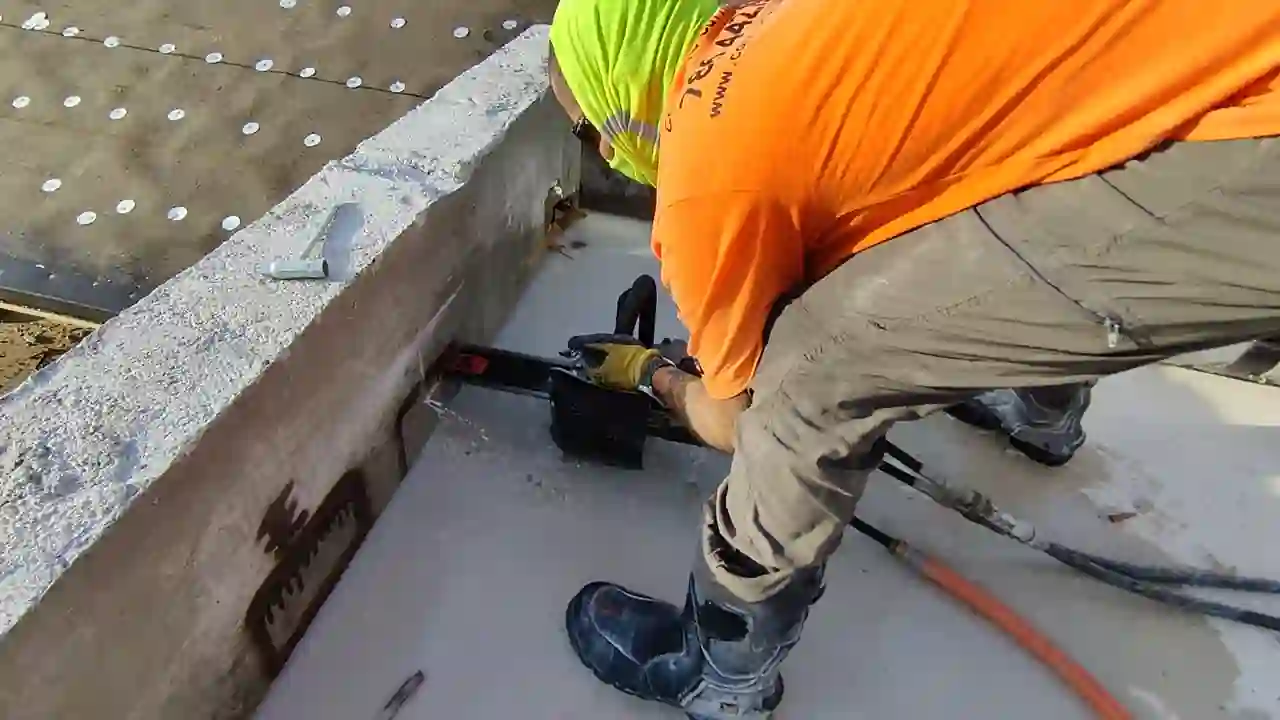
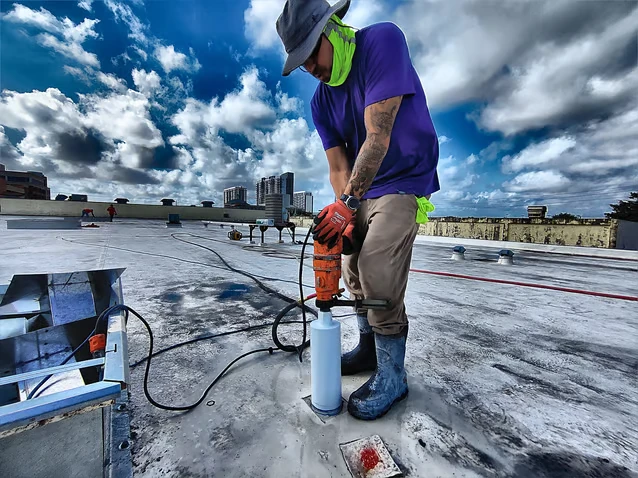
This is where the decision tree gets technical. When machine access is restricted — and in South Miami Heights, it often is — the crew must pivot to hand demolition methods without sacrificing efficiency or safety. Hydraulic concrete cutting in Miami remains the preferred method when clearance allows, because it delivers controlled fracture lines with minimal collateral vibration. But when the space simply won’t accommodate even a compact hydraulic unit, the answer is a combination of electric chipping hammers, core drilling for stress relief, and strategic saw cutting to pre-segment the slab.
Pre-segmenting is not optional in tight spaces — it’s the entire strategy. By making a series of straight cuts that divide a large slab into manageable panels, the crew eliminates the need for brute-force breaking that sends shockwaves into adjacent concrete and masonry. Each panel, once isolated, can be pried, lifted, and removed without disturbing the surrounding substrate. This approach requires more setup time but dramatically reduces the risk of cracking adjacent walkways, pool decks, or the existing home foundation.
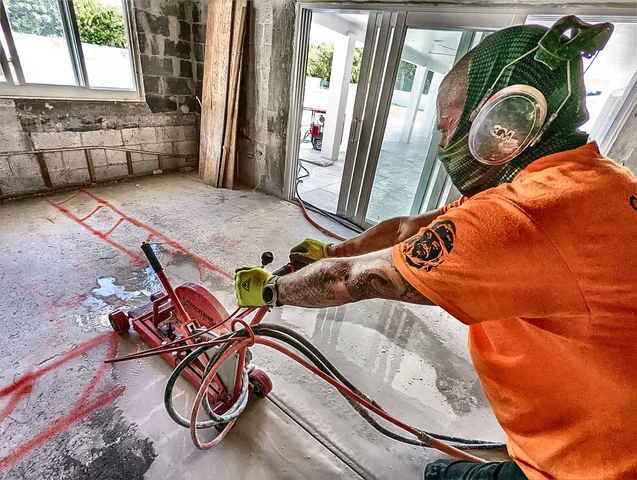
For jobs where even electric equipment creates unacceptable vibration risk — typically within 18 inches of a shared wall or post-tension slab edge — rail saw services offer a track-mounted cutting solution that keeps the blade perfectly controlled and the vibration signature to a minimum. Rail saws are underutilized in residential demolition but are genuinely the right tool for precision removal in these confined scenarios.

Debris Sequencing and Haul-Out Logistics When Space Is the Enemy
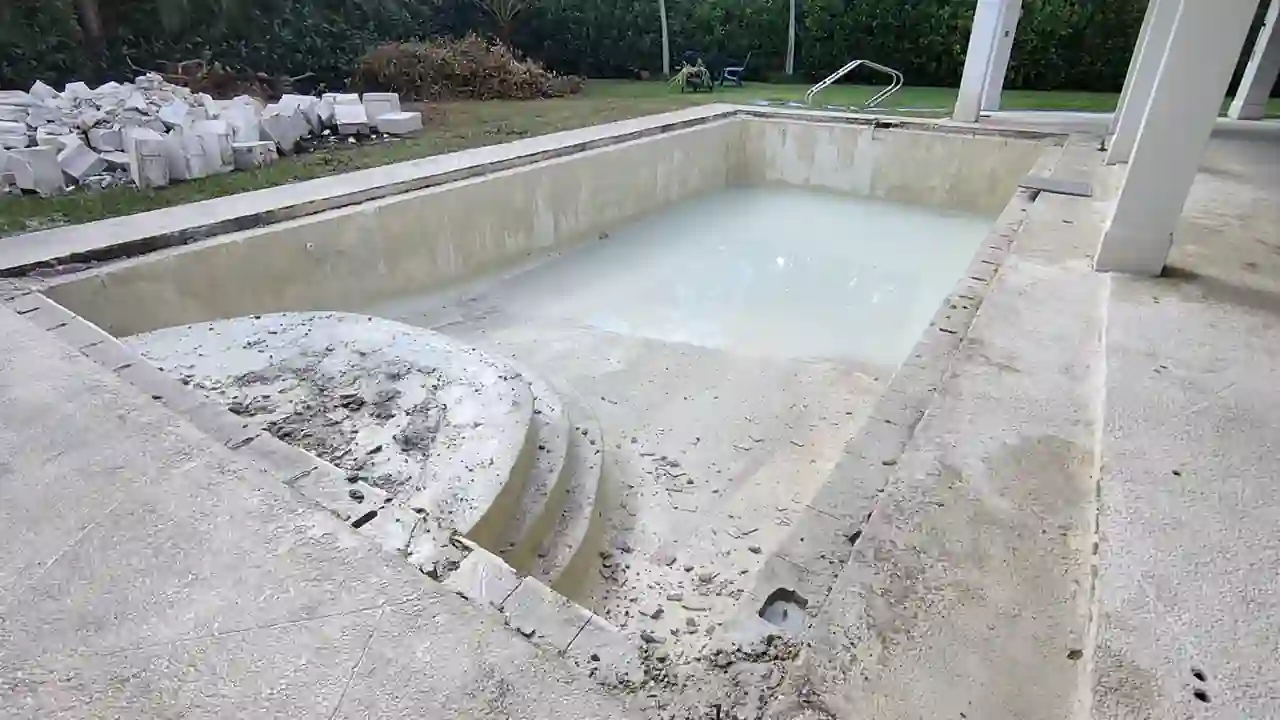
Removing broken concrete from a confined site is a logistical problem that deserves as much attention as the cutting itself. A 4-inch slab measuring 20 by 30 feet generates roughly 18,000 pounds of broken aggregate. Getting that material from a rear yard with a 36-inch access gate to a dumpster positioned at the curb requires a relay system — and that relay system needs to be planned, not improvised.
In practice, this means staging a series of smaller debris containers inside the work zone, using a combination of manual labor and compact electric wheelbarrows to ferry material in batches. The dumpster placement at the street must account for Miami-Dade County right-of-way permits, which are non-negotiable and carry real fines when ignored. For jobs where street parking is limited, a roll-off permit application needs to be filed days before mobilization — not the morning of.
Crew size matters here more than most contractors admit. A two-person crew on a confined South Miami Heights slab removal is going to spend half their time moving debris rather than cutting. A four-person crew with defined roles — two cutting, two hauling — maintains momentum and keeps the job on schedule. Labor cost per hour goes up, but total job hours drop significantly, and the net result is a more competitive bid and a cleaner site at the end of the day.
Reinforcement Identification and Rebar Management in Older South Miami Heights Slabs
Slabs poured in South Miami Heights before the 1990s frequently contain rebar configurations that don’t match any current specification — because they were poured without engineered drawings, by contractors working from experience rather than blueprints. What this means in practice is that you cannot assume rebar spacing, diameter, or depth until you’ve made your first exploratory cut and looked at the cross-section.
Ground-penetrating radar (GPR) scanning before cutting is the professional standard for any slab removal where the reinforcement pattern is unknown. GPR identifies rebar location, depth, and density, as well as any embedded conduit or post-tension cables that would be catastrophic to cut accidentally. Professional concrete cutting and demolition teams use GPR as a standard pre-cut protocol, not an upsell — and any contractor skipping this step on an older South Miami Heights property is accepting risk on behalf of the property owner without disclosure.
Once rebar is exposed during removal, it must be cut clean and removed with the concrete rather than left as protruding hazards. Oxygen-acetylene cutting or an angle grinder with a metal cut-off wheel handles this efficiently. The cut ends should be documented if the adjacent slab or foundation is being retained, as the rebar termination point affects the structural continuity of what remains.
Environmental and Moisture Considerations Specific to South Florida Slab Removal
South Miami Heights sits in a zone with a high water table and significant seasonal moisture variation. When a slab is removed — particularly a full-depth removal down to grade — the exposed subgrade can become saturated rapidly, especially during the wet season. This matters for two reasons: it affects the timeline for any subsequent pour, and it can destabilize the edges of adjacent slabs or footings if water pools against them.
Proper subgrade management after removal includes grading for positive drainage, installing a temporary moisture barrier if the area will be exposed for more than 48 hours before backfill or new concrete placement, and inspecting the adjacent foundation perimeter for any signs of undermining. Moisture barrier concrete solutions are often recommended as part of the replacement specification, particularly in areas where vapor transmission has historically caused slab degradation.
Safety through all of these phases is non-negotiable. Confined space work, wet subgrades, and overhead utility proximity create a compound hazard environment that requires active hazard management — not just a toolbox talk at the start of the day. Our team follows the protocols outlined in detail at our concrete cutting safety guide, which covers PPE requirements, silica dust control under OSHA 1926.1153, and emergency response planning for confined work zones.
Coordinating With Adjacent Property Owners and Local Code Requirements
South Miami Heights falls under Miami-Dade County jurisdiction, which means demolition permits are required for any structural concrete removal — and that permit process includes notification requirements for adjacent property owners when the work is within a certain distance of a shared boundary. Skipping this step doesn’t just risk a stop-work order; it creates neighbor disputes that can delay a project by weeks.
Proactive communication with adjacent owners before mobilization, combined with a clear explanation of the work timeline and dust/vibration control measures, eliminates the majority of complaints before they start. It’s not a soft skill — it’s a logistics requirement that experienced contractors build into their project timeline as a hard deliverable. For ongoing project updates, resources, and technical guidance on concrete maintenance across Miami-Dade, visit our concrete maintenance resource hub.
Selecting the Right Crew for a South Miami Heights Confined Removal Project
The differentiator on a difficult confined-site removal is not the equipment catalog — it’s the crew’s ability to read a site, adapt their sequencing in real time, and maintain production without creating new problems. South Miami Heights concrete removal done right means the neighboring driveway doesn’t crack, the utility lines stay intact, the permits are in order before the first saw fires up, and the subgrade is clean and properly graded when the crew pulls out.
That level of execution comes from experience with exactly these kinds of jobs — not from a contractor who primarily works open commercial sites and treats residential confined-space removal as a minor variation. If your project involves a tight lot, a low-clearance structure, shared walls, or a slab with unknown reinforcement history, the crew you hire needs to have a documented process for each of those variables before they ever show up on site.