Why Site Clearance Services Carry the Highest Safety Risk on Any Miami Job Site
Of all the phases in a commercial or residential construction project, site clearance consistently ranks among the most technically demanding and hazard-intensive. Before any new structure goes up in Miami-Dade or Broward County, the existing footprint — slabs, foundations, buried utilities, reinforced walls, and decades of compacted debris — must be methodically removed. This is not a bulldoze-and-go operation. Professional site clearance services require a disciplined, sequenced approach that integrates OSHA 29 CFR 1926 Subpart T standards, structural assessment protocols, and real-time hazard monitoring. Skipping any of these steps doesn’t just put workers at risk — it exposes general contractors to six-figure OSHA citations, project shutdowns, and civil liability that can outlast the project itself.
Pre-Clearance Structural Engineering Assessment and Hazard Mapping
No reputable site clearance crew should break ground — or swing a hydraulic breaker — without a completed pre-demolition engineering survey. In Miami, where soil conditions range from limestone bedrock in the Upper Keys to saturated fill in low-lying urban corridors, this assessment is non-negotiable. The survey must identify load-bearing elements, post-tension cable locations, and any rebar-embedded concrete that could cause unpredictable fracture patterns during cutting operations.
Hazard mapping goes hand-in-hand with structural assessment. Every site clearance project requires a documented utility strike prevention plan. In Miami-Dade County, the density of buried infrastructure — gas mains, fiber optic conduit, high-voltage electrical, stormwater drainage — means that ground-penetrating radar (GPR) scanning should be standard procedure before any mechanical excavation begins. Sunshine 811 call-before-you-dig notifications are legally required in Florida, but GPR adds a critical second layer of verification that utility markings alone cannot provide.
For more on how structural integrity is maintained during complex demolition work, see our detailed breakdown of rebar-embedded concrete cutting and structural integrity protocols for Miami reinforced slabs.
OSHA 29 CFR 1926 Subpart T — The Demolition Standard Every Site Foreman Must Internalize
OSHA’s Subpart T is the federal regulatory backbone for demolition and site clearance operations. It mandates that before any demolition work begins, a competent person — as defined under 29 CFR 1926.32(f) — must conduct a written engineering survey of the structure. This isn’t a checkbox exercise. The survey must evaluate the possibility of unplanned collapse, the condition of floors and walls, and the presence of hazardous materials including asbestos-containing materials (ACMs), lead-based paint, and PCB-laden caulking.
In Florida, ACM abatement must comply with both OSHA 1926.1101 and Florida Department of Environmental Protection (FDEP) Chapter 62-257 regulations. Any structure built before 1980 should be treated as a presumed ACM site until sampling and laboratory analysis prove otherwise. On Miami sites, where Art Deco and mid-century commercial buildings are routinely cleared for redevelopment, this is an everyday operational reality — not an edge case.
- Written engineering survey completed before work begins (mandatory per 1926.850)
- Utility disconnection verification — gas, electric, water, and sewer confirmed shut off at the source
- Hazardous material abatement completed and documented prior to mechanical demolition
- Fall protection systems in place for any work at or above six feet (1926.502)
- Respiratory protection program active for silica and dust-generating operations (1926.1153)
- Competent person on-site during all active demolition phases
Silica Dust Control During Concrete Demolition and Slab Removal
Crystalline silica exposure is one of the most underestimated hazards in site clearance work. When concrete slabs, masonry walls, or cured mortar are cut, ground, or fractured, respirable silica particles — those smaller than 10 microns — become airborne and can penetrate deep into lung tissue. OSHA’s respirable crystalline silica standard for construction (29 CFR 1926.1153) establishes a permissible exposure limit (PEL) of 50 micrograms per cubic meter of air, averaged over an eight-hour shift.
For site clearance crews performing high-volume concrete demolition in Miami’s dense urban environment, engineering controls are the first line of defense. These include:
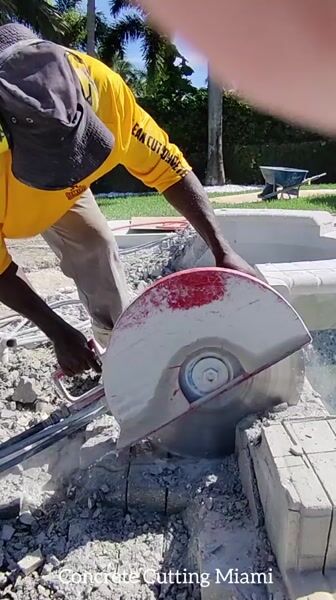
- Wet cutting methods using continuous water suppression at the blade-concrete interface
- Local exhaust ventilation (LEV) integrated into electric demolition hammers and grinders
- HEPA-filtered vacuum systems for surface grinding and scarifying operations
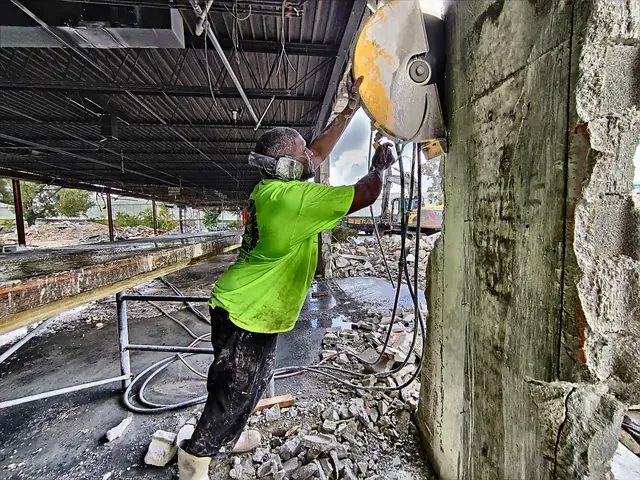
- Enclosed cab equipment with filtered air systems for operators running hydraulic breakers
When engineering controls alone cannot maintain exposures below the action level of 25 micrograms per cubic meter, a written respiratory protection program under 29 CFR 1910.134 must be activated. Half-face respirators with P100/OV combination cartridges are the minimum standard; powered air-purifying respirators (PAPRs) are recommended for extended-duration high-exposure tasks.
Sequenced Demolition Planning to Prevent Structural Collapse Hazards
Uncontrolled structural collapse is the leading cause of fatality in demolition operations nationwide. In site clearance work, this risk is amplified when partial demolition leaves standing walls, cantilevered slabs, or unsupported roof structures while other sections of the building are being actively removed. The solution is a sequenced demolition plan developed by a licensed structural engineer and enforced by the on-site competent person.
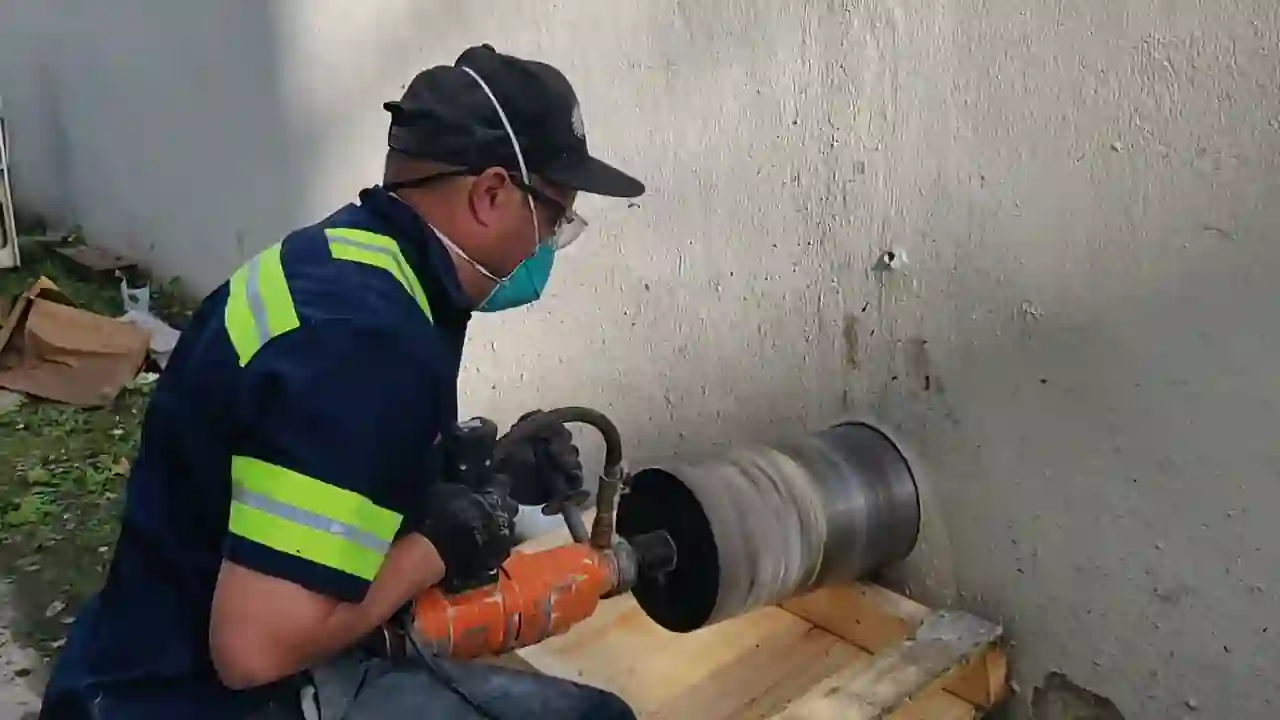
Sequencing typically proceeds from the top down for above-grade structures and from the perimeter inward for slab-on-grade clearance. In reinforced concrete construction — which dominates Miami’s commercial and multi-family building stock — cutting sequences must account for post-tensioning cable tension. Severing a post-tension tendon without first relieving the cable stress can cause explosive concrete spalling and sudden slab drop. This is why diamond wire saw operations and hydraulic core drilling must be preceded by tendon location scanning using electromagnetic detection equipment.
Explore how our team approaches complex demolition sequencing across South Florida at our Miami demolition services resource hub.
Personal Protective Equipment Standards for Site Clearance Operations
PPE on a site clearance job is not a one-size-fits-all specification. The hazard profile changes hour by hour as different demolition phases activate different exposure risks. A worker operating a hydraulic breaker on a concrete slab faces different PPE requirements than a laborer hand-sorting debris or a saw operator cutting through a reinforced foundation wall.
At minimum, all personnel within the site clearance perimeter must be equipped with:
- Class E hard hats (ANSI Z89.1) rated for electrical hazard and impact
- Safety-toed boots meeting ASTM F2413 with puncture-resistant midsoles
- High-visibility vests (ANSI/ISEA 107 Class 2 or Class 3) when mobile equipment is operating
- Anti-vibration gloves for operators of percussive demolition tools (HAV exposure per ACGIH TLV)
- Polycarbonate safety glasses plus full face shields for cutting and grinding operations
- Double hearing protection (foam insert plus earmuff) when noise levels exceed 100 dBA
Site Perimeter Control and Third-Party Hazard Exclusion in Urban Miami Settings
Miami’s urban density creates a unique challenge for site clearance operations — the public is often just feet away from active demolition. Pedestrians, cyclists, neighboring business patrons, and passing vehicles represent a significant third-party hazard that must be controlled through physical exclusion and engineered barriers.
OSHA 1926.850(c) requires that all hazardous areas be barricaded to prevent unauthorized access. In Miami, this typically means chain-link perimeter fencing with solid debris screening fabric, overhead protective canopies over adjacent sidewalks, and flagging personnel stationed at active equipment access points. For projects near Florida Keys construction corridors or coastal redevelopment zones, additional environmental protection measures — silt fencing, turbidity barriers, and dust suppression curtains — are required under FDEP stormwater management rules.
See how our team manages complex coastal and urban clearance projects across South Florida at our Florida Keys construction project archive.
Equipment Inspection Protocols That Prevent Mechanical Failure Incidents
Mechanical failure of demolition equipment during active site clearance is a direct cause of serious injury. Hydraulic line ruptures on excavators, blade guard failures on concrete saws, and wire rope fatigue failures on crane-assisted demolition all represent preventable incidents when pre-shift inspection protocols are enforced. OSHA 1926.1412 mandates documented pre-shift inspections for all cranes and derricks; similar inspection discipline should be applied to all powered demolition equipment regardless of whether a specific OSHA standard explicitly requires it.
Our crews follow a written equipment inspection checklist that covers hydraulic system integrity, blade and bit condition, guard functionality, emergency stop systems, and operator restraint systems before every shift. Equipment that fails inspection is red-tagged and removed from service until certified repairs are completed — no exceptions, regardless of schedule pressure.
For a broader look at how technical precision drives safe outcomes across our full range of services, visit our overview of mastering concrete cutting and demolition for next-level Miami construction.
Building a Safety Culture That Outlasts Any Single Site Clearance Project
Technical protocols, OSHA standards, and PPE requirements are only as effective as the safety culture that enforces them. On high-pressure Miami construction schedules — where developer timelines and permit windows create constant urgency — the temptation to cut safety corners is real and persistent. The most effective countermeasure is a crew-level safety culture where every worker has both the authority and the expectation to stop work when an uncontrolled hazard appears.
This means daily toolbox talks that address the specific hazards of that day’s work scope, not generic safety reminders. It means incident near-miss reporting systems that reward transparency rather than punishing the reporter. And it means competent persons who are empowered to halt operations without requiring supervisor approval when conditions warrant it.
Site clearance services done right are not just about moving material — they are about protecting the people who do the work, the public who surrounds it, and the project that depends on a clean, safe foundation to build from. Every decision made during the clearance phase echoes through every phase that follows. Find the full scope of our Miami service capabilities at our Miami concrete cutting and demolition services directory.