Technical Overview: The Metallurgical Challenge of Rebar-Embedded Concrete
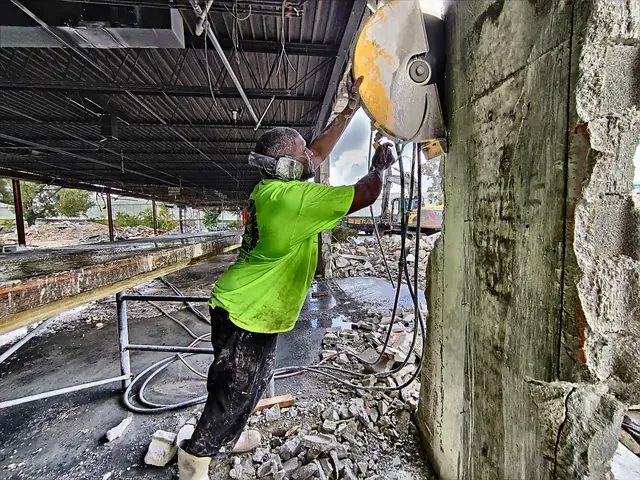
Cutting concrete that contains rebar is not a simple extension of plain concrete sawing. The presence of steel reinforcement fundamentally alters the mechanical interaction between the cutting tool and the substrate. When a diamond blade encounters rebar, the bond matrix holding the diamond grit is subjected to thermal shock, impact loading, and abrasive wear that differ significantly from cutting aggregate alone. For contractors operating in Miami—where coastal humidity, salt-laden air, and high water tables accelerate corrosion—the stakes are even higher. A cut that compromises the rebar’s protective concrete cover can initiate a corrosion cell that propagates under the slab, leading to spalling and structural failure within months. This post examines the engineering protocols, equipment specifications, and site-specific adjustments required to cut rebar-embedded concrete safely, efficiently, and in compliance with South Florida building codes.
Diamond Blade Bond Selection for Rebar Encounters
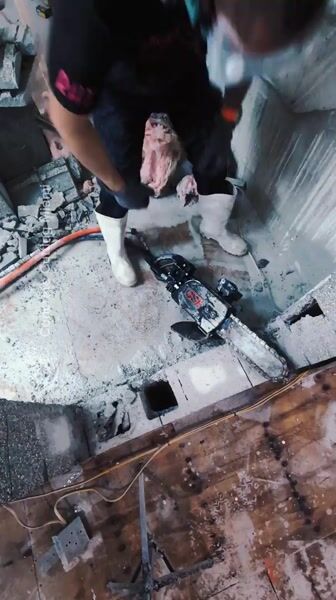
The primary variable in rebar-embedded concrete cutting is the bond hardness of the diamond blade. A blade designed for plain concrete uses a bond that wears at a rate matching the aggregate abrasiveness. When that same blade hits steel, the diamond grit fractures prematurely because the bond cannot release worn grit fast enough to expose fresh cutting edges. The result is a glazed blade surface, excessive heat generation, and dramatically reduced cut speed. For rebar-rich environments, a soft-bond blade is mandatory. Soft bonds release diamond grit more readily, ensuring that the cutting surface remains sharp even when transitioning between concrete and steel. For Miami projects involving parking garages, bridge decks, or foundation slabs—where rebar densities often exceed 150 pounds per cubic yard—a segmented blade with a soft nickel-bronze bond is the industry standard. The segment design should feature a high diamond concentration (typically 25–30% by volume) to withstand the intermittent impact loads imposed by rebar crossings.
Wet Cutting Versus Dry Cutting: A Thermodynamic Decision
The choice between wet and dry cutting methods becomes critical when rebar is present. Dry cutting generates frictional heat that can exceed 600°F at the blade–steel interface. At these temperatures, the rebar’s yield strength drops by approximately 40%, and the surrounding concrete undergoes micro-cracking due to differential thermal expansion. For structural slabs in Miami’s high-humidity climate, these micro-cracks become pathways for chloride ingress, accelerating rebar corrosion. Wet cutting, by contrast, maintains the blade temperature below 200°F, preserving the rebar’s mechanical properties and preventing heat-affected zone (HAZ) embrittlement. However, wet cutting introduces its own risks: water runoff must be contained to prevent hydrostatic pressure buildup under the slab, and the slurry generated contains cementitious fines that require proper disposal per Miami-Dade County environmental regulations. For foundation repair applications—where the cut line often passes directly over existing rebar—wet cutting with a continuous water feed at a flow rate of 4–6 gallons per minute is the recommended approach. A detailed comparison of wet versus dry cutting tradeoffs can be found in our analysis of concrete cutting moisture control strategies.
Equipment Configuration for Rebar-Rich Environments
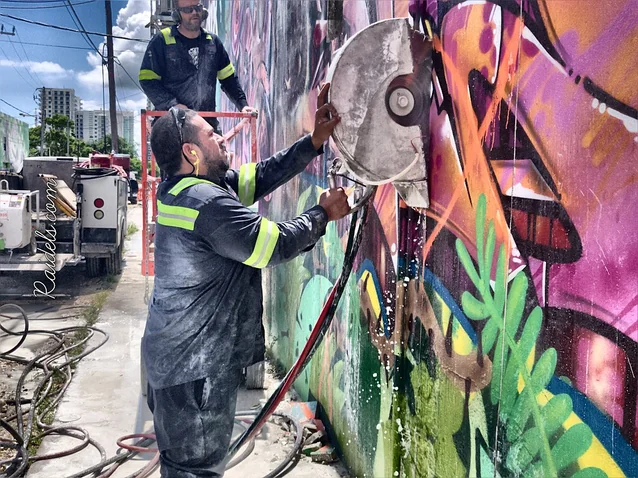
Walk-behind saws and hand-held cutters require different setup parameters when rebar is anticipated. For walk-behind saws equipped with blades between 24 and 36 inches in diameter, the depth of cut should be set to no more than 1.5 inches per pass when rebar is expected within the first 4 inches of the slab. This conservative pass depth prevents the blade from binding against a rebar cluster, which can cause kickback or segment loss. The hydraulic pressure on the saw motor should be dialed to 2,500–3,000 psi for rebar cutting, compared to 3,500–4,000 psi for plain concrete. Lower pressure reduces the torque spike when the blade contacts steel, protecting both the blade and the saw’s drive train. For hand-held cutters, a blade diameter of 12 to 14 inches with a 1-inch arbor is standard, but the operator must maintain a consistent feed rate of 2–3 inches per second. Accelerating through a rebar crossing creates a thermal spike that can anneal the diamond segments, reducing blade life by up to 60%. For deep cuts exceeding 6 inches, a two-stage approach is recommended: an initial pass at 2-inch depth to expose the rebar layout, followed by a second pass at full depth. This method allows the operator to map rebar locations and adjust the cut path to avoid critical structural reinforcement.
Structural Load Assessment Before Cutting
Cutting through rebar-embedded concrete without first assessing the structural load path is a liability risk that no Miami contractor can afford. Rebar in a slab is not randomly placed; it follows a engineered grid designed to carry tensile loads in specific directions. Cutting a primary tension bar in a cantilevered balcony slab or a post-tensioned tendon can lead to immediate collapse. Before any cut, a ground-penetrating radar (GPR) survey should be conducted to map rebar location, size, and depth. In Miami, where many structures were built before modern seismic codes, rebar spacing can be inconsistent, and lap splices may be located in unexpected areas. The GPR data should be overlaid on the structural drawings to identify critical reinforcement that must be preserved. If a cut must pass through a rebar cluster, the structural engineer should calculate the load redistribution and specify whether supplemental steel or carbon-fiber reinforcement is needed post-cut. For foundation repair projects, this assessment is especially critical, as the cut line often intersects the footing rebar cage. Our work on foundation repair concrete cutting routinely involves this level of pre-cut structural coordination.
Miami-Specific Compliance and Saltwater Corrosion Factors
Miami’s coastal environment imposes corrosion-protection requirements that go beyond standard concrete cutting practices. After a cut exposes rebar—either through direct contact or through spalling of the cover concrete—the exposed steel must be treated within 24 hours to prevent rust initiation. The Florida Building Code (FBC) Section 1903.1.1 requires that all exposed reinforcement be coated with a corrosion-inhibiting epoxy or a zinc-rich primer before patching. For cuts made within 1,000 feet of the coastline, the code mandates a minimum 1.5 inches of concrete cover over rebar, which means any cut that reduces cover below this threshold must be followed by a shotcrete or polymer-modified mortar overlay. Additionally, the cut surface itself must be sealed with a penetrating silane sealer to block chloride ion penetration. Contractors working on Miami Beach structures face even stricter requirements due to the combined effects of salt spray, tidal moisture, and airborne chlorides. A dedicated protocol for these conditions is detailed in our guide to concrete cutting on Miami Beach.
Post-Cut Rebar Exposure and Corrosion Mitigation
Once the cut is complete and the rebar is exposed, the window for corrosion protection is narrow. In Miami’s ambient humidity—often exceeding 80%—a bare rebar surface will develop visible rust within 4 to 6 hours. This rust layer, if left untreated, reduces the bond strength between the rebar and the repair mortar by up to 50%. The remediation protocol begins with abrasive blasting of the exposed rebar to achieve a near-white metal finish (SSPC-SP10 standard). Within one hour of blasting, a two-part epoxy primer should be applied at a dry film thickness of 8–12 mils. For rebar that will remain embedded in the repair patch, a cementitious anti-corrosion coating containing calcium nitrite or a migrating corrosion inhibitor (MCI) is recommended. The patch material itself should have a chloride diffusion coefficient below 1.0 × 10⁻¹² m²/s, which is achievable with a low-water-cement-ratio (0.40 or less) silica fume concrete. For cuts that are part of a larger demolition or renovation project, the exposed rebar ends should be capped with a heat-shrink tubing or a brush-applied mastic to prevent moisture ingress during the construction delay. These post-cut steps are often overlooked by general demolition crews, but they are the difference between a repair that lasts five years and one that lasts fifty.
Blade Wear Monitoring and Cost Optimization
Cutting rebar-embedded concrete accelerates blade wear by a factor of 3 to 5 compared to plain concrete cutting. For a typical Miami parking garage slab with #4 rebar at 12-inch spacing, a 36-inch segmented diamond blade will yield approximately 1,200 to 1,500 linear feet of cut before requiring replacement. The cost per linear foot, including blade amortization, water usage, and labor, ranges from $8 to $14 for rebar-embedded concrete, compared to $3 to $6 for plain concrete. To optimize blade life, operators should monitor the blade’s segment height loss after every 200 linear feet of cut. A loss of 1/8 inch per 100 feet is acceptable; anything higher indicates either a bond mismatch or excessive feed pressure. Real-time monitoring of amperage draw on the saw motor provides an indirect measure of blade sharpness. A 15% increase in amperage over baseline typically signals that the blade is dulling and should be dressed with a silicon carbide block to expose fresh diamond. For contractors managing multiple jobs across Miami-Dade and Broward counties, maintaining a blade inventory with three bond hardness grades—soft, medium, and hard—allows rapid adaptation to varying rebar densities and concrete aggregates. Coordination with experienced concrete drilling contractors ensures that the correct blade specification is deployed for each unique structural condition.
Safety Protocols for Rebar Penetration Cuts
The most dangerous scenario in rebar-embedded concrete cutting is the unexpected encounter with a post-tensioning tendon or a high-yield steel bar. Unlike standard rebar, which has a yield strength of 60,000 psi, post-tensioning strands are stressed to 270,000 psi and store enormous elastic energy. A blade that catches a post-tensioning strand can cause the strand to snap and whip with lethal force. Before any cut, the GPR survey must specifically identify post-tensioning tendons, which appear as continuous wave-like reflections in the radargram. If a tendon is detected within 3 inches of the cut path, the cut must be relocated or the tendon must be de-stressed by a licensed structural engineer. For standard rebar cuts, the operator should wear a full-face shield, cut-resistant gloves, and a Kevlar-lined apron. The saw’s blade guard must be equipped with a water-spray nozzle that directs flow to both sides of the blade to suppress the cloud of metallic dust generated when cutting steel. This dust contains iron oxide particles that are respirable and can cause lung irritation over prolonged exposure. A HEPA-filtered vacuum attachment is recommended for indoor cuts, particularly in occupied buildings where air quality standards apply. All crew members should be trained in the specific lockout-tagout procedures for hydraulic saws, as the high-pressure hoses can inject hydraulic fluid into the skin if a pinhole leak occurs during rebar cutting.
Quality Assurance and Inspection Criteria
After the cut is completed and the rebar is treated, the final quality assurance inspection should verify three parameters: cut tolerance, rebar clearance, and corrosion protection coverage. The cut tolerance for structural applications is typically ±1/8 inch over a 10-foot length, measured from the reference line. Rebar clearance—the distance between the cut face and the nearest remaining rebar—must be at least 1 inch to allow for proper patching and to prevent the repair material from bridging across the cut. Corrosion protection coverage is verified by a dry-film thickness gauge applied to the epoxy-coated rebar surface. Any holiday or pinhole in the coating must be spot-repaired with a brush-applied epoxy. For cuts that are part of a larger structural modification, the inspection report should include photographs of the exposed rebar, the coating application, and the final patched surface. This documentation is essential for passing Miami-Dade County building inspections, which have become increasingly stringent following the Surfside condominium collapse in 2021. Maintaining a digital archive of cut records, GPR scans, and material certifications is now standard practice for reputable concrete cutting firms operating in the South Florida market.