Structural Load Path Analysis for Indoor Pool Demolition
Indoor pool removal is not a simple excavation. The pool shell is often integrated into the home’s foundation and may support adjacent load-bearing walls. In Miami, where many homes sit on slab-on-grade or elevated post-tension slabs, cutting into a pool structure without understanding the load path can lead to catastrophic settlement. The first step is a full structural survey: identifying whether the pool walls are tied into the main foundation, whether there are steel reinforcing bars (rebar) that transfer loads, and whether the pool itself acts as a retaining wall for soil or groundwater. Without this analysis, even a clean cut can cause differential movement in the slab above.
We typically use ground-penetrating radar (GPR) to map rebar placement and post-tension cables before any cutting begins. This is non-negotiable for indoor pools in Miami Beach or Coral Gables, where older homes may have unmarked tendons. A single severed cable can release stored energy and cause a progressive collapse. The GPR scan also reveals the thickness of the pool shell—often 6 to 10 inches of reinforced concrete—and any underground plumbing that must be abandoned or rerouted. Once the structural map is complete, we design a cutting sequence that preserves temporary shoring and allows for staged removal.
Load-Bearing Wall Assessment for Indoor Pool Demolition
Many indoor pools are surrounded by walls that support the roof or upper floors. In split-level Miami homes, the pool may sit beneath a second-story addition. Removing the pool without first transferring those loads to temporary steel beams or hydraulic shoring is a recipe for disaster. We calculate the point loads at each column and beam bearing point, then install adjustable shoring towers rated for the full dead load plus live load during construction. The shoring must remain in place until the new slab or fill is poured and cured to 75% of design strength. This is where concrete cutting Miami Beach crews excel—they understand the nuances of coastal soil conditions and the need for deep footings when backfilling a void.
Diamond Wire Sawing in Confined Spaces
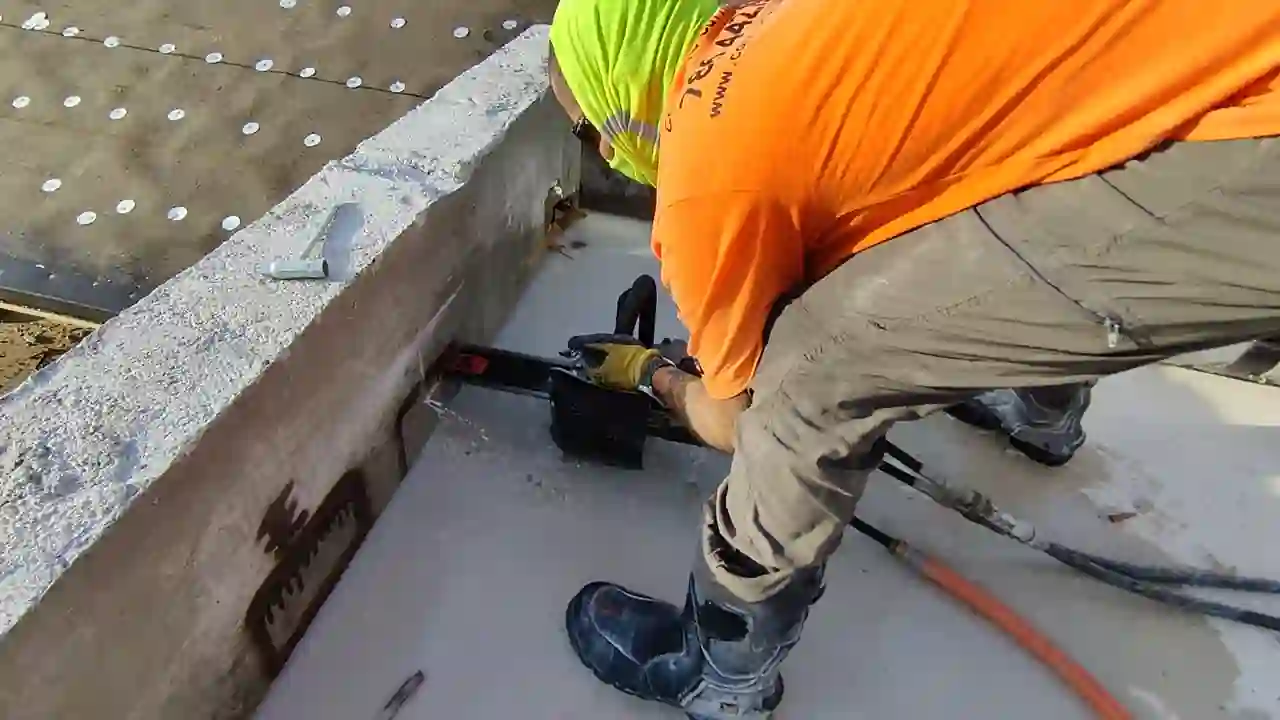
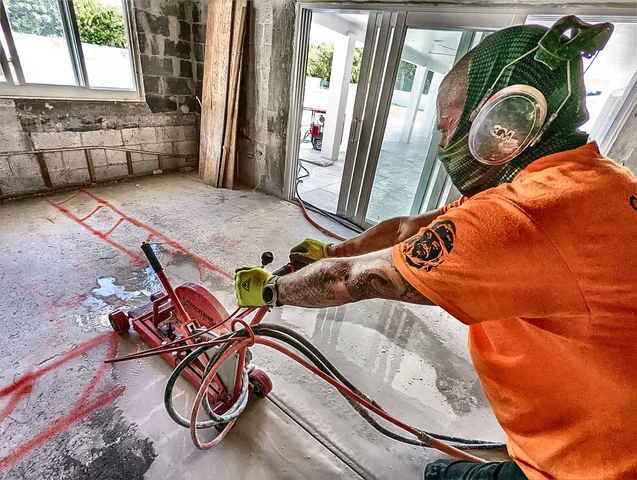
Indoor pools rarely have equipment access for large saws. We rely on diamond wire saws with remote hydraulic power packs that can be placed outside the house. The wire is threaded through small pilot holes drilled at the perimeter of the pool. This technique allows us to cut the pool into manageable sections—typically 2-foot by 2-foot blocks weighing 500 to 800 pounds each. The wire speed and tension must be adjusted for the specific aggregate in Miami’s limestone-based concrete. Too fast, and the beads wear prematurely; too slow, and the wire binds. We use a variable-frequency drive to maintain optimal cutting torque, especially when slicing through rebar clusters near the pool’s skimmer or return lines.
For pools with a deep end exceeding 8 feet, we often perform vertical cuts first, then horizontal cuts from the bottom up. This prevents the sections from toppling and damaging adjacent finishes. The cut pieces are lifted with a mini crane or a gantry system rated for the weight. In tight spaces, we use a hydraulic spreader to break the bond along the cut line before lifting. All cutting slurry is contained with vacuum systems to prevent moisture damage to interior flooring and drywall.
Miami-Dade County Permitting for Structural Pool Removal
Indoor pool removal in Miami-Dade requires a building permit and often a structural engineering letter. The county wants to see that the void will be filled with compacted granular fill or a new concrete slab, and that the foundation system remains intact. If the pool is located in a flood zone (AE or VE), the fill must be engineered to meet FEMA requirements for elevation and drainage. We coordinate with a licensed structural engineer who stamps the shoring plan and the backfill specifications. Failure to obtain a permit can result in stop-work orders, fines, and difficulty selling the property later. We always recommend pulling a permit even for “minor” pool removals—the liability is too high to skip it.
One common oversight is abandoning the pool’s plumbing. The county requires that all pipes be capped and grouted, not just cut and left. We use hydraulic cement to seal the open ends of the main drain, skimmer, and return lines. If the pool had a heater or pump pad, those must be removed and the electrical conduits terminated in a junction box. The driveway removal category on our site covers similar decommissioning steps, though indoor pools add the complexity of interior access.
Backfilling and Slab Restoration After Pool Removal
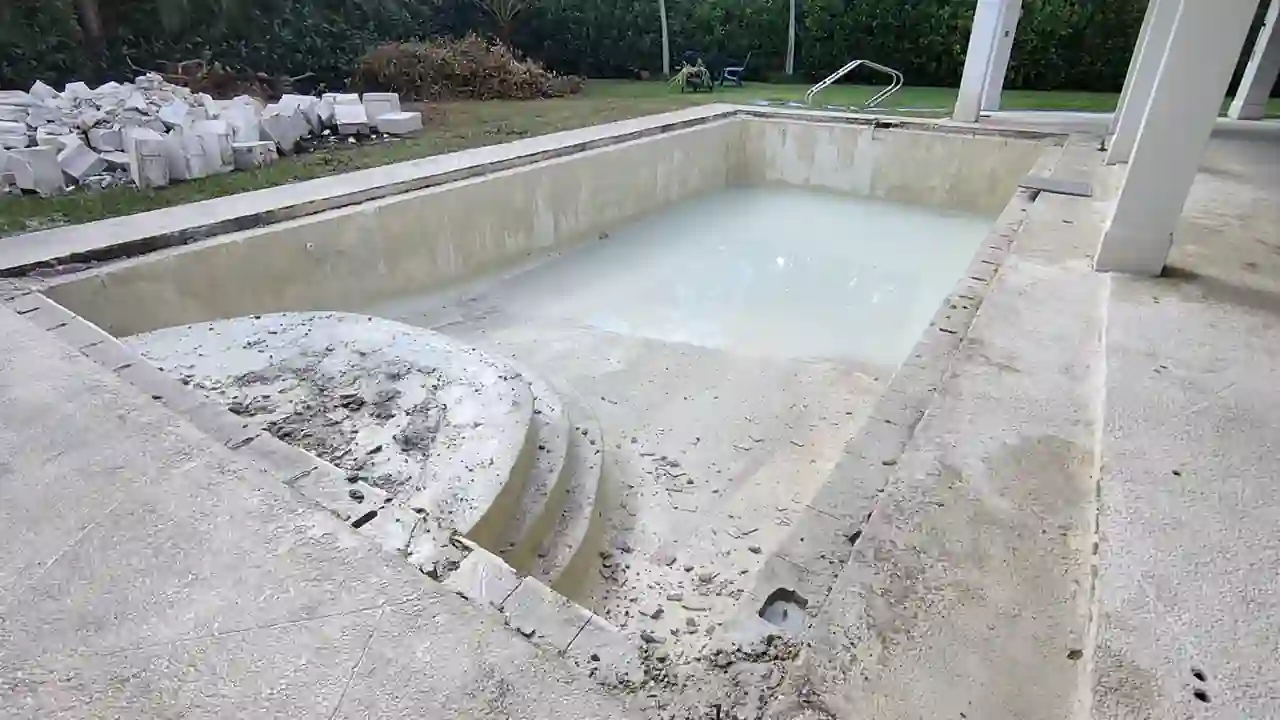
Once the pool shell is completely removed, the excavation must be backfilled in lifts. We use a flowable fill (controlled low-strength material) that self-levels and eliminates settlement risk. This is far superior to granular fill, which can compact unevenly under the interior slab. The flowable fill is poured to within 4 inches of the finished floor elevation, then a reinforced concrete slab is cast on top. The new slab must be doweled into the existing foundation to prevent differential movement. We drill and epoxy #4 rebar dowels at 12-inch centers along the perimeter of the cut.
For homes with radiant heating or in-floor hydronic systems, the new slab must accommodate those loops. We work with the mechanical contractor to embed the tubing before the pour. The concrete mix is specified with a low shrinkage admixture to minimize cracking, and we use a laser screed to achieve a flat tolerance of 1/8 inch in 10 feet. Curing is critical—wet curing for seven days with continuous misting or a curing compound that meets ASTM C309.
Cost-Efficiency Through Precision Cutting
Removing an indoor pool is expensive, but precision cutting reduces labor and disposal costs. By cutting the shell into uniform blocks, we can load them into a roll-off dumpster without needing a crane for oversized pieces. The diamond wire saw produces a clean kerf that minimizes dust and noise, which is important for occupied homes or condos. We also salvage the rebar for recycling, which offsets some of the disposal fees. For homeowners considering how to break concrete without a jackhammer, the answer is always a wire saw—it’s faster, quieter, and safer for interior work.
We also advise clients to combine pool removal with other concrete work, such as a new patio or driveway, to share mobilization costs. The DIY approach is strongly discouraged for indoor pools; the risks of structural failure, water intrusion, and permit violations are too high. Leave it to the professionals who understand Miami’s unique soil and code environment.
Safety Protocols for Interior Concrete Demolition
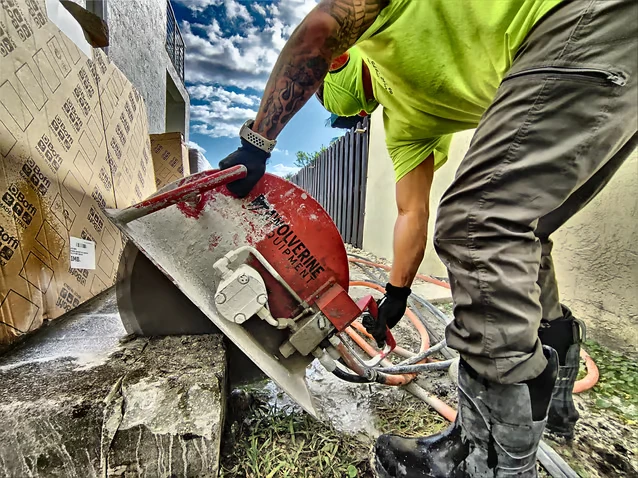
Indoor demolition requires constant air monitoring for silica dust and carbon monoxide from cutting equipment. We use HEPA-filtered negative air machines to maintain negative pressure in the work area. All workers wear full-face respirators with P100 filters and Tyvek suits. The cutting area is isolated with plastic sheeting and zippered entry doors. We also monitor for methane or hydrogen sulfide if the pool has been stagnant—Miami’s warm climate can produce anaerobic bacteria in trapped water.
Fire safety is another concern. Diamond wire saws generate heat, and the cutting slurry can create slippery conditions. We keep a fire extinguisher rated for Class A and C within 10 feet of the cutting station. All electrical tools are GFCI-protected, and we use ground-fault circuit interrupters on every extension cord. The slice and dice approach—making multiple small cuts instead of one large one—reduces the risk of uncontrolled slab collapse and allows for easier handling.
Post-Removal Inspection and Warranty
After the new slab is poured and cured, we perform a final inspection with the structural engineer. The slab is tested for moisture vapor emission (ASTM F1869) to ensure it’s ready for flooring. We also check for any settlement cracks that may appear in the first 30 days. Our work carries a two-year warranty against structural defects, which is standard for concrete cutting Miami Beach specialists. For indoor pool removals, we also provide a letter of compliance for the homeowner’s insurance company, documenting that the void was properly filled and the foundation restored.
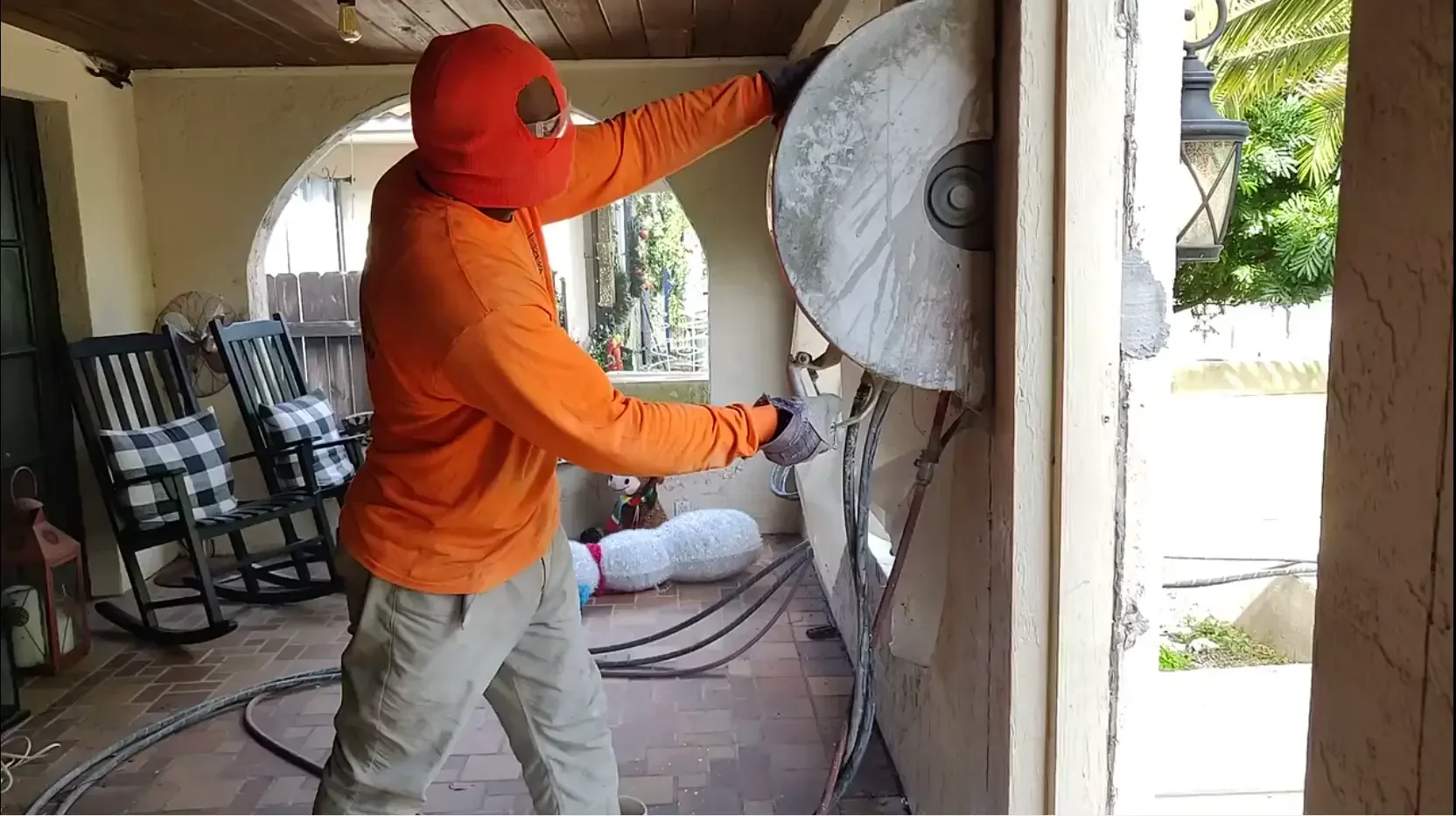
Indoor pool removal is a high-stakes operation that demands engineering rigor, precise cutting equipment, and local code knowledge. Whether you’re converting a basement pool into living space or removing an unused amenity, the process must be executed by a crew that understands load paths, soil conditions, and permit requirements. Concrete Cutting Miami, LLC brings decades of experience in structural demolition, from wire sawing to post-tension cable avoidance. Contact us for a site assessment and a detailed cutting plan tailored to your Miami property.