Diamond Blade Core Stability for Rebar-Laden Concrete in Humid Conditions
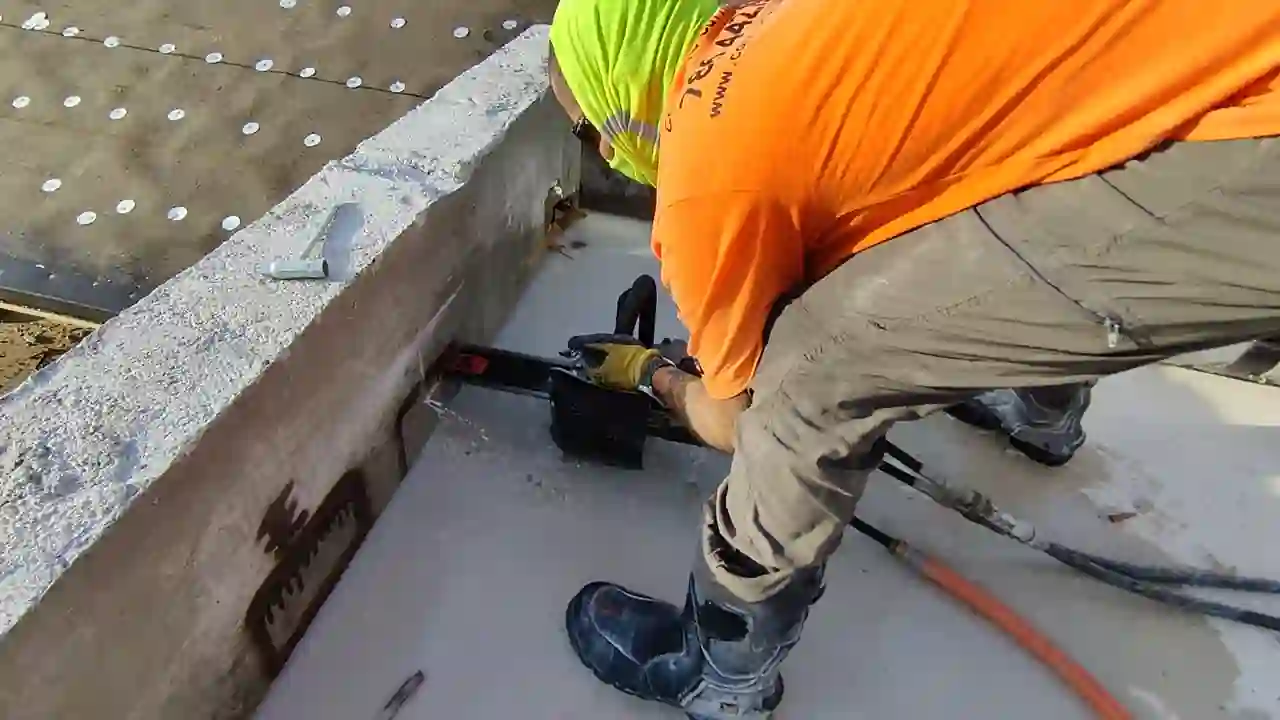
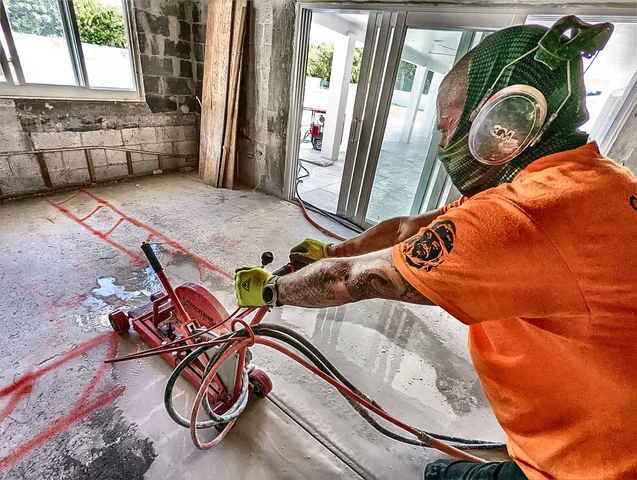
When cutting concrete with rebar, the interaction between the diamond matrix and steel reinforcement creates a unique thermal and mechanical stress profile. In Miami’s coastal environment, this challenge is compounded by chloride-induced corrosion that weakens the steel-concrete bond. A standard segmented blade will glaze over after encountering #5 rebar at 4-inch spacing, leading to catastrophic bond failure. The solution lies in blade core design: a hardened steel core with relief slots reduces heat buildup and prevents warping under the intermittent loading caused by rebar. For deep cuts exceeding 12 inches, we specify a laser-welded blade with a high bond concentration—20+ diamond mesh—to withstand the abrasive slurry generated by cutting through both aggregate and steel.
At Concrete Cutting Miami, we routinely encounter post-tensioned slabs where rebar is intertwined with tendons. The critical variable is blade speed: too slow and the diamond crystals fracture; too fast and the bond post pulls out. Our field data indicates that for rebar concentrations above 1.5% by volume, a blade speed of 2,800–3,200 RPM with a water flow of 4 gallons per minute yields optimal matrix erosion. This aligns with the Brickell Flatiron project specifications, where we achieved a 0.3% deviation from plumb on 18-inch cores through a heavily reinforced shear wall.
Hydraulic Power Units and Torque Management for Rebar Cutting
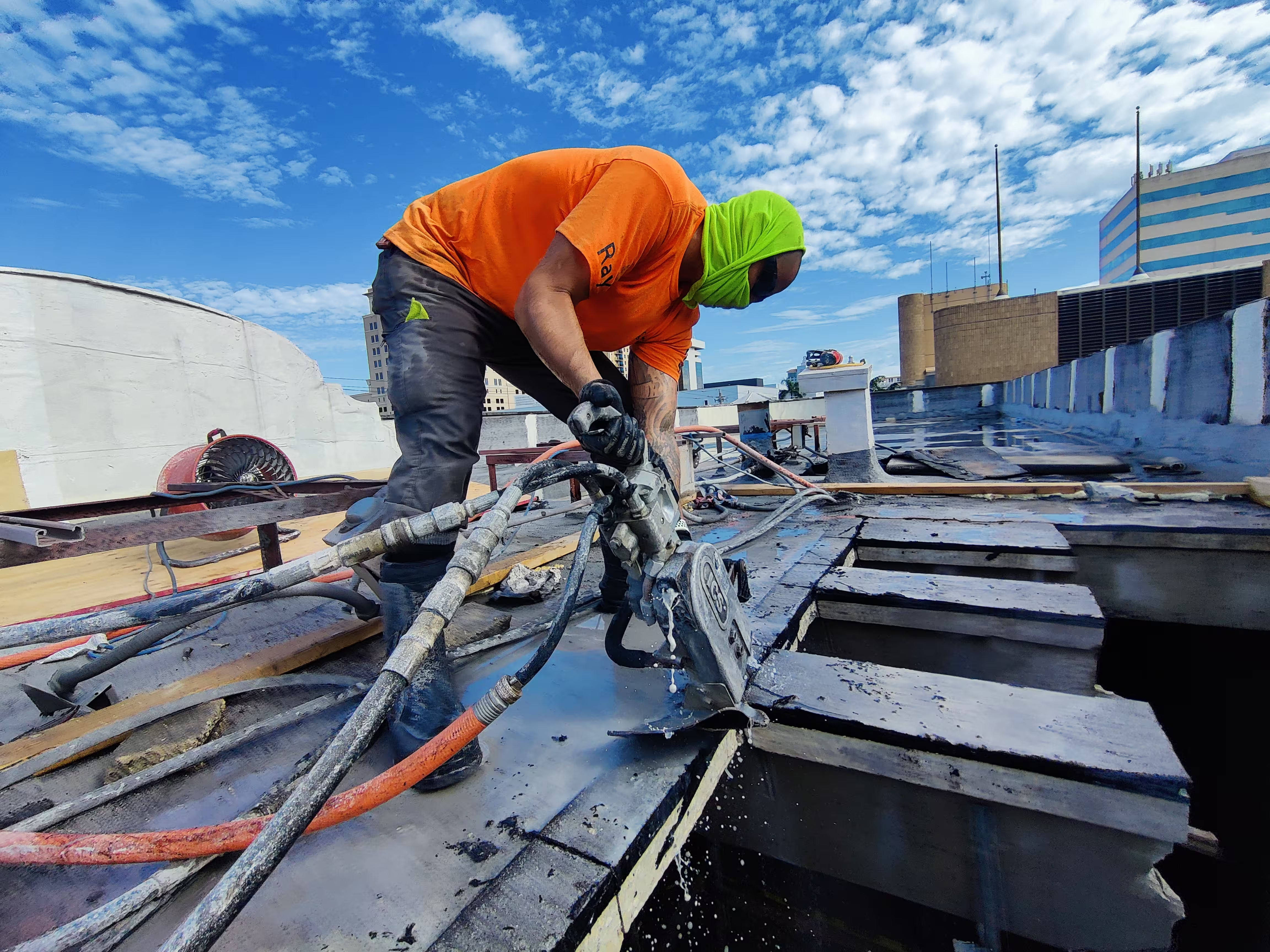
Conventional electric saws stall when the blade encounters a #8 rebar at full RPM. The hydraulic power unit (HPU) solves this by delivering constant torque across a variable flow range. For cutting concrete with rebar on a Miami high-rise, we deploy a 35-horsepower HPU with a 15-gallon reservoir to maintain oil temperature below 140°F. The key parameter is pressure compensation: when the blade hits a rebar knot, the system drops flow to 5 GPM while boosting pressure to 2,500 PSI, allowing the diamond rim to abrade through the steel without kickback.
Wire Saw Tensioning for Continuous Rebar Chains
When the demolition scope requires cutting through columns with continuous spiral rebar, a wire saw becomes the only viable option. The tension must be maintained at 1,200–1,500 kg to prevent the diamond beads from bouncing off the rebar. In our demolition techniques for the Miami Marine Stadium restoration, we used a 45mm wire with 8 beads per meter to cut through 2-inch aggregate and #11 rebar simultaneously. The water coolant must be injected directly into the cut at 8 GPM to prevent thermal shock to the beads—failure to do this results in bead loss within 10 minutes of contact with rebar.
One of the most overlooked aspects is the control joints in slabs that contain rebar continuity. Even a partial depth cut through a control joint can propagate a crack through the entire slab if the rebar is not fully severed. Our method uses a stitch drilling pattern with a 3-inch overlap to ensure that every rebar intersection is cut. This was critical in the Brickell Flatiron project, where proper control joint execution prevented seismic stress concentrations.
Water Cooling and Slurry Management in Coastal Rebar Cutting
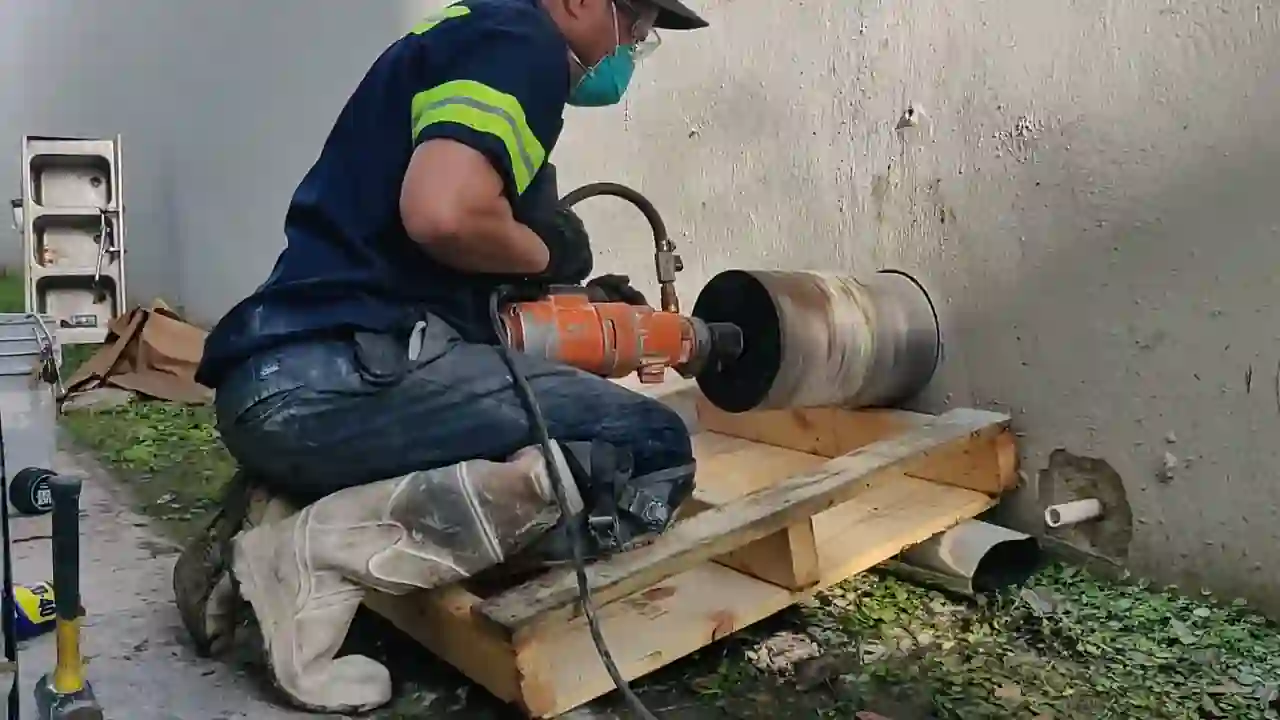
Water plays a dual role in cutting concrete with rebar: it cools the blade core and flushes abrasive grit from the cut. In Miami, where the water table is high, slurry management becomes a regulatory issue. We use a closed-loop vacuum system that recovers 95% of the slurry, preventing silica and metal fines from entering the storm drains. The pH of the water must be maintained between 6.5 and 8.5 to avoid accelerating rebar corrosion post-cut. For outdoor cuts exposed to sea spray, we add a corrosion inhibitor—usually 2% sodium nitrite—to the water stream.
Blade Segment Wear Patterns Indicating Rebar Density
Experienced operators can predict rebar location by reading blade wear. When the outer segments show a concave profile, the rebar density is uniform; a jagged edge indicates random rebar placement typical of Miami’s older structures. After cutting through a 24-inch thick foundation wall containing #7 rebar at 6-inch centers, we observed a 40% faster wear rate compared to unreinforced concrete. This data informs our pricing model for how to cut concrete with rebar effectively in this market.
In a recent project for the Miami-Dade Water and Sewer Department, we cut into a 36-inch RCP pipe reinforced with two layers of welded wire mesh. The wire mesh caused rapid segment loss because the mesh geometry pulls the blade sideways. We switched to a narrower kerf blade (0.125 inches) with a hard bond, allowing the diamonds to cut through the mesh cleanly. This approach is outlined in our summer heat survival guide because heat management becomes extreme when cutting through multiple layers of steel.
Structural Integrity Verification Post-Rebar Cut
Cutting concrete with rebar is not just about removal; it’s about ensuring the remaining structure maintains load capacity. We use a ground-penetrating radar (GPR) scan before any cut to map rebar layout, but after cutting, we verify with a ferroscan to confirm no rebar was left partially embedded. A half-cut rebar creates a stress raiser that can cause brittle fracture under cyclic loading—critical in Miami’s hurricane wind environment. For load-bearing walls, we require a 2-inch minimum clear cover over cut rebar ends, with epoxy injection to restore bond integrity.
The cost difference between cutting unreinforced concrete and cutting concrete with rebar is approximately 60% more due to blade wear and reduced cutting speed. However, our concrete demolition quoting algorithm accounts for rebar density using a volumetric formula based on GPR data. In the Brickell area, where rebar congestion exceeds 3% by volume, we recommend a wire saw with a 48-inch cutting frame to maintain production rates above 5 square feet per hour.
For contractors looking to optimize their own operations, the single most important upgrade is a variable frequency drive (VFD) on the HPU. This allows the operator to dial in the exact RPM for the rebar grade encountered—ASTM A615 Grade 60 requires slower cutting than Grade 40 because of higher tensile strength. Pairing a VFD with a diamond blade rated for reinforced concrete (look for the “RC” marking) reduces downtime by 25% according to our Miami project logs.