Why Thick Slab Demolition Punishes the Wrong Equipment Instantly
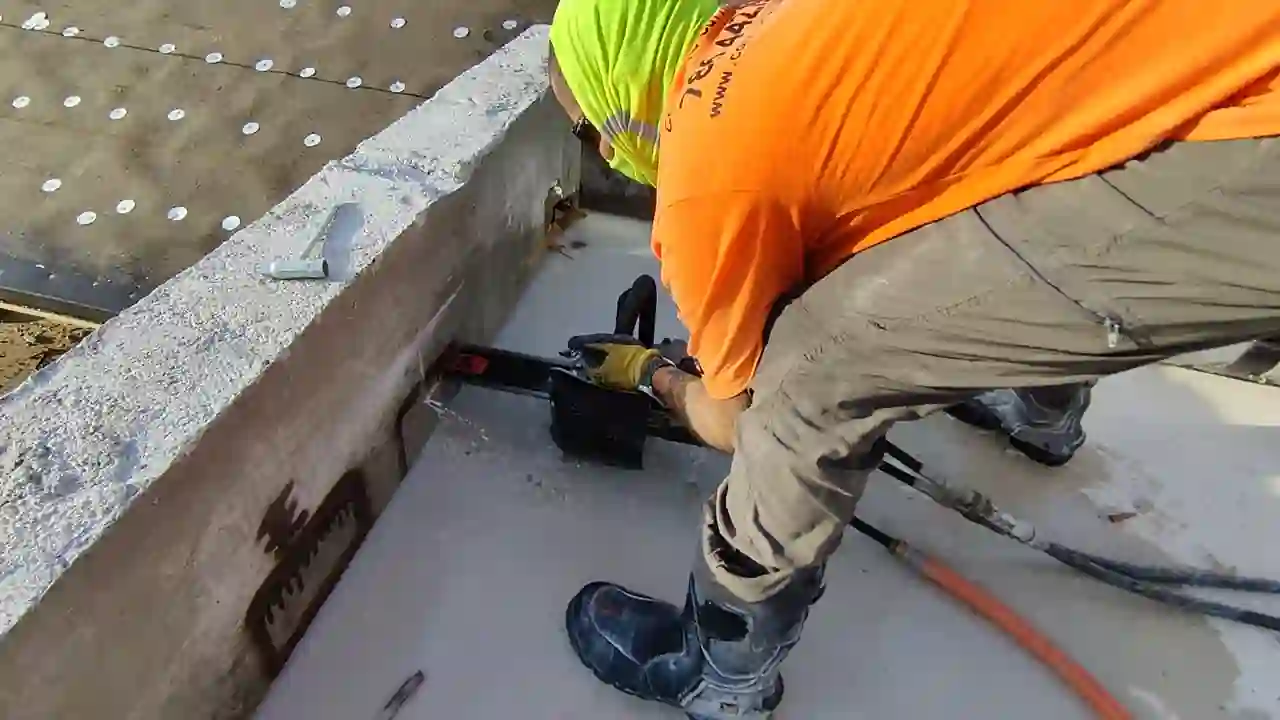
Walk onto any thick-slab demolition site in Miami without a firm grasp of your equipment specifications and blade requirements, and you will pay for it — in burned segments, stalled motors, and slabs that refuse to move. Thick concrete, typically classified as anything exceeding six inches of depth, presents a fundamentally different mechanical challenge than standard four-inch flatwork. The aggregate size increases, the PSI ratings climb, and in South Florida, rebar schedules inside structural slabs get dense fast. Every one of those variables directly dictates which saw platform you deploy, what diamond tooling you mount to it, and how you configure your blade for the specific material you are attacking. Getting this wrong is not a minor inconvenience — it is a job-stopper.
Saw Platform Selection Based on Slab Depth and PSI Rating
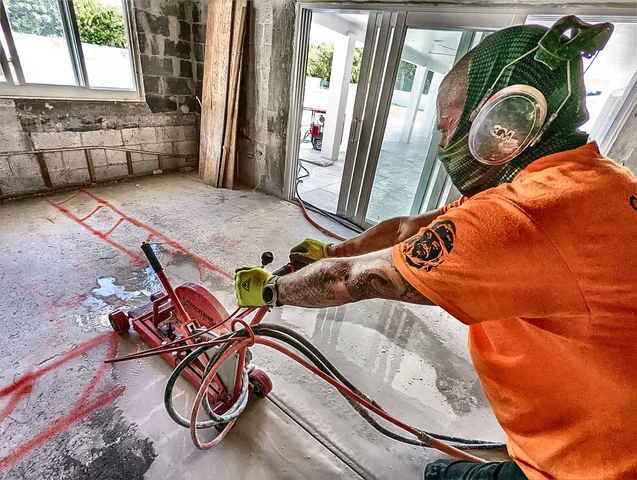
The first decision is always the saw platform, and it must be matched to the slab’s compressive strength and depth before a single blade is ordered. For slabs in the six-to-ten-inch range with compressive strengths between 3,000 and 5,000 PSI — the most common range for Miami residential and commercial flatwork — a self-propelled flat saw with a minimum 25-horsepower gasoline engine or a 20-horsepower hydraulic drive is the baseline. Anything underpowered will bog down mid-cut, generate excessive heat at the blade collar, and cause premature segment loss.
For slabs exceeding ten inches — parking structures, industrial floors, bridge approaches — you are moving into the territory of large-diameter flat saws running 65 to 100 horsepower, or wall saws and wire saws for vertical and confined applications. The Husqvarna FS 7000 D and the Hilti DSH 900-X represent the upper tier of flat-saw capability for heavy demolition. Hydraulic flat saws in this class deliver constant torque regardless of blade load, which is critical when cutting through aggregate-heavy mixes or hitting unexpected rebar clusters. For a deeper look at how rebar density affects your cutting approach, this breakdown on cutting rebar in Miami without wrecking your blades covers the tooling and technique adjustments that matter most.
Hydraulic vs. Electric vs. Gasoline Drive Systems for Demolition Cuts
Drive system selection is not merely a fuel preference — it is a torque management decision. Gasoline saws deliver high peak horsepower but suffer torque drop under load, which is exactly what happens when a blade enters hard aggregate or rebar. Electric saws with variable frequency drives maintain consistent RPM under load but are limited by power availability on demolition sites. Hydraulic systems are the professional standard for heavy slab work because they deliver flat torque curves across the entire RPM range, meaning the blade maintains cutting speed even when the material gets hard. If you are breaking up a thick post-tensioned slab or a reinforced industrial floor, hydraulic drive is not a luxury — it is a requirement.
Diamond Blade Specifications That Actually Match Thick Concrete Conditions
The blade is where most operators make their most expensive mistakes. Diamond tooling for thick concrete demolition is not a commodity purchase, and selecting a blade based on price alone will cost you more in replacement blades, downtime, and motor stress than any savings justify. The key specifications to evaluate are segment height, bond hardness, diamond concentration, and blade diameter relative to your saw’s arbor and RPM rating.
Segment Height and Its Direct Impact on Slab Penetration Depth
Segment height determines how many re-sharpenings a blade can sustain before the steel core is exposed, but it also affects heat management during deep cuts. For slabs six to twelve inches thick, specify segments with a minimum height of 15mm, with 18mm to 20mm segments preferred for production cutting in abrasive or hard aggregate mixes. Taller segments provide more diamond exposure per pass and allow the blade to self-sharpen more aggressively in abrasive material. In Miami’s mix of oolite limestone aggregate and hard silica sand, segment height directly correlates to how long a blade stays productive before glazing over.
Bond Hardness Matched to Concrete Hardness — The Inverse Relationship
This is the specification that confuses even experienced operators: bond hardness must be inversely matched to concrete hardness. Hard concrete requires a soft bond so that worn diamond crystals release quickly, exposing fresh cutting diamonds. Soft or abrasive concrete requires a hard bond to prevent premature segment wear. For thick structural slabs in the 4,000 to 6,000 PSI range — typical of Miami commercial construction — a medium-soft bond (rated approximately 30 to 50 on manufacturer hardness scales) delivers the best balance of cutting speed and segment life. Going too hard on a high-PSI slab will glaze the blade within minutes. The full technical guide on diamond tooling and blade selection secrets covers bond matrix chemistry in detail for anyone who needs to go deeper on this specification.
Diamond Concentration Grades for Reinforced vs. Unreinforced Slabs
Diamond concentration — expressed as the weight of diamonds per unit volume of segment matrix — ranges from low (25 to 35 concentration) to high (50 to 75 concentration). For unreinforced thick slabs, higher concentration blades cut faster and last longer in hard aggregate. For heavily reinforced slabs, moderate concentration blades with a softer bond outperform high-concentration blades because the rebar contact repeatedly resharpens the segment, and high-concentration blades in that condition tend to overheat and glaze. Specify a concentration grade of 40 to 50 for general reinforced thick-slab demolition work in Miami conditions.
Blade Diameter, RPM, and Peripheral Speed Calculations for Deep Cuts
Blade diameter must be matched to both the required cut depth and the saw’s rated RPM to achieve correct peripheral speed. The industry standard peripheral speed for diamond blades in concrete is 4,500 to 5,500 surface feet per minute (SFPM). A 20-inch blade running at 1,200 RPM produces approximately 6,280 SFPM — too fast for most concrete applications and a recipe for segment overheating. That same 20-inch blade at 900 RPM produces 4,712 SFPM, which sits in the optimal range. Always calculate peripheral speed before mounting a large-diameter blade on a saw, especially when stepping up blade size for deeper cuts into thick slabs. The formula is straightforward: SFPM equals blade diameter in inches multiplied by 0.2618 multiplied by RPM.
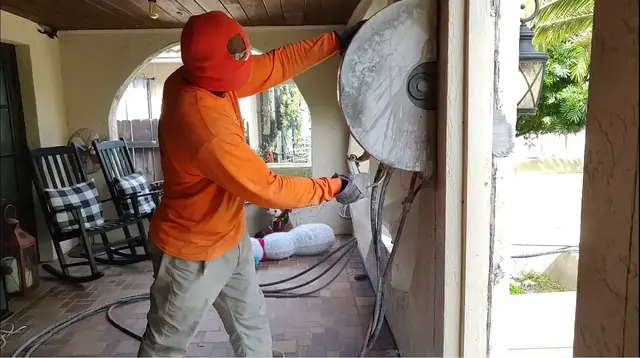
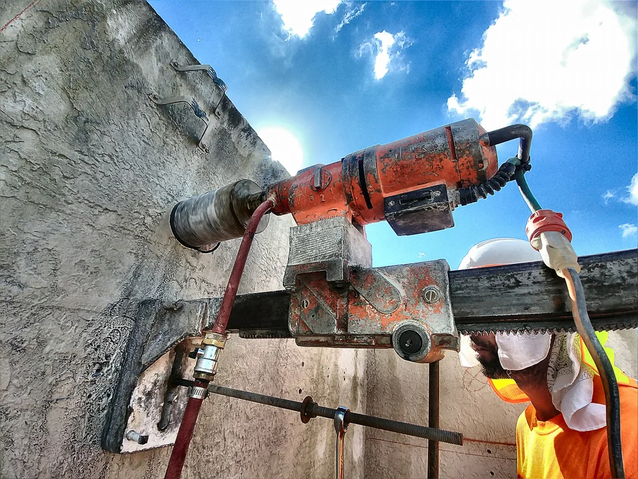
For thick slabs requiring cuts beyond 13 inches of depth, a single-pass flat saw approach becomes impractical. The professional method is a two-pass system: a flat saw cuts to maximum blade depth from the top surface, followed by a track-mounted wall saw completing the cut from the side or a second opposing pass. Wire saws are the preferred solution for full-thickness cuts through slabs exceeding 18 inches, as they eliminate the depth limitation entirely.
Wet vs. Dry Cutting Protocols for Thick Slab Demolition
Wet cutting is non-negotiable for thick concrete demolition in most professional applications. The water serves three functions simultaneously: it cools the blade and prevents thermal segment damage, it suppresses silica dust to OSHA Table 1 compliance levels, and it flushes the cut kerf of slurry that would otherwise pack the gullets and stall the blade. For thick slabs, water flow rates must be increased proportionally with cut depth — a minimum of 1.5 gallons per minute for cuts up to eight inches, scaling to 3 gallons per minute for cuts exceeding twelve inches. Insufficient water flow on a deep cut is one of the fastest ways to destroy a premium diamond blade.
Dry cutting with turbo-segment blades is acceptable for shallow scoring passes — typically the first two inches of depth used to establish a cut line before switching to wet cutting for full depth penetration. Turbo segments handle the heat of dry cutting better than standard segmented blades due to their continuous rim design, which distributes heat more evenly. Never dry-cut beyond four inches of depth in thick concrete, regardless of blade rating.
Breaking After Cutting — Hydraulic Splitters vs. Pneumatic Breakers
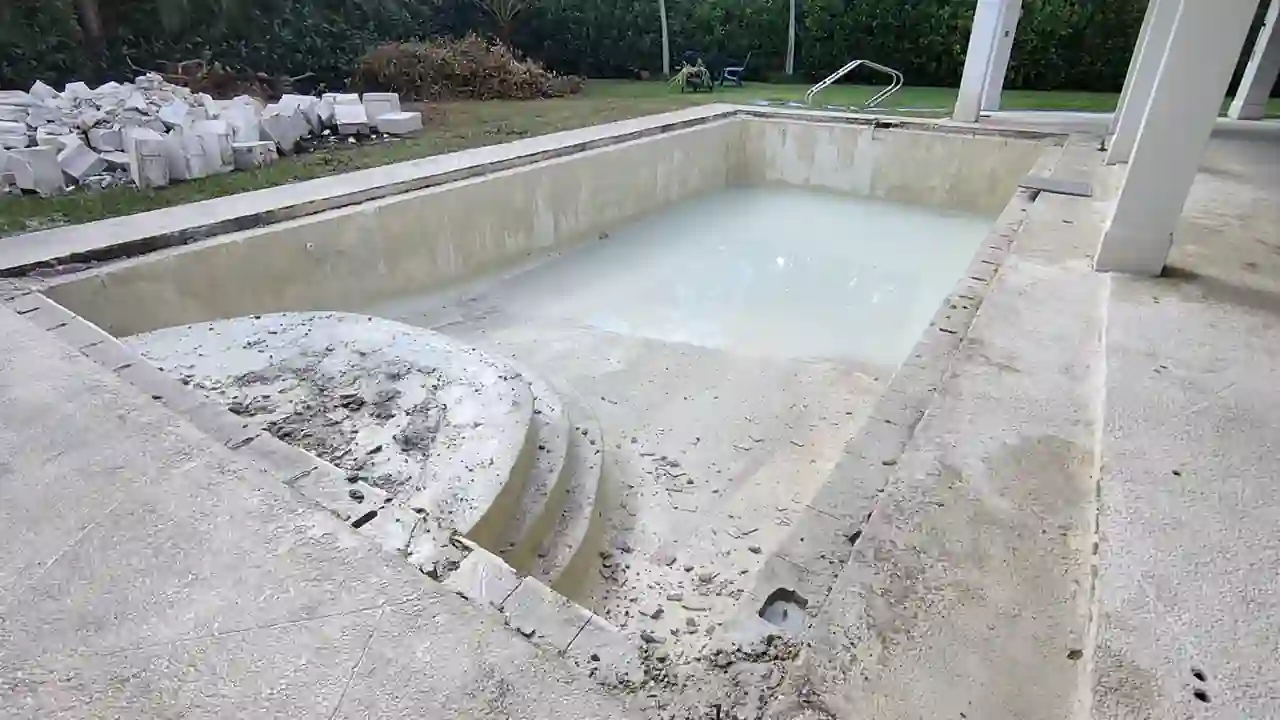
Once the slab is fully scored or cut into manageable sections, the breaking method must be matched to the section size and the need to preserve surrounding material. Pneumatic breakers (jackhammers) in the 60 to 90-pound class are the standard for general thick-slab demolition, but they transmit significant vibration and can crack adjacent sections if used carelessly near cut lines. Hydraulic concrete splitters — tools that insert into drilled holes and expand hydraulically to crack the slab along a controlled line — are the preferred method when precision matters. They generate zero vibration, produce predictable crack propagation, and are far safer near existing structures or post-tensioned cable zones. For DIY-adjacent projects where controlled demolition matters, this Miami patio demolition guide walks through breaking methods in practical terms.
Building a Tooling Spec Sheet Before Every Thick Slab Job
Every thick concrete demolition project should begin with a written tooling specification sheet that documents concrete PSI, slab depth, aggregate type, rebar schedule, saw platform, blade diameter, segment height, bond hardness, diamond concentration, and target peripheral speed. This is not bureaucratic overhead — it is how professional crews eliminate guesswork, reduce blade consumption, and protect expensive equipment from misapplication. Miami’s construction landscape runs the full spectrum from soft oolite limestone to hard silica aggregate concrete, and a blade spec that works perfectly on one job can fail in twenty minutes on the next if the variables are not re-evaluated. For location-specific guidance on concrete cutting projects across Miami-Dade, browse the full Miami project resource library or explore the concrete demolition guide tag archive for application-specific technical posts. The investment in proper specification upfront pays back every time in blade life, equipment longevity, and jobs that finish on schedule.