Why Concrete Dust Is One of the Most Dangerous Hazards on Any Active Job Site
Every time a diamond blade contacts a concrete slab, a grinder skims a surface, or a core drill bores through a wall, the air fills with particulate matter that most workers can’t see, can’t smell, and can’t feel — until it’s far too late. Concrete dust, specifically the respirable crystalline silica (RCS) it carries, is not a background nuisance. It is a confirmed human carcinogen classified by OSHA, NIOSH, and the International Agency for Research on Cancer. Prolonged inhalation causes silicosis, an irreversible and progressive scarring of lung tissue, as well as lung cancer, chronic obstructive pulmonary disease, and kidney disease. The insidious nature of this hazard is that symptoms don’t emerge for years — sometimes decades — after initial exposure, meaning a worker who feels perfectly fine today may be carrying a death sentence earned on a job site five years ago.
At Concrete Cutting Miami, LLC, we operate in one of the most active construction markets in the country. Every day our crews are on commercial sites, residential renovations, and infrastructure projects where concrete work generates significant dust loads. Our protocols aren’t theoretical — they’re field-tested, OSHA-audited, and built around keeping skilled tradespeople alive and healthy for full careers. This post breaks down the technical and regulatory framework every concrete contractor operating in Florida — and anywhere else — needs to understand and implement immediately.
The OSHA Silica Standard That Every Concrete Crew Must Know by Number
In 2016, OSHA published 29 CFR 1926.1153, the Respirable Crystalline Silica Standard for Construction. This is the governing federal regulation for all concrete cutting, grinding, drilling, and demolition activities. The standard established a new Permissible Exposure Limit (PEL) of 50 micrograms of respirable crystalline silica per cubic meter of air (50 µg/m³) as an 8-hour time-weighted average. It also established an Action Level of 25 µg/m³, at which point medical surveillance and enhanced controls must begin.
The most operationally significant component of the standard is Table 1, which specifies engineering and work practice controls for specific construction tasks. If a contractor follows Table 1 specifications exactly — including correct equipment, water delivery rates, and vacuum specifications — they are presumed to be in compliance without needing air monitoring. If they deviate from Table 1, they must conduct objective air monitoring and demonstrate exposure is below the PEL. For most field operations, Table 1 compliance is the practical path forward.
Table 1 Requirements for Common Concrete Cutting Tasks
- Handheld and stand-mounted angle grinders used on mortar or concrete: Requires a shroud or guard with a HEPA-filtered vacuum system achieving 25 CFM or greater airflow at the shroud inlet.
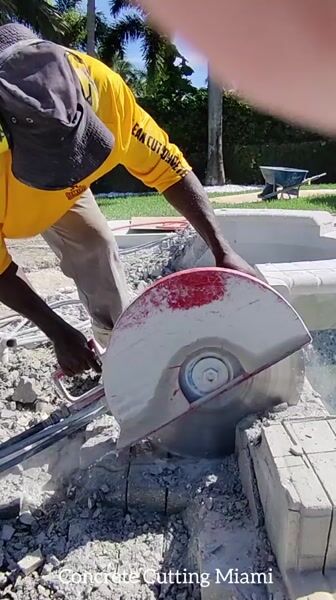
- Walk-behind saws cutting concrete or masonry: Requires either integrated water delivery providing continuous water to the blade, or a blade-mounted shroud connected to a HEPA vacuum. Wet cutting must keep the blade and cut zone visibly wet at all times.
- Handheld power saws (not walk-behind) used outdoors: Requires a commercially available water delivery system providing continuous water to the blade, or a HEPA vacuum with blade guard shroud.
- Core drilling into concrete: Requires water delivery to the drill bit or a vacuum system with a drill shroud and HEPA filtration.
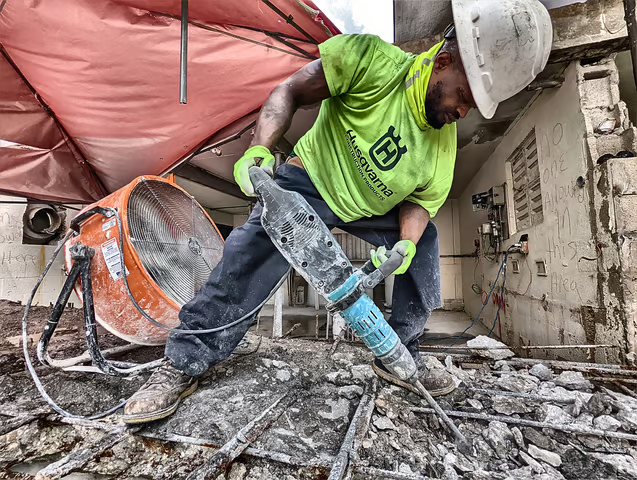
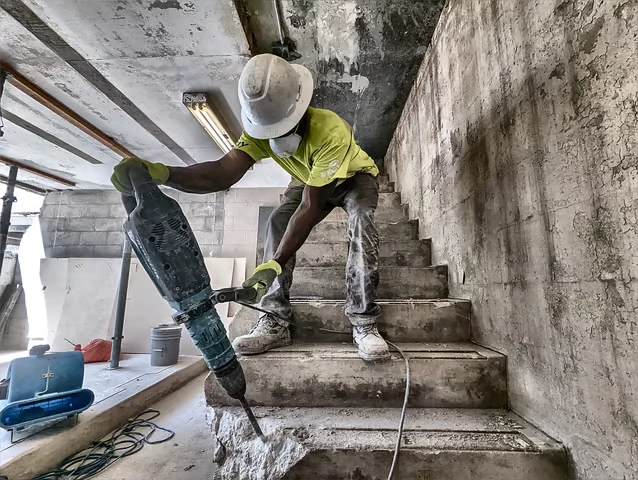
- Jackhammering and chipping concrete: Requires water delivery to the tool or a shroud with HEPA vacuum. Wet methods must keep the work area visibly moist.
- Demolition of concrete walls or structures: Requires water delivery systems to control dust at the point of impact.
Understanding slab thickness requirements and material composition before cutting operations begin also informs dust generation rates — thicker, denser slabs with higher silica content require more aggressive dust suppression from the first cut.
Engineering Controls That Actually Stop Respirable Silica at the Source
The hierarchy of controls — elimination, substitution, engineering controls, administrative controls, PPE — applies directly to silica dust management on concrete job sites. Engineering controls are the backbone of any compliant dust management program because they physically prevent dust from becoming airborne or capture it before workers inhale it.
Integrated Water Suppression Systems for Wet Cutting Operations
Wet cutting is the most widely used engineering control in concrete cutting operations, and when done correctly, it is highly effective. The key word is “correctly.” A trickle of water from a garden hose does not constitute a compliant wet cutting system. OSHA requires continuous water delivery that keeps the blade and cutting zone visibly wet throughout the entire operation. This typically means a pressurized water supply delivering between 0.5 and 1.5 gallons per minute directly to the blade through a dedicated water ring or blade-mounted delivery nozzle.
Slurry management is the often-overlooked companion requirement. Wet cutting creates silica-laden slurry that, once dried, becomes a secondary dust hazard. Slurry must be collected, contained, and disposed of properly — not allowed to dry on the slab surface where foot traffic and air movement will re-aerosolize it. Learn more about how to cut concrete with the right equipment configurations for both dust and slurry control.
HEPA Vacuum Systems and Shroud Engineering for Dry Operations
When wet cutting is impractical — interior electrical work areas, below-grade applications with drainage restrictions, or precision cutting near finished surfaces — HEPA-filtered vacuum systems become the primary engineering control. Not all vacuums are created equal. OSHA and Table 1 require HEPA filtration rated at 99.97% efficiency at 0.3 microns. Standard shop vacs do not meet this standard and will actually re-aerosolize fine silica particles through exhaust discharge.
The vacuum system must be matched to the tool shroud. Shroud coverage must enclose the cutting zone as completely as geometry allows, and the vacuum must maintain adequate airflow — typically 25 CFM minimum at the shroud — to capture dust before it escapes into the breathing zone. Shrouds must be inspected before each use for cracks, gaps, and wear that would compromise capture efficiency.
Respiratory Protection as the Last Line of Defense, Not the First
A critical mistake made by contractors who haven’t internalized the hierarchy of controls is treating respirators as the primary — or only — dust control measure. Respirators are PPE. They are the last line of defense, required when engineering and administrative controls cannot reduce exposure below the Action Level or PEL. They are never a substitute for proper equipment and wet or vacuum suppression systems.
When respirators are required, the minimum acceptable protection for silica dust is a half-face air-purifying respirator with N95 or P100 filters. For tasks generating higher concentrations, or for workers who cannot achieve a proper seal with a half-face unit, a powered air-purifying respirator (PAPR) with HEPA cartridges may be required. All respirators used in OSHA-regulated silica environments must be part of a written Respiratory Protection Program per 29 CFR 1910.134, which includes fit testing, medical evaluation, training, and maintenance protocols.
Fit Testing, Facial Hair, and Seal Integrity Requirements
- Quantitative fit testing must be performed before initial use and annually thereafter.
- Facial hair — even one day of stubble — in the seal area of a tight-fitting respirator voids OSHA compliance. No exceptions.
- Workers must perform a user seal check (positive and negative pressure) before each donning.
- Damaged, soiled, or compromised respirators must be replaced immediately — not at the end of the shift.
For operations involving rebar cutting adjacent to concrete demolition work, the dust hazard compounds with metal fume and spark exposure. Review our detailed protocols for how to cut rebar safely on any job site to understand how multi-hazard environments require layered protection strategies.
Administrative Controls and Written Exposure Control Plans
OSHA 29 CFR 1926.1153 requires any employer whose workers may be exposed to respirable crystalline silica at or above the Action Level for 30 or more days per year to establish and implement a written Exposure Control Plan (ECP). This is not optional paperwork — it is a legal requirement with specific content mandates.
A compliant ECP must identify all tasks that involve silica exposure, specify the engineering controls, work practices, and respiratory protection used for each task, identify the person responsible for implementing the plan, and describe the housekeeping measures in place to minimize silica exposure from dust accumulation. The plan must be reviewed and updated at least annually and whenever new tasks or equipment are introduced.
Administrative controls that reduce exposure time and concentration include job rotation to limit individual worker exposure duration, scheduling high-dust operations during unoccupied periods, establishing regulated areas with restricted access during active cutting, and implementing wet sweeping or HEPA vacuuming protocols — never dry sweeping or compressed air blowdown, both of which are explicitly prohibited by OSHA for silica-contaminated surfaces.
Housekeeping Protocols That Prevent Secondary Silica Exposure
- Vacuum all concrete dust from surfaces using HEPA-equipped equipment before any air movement or foot traffic disturbs settled material.
- Never use compressed air to clean clothing, equipment, or surfaces in silica work areas.
- Wet mop or wet wipe surfaces where vacuuming is impractical, using sufficient water to keep material damp during cleanup.
- Dispose of silica-contaminated waste in sealed, labeled containers per local environmental regulations.
- Establish decontamination areas at site exits to prevent tracking silica dust into clean zones or vehicles.
Medical Surveillance Requirements Under the Federal Silica Standard
Workers exposed to respirable crystalline silica at or above the Action Level for 30 or more days per year must be enrolled in a medical surveillance program. Initial medical exams must be offered within 30 days of initial assignment, and follow-up exams must be offered every three years thereafter. Each exam must include a medical and work history, a physical exam with emphasis on the respiratory system, a chest X-ray reviewed by a NIOSH B-reader or board-certified radiologist, a pulmonary function test, and any additional tests deemed appropriate by the examining physician.
Employers must provide the examining physician with a description of the worker’s duties, the worker’s exposure levels, and information on PPE used. The physician must provide a written medical opinion to both the employer and the employee. Employers must keep medical records for the duration of employment plus 30 years — a reflection of the long latency period between silica exposure and disease manifestation.
Structural Opening Work and Elevated Dust Generation Scenarios
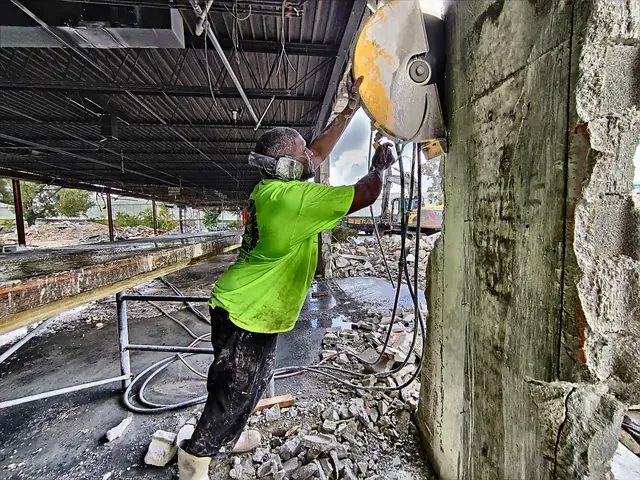
Certain concrete cutting operations generate dramatically higher dust loads than standard slab cutting. Wall cutting for structural openings — door frames, window enlargements, utility penetrations — creates enclosed-space dust accumulation that can reach dangerous concentrations within minutes. Projects involving enlarging existing door and window openings require site-specific dust control plans that address airflow, containment barriers, and negative pressure isolation of the work zone from occupied spaces.
Similarly, concrete saw operations on rebar-reinforced slabs present compounded hazards. The interaction between diamond blades and embedded steel creates additional heat, vibration, and particulate that can affect blade tracking and dust capture efficiency. Our technical analysis of whether a concrete saw can cut through rebar addresses both the mechanical and safety dimensions of these high-risk cutting scenarios.
Building a Silica Safety Culture That Outlasts Any Single Inspection
Regulatory compliance is the floor, not the ceiling. The most effective silica dust programs at high-performing concrete contractors go beyond Table 1 checklists and written ECPs. They build jobsite cultures where workers understand the biological mechanism of silicosis, where foremen are empowered to halt operations when dust controls fail, and where equipment maintenance — filter replacement schedules, water system pressure checks, shroud integrity inspections — is treated with the same urgency as blade sharpness and saw alignment.
Training must be task-specific and documented annually. It must cover the health effects of silica, the specific engineering controls for each task performed, how to use and maintain required equipment, and the contents of the written ECP. Training records must be retained and available for OSHA inspection.
Concrete dust will always be generated where concrete is cut, drilled, or demolished. The professional obligation — legal, ethical, and practical — is to ensure that not one cubic meter of air in a worker’s breathing zone exceeds what science and regulation have established as the threshold of acceptable risk. Every tool selection, every equipment setup, every site layout decision either moves toward that standard or away from it. In this trade, there is no neutral ground.