Chipping Out Concrete What It Means and Why It Is Not Breaking
Chipping out concrete is the controlled removal of a specific section of concrete, whether that is a spalled patch, a high spot, or a section that needs to be cut back for a repair. It is a different skill from breaking concrete, and the difference is control. When you chip out concrete, you are removing exactly what needs to come out and nothing more.
In Miami, chipping out comes up on everything from spalling repairs near the coast to leveling a floor before new tile. The key is matching the tool and the technique to the job, because chip too aggressively and you turn a small repair into a full slab replacement. Let me walk through how the pros approach it.

Choose the Right Tool for the Removal
The tool you use to chip out concrete depends on how much material has to come off and how precise the removal needs to be. A chipping hammer is the standard for controlled work, delivering a rapid hammering action that breaks off small pieces without shattering the surrounding slab. It is light enough to feather an edge and powerful enough to remove a section.
For larger areas, a jackhammer or a breaker removes material faster but with less finesse. For thin, uniform removal across a big floor, a scarifier or grinder is often better than a hammer. Our guide to chipping concrete tools and techniques breaks down the options in detail.
Score the Edges Before You Start Chipping
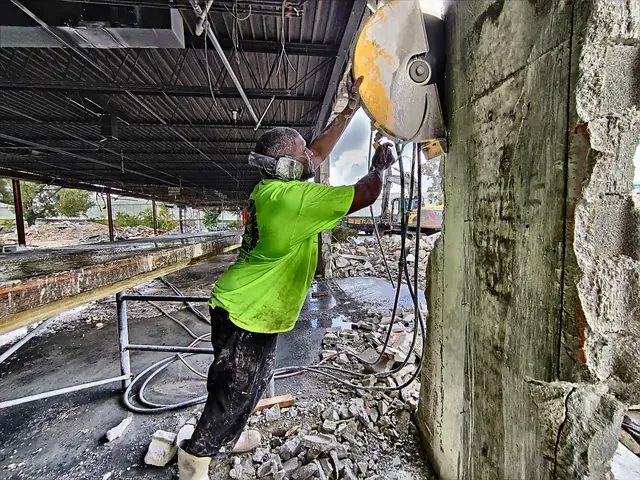
One of the most important techniques in chipping out concrete is scoring the perimeter first. A quick pass with a saw along the edge of the area you are removing creates a clean boundary that stops the chipping from spreading into the surrounding concrete. Without that scored edge, the chipping can travel, and a clean patch turns into a ragged, oversized hole.
This is the step that separates a professional from an amateur. The saw cut defines the repair area, and the chipping hammer stays inside those lines. The result is a clean, square removal that patches perfectly. Skipping the score is how you end up with a repair that is twice as big as it needed to be.
Control the Depth and Protect What Is Underneath
Chipping out concrete is a depth-sensitive job. If there is rebar, conduit, or a pipe underneath, you have to know exactly how deep you are going. A professional chips in shallow passes, checking depth constantly, and switches to a lighter touch as they approach whatever is beneath the concrete.
This matters a lot in Miami, where slabs often sit over plumbing and electrical lines. Chip too deep and you hit a pipe; chip carelessly and you nick a conduit. The whole point of chipping out instead of breaking is that you can stop precisely where you need to. That control is what you are paying for.
Spalling and the Salt Air Connection
A large share of the chipping-out work we do in Miami is driven by spalling, which is what happens when rebar corrodes and the expanding steel pushes the concrete apart from the inside. Near the coast, salt air accelerates that corrosion, and the result is chipped, flaking concrete at the edges and corners of slabs and beams.
The repair sequence matters. You chip out the loose, delaminated concrete, clean the exposed rebar, treat it for corrosion, and patch with a compatible repair mortar. If you skip the rebar treatment and just patch over the rust, the patch will fail again in a few years. Our guide to fixing concrete chipping walks through the full sequence.
Common Chipping Jobs Around a Miami Home
Chipping out concrete shows up on a surprising number of jobs around a typical Miami home. It is how a spalled section of a driveway or walkway gets repaired, how a high spot on a slab gets leveled before new flooring goes down, and how a section of damaged concrete around a pool deck gets cut back for a patch. Each of these is a small, localized job that rewards a controlled hand.
The thing they all share is that the surrounding concrete is worth saving. When the damage is isolated and the rest of the slab is sound, chipping out the bad section and patching it is far cheaper than replacing the whole thing. The trick is knowing how deep to go and stopping before you create more work than you started with. Our guide to concrete chipping methods covers the common jobs and how they are approached.
Exposing Rebar the Right Way
A lot of chipping-out work in Miami is done to expose rebar that has started to corrode, especially near the coast. The concrete over the steel is chipped away so the rebar can be cleaned, treated, and covered with a repair mortar that actually bonds. This is the only repair that lasts, because simply patching over rusting rebar means the patch will fail again when the steel keeps expanding underneath it.
Exposing the rebar has to be done carefully, because chipping too aggressively damages the steel you are trying to save. The goal is to clean the rebar, not to scar it, and that takes a lighter touch as you get close. Our guide to fixing concrete chipping walks through the full sequence from chipping to patching, and why the rebar treatment matters so much in a salt-air climate.
The Tool Rentals and When They Make Sense
For a small chipping job, renting a chipping hammer can be a reasonable way to save money, if the work is small and you know what you are doing. The rental is cheap, and a single localized repair is within reach of a capable DIYer who understands depth control and dust protection. The key is keeping the job small and knowing your limits.
The moment the job grows, the rental stops making sense. A larger area, a structural element, or rebar that needs treating all push the work toward a professional, who brings the right tools and the right judgment. Our guide to breaking concrete safely helps you decide when the rental is worth it and when the crew is the better value.
Depth control is the skill that makes or breaks a chipping job. The difference between chipping and breaking is that chipping stops exactly where you need it to, whether that is just above a pipe, just below a spalled surface, or just shy of the rebar you are trying to save. A professional works in shallow passes and checks constantly, and that discipline is why a chipped repair patches cleanly instead of turning into a full slab replacement.
The tool matters more than most people realize. A chipping hammer is the standard for controlled work, but the bit you put in it changes the result, from a wide spade for fast removal to a narrow point for feathering an edge. Matching the bit to the job is a small detail that shows up in how clean the final surface is, and it is one of the things that separates a professional repair from a weekend attempt.
When Chipping Out Beats Full Removal
Chipping out is the right call when the damage is localized and the slab is otherwise sound. It is faster and cheaper than full removal, and it preserves the structural integrity of the surrounding concrete. But when the damage is widespread, the slab is cracked through, or it has settled, chipping out is just delaying a removal that has to happen anyway.
A professional assessment tells you which situation you are in. If the slab is worth saving, chip it out and patch it. If it is not, plan for slab removal. The right call saves you money either way, because it keeps you from doing the same repair twice.