What Actually Happens to the Water When You Cut a Concrete Driveway
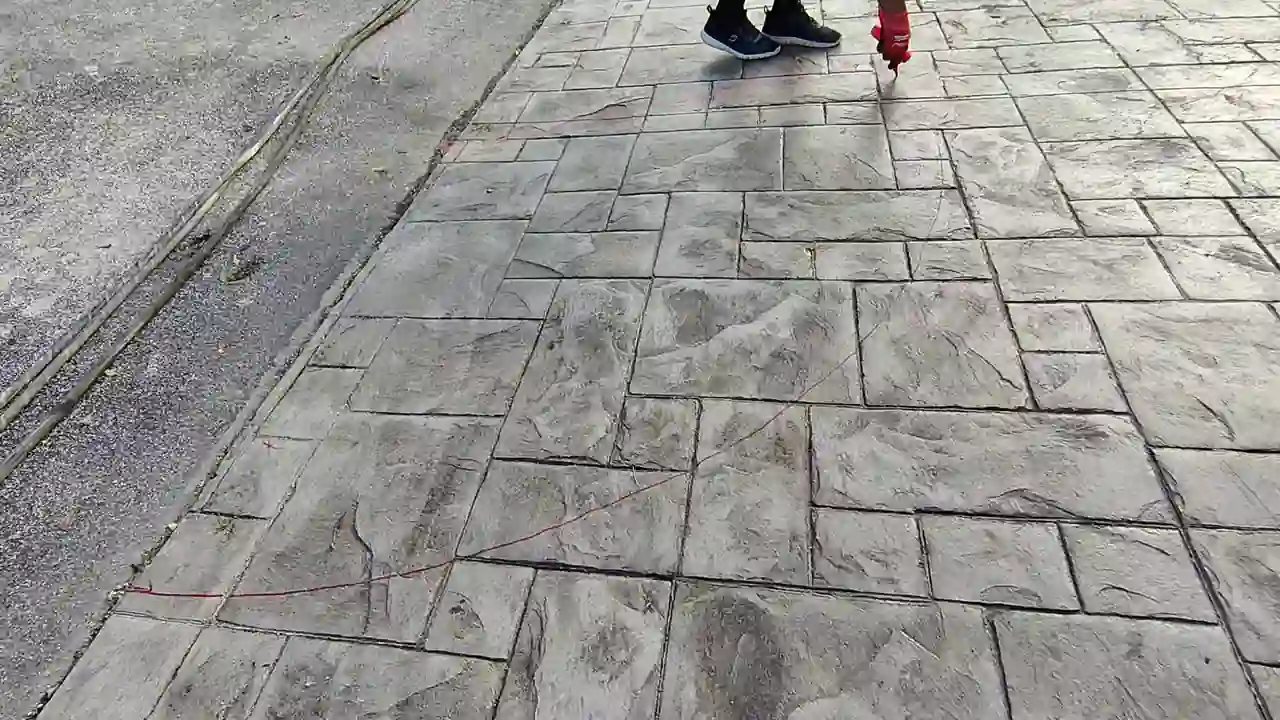
Most homeowners and even some general contractors think of concrete driveway cutting as a straightforward task — mark a line, run a blade, done. What they don’t account for is the chemistry happening at the cut zone. Diamond blade wet-cutting generates a slurry that is a mixture of water, fine concrete particulate, silica dust, and — depending on the slab’s history — traces of oil, heavy metals, or curing compounds. In Miami-Dade County, where storm drains connect directly to Biscayne Bay and the broader South Florida coastal watershed, allowing that slurry to sheet-flow off a driveway and into the street is not just sloppy work. It’s an environmental violation with teeth. The Clean Water Act Section 402, along with Florida DEP stormwater regulations, explicitly prohibit the discharge of concrete slurry into storm drainage systems. Understanding how to manage that waste stream from the first saw pass to final site cleanup is what separates a professional concrete driveway cutting operation from a liability waiting to happen.
The pH Problem Nobody Talks About at the Jobsite
Fresh concrete slurry is highly alkaline, typically registering between pH 11 and pH 13 on the scale. For context, household bleach sits around pH 12.5. When this material enters a storm drain, it doesn’t just carry particulate — it chemically alters the receiving water body. Aquatic ecosystems in South Florida are particularly sensitive, and even a single driveway cutting job handled carelessly can contribute to localized pH spikes that stress fish populations and coral reef systems downstream. Miami-Dade’s MS4 (Municipal Separate Storm Sewer System) permit requires contractors to implement Best Management Practices (BMPs) that prevent any concrete-laden water from reaching the storm system. This applies to residential driveway work just as aggressively as it does to commercial or municipal projects. If your cutting contractor isn’t talking about pH, they’re not thinking about compliance.
Slurry pH Mitigation Techniques Used in the Field
- Carbon dioxide injection: CO₂ is bubbled through collected slurry to neutralize alkalinity, bringing pH down to the 6–9 discharge range acceptable under most permits.
- Dry ice treatment: Particularly useful on small residential jobs where CO₂ tanks aren’t practical. Dry ice pellets are added to the slurry containment vessel and agitated.
- Citric acid buffering: A measured addition of food-grade citric acid to neutralize collected slurry before disposal — effective but requires pH testing to confirm results.
- Vacuum recovery and off-site disposal: The most compliant method — all slurry is vacuumed, containerized, and transported to an approved concrete waste facility.
Setting Up a Contained Water System Before the First Blade Pass
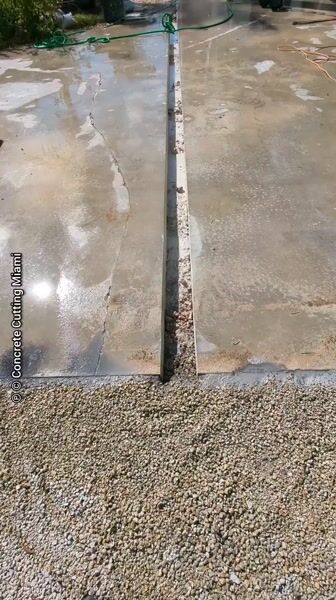
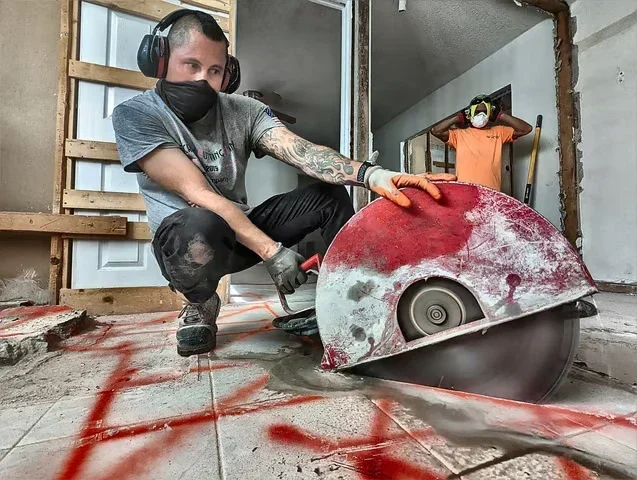
Professional concrete driveway cutting in an environmentally sensitive market like Miami requires a containment setup that’s established before any equipment runs. The perimeter of the work zone — particularly the downhill or drain-adjacent edges — must be sealed using one of several BMP approaches. Foam berm barriers, absorbent berms, or sand bags are placed to prevent lateral flow. For longer driveway cuts, a channel system using flexible containment tubing routes slurry toward a single low point where a wet/dry vacuum or slurry pump can recover the material continuously. The goal is zero uncontrolled discharge. Every gallon of water introduced to the cut zone must be accounted for and recovered. This is especially critical in Miami’s flat topography, where water has nowhere to go but the nearest drain inlet.
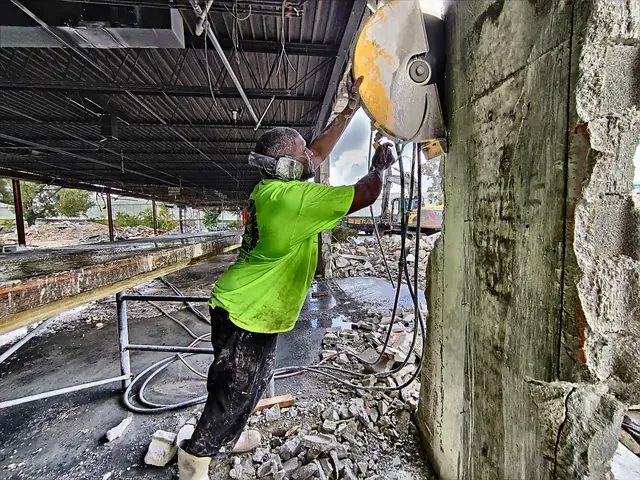
The equipment used for diamond blade rail saw operations on driveways is particularly well-suited for closed-loop water systems. Rail-guided flat saws can be paired with integrated vacuum slurry recovery attachments that pull the waste stream directly from the blade guard housing, preventing it from ever reaching the slab surface in volume. This is the preferred configuration for any driveway cut adjacent to a storm inlet or drainage swale.
Choosing Between Wet Cutting and Dry Cutting Based on Site Conditions
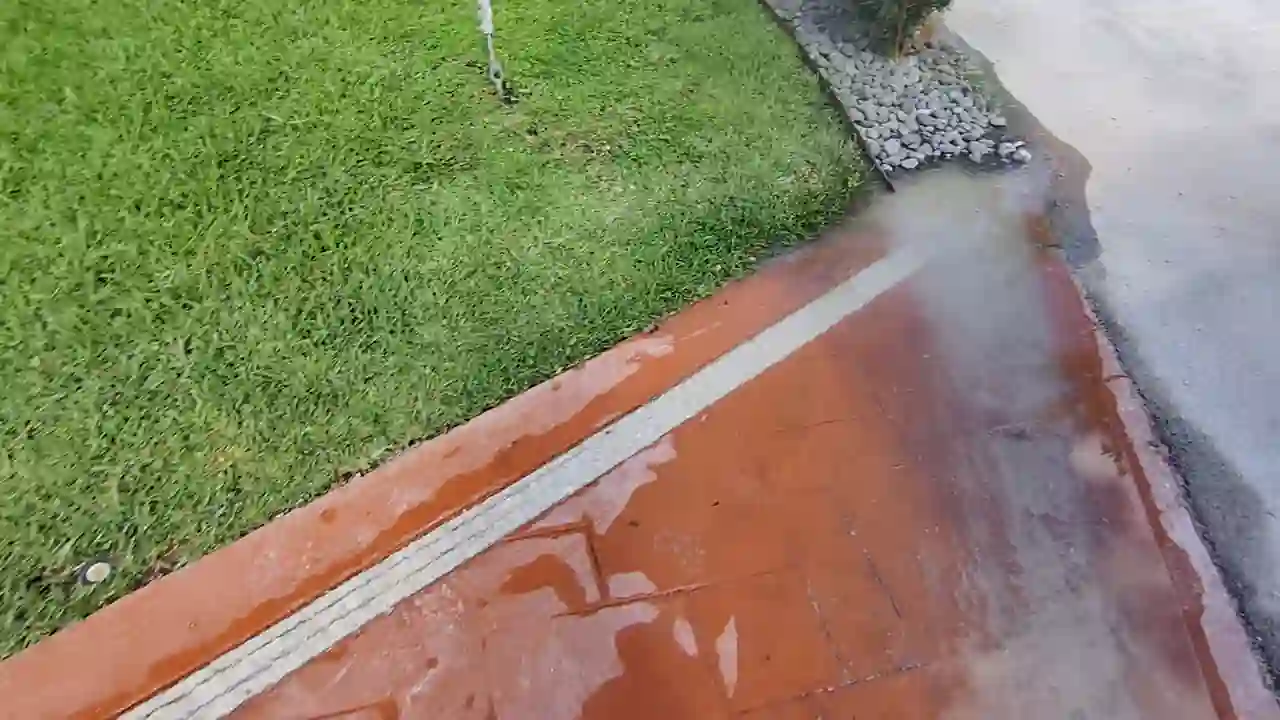
The instinct to avoid wet cutting to sidestep slurry management is understandable, but it creates a different and arguably more dangerous problem — airborne respirable crystalline silica (RCS). OSHA’s silica standard (29 CFR 1926.1153) mandates engineering controls for any concrete cutting operation that generates silica dust. On a concrete driveway, dry cutting without a HEPA vacuum system integrated at the blade produces dust concentrations that routinely exceed the permissible exposure limit (PEL) of 50 µg/m³ as an 8-hour TWA. In Miami’s outdoor residential environments, this dust drifts onto neighboring properties, into HVAC intakes, and into the breathing zones of bystanders.
Wet cutting with proper slurry containment remains the industry-preferred method for most concrete driveway cutting scenarios precisely because it controls both the dust and the particulate simultaneously. The water acts as a dust suppressant at the source, and the slurry — while requiring management — is at least a contained waste stream rather than an airborne hazard. When site geometry makes wet cutting impractical, dry cutting with a shrouded blade and continuous HEPA vacuum extraction is the compliant alternative, but it requires even more rigorous air monitoring and worker protection protocols.
Wire Sawing Applications for Complex Driveway Geometry
Standard flat saw equipment handles straightforward linear driveway cuts efficiently, but driveways with decorative patterns, curved borders, or transition cuts near garage aprons sometimes require more versatile tooling. Wire sawing in Miami has emerged as a practical solution for these complex geometries. A diamond-embedded wire looped through pre-drilled anchor points can follow contours impossible for a rigid blade. The water delivery and slurry management requirements for wire sawing are similar to flat sawing — continuous water flow to the wire, immediate vacuum recovery of the slurry — but the containment setup must account for the wire’s movement path rather than a fixed blade guard.
Slurry Disposal Logistics for Residential Driveway Projects
Once slurry is recovered, the question becomes what to do with it. In Miami-Dade, concrete slurry cannot be poured down sanitary sewer cleanouts without a pretreatment permit. It cannot be dumped on vacant lots or construction spoil areas without DEP authorization. The compliant disposal pathways include: dewatering the slurry on-site using a filter bag system (where the dried cake is disposed of as solid waste and the filtered water is pH-tested before discharge), hauling the liquid slurry to a licensed concrete recycling facility, or allowing the slurry to dry in a containment vessel and disposing of the hardened material as construction debris in a permitted C&D landfill.
For context on how similar waste management principles apply in enclosed environments, the approach used in indoor pool removal projects provides a useful parallel — contained spaces require even more rigorous slurry control, and the lessons from those projects translate directly to tight driveway scenarios bordered by landscaping or structures.
Documentation and Compliance Records Every Contractor Must Keep
Environmental compliance isn’t just about doing the right thing in the field — it’s about being able to prove it. Contractors performing concrete driveway cutting in Miami should maintain a project-level BMP log that documents the containment methods deployed, the volume of slurry recovered, the pH readings taken before any discharge or disposal, and the disposal destination with receipts or manifests. If a code enforcement officer or DEP inspector arrives on-site — and in South Florida, this happens — the ability to produce that documentation immediately demonstrates good faith compliance and often determines whether a notice of violation is issued.
Photographic documentation of the containment setup before cutting begins, during the operation, and after cleanup is equally valuable. Time-stamped photos showing berms in place, vacuum systems running, and a clean site post-completion create a defensible record. For a deeper look at how professional-grade cutting operations are structured from a technical and compliance standpoint, this overview of concrete cutting techniques and tools in Miami covers the broader operational framework that informs every compliant job.
What to Demand From Your Concrete Driveway Cutting Contractor
Before any saw touches your driveway, your contractor should be able to answer the following questions without hesitation: What BMP containment system will you use? How will you recover the slurry? What is your pH management protocol? Where will the waste be disposed of, and can you provide documentation? A contractor who fumbles these questions or dismisses them as unnecessary is a contractor who is either uninformed about current regulations or willing to cut corners that could create liability for the property owner as well. In Miami-Dade, property owners can be held jointly liable for environmental violations occurring on their property, even if a third-party contractor caused the discharge.
The technical demands of compliant concrete driveway cutting — slurry containment, pH neutralization, vacuum recovery, documented disposal — are not obstacles. They are the baseline standard of professional practice. Firms that have invested in the right equipment, trained their crews on environmental protocols, and built compliance documentation into their workflow deliver better work, cleaner sites, and zero regulatory exposure for their clients. That’s the standard Concrete Cutting Miami, LLC holds itself to on every driveway project, from a single expansion joint cut to a full driveway removal and replacement prep.