What Miami’s Residential Drainage Rules Actually Require From Concrete Contractors
Miami-Dade County sits on top of the Biscayne Aquifer — one of the most sensitive freshwater systems in the southeastern United States. That geological reality shapes every single concrete cutting project we run on a residential site, from a simple driveway joint to a full foundation penetration. When you’re designing or modifying residential drainage in Miami, you’re not just managing water flow. You’re operating inside a layered framework of Miami-Dade DERM regulations, NPDES stormwater permits, and Florida DEP standards that carry real teeth. Fines for improper slurry discharge into storm drains can exceed $10,000 per incident, and repeat violations have resulted in project shutdowns. Understanding how drainage design intersects with concrete work — and specifically with the slurry generated during cutting operations — is non-negotiable for any contractor or homeowner serious about doing this right.
The Slurry Problem That Most Residential Projects Ignore Until It’s Too Late
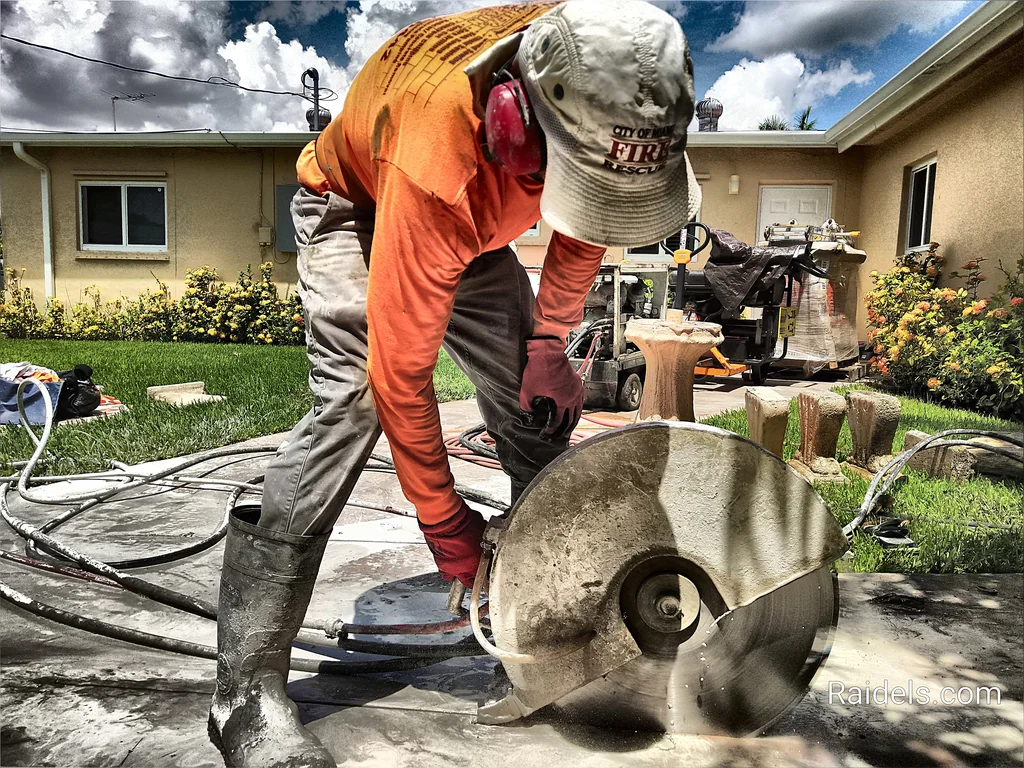
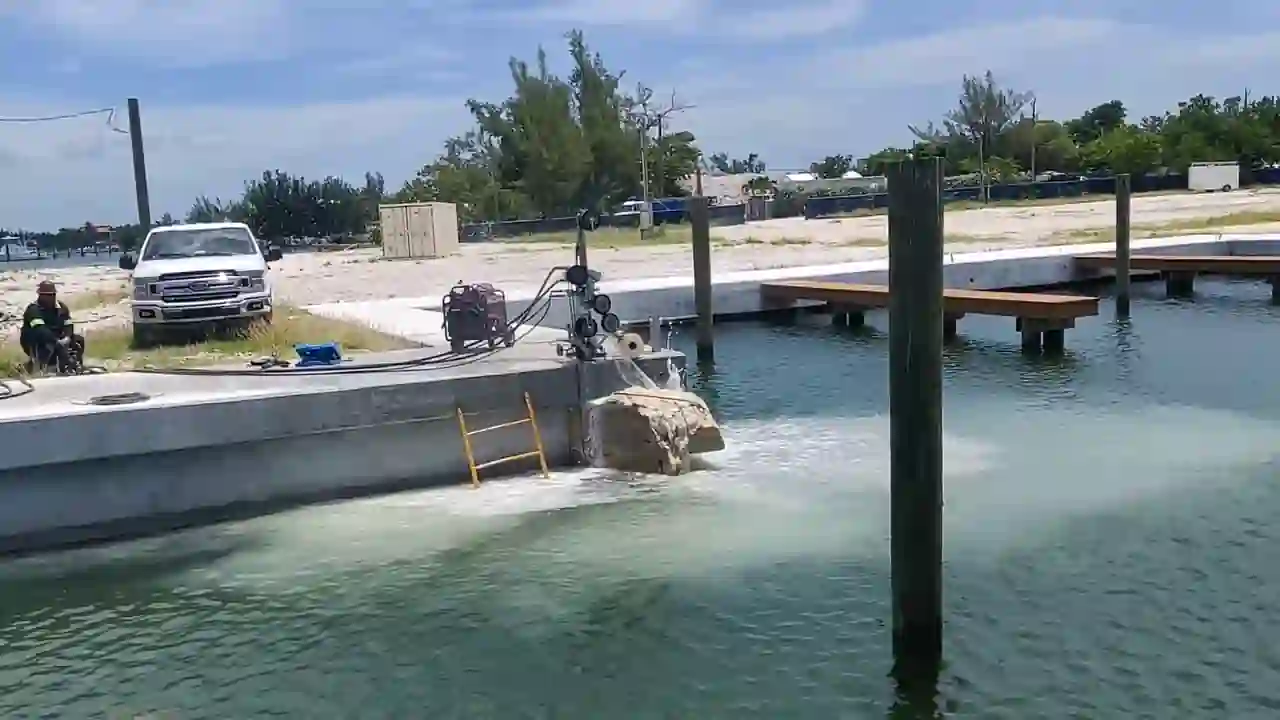
Concrete slurry — the gray, alkaline soup produced when diamond blades cut through cured concrete — has a pH typically ranging between 11 and 13. That puts it firmly in the caustic range. When that material enters a storm drain, a swale, or a pervious surface, it doesn’t just discolor the pavement. It alters soil chemistry, kills beneficial microorganisms, and in high enough volumes, it can reach the aquifer directly through Miami’s notoriously shallow water table. On residential sites, the drainage system is often far less forgiving than on commercial pads. You’re working near landscaping, pool decks, irrigation lines, and French drain networks that connect directly to the larger stormwater infrastructure.
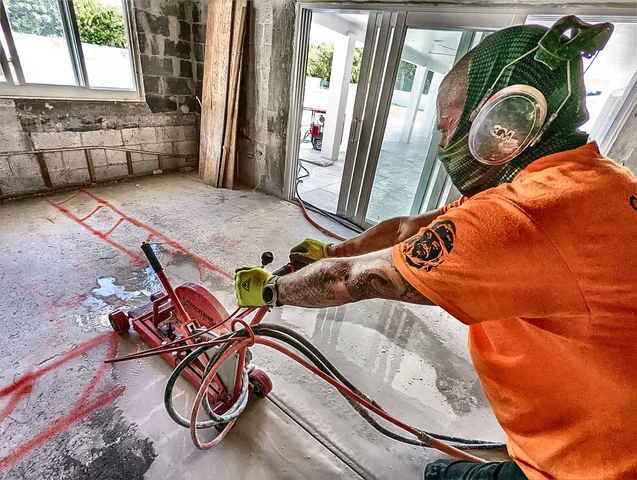
The standard approach for slurry containment on residential concrete cutting jobs in Miami involves three core components: physical berms or vacuum recovery at the cutting zone, a settling tank or filter bag system for solids separation, and a pH neutralization protocol before any water is discharged. On jobs where we’re cutting driveway control joints or working near existing drainage channels, we pre-map every nearby drain inlet and cover them with filter fabric barriers rated for construction site runoff. This isn’t optional — it’s the baseline.
Designing Residential Drainage Systems That Account for Future Concrete Work
Here’s a perspective that rarely comes up in residential drainage design conversations: the drainage system you install today needs to accommodate the concrete cutting operations that will happen over the life of the structure. That means thinking about where slurry will naturally migrate during a future saw cut, where vacuum recovery equipment can be staged, and whether your drainage grades create pooling zones that trap contaminated water near sensitive features like well heads or landscaping beds.
In Miami’s flat topography — where elevation changes of just six inches can redirect hundreds of gallons of stormwater — drainage design has to be precise. Swales need to be graded to a minimum of 1% slope to maintain flow without standing water. French drains in residential applications typically use perforated pipe wrapped in filter sock, set in a gravel bed, but these systems are extremely vulnerable to fine particulate contamination from concrete slurry. Once cement fines migrate into a French drain, the perforations clog and the system fails. Designing isolation valves or cleanout access points into residential drainage networks is a best practice that pays dividends when concrete cutting work is on the horizon.
NPDES Phase II and What It Means for Your Miami Residential Cutting Job
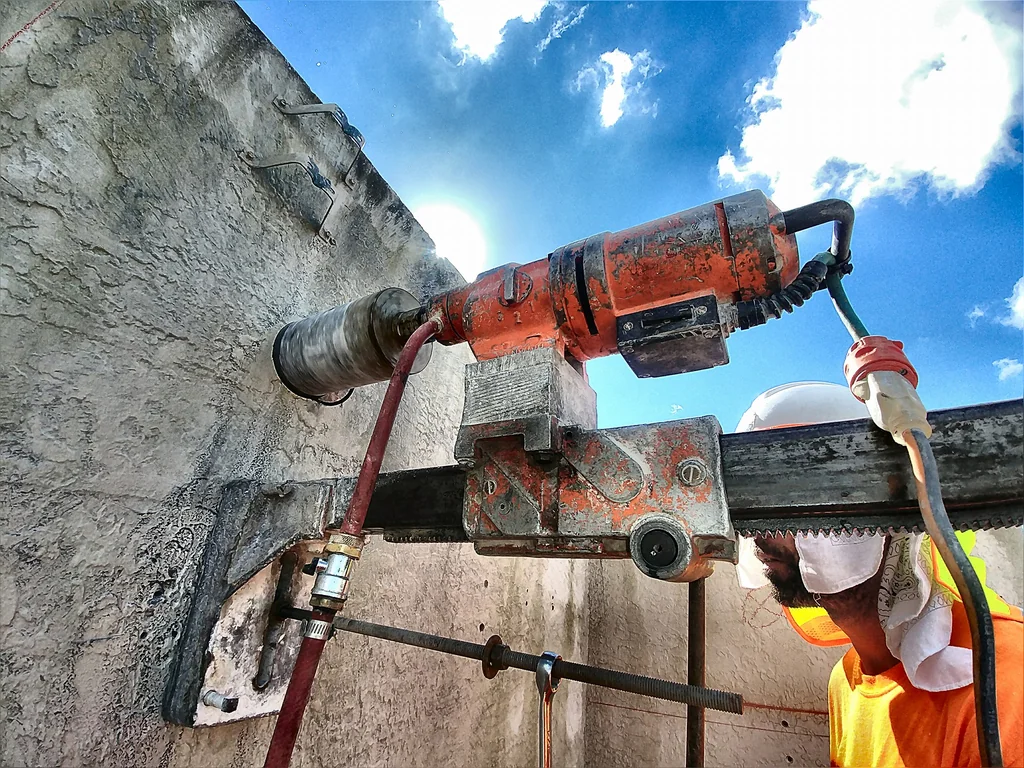
The National Pollutant Discharge Elimination System Phase II rules extend stormwater permit requirements to smaller construction sites — including residential projects disturbing as little as one acre of land. In Miami-Dade, this is enforced aggressively. A residential drainage redesign that involves breaking up existing concrete slabs, cutting new channel sections, or modifying existing curb and gutter configurations can easily trigger NPDES requirements if the disturbed area threshold is met.
What does that mean practically? You need a Stormwater Pollution Prevention Plan (SWPPP) that specifically addresses how concrete cutting waste will be managed. The SWPPP must identify best management practices (BMPs) for slurry containment, designate a responsible party for daily site inspections, and outline corrective action procedures if a discharge event occurs. Many residential contractors in Miami are caught off guard by this requirement because they associate NPDES permits with large commercial sites. The scale of enforcement has shifted significantly in the last five years.
pH Neutralization Protocols for On-Site Slurry Treatment
When vacuum recovery isn’t sufficient to capture all slurry — which is common on larger residential pads or during extended saw cut operations — on-site pH neutralization becomes necessary before any water can be discharged to the ground or storm system. The standard approach uses dry ice (CO2) or citric acid to bring the pH of collected slurry water down to the acceptable discharge range of 6.5 to 8.5. We use calibrated pH meters on every job where wet cutting is involved, and we document readings before and after treatment. That documentation matters enormously if a DERM inspector shows up on site.
Vacuum Recovery Systems Sized for Residential Cutting Operations
Industrial wet-vac systems designed for concrete cutting generate significant suction volumes — typically between 150 and 300 CFM depending on the unit. On residential sites, you’re often working in tighter quarters with less staging area, which means the slurry recovery tank needs to be appropriately sized and positioned without blocking egress or damaging existing landscaping. We use wheeled containment units that can be repositioned quickly as the cut line moves, with a secondary containment tray under the tank to catch any drips or overflow. For jobs involving roof openings or elevated cuts, slurry management becomes a three-dimensional problem — you need containment above and below the work plane simultaneously.
How Drainage Grade Modifications Interact With Concrete Cutting Scope
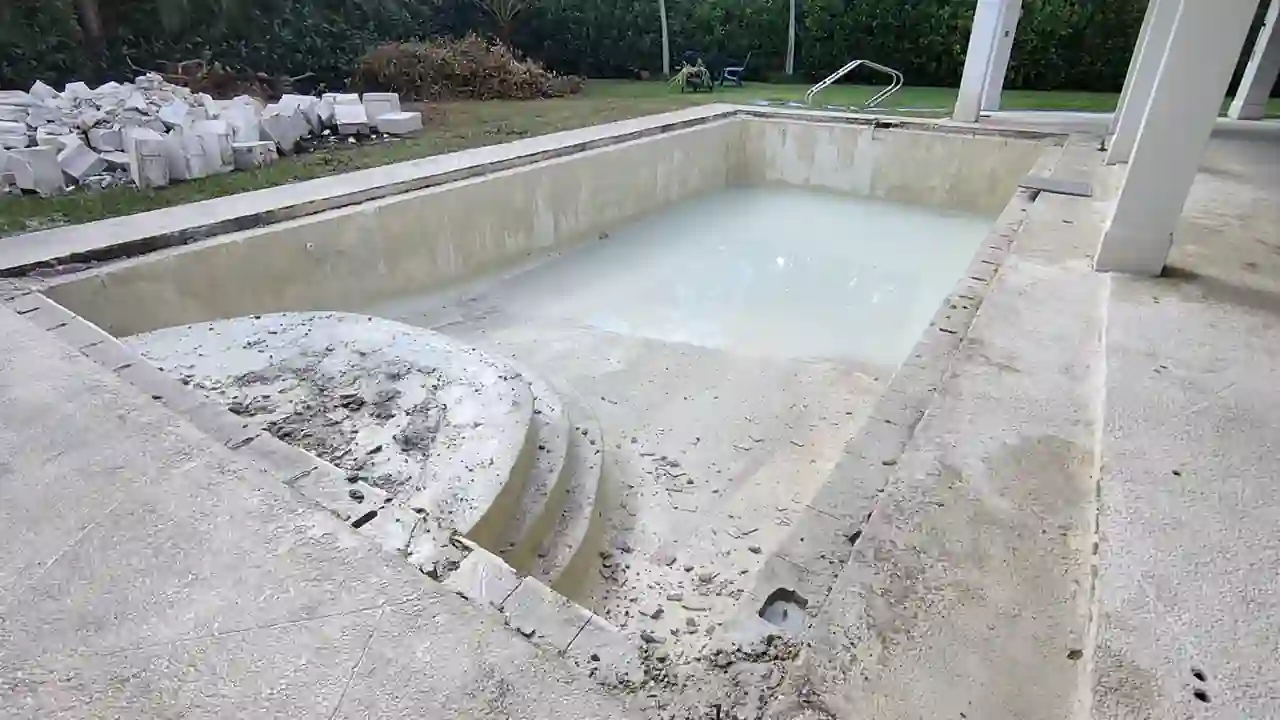
One of the most technically complex scenarios in residential drainage design is when a homeowner needs to re-grade their yard for improved drainage while simultaneously modifying existing concrete flatwork. This typically involves cutting out sections of existing slab, adjusting the sub-base grade, and pouring new concrete at corrected elevations. Each phase of that work generates slurry and debris that must be managed according to the same environmental standards as any other concrete cutting operation.
The sequencing matters enormously here. We always complete drainage infrastructure modifications — new pipe runs, inlet boxes, cleanout installations — before any concrete cutting begins. This ensures that the drainage system itself isn’t compromised by construction debris or slurry infiltration during the active work phase. It also means that if a rain event occurs mid-project (a near-certainty in Miami’s afternoon thunderstorm season), the drainage system can handle runoff without routing it through the active work zone.
Projects involving significant concrete debris removal should also consider the downstream implications for concrete crushing and recycling operations. Crushed concrete aggregate can be reused as base material in drainage bed construction, which reduces haul-off costs and keeps material out of the waste stream. This is an increasingly common practice on larger residential drainage projects in Miami-Dade.
Control Joint Placement as a Drainage Engineering Decision
This is a point that gets overlooked in almost every residential drainage conversation: control joints in concrete flatwork aren’t just crack prevention tools. They’re also drainage management features. When properly placed and sealed, control joints prevent water from migrating laterally beneath a slab, which protects sub-base integrity and reduces hydrostatic pressure buildup that can cause heaving in Miami’s expansive soil conditions. When control joints are poorly placed or left unsealed, they become pathways for water infiltration that undermines the entire drainage design.
On residential projects where we’re cutting new joints into existing flatwork as part of a drainage correction project, we follow ACI 360R guidelines for joint spacing relative to slab thickness, and we specify joint sealant products rated for the specific exposure conditions — whether that’s pool deck chemical exposure, vehicular traffic, or standard pedestrian flatwork. Getting the joint depth right (typically one-quarter of the slab thickness) is critical to achieving the crack control function without compromising structural integrity.
Building a Compliant Residential Drainage Project From the Ground Up
The contractors who consistently deliver clean, compliant residential drainage projects in Miami are the ones who treat environmental management as a design discipline, not an afterthought. Slurry containment, pH monitoring, SWPPP documentation, and drainage system protection aren’t line items you add at the end of a bid — they’re integrated into the project methodology from the first site visit. Miami’s regulatory environment will only get stricter as pressure on the Biscayne Aquifer increases, and the contractors who build compliance into their standard operating procedures now will be the ones still working when enforcement tightens further.
If your residential drainage project involves any concrete cutting, coring, or slab removal, the environmental management plan needs to be part of the conversation before the first blade turns. The cost of doing it right is a fraction of the cost of a DERM enforcement action — and the difference between a project that passes inspection and one that doesn’t almost always comes down to the details that get handled before the work starts.