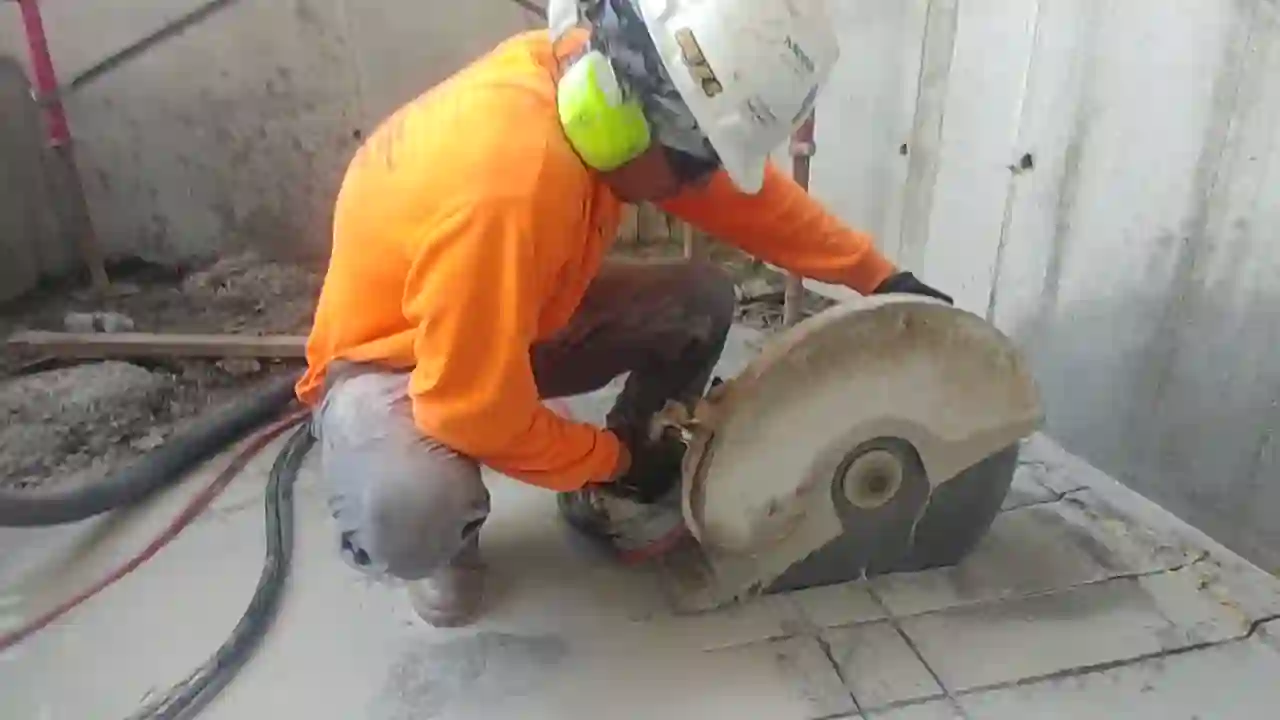
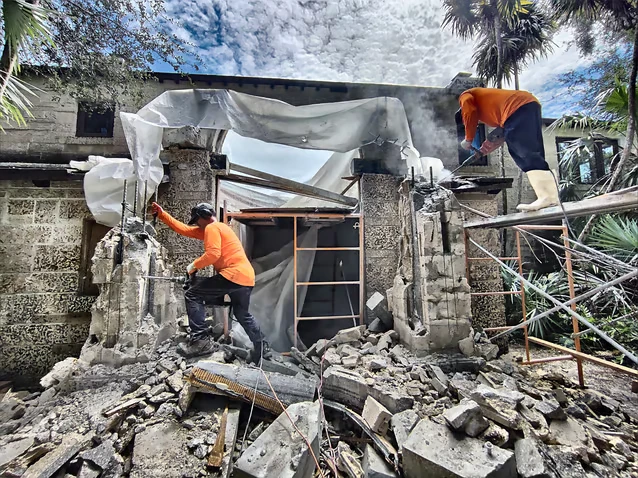
The Real Variables Driving Sawcut Concrete Project Costs in South Florida
Every sawcut concrete project that lands on a bidding desk looks deceptively simple on paper — a linear footage number, a slab thickness, and a deadline. But seasoned estimators in South Florida know the gap between a penciled number and a profitable job is filled with variables that most bid sheets never capture. Aggregate hardness, reinforcement density, ambient heat, water availability, and disposal logistics all compound against your margin before the first blade ever touches the slab. This post breaks down how professional concrete cutting operations price sawcut work, what drives timeline estimates, and where the hidden cost multipliers live in a typical commercial or residential flatwork project.
Slab Composition and Its Direct Impact on Blade Wear Rates
The single largest variable in sawcut concrete pricing is what’s actually inside the slab. Miami-Dade and Broward County projects frequently involve slabs poured with locally sourced limestone aggregate, which is comparatively soft and forgiving on diamond blades. However, older industrial slabs — particularly those from the 1970s and 1980s — often incorporated silica-heavy aggregates or recycled ballast that accelerates blade wear by 30 to 60 percent compared to modern pours.
A standard 14-inch diamond blade for a walk-behind flat saw runs between $180 and $350 depending on segment bond hardness and manufacturer. On a soft limestone slab at 4 inches deep, a quality blade may yield 800 to 1,200 linear feet. On a hard aggregate or heavily reinforced slab, that same blade may wear out at 300 to 500 linear feet. For a job requiring 2,000 linear feet of control joint sawcutting, the blade cost alone can swing from $300 to over $2,000 depending on slab composition. That variance needs to live in your bid — not in your profit margin.
Rebar and wire mesh add another layer of cost complexity. A 4-inch unreinforced slab cuts at roughly 25 to 40 linear feet per minute with a mid-range walk-behind saw. Add a single mat of #4 rebar at 12-inch centers and that rate drops to 15 to 22 linear feet per minute while simultaneously accelerating blade segment erosion. Double-mat reinforcement — common in parking decks and industrial floor slabs — can reduce cutting speed to under 10 linear feet per minute and double blade consumption per unit length.
GPR Scanning as a Pre-Bid Cost Control Tool
Ground-penetrating radar scanning before a sawcut bid is no longer optional on any job exceeding $5,000. A GPR scan typically costs $400 to $900 for a standard commercial slab and delivers rebar layout, post-tension cable locations, conduit runs, and slab thickness confirmation. The intelligence that scan provides directly determines your blade budget, your cutting speed estimates, and — critically — whether the job even proceeds as scoped. Post-tension slabs require a completely different cutting protocol and carry significantly higher liability exposure. Discovering a PT slab after mobilization is a timeline and cost catastrophe that a $600 scan prevents entirely.
Equipment Selection and Hourly Rate Structures for Sawcut Concrete Work
Walk-behind flat saws in the 25 to 65 horsepower range dominate residential and light commercial sawcut concrete work. Machine rental rates in the Miami market run $350 to $650 per day for owner-operator setups, while full-service contractor rates — including operator labor, water supply, and basic consumables — typically start at $850 to $1,400 per day for a single-saw crew. Early joint sawing (green cutting) on fresh concrete requires dedicated early-entry equipment like a Husqvarna Soff-Cut or Stihl GS 461, which commands a premium of $200 to $400 per day over standard flat saw pricing.
For deep-cut applications — expansion joints through 8-inch or thicker slabs, or utility trench cuts — 65 to 100+ horsepower hydraulic flat saws enter the picture. These machines carry day rates of $1,200 to $2,200 and require a two-person crew for safe operation and slurry management. The 20-inch hydraulic hand saw fills a critical niche for confined-access cuts and vertical slab penetrations where a flat saw cannot maneuver, and its operating costs factor differently into bids involving wall cuts or tight-tolerance work near structural columns.
Understanding equipment costs at a granular level separates contractors who win profitable bids from those who win unprofitable ones. Fuel consumption, hydraulic fluid changes, blade arbor wear, and belt replacements are operating costs that compound across a multi-day job. A 65 HP diesel flat saw burns approximately 1.5 to 2.5 gallons of diesel per hour under load. On a 10-hour production day, that’s $25 to $45 in fuel alone — small per unit, but real on a tight margin job.

Timeline Estimation for Sawcut Concrete Projects by Job Type
Accurate timeline estimation is where bids are won or lost on competitive commercial projects. The following production benchmarks reflect real-world South Florida conditions, not manufacturer specification sheets.
- Residential driveway control joints (4-inch slab, no rebar): 500 to 800 linear feet per day, single operator walk-behind saw. Typical residential driveway job completes in 2 to 4 hours including setup, cutting, and slurry cleanup.
- Commercial parking lot joint sawing (5-inch slab, wire mesh): 1,200 to 2,000 linear feet per day with a 35 HP walk-behind. A 10,000 square foot lot requiring joints at 12-foot spacing needs approximately 850 to 1,000 linear feet of cuts — typically a single-day mobilization.
- Industrial slab trench cuts (6 to 8 inches, double rebar mat): 200 to 400 linear feet per day depending on blade selection and cooling water availability. A 500-linear-foot utility trench sawcut realistically requires 2 to 3 production days plus slurry removal time.
- Early-entry green sawing on fresh pours: Timing-dependent on ambient temperature and mix design. In Miami’s summer heat, initial cuts may need to begin within 1 to 4 hours of finishing. Crew standby time during the curing window must be priced into the bid as a fixed cost regardless of linear footage.
- Post-tension slab sawcutting (with confirmed cable layout): Highly variable. Cable avoidance routing adds 40 to 80 percent to cut length versus straight-line geometry, extending timelines proportionally.
Slurry Management Time Is Always Underestimated
Wet sawcutting produces approximately 1 to 2 gallons of slurry per linear foot of 4-inch slab. A 1,000-linear-foot job generates 1,000 to 2,000 gallons of concrete slurry that cannot be discharged to storm drains under Miami-Dade environmental ordinances. Vacuum recovery, containment, and off-site disposal add 1 to 3 hours to any production day and carry disposal costs of $150 to $400 per load depending on volume and disposal facility. Bids that omit slurry management are bids that lose money on execution. Site logistics in Miami concrete cutting are genuinely make-or-break — slurry disposal is one of the clearest examples of why.
Bidding Factors That Separate Profitable Sawcut Contracts from Break-Even Jobs
Beyond direct production costs, the following site and contract factors carry significant bid weight and must be evaluated before submitting any sawcut concrete proposal.
- Access and mobilization distance: Miami traffic patterns mean a job in Doral versus a job in Homestead can add 45 to 90 minutes of non-billable drive time per day. Multi-day jobs compound this into real dollar losses if not addressed in the mobilization line item.
- Water supply availability: Wet cutting requires a continuous water supply of 2 to 5 gallons per minute. Jobs without on-site water access require a water tank trailer, adding $150 to $300 per day to operating costs.
- Working hours restrictions: Many Miami commercial projects restrict sawcutting to daytime hours to limit noise impact. Night sawcutting premiums of 25 to 40 percent on labor rates are standard and must be reflected in bids for projects with noise ordinance constraints.
- Saw cut depth verification requirements: Some structural specifications require depth verification at set intervals, adding inspection time and documentation labor to the production schedule.
- Equipment maintenance windows: Proper equipment maintenance scheduling prevents mid-job breakdowns that destroy timelines and client relationships. Budget one maintenance hour per every 8 production hours for blade changes, water system checks, and belt tension verification.
Staying current with industry pricing benchmarks and new equipment capabilities is essential for competitive bidding. Events like World of Concrete 2026 provide direct access to equipment manufacturers, blade suppliers, and industry cost data that directly inform accurate bid construction.
Egress and Specialty Sawcut Applications Carry Premium Pricing Structures
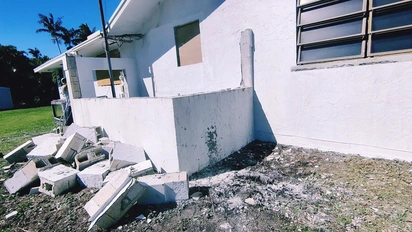
Not all sawcut concrete work is flatwork. Vertical wall cuts, egress window openings, and structural penetrations involve different equipment, different safety protocols, and different pricing structures entirely. Concrete egress window cutting in Miami is a growing residential service driven by building code compliance requirements, and these jobs command $800 to $2,500 per opening depending on wall thickness, reinforcement, and access conditions. The precision required for egress cuts — maintaining dimensional tolerances of plus or minus one-quarter inch in some specifications — demands experienced operators and well-maintained equipment that cannot be substituted with entry-level crews chasing low bid numbers.
Building a Sawcut Concrete Bid That Actually Holds Up in the Field
A defensible sawcut concrete bid is built from the ground up using confirmed slab data, realistic production rates, fully loaded equipment costs, and explicit line items for slurry management, mobilization, and contingency. The contractors who consistently win and complete sawcut jobs profitably are the ones who treat every bid as a mini-engineering exercise rather than a linear footage multiplication. In a market as competitive and logistically demanding as South Florida, the difference between a 12 percent margin and a 2 percent margin on a sawcut project almost always traces back to one or two variables that were estimated loosely rather than calculated precisely. Know your slab, know your equipment, and price every hour of work — including the hours spent managing what the saw leaves behind.