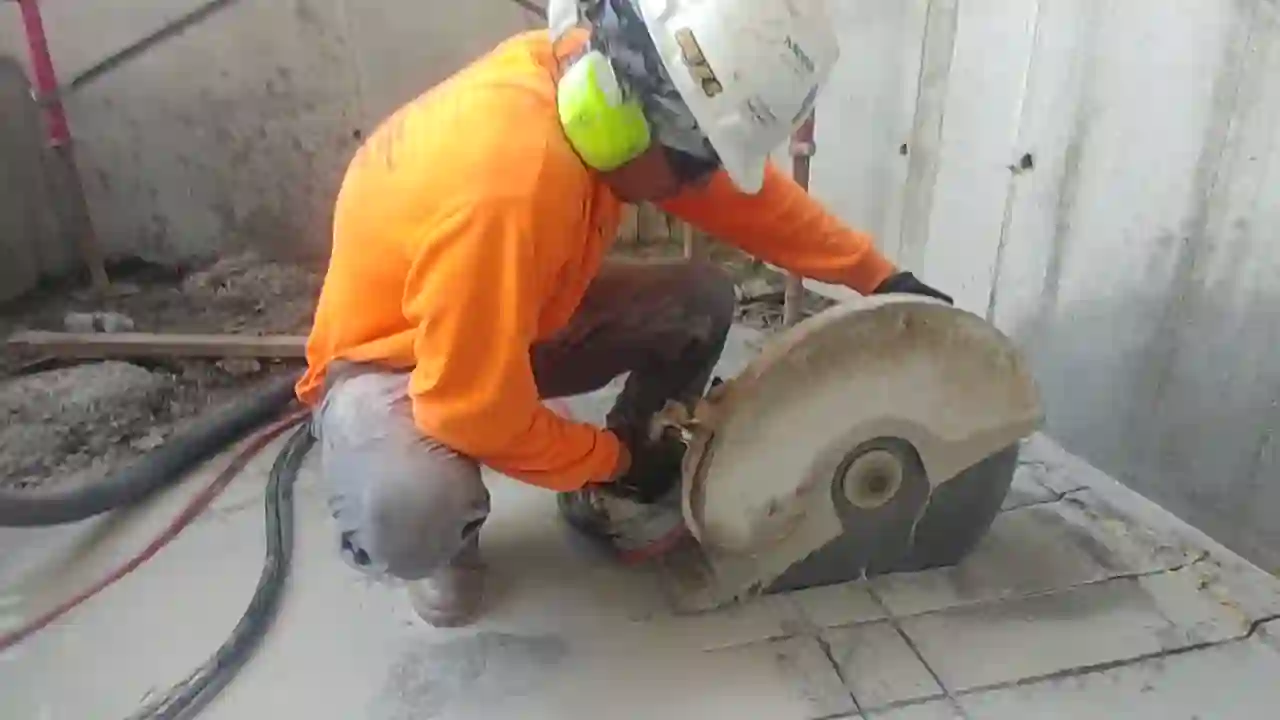
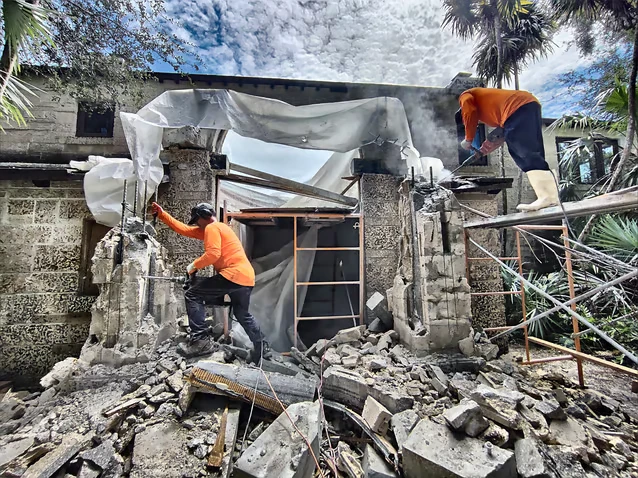
Why Concrete Cutting Bids Vary So Wildly — And What the Numbers Actually Look Like
Ask three concrete cutting contractors to bid the same job in Miami-Dade County and you’ll get three wildly different numbers. That’s not incompetence — it’s a reflection of how many technical variables drive cost in this trade. Compressive strength, aggregate hardness, reinforcement layout, access constraints, slurry disposal requirements, and equipment mobilization all compound in ways that make flat-rate pricing nearly impossible. The only reliable way to understand what a job should cost is to study real projects with real outcomes. These five concrete cutting case studies from South Florida document actual scopes, bid factors, timelines, and final costs — the kind of data that makes future estimates defensible.
Case Study 1 — Residential Slab Penetration in Doral for HVAC Retrofitting
Project Scope and Bid Breakdown
A two-story residential build in Doral required 14 core drill penetrations through a 6-inch post-tension slab to accommodate new HVAC ductwork. The slab was 4,500 PSI concrete poured in 2008 with a 3/4-inch limestone aggregate — typical for that era in Miami-Dade. The critical constraint was the post-tension cable layout. Before a single blade touched the concrete, the crew ran ground-penetrating radar (GPR) across all 14 proposed locations. Three had to be relocated by 4 to 8 inches to clear cable paths.
The final bid came in at $3,200 for the full scope. Here’s how that number was built:
- GPR scanning: $480 (flat rate, includes report and mark-up)
- 14 core drills at 4-inch diameter: $1,540 ($110 per penetration)
- Slurry containment and vacuum extraction: $320
- Mobilization and equipment transport: $280
- Supervision and post-work documentation: $580
Timeline was one full day on-site. The GPR relocation of three cores added approximately 90 minutes to the schedule. This project is a textbook example of why post-tension identification is non-negotiable — skipping it would have risked a catastrophic cable strike and turned a $3,200 job into a six-figure structural repair. For more on how poor pre-planning inflates costs, review common project planning errors in concrete work.
Case Study 2 — Flat Saw Cutting for Control Joint Installation in a Hialeah Warehouse
Scope, Timeline, and the Variables That Drove the Price Up
A 22,000-square-foot warehouse slab in Hialeah had been poured without adequate control joints, and random cracking had begun appearing within 18 months of completion. The remediation plan called for cutting a full grid of control joints — 1/4-inch wide, 2 inches deep — across the entire floor to relieve shrinkage stress and guide future cracking into predictable lines.
The total linear footage came to 3,840 linear feet. At first glance, this looks like a straightforward flat saw job. It wasn’t. The concrete was 5,000 PSI with a hard silica aggregate — significantly more abrasive than the limestone mix common in older Miami builds. Blade wear was nearly double what the estimator initially projected. The job required three blade changes mid-project, which added both material cost and downtime.
Final project cost: $9,100. The original estimate had been $7,400. The delta came from:
- Aggregate hardness requiring premium diamond segment blades ($420 per blade vs. $210 standard)
- Two additional blade changes beyond the single change budgeted
- Extended slurry management — silica-heavy slurry requires careful disposal under EPA guidelines
- An extra half-day of labor due to reduced cut speed through hard aggregate
Timeline: 3.5 days. Original estimate was 2.5 days. The lesson here for bidders is that aggregate type must be confirmed before pricing — a slab test cut or review of the original mix design spec sheet would have caught this discrepancy upfront.
Case Study 3 — Wall Sawing for Door Opening in a Coral Gables Commercial Building
Structural Complexity and the Cost of Working Around Existing Rebar
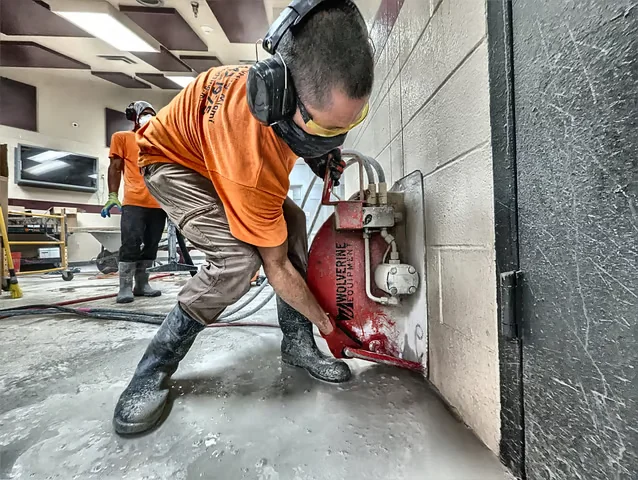
A Coral Gables commercial renovation required a new 8-foot-wide by 9-foot-tall door opening cut through a 10-inch reinforced concrete shear wall. The wall was part of the original 1987 construction, poured at 3,000 PSI with #5 rebar on 12-inch centers both ways — a relatively dense reinforcement grid by today’s standards but typical for that period’s commercial construction in South Florida.
Wall sawing through rebar-dense concrete is one of the most cost-intensive cutting operations in the trade. The blade must be sized and tensioned to handle both the concrete matrix and the steel reinforcement without overheating or losing segment integrity. This job used a 36-inch diameter wall saw blade with a hydraulic drive system. Four perimeter cuts were required to complete the opening.
Bid and final cost: $6,800. Key pricing factors included:
- Wall saw mobilization and track installation: $900
- Blade cost (36-inch, rebar-rated): $1,100 per blade, one blade used
- Four perimeter cuts at estimated 2.5 hours each: $2,400 in labor
- Concrete debris removal and haul-off: $640
- Temporary shoring during cutting: $760 (subcontracted)
Timeline: 1.5 days. No overruns. The project came in clean because the estimator pulled the original structural drawings, confirmed rebar spacing, and priced accordingly. This is a prime example of how advanced construction techniques demand thorough pre-bid documentation review.
Case Study 4 — Country Walk Demolition Involving Slab-on-Grade Removal
Full Slab Removal Pricing and Equipment Selection Logic
A partial structure demolition in the Country Walk area required removal of approximately 4,200 square feet of 4-inch slab-on-grade to allow for new foundation work. The demolition strategy combined flat sawing to create manageable panels, followed by hydraulic breaker work to fracture and remove the sections.
The slab was unreinforced — a critical pricing variable. No rebar means faster saw speeds, lower blade wear, and simpler debris handling. The concrete was 3,500 PSI poured over a compacted limerock base. Slabs of this profile are among the most cost-efficient to remove when the access is open and the haul route is clear, both of which applied here.
Final cost: $14,200 for the full removal scope including haul-off. Breakdown:
- Flat sawing to panel the slab (grid pattern, 4×4-foot panels): $3,800
- Hydraulic breaker operation: $2,200
- Skid steer loading and debris staging: $1,600
- Three haul-off loads (20-yard containers): $4,200
- Site cleanup and grading: $2,400
Timeline: 4 days. This project is a benchmark for unreinforced slab removal pricing in Miami-Dade. For reinforced slabs of the same area, expect cost to increase 35 to 50 percent due to blade wear, slower cut speeds, and heavier debris weight per panel.
Case Study 5 — High-Rise Core Drilling in Brickell for MEP Penetrations
Vertical Access Costs and the Premium for Elevated Work
A 22-story residential tower in Brickell required 38 core drill penetrations across floors 8 through 14 for MEP (mechanical, electrical, plumbing) system upgrades. The slabs were 8-inch post-tension, 5,500 PSI — the hardest and most complex drilling environment in this case study set. GPR scanning was mandatory on every floor before drilling commenced.
Elevated work in occupied high-rise buildings carries a significant cost premium that many clients underestimate. Elevator access windows, noise restrictions, dust containment in occupied corridors, and the logistics of moving heavy core drill equipment between floors all add billable time that doesn’t exist on a ground-level job.
Total project cost: $28,400. Key cost drivers:
- GPR scanning across 6 floors: $2,880
- 38 core penetrations at 6-inch diameter through 8-inch PT slab: $15,200 ($400 per core)
- Elevator access coordination and equipment staging: $1,800
- Dust and slurry containment in occupied building: $2,400
- After-hours work premium (noise ordinance compliance): $3,600
- Supervision, documentation, and MEP coordination: $2,520
Timeline: 9 days. Standard ground-level equivalent would have taken 3 to 4 days. The 9-day timeline reflects access constraints, not cutting difficulty. This is the most important lesson from this case study — in high-rise work, access logistics often cost more than the actual cutting. For a broader look at how professional concrete services are scoped and priced in Miami, see the professional concrete services resource library.
The Bidding Variables That Separate Accurate Estimates from Expensive Guesses
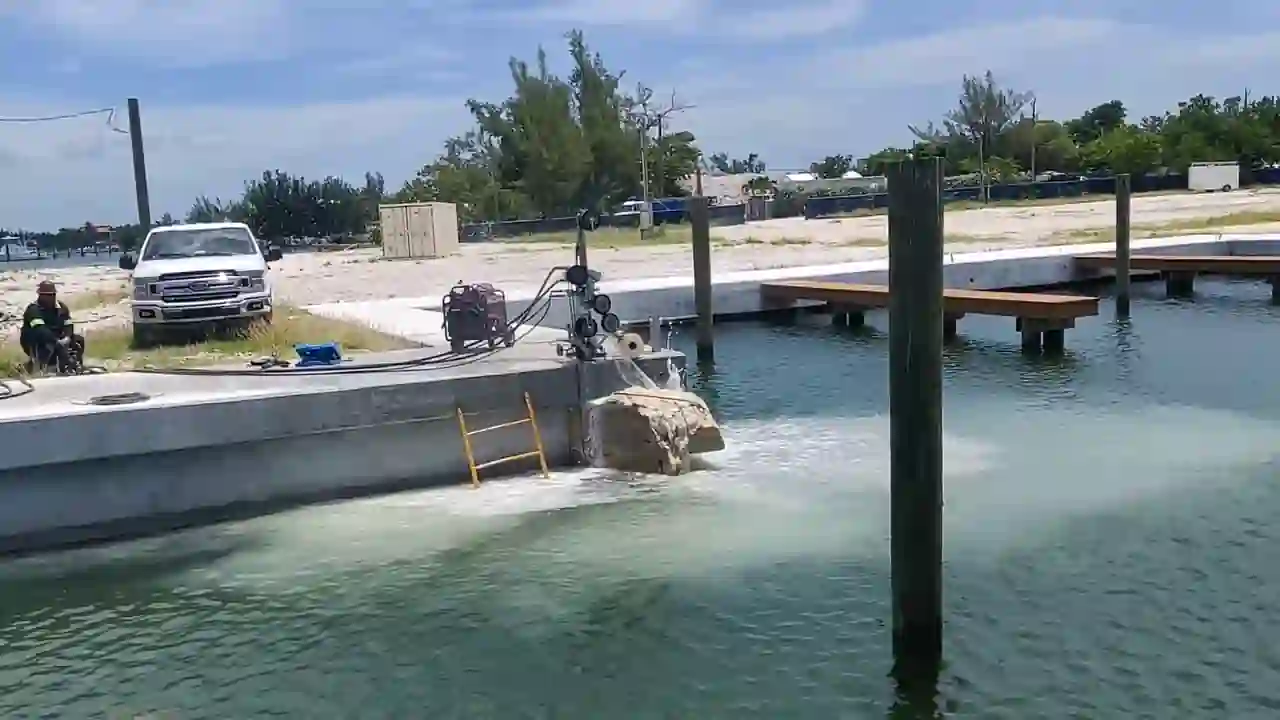
Across these five projects, certain cost drivers appear repeatedly. Any contractor building a bid without explicitly accounting for each of these is working with incomplete data:
- Concrete compressive strength (PSI): Higher PSI means slower cut speeds and faster blade wear — both directly increase cost.
- Aggregate type and hardness: Silica aggregate is significantly more abrasive than limestone. Miami’s older stock tends toward limestone; newer pours often use harder aggregates.
- Reinforcement density and type: Rebar spacing, bar size, and post-tension cable layout all affect blade selection, cut speed, and risk profile.
- Access conditions: Ground level, elevated, occupied, restricted hours — each tier adds cost and time.
- Slurry management: Volume, disposal requirements, and containment complexity vary by job size and site conditions.
- GPR scanning: Non-negotiable on post-tension slabs. Budget it as a fixed line item, not an optional add-on.
The difference between a profitable concrete cutting job and a money-losing one almost always comes down to how thoroughly these variables were assessed before the bid was submitted. The projects documented here range from $3,200 to $28,400 — and every dollar in that range is traceable to a specific technical condition on the job site. That’s the standard every estimate should be held to.