Why Miami Lakes Demolition and Construction Bids Vary So Dramatically
If you’ve pulled multiple bids for a construction or demolition project in Miami Lakes and found a $40,000 spread between contractors, you’re not dealing with incompetence — you’re dealing with wildly different assumptions about site conditions, material classifications, and labor burden. Miami Lakes sits in a zone where South Florida’s high water table, older commercial infrastructure, and dense residential adjacency converge into a cost environment that punishes underestimated scopes. As a senior concrete consultant who has walked hundreds of sites across Miami-Dade, I’ll tell you plainly: the contractors who win on price and lose on margin almost always failed to account for the same three or four variables. This post breaks those down with real numbers and honest timeline expectations.
The Real Cost Drivers on Miami Lakes Demolition Sites
Before any number lands on a bid sheet, a qualified estimator needs to understand what’s actually being demolished and what’s beneath it. Miami Lakes commercial and residential demolition projects share several cost drivers that are unique to this geography.
Concrete Slab Thickness and Reinforcement Density
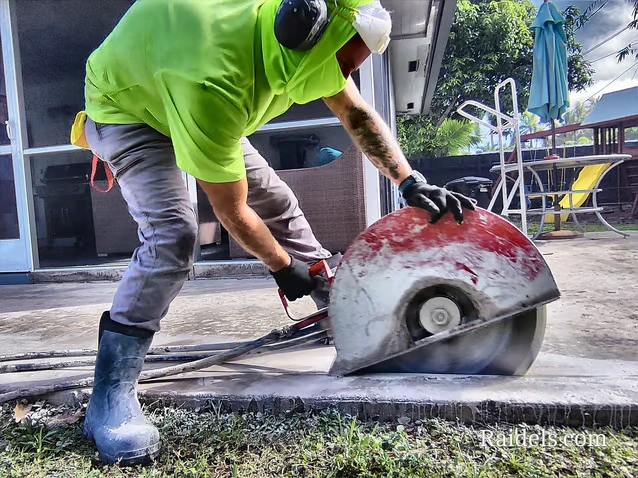
Older commercial slabs in Miami Lakes — particularly those built between 1975 and 1995 — commonly run 6 to 8 inches thick with #5 rebar on 12-inch centers. That’s not a standard residential pour. Diamond blade consumption alone on a 10,000-square-foot slab removal can run between $1,800 and $3,200 depending on aggregate hardness. Factor in hydraulic breaker time, bobcat loading, and haul-off, and you’re looking at $4.50 to $7.25 per square foot for full slab demolition before debris disposal costs are added.
High Water Table Complications
Miami Lakes averages a water table between 2 and 5 feet below grade depending on season. Any below-grade demolition — elevator pits, parking structures, basement-level utility trenches — requires dewatering equipment staged on-site. A continuous dewatering setup for a 30-day demolition scope adds $1,200 to $3,500 per week depending on pump capacity and discharge permitting requirements through Miami-Dade DERM. Contractors who skip this line item in their bids are setting themselves up for change orders.
Confined Space Premiums
Mechanical rooms, underground utility vaults, and parking garage demolition in Miami Lakes frequently trigger OSHA-defined confined space protocols. Certified entry supervisors, atmospheric monitoring equipment, and rescue standby personnel add 15% to 22% to the direct labor cost for any scope that involves confined space entry. If your contractor isn’t mentioning this, ask directly. Learn more about the technical requirements at confined space demolition protocols before you sign off on a scope of work.
Timeline Estimation for Construction and Demolition in Miami Lakes
Timelines on Miami Lakes projects are consistently underestimated by 20% to 35% when contractors fail to account for permitting lag, material testing delays, and weather windows. Here’s a realistic breakdown by project type.
Light Commercial Demolition (Under 5,000 SF)
- Permitting and NOC filing: 10 to 21 business days through Miami-Dade Building Department
- Utility disconnection coordination: 5 to 10 business days (FPL, MDWASD, gas)
- Active demolition phase: 3 to 7 days depending on structural complexity
- Debris removal and site grading: 2 to 4 days
- Total realistic timeline: 5 to 7 weeks from contract execution
Mid-Scale Concrete Demolition (5,000 to 25,000 SF)
- Permitting and structural review: 21 to 45 business days
- Asbestos and lead-paint abatement (if pre-1980 structure): 5 to 15 days — this is non-negotiable and heavily enforced in Miami-Dade
- Active demolition phase: 10 to 21 days
- Concrete debris haul-off and disposal: Concurrent or 3 to 5 additional days
- Total realistic timeline: 10 to 14 weeks
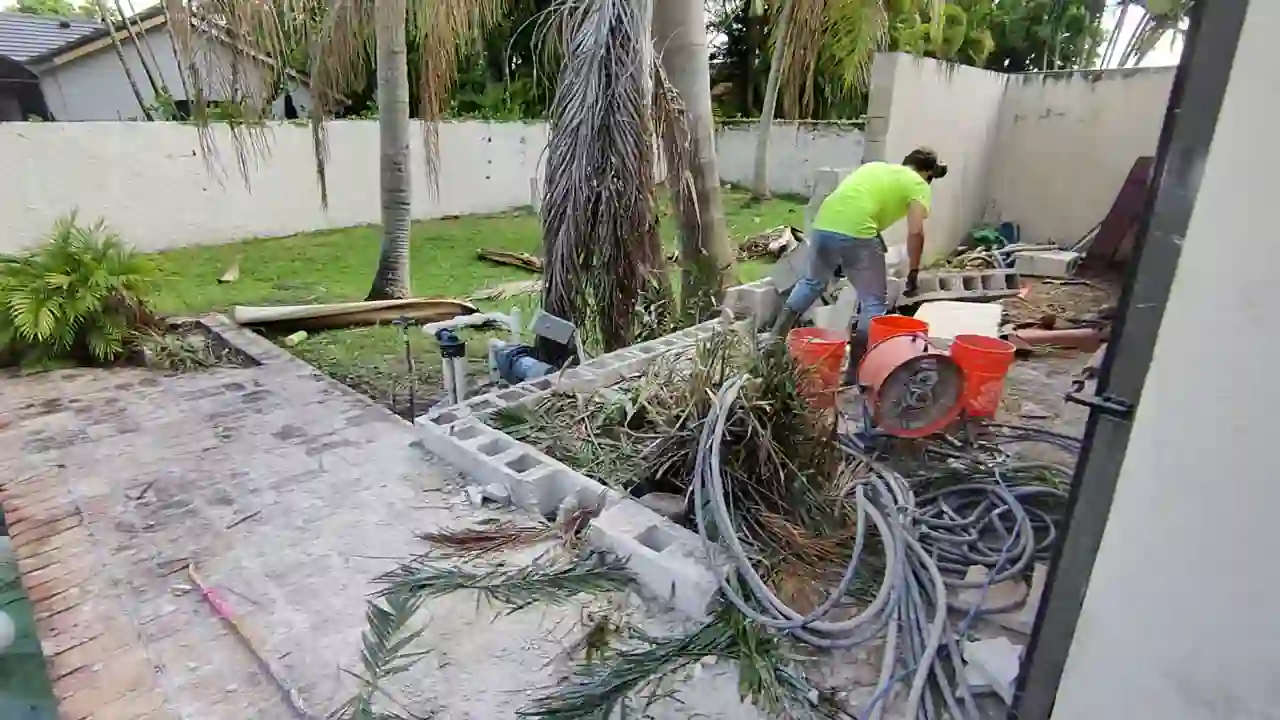
Concrete debris disposal is a cost center that most project owners don’t anticipate correctly. Tipping fees at Miami-Dade approved C&D facilities currently run $52 to $78 per ton, and a 10,000-square-foot slab at 6 inches thick generates roughly 75 to 90 tons of material. That’s a $4,000 to $7,000 disposal line item before any recycling credits. For a detailed breakdown of how to manage this responsibly, see our guide on removal and disposal of concrete debris after demolition.
Bidding Factors That Separate Accurate Estimates from Guesswork
Saw Cut Sequencing and Structural Load Considerations
On tight Miami Lakes job sites — particularly infill commercial pads adjacent to existing occupied structures — the sequence of saw cuts directly affects both cost and timeline. A poorly sequenced cut pattern on a post-tensioned slab can cause uncontrolled cracking that damages adjacent footings and triggers structural engineer involvement at $300 to $600 per hour. Site foremans need to understand cut sequencing before the blades ever hit concrete. This is covered in depth at what every site foreman needs to know before making saw cuts on a tight job site.
Vibration and Noise Ordinance Compliance Costs
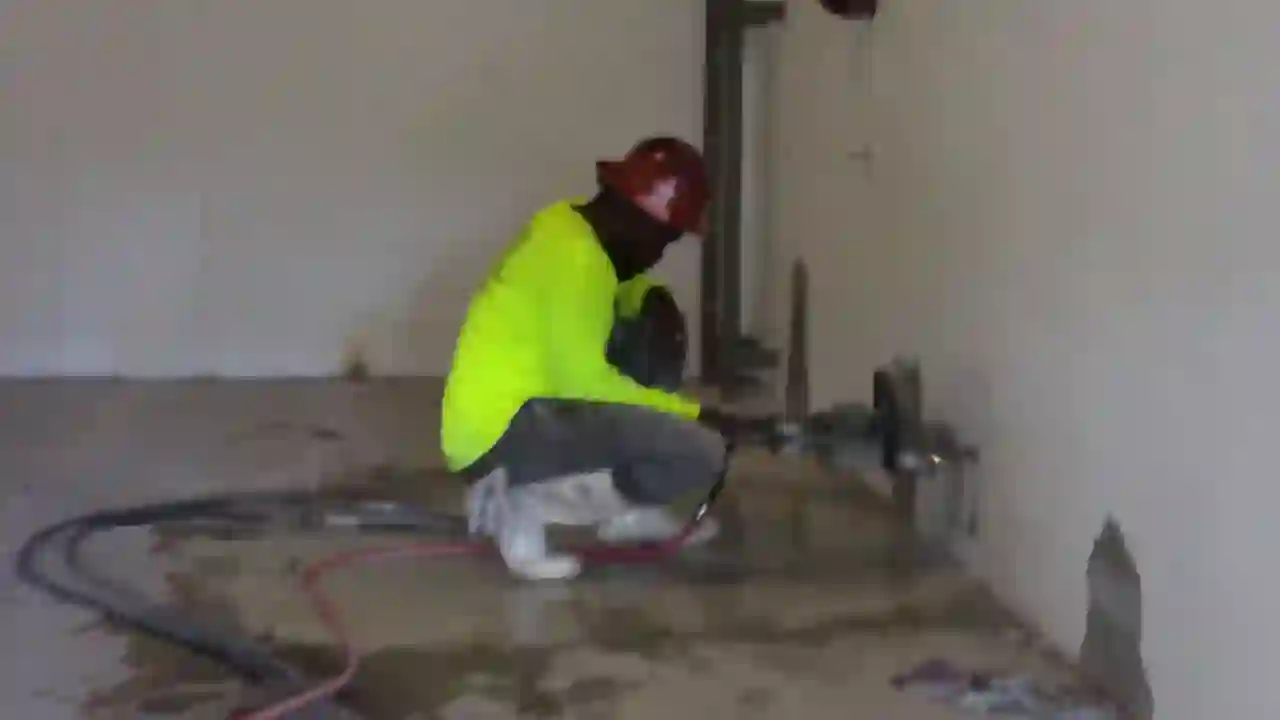
Miami Lakes has residential zones within 200 feet of most commercial corridors on NW 67th Avenue and the Main Street district. Miami-Dade County Noise Ordinance Chapter 21 limits construction noise to 65 dBA at the property line during daytime hours. Hydraulic impact breakers routinely exceed 85 dBA at 50 feet. Contractors who plan to use impact demolition near residential adjacency need to budget for either acoustic barriers ($800 to $2,400 for temporary panel systems) or transition to wire saw and core drill methods that run quieter. Those restricted-access and noise-sensitive scenarios are explored in detail at what nobody tells you about demolition in tight restricted job sites.
Dust Suppression and Air Quality Compliance
Miami-Dade DERM enforces PM10 particulate standards aggressively on demolition sites. Water suppression systems, HEPA-filtered vacuum shrouds on saw cutting equipment, and wind fence installation are not optional on sites within 300 feet of occupied structures. Budget $1,500 to $4,500 per project for compliant dust suppression infrastructure depending on site perimeter and demolition method. More on compliant approaches is available through demolition dust suppression techniques.
Sustainable Material Handling as a Bid Differentiator
Owners and general contractors in Miami Lakes are increasingly requesting C&D waste diversion documentation for LEED submissions and municipal incentive programs. Contractors who can demonstrate 75% or greater concrete recycling rates — directing crushed material to FDOT-approved recycled aggregate facilities — can position that capability as a bid differentiator rather than a cost burden. Recycled concrete aggregate from Miami Lakes demolition projects is currently accepted at multiple Broward and Miami-Dade processing facilities at zero or reduced tipping fees when material is clean and segregated. Explore sustainable demolition practices further at sustainable practices in concrete demolition.
Mobilization and Equipment Staging Costs Specific to Miami Lakes
Miami Lakes’ grid layout and the limited staging areas along the Palmetto Expressway corridor mean that equipment mobilization — particularly for large-diameter core drill rigs, wire saw systems, and track-mounted hydraulic processors — often requires off-hours delivery and police escort coordination for oversize loads. That adds $400 to $1,200 per mobilization event depending on equipment dimensions and route restrictions. Multi-phase projects that can consolidate equipment mobilizations into fewer moves save meaningfully on this line item.

Building a Defensible Bid for Miami Lakes Construction and Demolition
A defensible bid for construction and demolition in Miami Lakes is built on four pillars: a thorough GPR scan of the slab and subsurface prior to pricing, a confirmed utility clearance letter from all four major utilities, a written asbestos/lead assessment from a Florida-licensed industrial hygienist, and a sequenced demolition methodology that accounts for adjacent structure protection. Contractors who present bids without these four elements documented are pricing on assumptions — and assumptions become change orders. Owners who accept bids without demanding this documentation are accepting risk transfer disguised as competitive pricing.
The cost range for a well-scoped Miami Lakes commercial demolition project currently sits between $8.50 and $18.00 per square foot all-in, depending on structural complexity, hazardous material presence, disposal requirements, and site access constraints. That range is wide because the variables are real. The contractors who consistently come in at the low end of that range without sacrificing quality are the ones who’ve invested in pre-bid site intelligence — and that investment is always worth it.