Why Breaking a Concrete Slab Is One of the Most Hazard-Dense Tasks on Any Job Site
Every year, concrete demolition work sends hundreds of workers to emergency rooms across the United States — and a significant number of those incidents trace back to one preventable root cause: inadequate safety planning before the first jackhammer swings. Breaking a concrete slab sounds straightforward. In practice, it involves explosive fragmentation forces, crystalline silica dust exposure, embedded rebar tension release, and utility strike risks that can kill or permanently disable a worker within seconds. Before any crew member touches a demolition tool, the entire operation must be mapped against OSHA 29 CFR 1926 Subpart Q — Demolition — and the agency’s Respirable Crystalline Silica Standard at 29 CFR 1926.1153. This isn’t paperwork formality. It’s the difference between a productive demolition day and a fatality investigation.
Pre-Demolition Engineering Survey Requirements Under OSHA 1926.850
OSHA mandates a competent-person engineering survey before any structural demolition begins. For slab work specifically, this survey must identify the slab’s structural loading role, the presence and location of post-tensioned or pre-stressed tendons, embedded conduit systems, plumbing penetrations, and any hazardous materials encapsulated within or beneath the concrete. Skipping this step is a willful violation — and OSHA willful violations carry penalties up to $156,259 per incident as of current federal guidelines.
In South Florida construction environments, slabs frequently conceal PVC conduit runs for electrical systems, copper water supply lines, and in older commercial properties, asbestos-containing vapor barriers directly beneath the pour. A ground-penetrating radar (GPR) scan conducted before breaking work begins is not optional on any professionally managed site — it’s the baseline standard. At Concrete Cutting Miami’s slab sawing division, GPR scanning is integrated into every pre-demolition workflow to eliminate utility strike hazards before any cutting or breaking tool is deployed.
Post-Tensioned Slab Identification and Tendon Release Hazards
Post-tensioned slabs represent one of the most dangerous breaking scenarios in commercial and high-rise construction. Tendons in these systems are stressed to between 22,000 and 33,000 pounds per square inch. When a jackhammer or hydraulic breaker inadvertently severs an active tendon, the stored energy releases instantaneously — launching concrete fragments and steel cable ends at velocities capable of penetrating standard PPE and causing fatal injuries up to 30 feet from the point of failure. Identification markers, typically plastic end caps or “PT” stamped on slab edges, must be verified before work begins. If markers are absent or the slab age is unknown, assume post-tensioning is present and consult a structural engineer before proceeding.
Mandatory PPE Specifications for Concrete Slab Breaking Operations
General-purpose construction PPE is insufficient for slab demolition. The hazard profile demands a specific, layered personal protective equipment matrix. Every crew member within the active breaking zone must be equipped according to the following minimum standard:
- Head Protection: ANSI/ISEA Z89.1 Type I or Type II, Class E hard hat — mandatory for all personnel within the demolition perimeter.
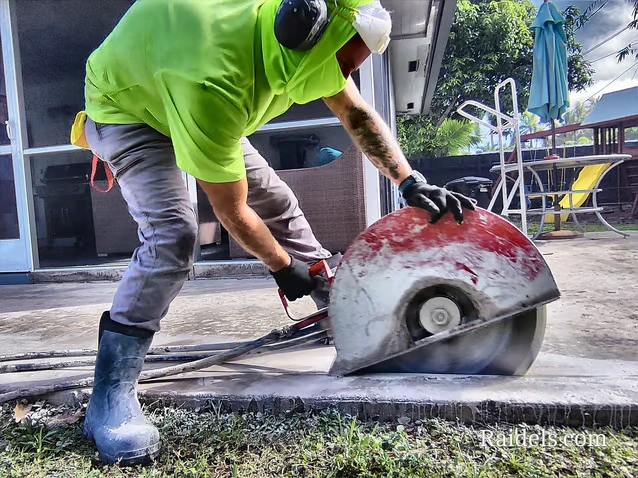
- Eye and Face Protection: ANSI Z87.1-rated safety glasses are baseline; full polycarbonate face shields are required when operating hydraulic breakers or jackhammers due to high-velocity fragment ejection.
- Hearing Protection: Electric demolition hammers and pneumatic jackhammers generate 95–115 dB(A) at the operator position. OSHA 29 CFR 1910.95 mandates hearing protection at exposures exceeding 85 dB(A) over an 8-hour TWA. Double protection — foam insert earplugs plus over-ear muffs — is recommended for continuous breaking operations.
- Respiratory Protection: A NIOSH-approved half-face respirator with P100/OV combination cartridges is the minimum for dry breaking operations. Full-face APF-10 respirators are required when silica concentrations cannot be confirmed below the OSHA action level of 25 µg/m³.
- Hand and Arm Protection: Anti-vibration gloves rated to ISO 10819 are required for jackhammer operators to mitigate Hand-Arm Vibration Syndrome (HAVS) risk during extended breaking sessions.
- Foot Protection: ASTM F2413-18 steel-toed, puncture-resistant boots — non-negotiable given the volume of sharp rebar and concrete fragment debris generated during slab demolition.
- High-Visibility Vest: Class 2 minimum when operating in proximity to active vehicle traffic or heavy equipment.
OSHA Silica Dust Control Table D Compliance During Slab Breaking
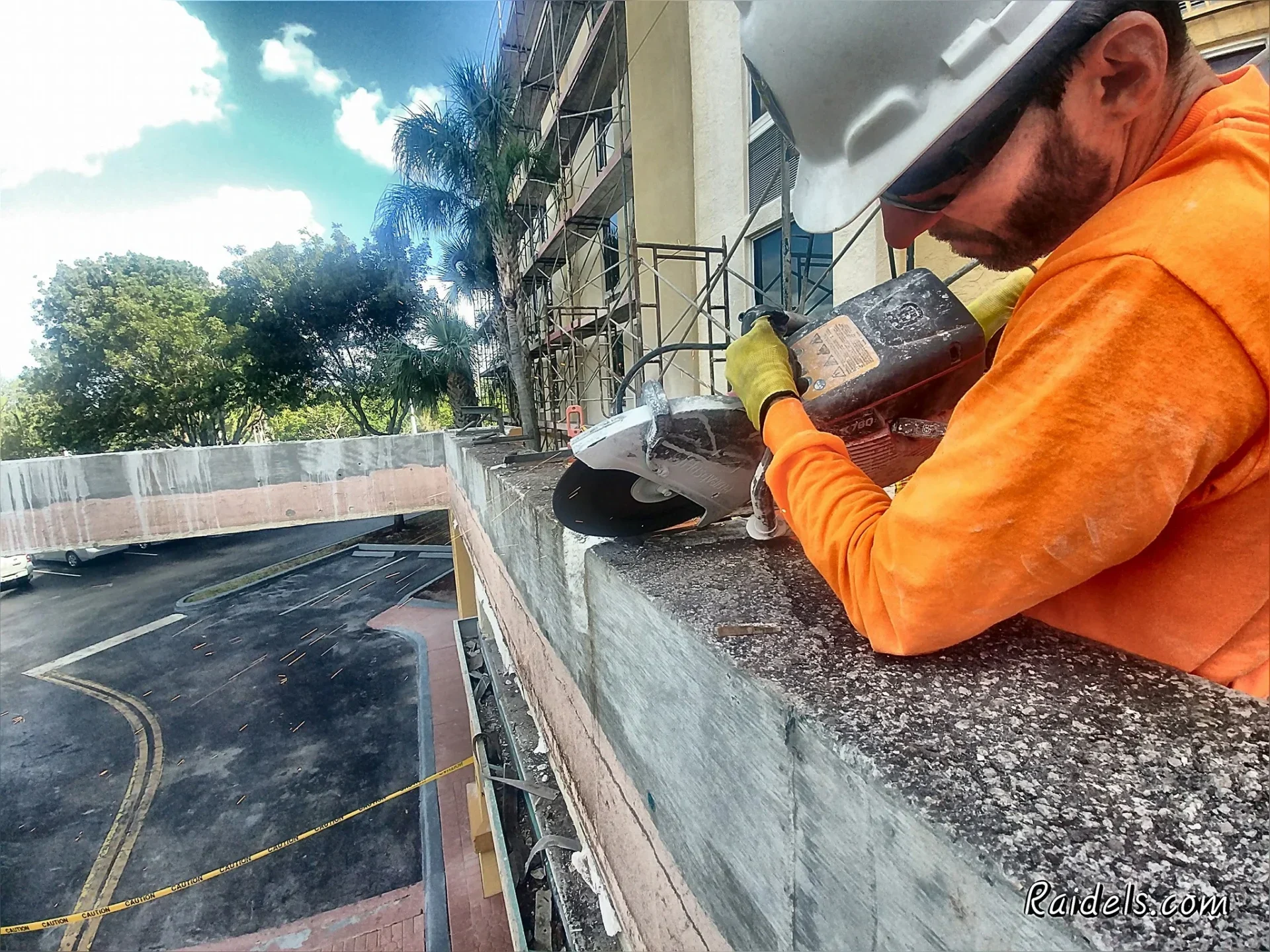
Crystalline silica exposure during concrete breaking is classified as a Group 1 carcinogen by IARC and is the primary cause of silicosis — an irreversible, progressive, and potentially fatal lung disease. OSHA’s 29 CFR 1926.1153 Table 1 specifies engineering controls that, when fully implemented, eliminate the need for air monitoring and allow crews to proceed without individual exposure sampling. For jackhammer and chipping hammer operations on slabs, Table 1 compliance requires wet methods or a tool-mounted HEPA vacuum dust collection system operating continuously during breaking.
Wet cutting and wet breaking are the gold standard for silica control in Miami’s climate, and they serve double duty — suppressing dust while also cooling diamond tooling during cutting operations. Learn more about how wet cutting practices in Miami are applied across demolition and precision cutting workflows to maintain both tool longevity and OSHA compliance simultaneously.
Establishing an Exposure Control Plan Before Breaking Begins
Any employer whose workers may be exposed to respirable crystalline silica at or above the action level of 25 µg/m³ as an 8-hour TWA must develop a written Exposure Control Plan. For slab breaking operations, this plan must identify the specific tasks that generate silica exposure, the engineering and work practice controls in use, the housekeeping measures to prevent secondary exposure from settled dust, and the procedures for restricting access to high-exposure areas. The plan must be reviewed and updated annually and must be accessible to workers and their designated representatives on request.
Hydraulic Breaker and Jackhammer Operating Protocols That Prevent Structural Collapse
Slab breaking methodology must account for the slab’s relationship to the overall structural system. Breaking a grade-level slab on compacted fill is fundamentally different from breaking an elevated structural slab that carries floor loads. For elevated slabs, sequential breaking patterns must be established by a structural engineer to prevent progressive collapse — a scenario where removing a section of slab redistributes loads beyond the capacity of adjacent structural members. OSHA 29 CFR 1926.855 specifically governs floor opening protection and requires that floor openings created during demolition be immediately guarded or covered to a load rating of at least twice the expected load.
On grade-level slabs, the primary structural concern shifts to undermining — particularly in South Florida where karst geology and high water tables create void formation risks beneath slabs. A slab that appears solid from above may have significant sub-slab voids due to soil erosion or biological activity. Workers operating heavy jackhammers on compromised slabs risk sudden breakthrough and entrapment. Probing the sub-slab condition with a steel rod prior to breaking in any area where previous water infiltration or settlement cracking is observed is a non-negotiable field protocol.
Perimeter Barricading and Exclusion Zone Establishment
OSHA 29 CFR 1926.502 establishes fall protection requirements, but exclusion zone requirements for demolition debris projection extend beyond fall protection standards. During active jackhammer or hydraulic breaker operation, concrete fragments can be ejected laterally up to 20 feet from the breaking point. The exclusion zone perimeter must be established at a minimum of 1.5 times the maximum calculated fragment projection distance, with physical barricading — not just tape — preventing unauthorized entry. On urban Miami job sites where pedestrian traffic and adjacent occupied structures are common, this often requires engineered debris containment screens rated to absorb fragment impact forces.
Environmental compliance is equally critical on South Florida demolition sites. Projects near waterways, wetlands, or in municipalities with strict construction waste ordinances must implement containment protocols to prevent concrete slurry and demolition debris from entering stormwater systems. The Golden Beach construction and demolition compliance framework provides an instructive model for how environmental and safety protocols can be integrated into a single job-site management system.
Rebar Exposure, Cutting Sequencing, and Struck-By Hazard Mitigation
As concrete slab sections are broken and lifted, exposed rebar presents acute struck-by and impalement hazards. OSHA’s “rebar impalement” hazard standard under 29 CFR 1926.701(b) requires that all protruding rebar onto which workers could fall must be guarded with rebar caps rated for fall protection — not decorative plastic mushroom caps, which provide zero impact resistance. During active breaking operations, rebar sections under bending stress from adjacent broken concrete can spring unpredictably when the restraining concrete is removed. Workers must maintain lateral clearance from exposed rebar ends during fragment removal and should use long-handled tools rather than direct hand contact when repositioning broken slab sections.
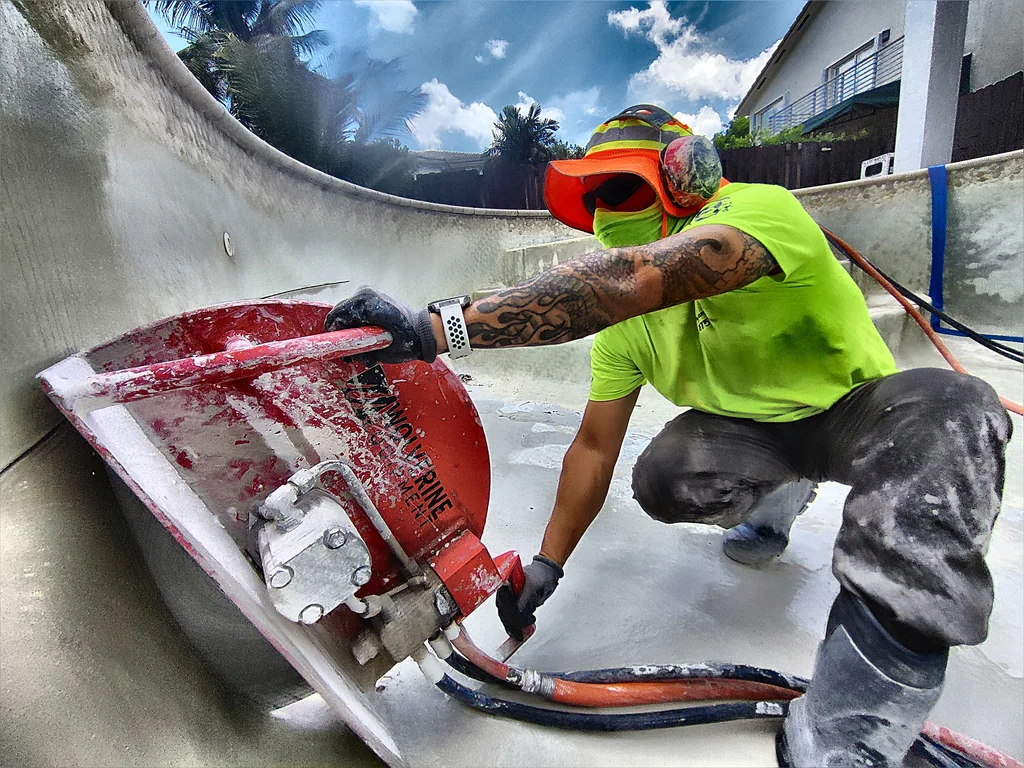
For precision demolition scenarios where selective slab removal is required — such as creating new utility penetrations or expanding existing openings — core drilling services combined with slab sawing provide a controlled alternative to jackhammer breaking that dramatically reduces rebar spring hazard, fragment projection risk, and silica dust generation. Precision cutting methods also eliminate the structural shock loading that hydraulic breakers transmit through adjacent slabs, making them the preferred method in occupied buildings or near sensitive equipment. For projects across Miami’s concrete construction sector, integrating cutting and drilling with strategic breaking sequences defines best-in-class demolition practice.
Post-Breaking Housekeeping, Waste Characterization, and Site Restoration Protocols
The hazard profile of a slab demolition site does not end when the last piece of concrete is broken. Concrete demolition debris contains respirable silica dust that can remain airborne or become re-suspended by foot traffic, wind, or equipment movement for hours after active breaking ceases. OSHA 29 CFR 1926.1153 housekeeping requirements prohibit dry sweeping or dry blowing of silica-containing debris — wet sweeping, HEPA-filtered vacuuming, or wet-suppression methods are required for all post-breaking cleanup operations. Workers performing cleanup must wear the same respiratory protection required during active breaking until air monitoring confirms exposures have dropped below the action level.
Concrete demolition waste in Florida must be characterized prior to disposal. Slabs poured before 1980 may contain lead-based paint coatings or fly ash with elevated heavy metal concentrations. Any slab with visible staining, discoloration, or a history of industrial chemical exposure must be tested before disposal at a standard construction and demolition debris facility. Misclassified hazardous waste disposal is a separate regulatory violation under FDEP and EPA RCRA regulations, carrying penalties independent of any OSHA findings. A complete job closeout includes a signed waste manifest, photographic documentation of the cleared slab area, and a written record of all safety controls implemented during the operation — documentation that protects both the contractor and the client in the event of a post-project regulatory inquiry.