Why Slurry Is the Hidden Liability in Every Concrete Wall Cutting Project
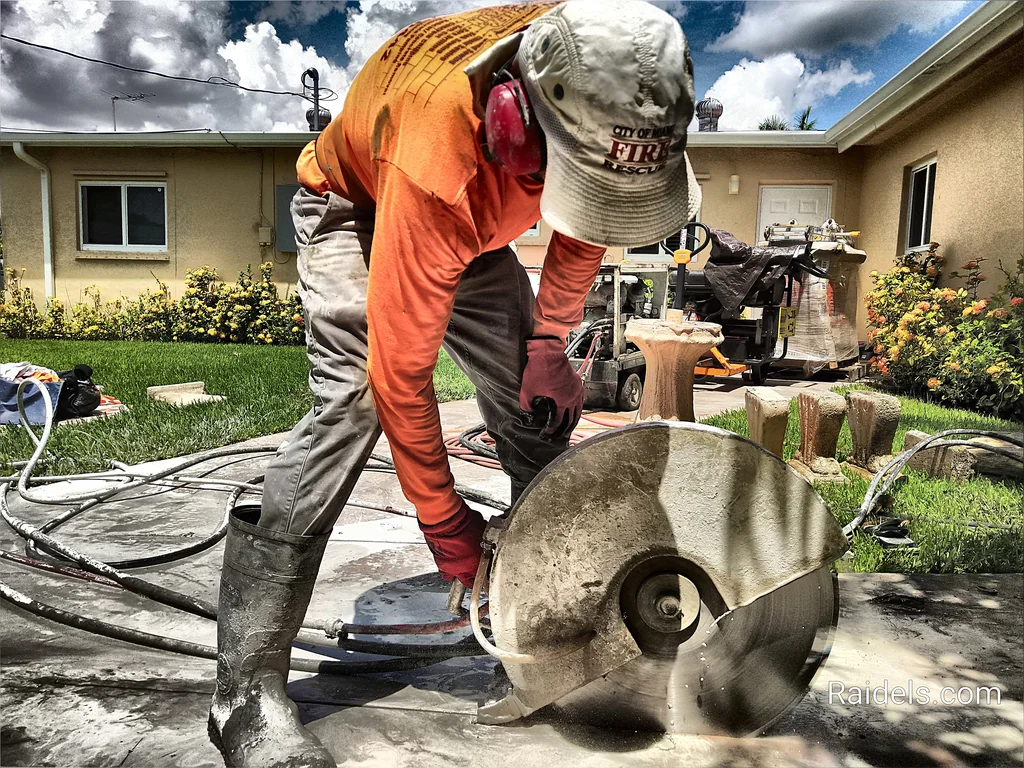
Every contractor who has ever run a diamond blade through a reinforced concrete wall knows the immediate concerns — blade depth, RPM calibration, rebar detection, and structural integrity. What gets far less attention, and what generates the most regulatory exposure in Miami-Dade County, is what happens to the water. Wet cutting through a concrete wall produces a fine alkaline slurry — a mixture of Portland cement particles, silica fines, aggregate dust, and cutting water — that carries a pH typically between 11 and 13. That’s caustic enough to violate stormwater discharge permits, damage municipal sewer infrastructure, and trigger EPA enforcement actions under the Clean Water Act. If your crew is cutting a wall opening and that gray water is sheeting across a slab toward a storm drain, you have a compliance problem, not just a mess.
The Chemistry of Concrete Cutting Slurry and Why It Matters Legally
Concrete cutting slurry is not inert. When diamond blades engage a concrete wall — whether you’re cutting a door opening in a CMU block partition or coring through a 12-inch post-tensioned shear wall — the hydration byproducts in the cured cement matrix are reactivated by the cutting water. The result is a highly alkaline suspension that contains calcium hydroxide, calcium silicate hydrates, and respirable crystalline silica. From a regulatory standpoint, this slurry is classified as a non-hazardous solid waste in most Florida jurisdictions, but its discharge into stormwater systems is explicitly prohibited under Florida Statute 403 and Miami-Dade County’s National Pollutant Discharge Elimination System (NPDES) permit requirements.
Contractors operating in Miami who are not actively managing slurry at the point of generation are exposed to stop-work orders, fines, and in repeat-offense scenarios, permit revocation. The environmental compliance standards for concrete breaking and cutting in Miami are not optional guidance — they are enforceable permit conditions that apply to every wall cutting operation, regardless of project size.
Containment System Engineering for Vertical Surface Cutting
Horizontal slab cutting has well-established slurry containment protocols — berms, vacuum systems, and collection sumps are relatively straightforward to deploy on a flat surface. Vertical wall cutting is mechanically more complex. Gravity works against you. Slurry generated at the blade contact point on a wall will run downward along the wall face, spread across the floor, and migrate toward any low point, which in Miami’s flat topography is almost always a storm drain or a French drain tied to the water table.
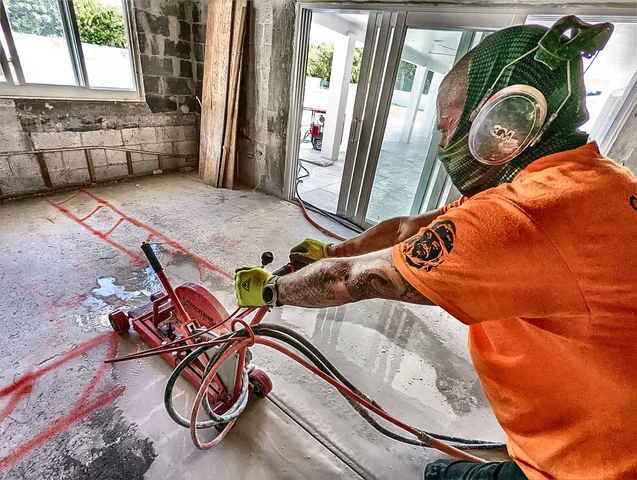
Professional-grade wall cutting containment systems for cutting through a concrete wall use a combination of the following engineered controls:
- Blade-integrated water shrouds — vacuum-shroud attachments that capture slurry at the point of cut, reducing floor contamination by up to 85% compared to open wet cutting
- Wall-mounted polyethylene catch trays — rigid or semi-rigid trays affixed below the cut line that channel runoff to a collection point rather than allowing it to sheet across the floor
- Perimeter berms and containment dikes — quick-deploy foam or rubber berms that isolate the work zone and prevent slurry migration to uncontrolled areas
- Wet-dry industrial vacuums with slurry tanks — high-CFM vacuum systems that collect slurry continuously during the cut, eliminating pooling on the floor
- Slurry pH neutralization stations — on-site treatment using citric acid or CO₂ injection to bring slurry pH below 9.0 before any controlled discharge
The specific combination of controls required depends on the wall substrate, the total linear footage of cut, the proximity of stormwater infrastructure, and whether the project is on a previously permitted site. For historical preservation projects, where wall cutting often occurs in buildings adjacent to sensitive drainage corridors, the containment requirements are even more stringent.
Vacuum Extraction Rates and Blade Water Flow Calibration
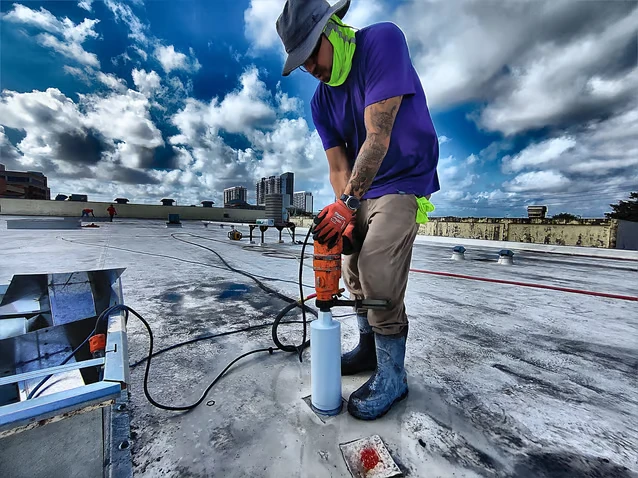
One of the most common technical errors crews make when cutting through a concrete wall is miscalibrating the relationship between blade cooling water flow rate and vacuum extraction capacity. Diamond blades used for wall cutting — typically 14-inch to 20-inch segmented blades on wall saws or 6-inch to 12-inch blades on angle grinders for smaller openings — require a minimum water flow to prevent thermal stress fracturing of the diamond matrix. That minimum is typically 0.5 to 1.5 gallons per minute depending on blade diameter and concrete hardness.
If your vacuum extraction system is rated below the input water volume, slurry accumulates faster than it is removed. The excess migrates. Conversely, running extraction rates too high creates negative pressure at the shroud that can pull the blade off-line on deep cuts. The correct calibration is a matched-flow system where extraction volume equals or slightly exceeds input volume, accounting for the additional slurry mass generated by the concrete material itself — typically 0.3 to 0.6 pounds of suspended solids per gallon of cutting water.
For projects involving driveway removal or exterior wall cutting adjacent to permeable surfaces, matched-flow vacuum systems are non-negotiable. The driveway maintenance and cutting standards in Miami reflect this, requiring documented slurry containment plans before any wet cutting permit is issued on exterior hardscape.
On-Site Slurry Dewatering and Disposal Protocols
Once slurry is collected, it must be managed as a solid waste stream, not discharged to any drain — storm, sanitary, or otherwise — without treatment and permit authorization. The standard on-site dewatering protocol involves allowing collected slurry to settle in a containment tank or lined pit, decanting the clarified water off the top for pH testing, and treating the remaining solids as construction debris for licensed disposal.
pH testing must be performed using calibrated digital meters, not litmus paper, for any project subject to NPDES documentation requirements. Readings must be logged with timestamps and retained as part of the project’s environmental compliance record. In Miami-Dade, inspectors from the Department of Regulatory and Economic Resources (RER) have authority to request these logs on active job sites without advance notice.
For high-volume wall cutting operations — think large commercial renovations, hospital expansions, or multi-story parking structure modifications — mobile dewatering units with filter press technology can process slurry on-site, producing a dry filter cake for landfill disposal and clarified water that can be recirculated as cutting water, dramatically reducing both disposal costs and water consumption. This closed-loop approach is increasingly specified by general contractors and owners on LEED-targeted projects.
Silica Dust Exposure Control During Dry and Near-Dry Cutting
While wet cutting is the standard for managing slurry during wall cutting, there are scenarios where near-dry or dry cutting is attempted — particularly in occupied buildings where water damage to interiors is a concern. OSHA’s Respirable Crystalline Silica Standard (29 CFR 1926.1153) establishes a permissible exposure limit of 50 micrograms per cubic meter of air as an 8-hour time-weighted average. Dry cutting through a concrete wall without engineering controls can generate silica concentrations 10 to 100 times that limit within seconds.
The only compliant approach for near-dry wall cutting is continuous HEPA-filtered vacuum extraction at the blade shroud, combined with respiratory protection at the assigned protection factor level for the anticipated exposure. This is not a substitution for wet cutting from an environmental standpoint — it eliminates slurry but creates an airborne hazard that must be managed with equal rigor. Crews operating in Miami’s concrete cutting sector must be trained and equipped for both exposure pathways.
Pre-Job Environmental Planning Checklist for Wall Cutting Operations
Before any blade contacts a concrete wall on a Miami job site, the following environmental planning steps should be completed and documented:
- Site drainage mapping — identify all storm drains, floor drains, and permeable surfaces within 50 feet of the work zone
- Containment system selection and staging — match system type to wall orientation, cut volume, and proximity to drainage infrastructure
- Water source and volume calculation — estimate total cutting water input based on linear footage, blade size, and substrate hardness
- Slurry disposal pre-arrangement — confirm licensed hauler or on-site dewatering capacity before work begins
- pH meter calibration verification — log calibration check with two-point buffer solution before first use on site
- NPDES permit review — confirm whether the site’s existing permit covers cutting operations or requires a separate authorization
- Crew training documentation — verify all personnel have current silica awareness and slurry management training on file
Industry professionals looking to stay current on compliance requirements and tooling advancements should note that World of Concrete 2026 will feature significant programming on environmental compliance and diamond tooling innovation — a critical resource for anyone specifying or executing wall cutting work at scale.
The Business Case for Compliant Slurry Management Is Stronger Than the Regulatory Case
Regulatory compliance is the floor, not the ceiling. Contractors who invest in proper slurry containment systems for cutting through a concrete wall reduce re-work from water damage, eliminate disposal liability exposure, improve blade life through optimized cooling water management, and build a documented compliance record that wins bids on public and institutional projects where environmental certifications are evaluated. In Miami’s competitive concrete cutting market, the crews that treat slurry management as a technical specialty — not an afterthought — are the ones holding the contracts five years from now.