Why Changing Pool Shape Is One of the Most Hazard-Dense Jobs in Residential Concrete Work
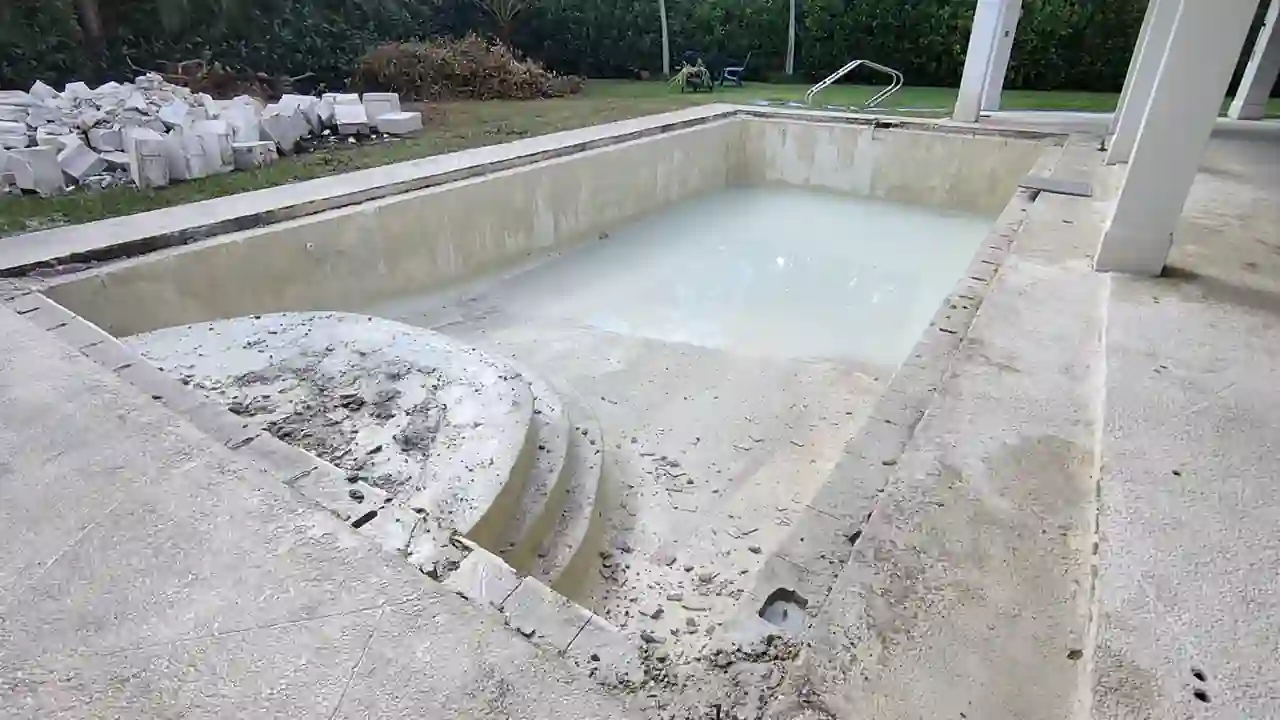
When a homeowner asks to change pool shape, what they’re picturing is a sleek new kidney curve or a dramatic rectangular lap pool replacing their dated oval. What they’re not picturing is the controlled demolition sequence, the confined-space hazard assessments, the crystalline silica exposure management, and the structural load calculations that have to happen before a single diamond blade touches gunite. As a concrete cutting contractor operating in South Florida’s saturated pool renovation market, we’ve seen what happens when these jobs get treated like simple remodels. It isn’t pretty, and it’s frequently avoidable. This post breaks down the real safety protocols, OSHA obligations, and hazard mitigation strategies that govern every pool reshaping project we execute.
Pre-Job Hazard Assessment Before Any Cutting Begins
The most dangerous moment on a pool reshaping project is the one before work starts — specifically, when a crew assumes they know what’s in the walls. Gunite and shotcrete pools in Miami-Dade County frequently contain embedded conduit, bonding wire, return jets, and main drain plumbing that don’t appear on any original drawing. Before a blade engages, every operator must conduct a ground-penetrating radar (GPR) scan or rebar locator sweep across every planned cut line.
OSHA 29 CFR 1926 Subpart Q governs concrete and masonry construction and applies directly to pool demolition sequences. Under this standard, employers are required to assess structural integrity prior to demolition, establish a controlled access zone, and ensure no worker is exposed to falling concrete debris without appropriate PPE. For pool reshaping specifically, this means:
- Utility locates completed at least 72 hours before mobilization — Florida law (Florida Statute 556) mandates Sunshine State One-Call notification, but electrical bonding grids embedded in the pool shell are not covered by utility marking services and must be located independently.
- Water table assessment — Miami sits on porous limestone with a water table often less than 4 feet below grade. Cutting the pool shell without hydrostatic relief can result in shell float or sudden water intrusion into the work zone.
- Structural engineer sign-off on cut sequences — Removing sections of a pool shell changes load paths. Any reshaping that eliminates more than 20% of the shell perimeter should be reviewed by a licensed PE before work begins.
For a deeper look at how these pre-job assessments fit into broader demolition safety planning, our team has documented the process in The Essential Guide to Safe Demolition Practices.
Crystalline Silica Exposure Controls During Diamond Blade Cutting on Pool Shells
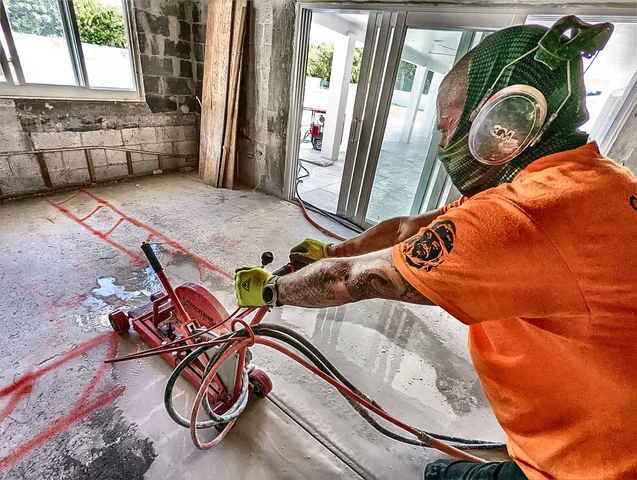
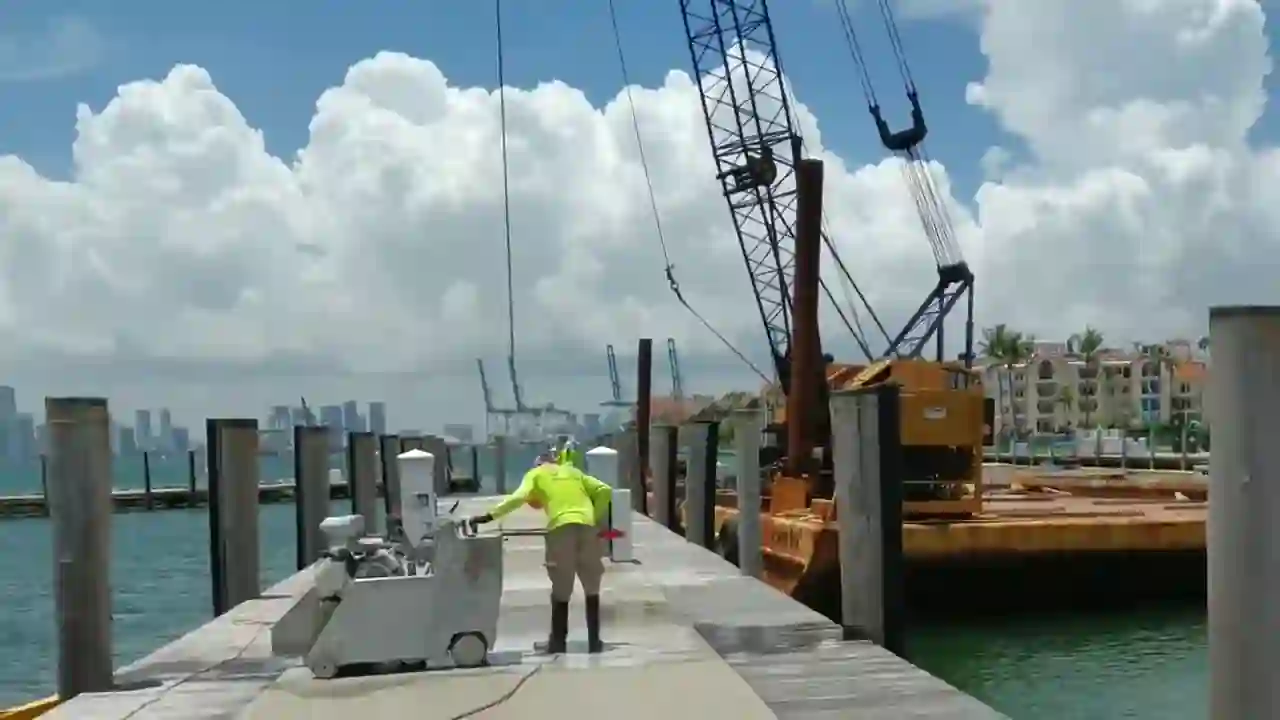
OSHA’s Respirable Crystalline Silica Standard (29 CFR 1926.1153) is the single most-cited regulation on concrete cutting job sites, and pool reshaping projects are no exception. Gunite is approximately 95% silica by composition. When you’re cutting a 6-inch gunite wall with a 14-inch diamond blade at 5,000 RPM, you are generating a silica dust cloud that exceeds the OSHA Permissible Exposure Limit (PEL) of 50 micrograms per cubic meter within seconds.
Compliant silica control for pool shell cutting requires one of three engineered controls:
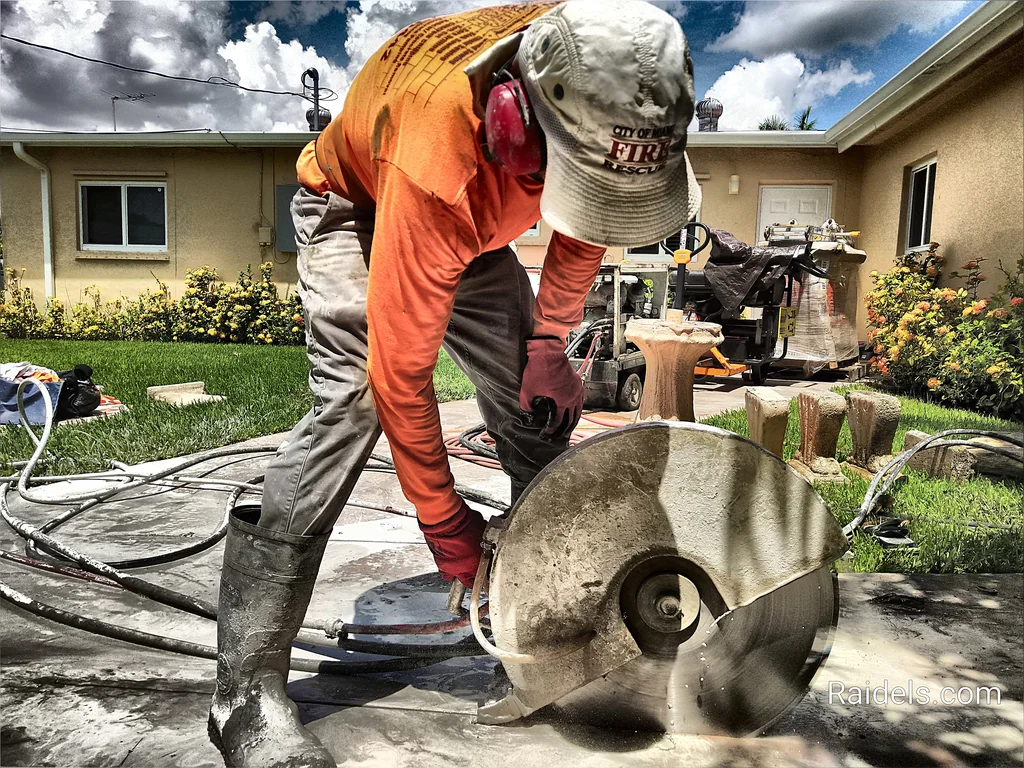
- Wet cutting with continuous water delivery — This is the standard method for wall saws and hand-held angle grinders on pool work. Water suppresses airborne particulate at the blade-material interface. Flow rates must be sufficient to keep the cut line visibly wet at all times — typically 1 to 1.5 gallons per minute for hand tools.
- Local exhaust ventilation (LEV) with HEPA filtration — For interior cuts where wet methods create slip hazards or water damage risks, a vacuum-shrouded grinder attached to an H-class HEPA vacuum (99.995% filtration at 0.3 microns) is the alternative. The shroud must maintain full contact with the cutting surface.
- Combination wet/LEV systems — On thick shell demolition where a hydraulic breaker follows the saw cut, a wet-suppression nozzle on the breaker combined with a LEV unit positioned within 12 inches of the break point is required.
Respiratory protection (minimum N95, preferably P100 half-face respirator) is required as supplemental protection even when engineering controls are in place. Fit testing and medical evaluation are mandatory under 29 CFR 1910.134 before any respirator is assigned to a worker.
Confined Space Protocols When Workers Enter the Empty Pool Shell
An empty in-ground pool is a permit-required confined space under OSHA 29 CFR 1926.1203 when it meets the definition of a space large enough for a worker to enter, has limited means of egress, and contains a recognized hazard. For pool reshaping, the recognized hazards are atmospheric (carbon monoxide from gas-powered cut-off saws, oxygen displacement from nitrogen-purged plumbing lines) and physical (engulfment risk from loose gunite debris, fall hazard from the pool edge).
Permit-required confined space entry for pool reshaping requires:
- A written confined space entry permit issued before each entry, listing authorized entrants, attendants, entry supervisor, hazards identified, and rescue procedures.
- Continuous atmospheric monitoring — A four-gas monitor testing for oxygen (19.5%–23.5% acceptable range), LEL, CO, and H₂S must be active throughout the work shift. In Miami’s warm climate, decomposing organic matter in older pools can generate H₂S concentrations that reach IDLH levels faster than workers expect.
- Non-entry rescue capability — A retrieval system (tripod with mechanical winch rated for the worker’s weight plus 50 lbs) must be staged at the entry point. Workers cannot rely on emergency services as their primary rescue plan.
- Battery-powered or pneumatic tools inside the pool — Gas-powered equipment inside the pool shell is prohibited unless forced-air ventilation is providing a minimum of 20 air changes per hour and continuous CO monitoring is active.
These same principles apply to any below-grade concrete cutting operation. Our broader discussion of advanced construction techniques covers how confined space protocols integrate with core drilling and wall sawing sequences across multiple project types.
Wall Saw Setup and Fall Protection at Pool Edge Elevations
Reshaping a pool almost always requires wall sawing the existing shell at grade level or slightly above. This puts operators within 6 feet of an unprotected edge — the OSHA trigger point for fall protection requirements under 29 CFR 1926.502. A standard pool depth of 5 to 8 feet means a fall from the deck edge into the empty shell is a serious injury or fatality event.
Compliant fall protection at pool reshaping sites requires either a guardrail system (top rail at 42 inches ±3 inches, capable of withstanding 200 lbs of outward force), a personal fall arrest system (PFAS) anchored to a point capable of supporting 5,000 lbs per attached worker, or a safety net system. For most residential pool jobs, a temporary cable guardrail system installed around the pool perimeter before any work begins is the most practical solution.
Wall saw track installation at the pool edge also creates a struck-by hazard. The saw carriage and blade assembly on a hydraulic wall saw can weigh 300 to 600 lbs. Track anchoring must be engineered to the existing deck substrate — Miami’s pool decks are frequently pavers over sand, which provides zero anchor capacity for expansion bolts. Concrete core anchors into the structural slab below the paver layer are required.
Debris Management and Spoil Containment During Shell Demolition
Gunite and shotcrete demolition generates sharp-edged concrete fragments that become projectile hazards when struck by mechanical breakers. All workers within 20 feet of active breaking must wear ANSI Z87.1-rated eye protection and face shields. Workers not directly involved in the break sequence must be excluded from the hazard zone via physical barriers — caution tape is not a compliant barrier for struck-by hazards.
Spoil management is also an environmental compliance issue in Miami-Dade County. Pool shell concrete that has been in contact with pool chemicals (particularly cyanuric acid and chlorine compounds) may require characterization before disposal. Coordinate with your waste hauler and confirm the receiving facility accepts chemically-exposed concrete before loading the dumpster.
Understanding the full cost and time implications of this kind of controlled demolition work is essential for accurate project bidding. We break down the numbers in detail at What Cutting a Concrete Floor Actually Costs and How Long the Job Really Takes — the same cost drivers apply to pool shell cutting.
Why DIY Pool Reshaping Fails the Safety Standard Every Time
Homeowners browsing backyard transformation content online frequently underestimate the regulatory and technical complexity of changing pool shape. The silica standard alone requires a written exposure control plan, designated competent person, medical surveillance program, and recordkeeping — none of which a homeowner can legally self-certify. The confined space standard requires trained attendants and rescue capability that simply doesn’t exist in a residential setting.
Beyond compliance, the physical risks are severe. Diamond blades operating at 5,000+ RPM can kick back with enough force to cause fatal lacerations. Hydraulic breakers generate ground vibration that can destabilize adjacent pool equipment pads and retaining walls. And in South Florida’s high water table environment, cutting the pool shell without proper hydrostatic management can result in rapid water intrusion that traps workers in a filling confined space.
The case for professional execution isn’t just about quality — it’s about keeping people alive. The benefits of hiring a professional concrete cutting company extend far beyond equipment access; they include the safety management systems, trained personnel, and regulatory compliance infrastructure that make these projects survivable.
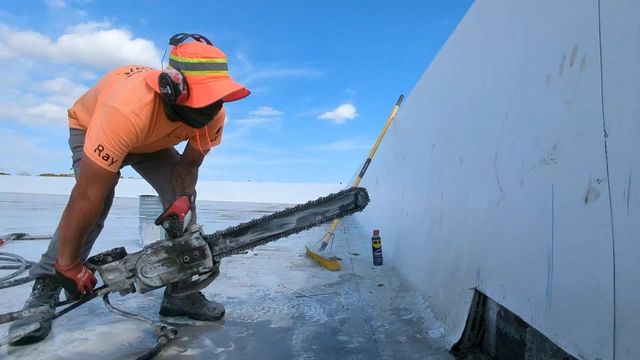
Building a Safe Change Pool Shape Project from the Ground Up
Every pool reshaping project we execute at Concrete Cutting Miami, LLC starts with a written Job Hazard Analysis (JHA) that maps every task sequence to its associated hazards and controls. That document drives the safety plan, the equipment selection, the crew training requirements, and the permit applications. It’s not bureaucratic overhead — it’s the difference between a successful project and a OSHA fatality investigation.
If you’re planning to change pool shape on a residential or commercial property in South Florida, engage your concrete cutting contractor before the design is finalized. The cut sequence, the access requirements, and the debris management plan all influence the final pool geometry and the project timeline. Getting the safety plan right from day one is the only way to deliver a transformed pool without transforming the job site into a hazard zone.