Why Concrete Floor Cutting Bids Vary So Dramatically From Contractor to Contractor
If you’ve collected three bids for cutting a concrete floor and they’re nowhere near each other, you’re not being played — you’re seeing the result of contractors pricing different scopes, different risk factors, and different equipment strategies. Cutting a concrete floor is not a commodity service. The variables that drive cost are highly technical, and a low bid that ignores them will cost you far more in change orders, delays, and structural damage than the premium you saved up front. This post breaks down every major cost driver and timeline factor a senior estimator considers before putting a number on paper.
The Core Pricing Unit — Linear Foot Rates and What They Actually Include
Most professional concrete floor cutting is quoted on a per-linear-foot basis, but that number is meaningless without knowing the depth increment it references. Industry standard base rates typically cover cuts up to 6 inches deep. Every additional inch of depth beyond that threshold adds cost — usually a percentage multiplier applied to the base rate — because blade wear accelerates exponentially with depth, water flow requirements increase, and cut time per foot stretches significantly.
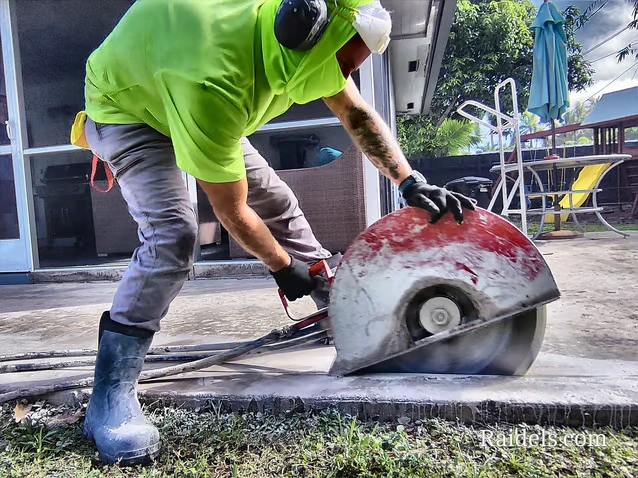
In the Miami market, base rates for flat slab sawing on a standard 4-inch residential or light commercial floor run between $4.50 and $8.00 per linear foot for straightforward, open-access cuts. That range already reflects local aggregate composition, which in South Florida often includes oolitic limestone and shell-based fill that wears diamond segments faster than granite-aggregate slabs in other regions. For a deeper look at how per-linear-foot pricing is structured across different project types, review our concrete cutting per linear foot tag archive where real project data is documented.
For post-tensioned slabs — common in Miami high-rise construction — pricing can jump to $12.00 to $22.00 per linear foot or higher, because tendon location scanning, specialized blade sequencing, and the liability exposure of cutting near live cables all factor into the estimate.
Depth, PSI Rating, and Aggregate Hardness as Bidding Multipliers
A contractor who doesn’t ask for your slab’s compressive strength rating before bidding is guessing. Concrete compressive strength — measured in PSI — directly affects how quickly diamond segments wear down and how much horsepower is required to maintain a consistent cut speed. A 3,000 PSI slab and a 6,000 PSI slab are entirely different jobs even if they share the same thickness and linear footage.
- 3,000–4,000 PSI slabs: Standard residential and light commercial. Base rate applies with minimal multiplier.
- 4,500–6,000 PSI slabs: Mid-range commercial and industrial. Expect a 15–30% premium over base rate due to increased blade consumption.
- 6,500 PSI and above: Specialty structural slabs, parking decks, industrial floors. Premium can reach 50–80% above base rate. Blade changes are frequent and must be priced into the scope.
Aggregate hardness compounds this further. Silica-rich aggregates are among the hardest on diamond tooling. If your slab was poured with a hard aggregate and you’re in a high-PSI range, a smart contractor will spec a softer bond diamond blade — counterintuitive as it sounds — to allow the diamonds to expose themselves faster and maintain cutting efficiency. This tooling decision affects both the bid and the timeline.
Reinforcement Density and Rebar Spacing — The Hidden Timeline Killer
Rebar is the single biggest timeline variable in any concrete floor cutting project. A lightly reinforced 4-inch residential slab with #3 rebar at 18-inch centers cuts fast. A heavily reinforced 8-inch industrial floor with #6 rebar at 6-inch centers in a mat pattern is a completely different animal. Blades slow down through steel, heat management becomes critical, and cut sequences may need to be redesigned to avoid blade binding.
When estimating timeline, experienced crews plan for linear footage per hour rather than per day. On open, lightly reinforced slabs, a 20-horsepower flat saw can move at 15 to 25 linear feet per hour at 4-inch depth. On heavily reinforced 8-inch slabs, that rate can drop to 4 to 8 linear feet per hour. A 200-linear-foot job that looks like a half-day project on paper can become a two-day job when reinforcement density is properly accounted for.
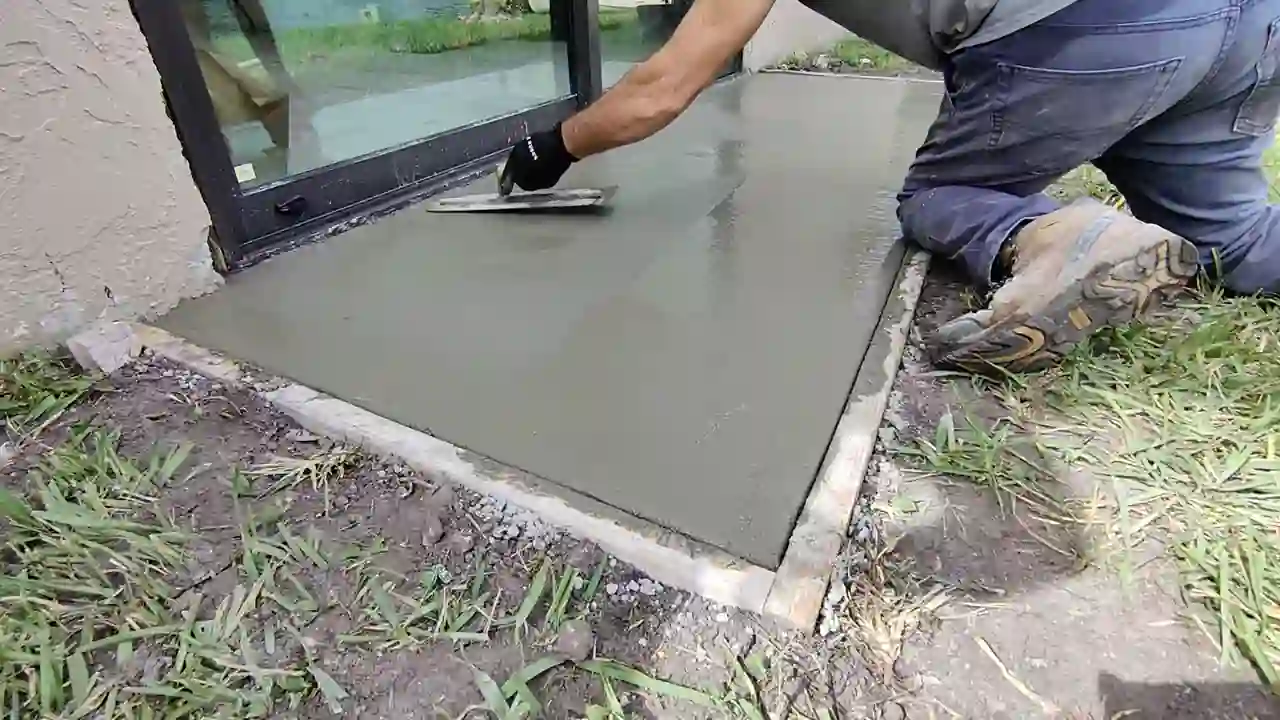
This is also where projects involving adjacent structures — like driveway sectioning and repair cuts — require additional caution, because reinforcement patterns near expansion joints and perimeter edges are often irregular and unpredictable.
Site Access, Slurry Management, and Mobilization Costs in the Miami Market
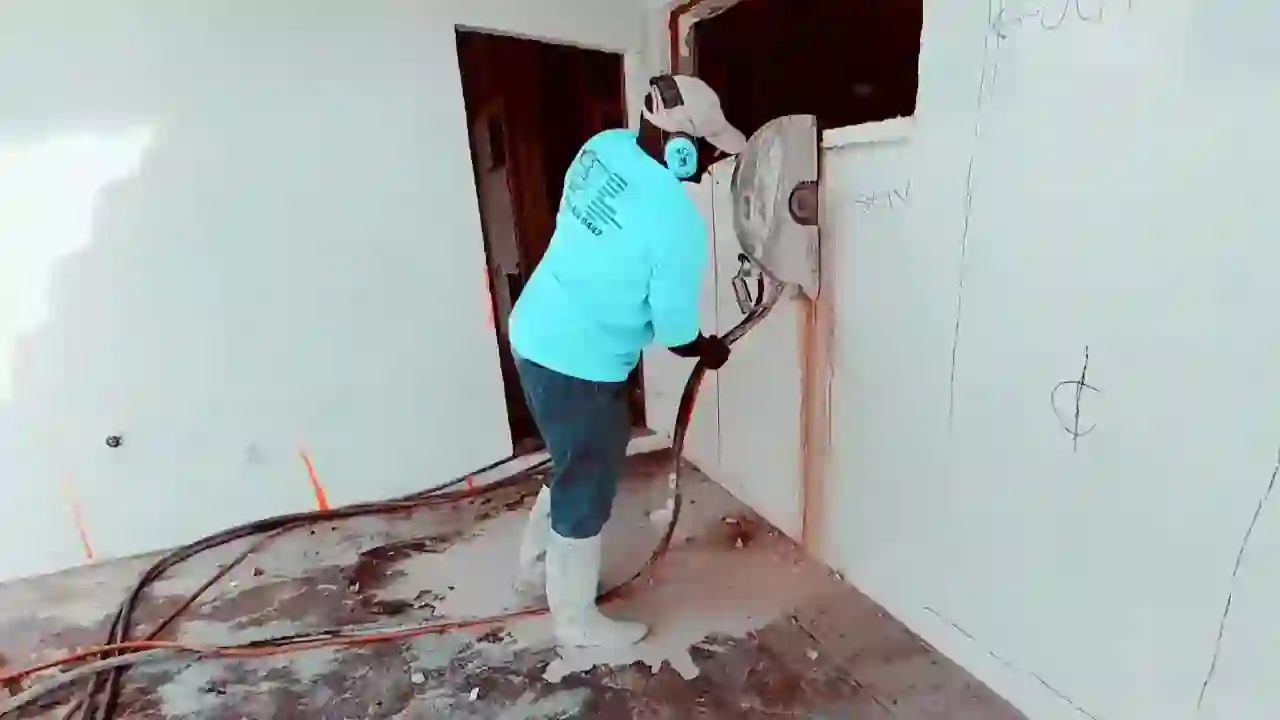
Access constraints are a line item that many clients don’t anticipate. Getting a flat saw into a basement, a parking garage, or a finished interior space has real costs attached. Equipment must sometimes be disassembled and reassembled on-site, or smaller machines must be substituted — which extends cut time and increases labor cost.
Slurry management is a regulatory and logistical cost that is non-negotiable in Miami-Dade County. Wet cutting generates a concrete-water slurry that cannot be discharged into storm drains. A professional crew will vacuum-extract slurry continuously, contain it in holding tanks, and arrange for proper disposal. This adds $150 to $400 per mobilization depending on volume, and it should appear as a line item in any legitimate bid. Projects in environmentally sensitive areas — near Biscayne Bay or in waterfront developments like Faena House-adjacent properties — face stricter scrutiny and higher compliance costs.
Mobilization fees in Miami typically run $350 to $750 for standard projects, covering equipment transport, setup, and teardown. Emergency or after-hours mobilization commands a significant premium — often 40 to 60% above standard rates — because crew overtime and equipment availability are constrained.
When Floor Cuts Connect to Larger Structural Scopes
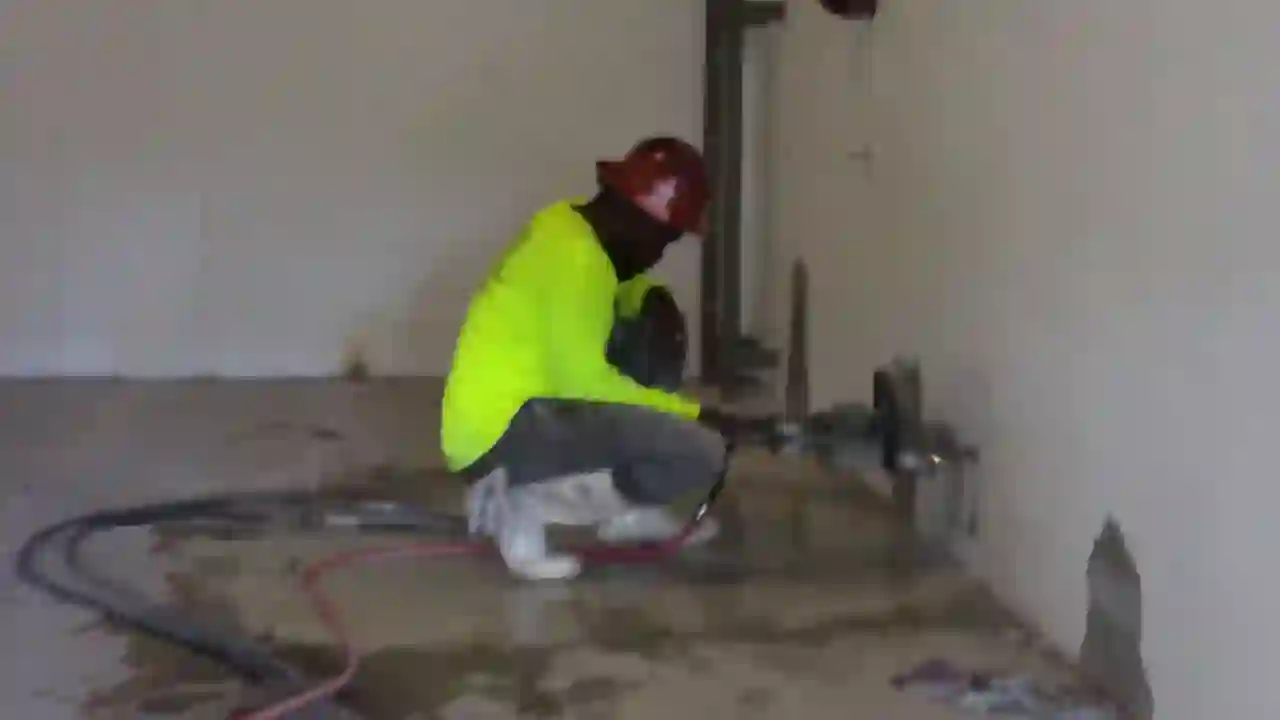
Cutting a concrete floor rarely exists in isolation. In renovation and demolition projects, floor cuts often connect to wall penetrations, core drilling for utilities, or full slab removal. When floor cutting is part of a broader structural modification, the sequencing of cuts matters enormously for both safety and cost efficiency. Wall cuts completed before floor cuts allow crews to establish reference lines and confirm structural load paths before committing to irreversible slab cuts. For projects involving structural wall modifications, our concrete wall cutting category covers the complementary scope in detail.
In extreme cases — particularly in pool demolition or large slab removal — hydraulic chain sawing becomes the preferred method for deep cuts where flat saw geometry is impractical. Hydraulic chain saws can cut to depths exceeding 24 inches in a single pass, making them valuable for thick foundation slabs and grade beams. The rental and operation cost for hydraulic chain saw equipment adds $800 to $2,500 per day to a project, but the time savings on deep cuts often justifies it. For related large-scale removal projects, our swimming pool demolition guide walks through how floor and wall cutting integrates into full removal scopes.
Building a Realistic Timeline for a Standard Commercial Floor Cutting Project
For a mid-size commercial renovation requiring 300 linear feet of floor cuts at 6-inch depth in a moderately reinforced slab, here is what a realistic timeline looks like when properly planned:
- Day 1 — Mobilization and GPR scanning: Ground-penetrating radar scanning of the cut lines to locate rebar, post-tension cables, conduit, and voids. This step is non-negotiable and typically runs 2 to 4 hours for a scope this size.
- Day 1–2 — Cutting operations: At an average rate of 10 linear feet per hour (accounting for reinforcement and depth), 300 linear feet requires approximately 30 cutting hours. With a two-machine crew, this is achievable in 1.5 to 2 days.
- Day 2–3 — Slurry cleanup, debris staging, and inspection: Final vacuum extraction, joint cleaning, and visual inspection of cut edges for spalling or deviation from specified line.
Total elapsed time for this scope: 3 to 4 working days. Compressing this timeline by skipping scanning or running a single machine is where projects go wrong — and where emergency repair costs dwarf the original cutting budget.
What a Professional Bid Document Should Contain Before You Sign Anything
A legitimate concrete floor cutting bid is a technical document, not a one-line quote. Before authorizing any work, verify that the bid explicitly states the following:
- Cut depth in inches and the PSI assumption the rate is based on
- Blade specification (bond hardness, segment height, diamond concentration) or a statement that tooling will be field-adjusted based on conditions
- GPR scanning scope — whether it’s included, excluded, or a separate line item
- Slurry containment and disposal method with associated cost
- Mobilization fee, number of mobilizations assumed, and after-hours rate structure
- Change order trigger conditions — specifically what constitutes a scope change if field conditions differ from assumptions
- Equipment type and horsepower rating for the primary cutting machine
A contractor who provides all of this upfront is pricing the real job. One who provides a single number without these details is pricing the best-case scenario — and you will pay for the gap when reality arrives. Cutting a concrete floor is precision trade work, and the bid should reflect that precision before a single blade touches your slab.