Why Safety Protocols Define a Qualified Concrete Cutting Contractor
In the concrete cutting trade, technical skill and safety discipline are inseparable. A contractor who can operate a wall saw with precision but ignores crystalline silica exposure limits is not a qualified professional — they’re a liability. Whether you’re managing a commercial demolition in Brickell, a utility penetration on a hospital floor, or a slab removal in a tight residential footprint, the difference between a safe outcome and a worksite incident almost always comes down to whether your concrete cutting contractor has internalized OSHA standards and built them into every phase of their operation. This post breaks down the specific protocols, hazard categories, and compliance frameworks that define truly professional concrete cutting work.
OSHA 29 CFR 1926.1153 — The Silica Standard Every Cutting Crew Must Own
OSHA’s respirable crystalline silica standard for construction, codified under 29 CFR 1926.1153, is the single most consequential regulatory framework governing concrete cutting operations. Silica particles generated during dry cutting, core drilling, or slab sawing are respirable at sizes below 10 microns — invisible to the naked eye and capable of causing silicosis, lung cancer, and COPD with cumulative exposure. The permissible exposure limit (PEL) is set at 50 micrograms per cubic meter of air as an 8-hour time-weighted average, with an action level of 25 µg/m³.
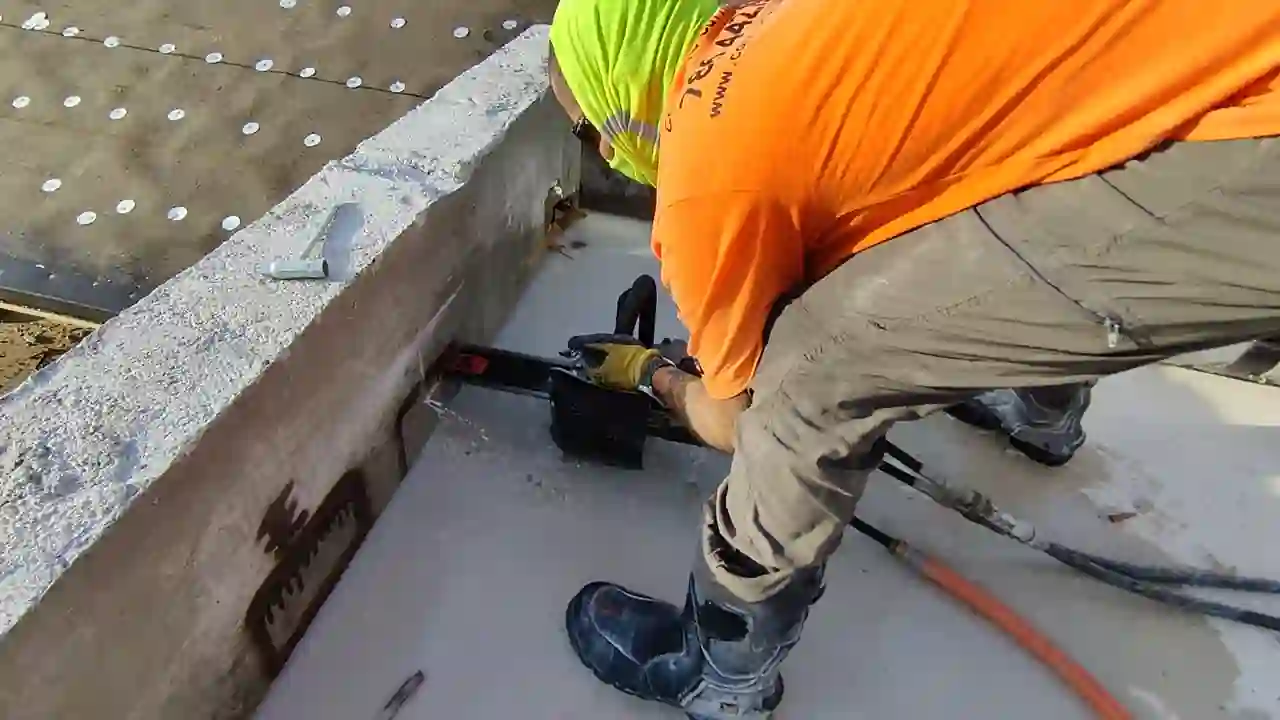
A compliant concrete cutting contractor must implement one of two compliance pathways: the Table 1 engineering controls method (using specified equipment with integrated water delivery or vacuum systems) or the exposure assessment method (air monitoring, followed by controls that demonstrably reduce exposure below the PEL). In practical terms, this means no dry cutting on slabs without a HEPA-filtered vacuum shroud, no handheld angle grinding without continuous water suppression, and no wall sawing without an integrated slurry management system. These aren’t optional upgrades — they’re minimum legal requirements.
For a deeper look at how these requirements intersect with complex demolition workflows in South Florida, see our guide on how to actually manage construction and demolition in Miami without getting buried in concrete problems.
Hazard Mapping Before the First Blade Hits the Slab
Pre-cut hazard identification is not a formality — it is an operational necessity. Before any concrete cutting contractor mobilizes equipment, a structured hazard assessment must be completed and documented. This assessment covers four primary hazard categories:
- Embedded utilities: GPR (ground-penetrating radar) scanning must be performed on any slab or wall before cutting begins. Striking a live electrical conduit, pressurized water line, or post-tension cable without prior detection creates immediate life-safety risk. GPR scanning to a minimum depth of 18 inches is standard on commercial projects.
- Structural load paths: Cutting into a load-bearing element without engineering sign-off can trigger progressive collapse. The contractor must review structural drawings and, where drawings are unavailable, conduct a visual structural assessment with a licensed engineer before proceeding.
- Hazardous materials: Slabs and walls in pre-1980 structures may contain asbestos-reinforced concrete coatings, lead-based paint, or other regulated materials. Cutting disturbs these materials and triggers separate OSHA and EPA notification requirements under NESHAP and 29 CFR 1926.1101.
- Overhead and adjacent work zones: Slurry runoff, blade fragment ejection zones, and vibration transfer to adjacent structures must all be mapped and controlled before cutting commences.
Explore industry-standard approaches to these assessments across our construction techniques resource library.

Blade Selection, Tensioning, and Operational Safety for Diamond Tooling
Diamond blade failure is one of the most dangerous acute hazards in concrete cutting. A 14-inch diamond blade spinning at 5,000 RPM carries enormous kinetic energy — a cracked or improperly tensioned blade can fragment and eject shrapnel at lethal velocity. A professional concrete cutting contractor treats blade inspection and tensioning as non-negotiable pre-operation steps, not afterthoughts.
Key blade safety protocols include:
- Pre-use inspection: Every blade must be visually inspected for cracks, missing segments, warping, and arbor bore damage before mounting. Blades that have been dropped, thermally shocked, or used beyond their rated RPM must be removed from service immediately.
- Speed rating compliance: The blade’s maximum RPM rating must always exceed the saw’s operating speed. Running a blade above its rated speed is a direct OSHA violation under 29 CFR 1926.303 and a primary cause of catastrophic blade failure.
- Ring test for segmented blades: Suspend the blade and tap it with a non-metallic object. A clear ring indicates structural integrity; a dull thud indicates a crack or loose segment.
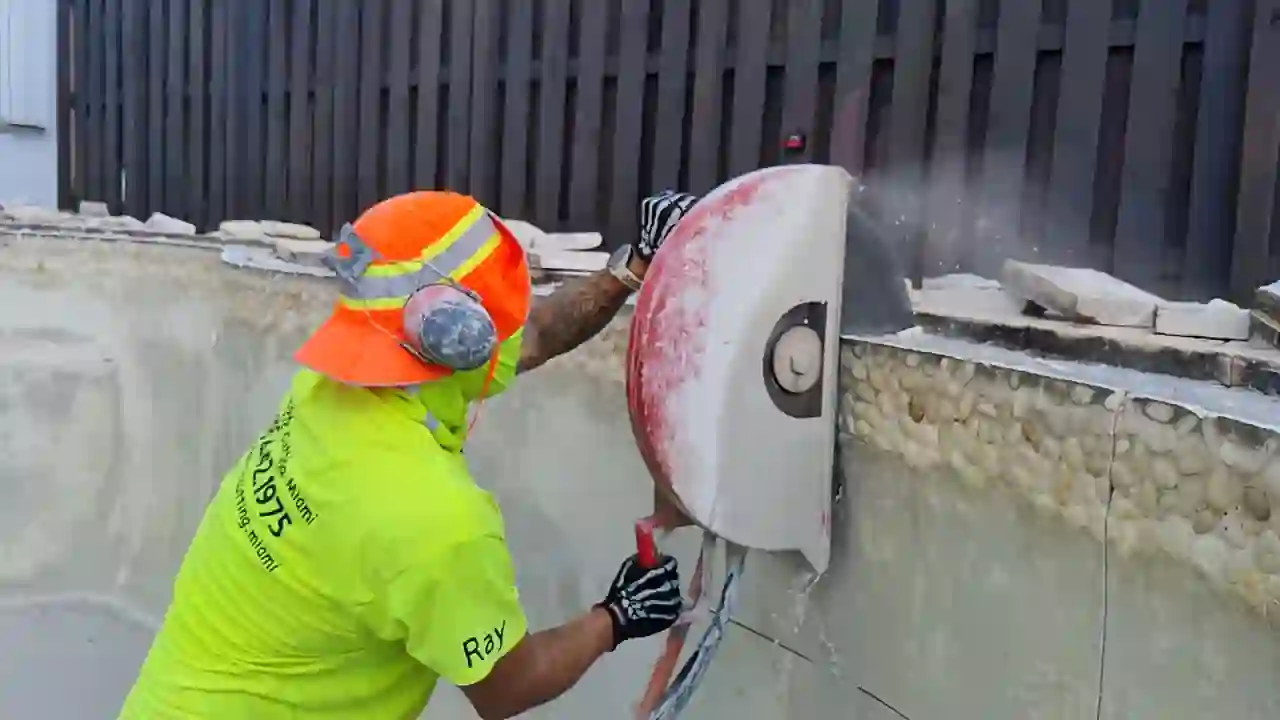
- Guard integrity: Blade guards must cover at least 180 degrees of the blade at all times during operation. Removing or modifying guards to access tight cuts is prohibited and constitutes a willful OSHA violation.
Wire sawing operations carry their own tensioning protocols. Diamond wire must be inspected for broken beads, kinks, and splice integrity before each cut. Tension must be set within the manufacturer’s specified range — over-tensioning accelerates bead wear and increases wire snap risk, while under-tensioning causes wire wander and unpredictable cutting paths. Learn more about wire saw applications and safety standards in our wire sawing technical resource section.
Personal Protective Equipment Standards for Concrete Cutting Operations
PPE in concrete cutting is task-specific, not generic. A contractor issuing standard construction hard hats and safety glasses to a crew operating a hydraulic wall saw is not meeting the hazard profile of the work. The following PPE matrix reflects minimum compliance standards for common cutting tasks:
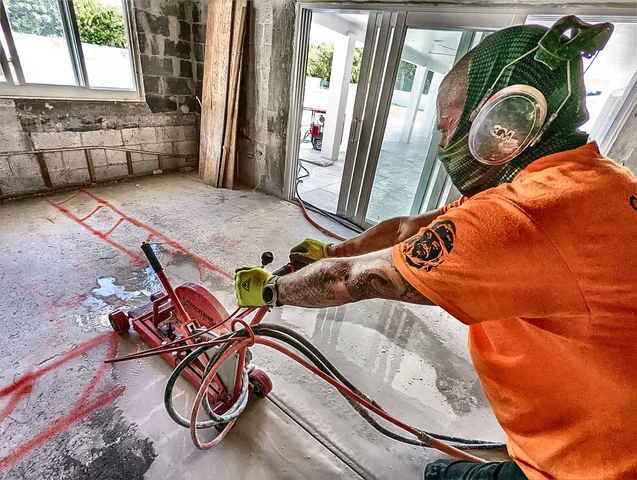
- Respiratory protection: When engineering controls cannot maintain silica exposure below the action level, a NIOSH-approved half-face respirator with P100 filters (or N95 at minimum for low-duration tasks) is required. Full-face APF-10 respirators are required in enclosed spaces or when cutting reinforced concrete with high silica aggregate.
- Hearing protection: Flat saws, wall saws, and core drills routinely generate noise levels between 95 and 110 dB at the operator position. Dual hearing protection (foam insert plus earmuff) is required when exposure exceeds 100 dB for sustained periods under 29 CFR 1926.52.
- Hand and arm protection: Anti-vibration gloves rated for power tool use reduce hand-arm vibration syndrome (HAVS) risk during prolonged core drilling and handheld saw operations.
- Eye and face protection: Full-face shields (not safety glasses alone) are required during any operation where blade fragment ejection, slurry splash, or concrete spall is possible — which encompasses virtually all cutting tasks.
- Cut-resistant footwear: Steel-toed, metatarsal-guard boots with slip-resistant soles are mandatory on all cutting sites where blades, wire, or heavy equipment are present.
For slab-specific safety considerations in Florida’s high-humidity, high-rebar environments, our slab cutting safety resources provide detailed operational guidance.
Wet Cutting Slurry Management and Environmental Compliance
Wet cutting is the primary silica control method for most flat sawing and core drilling operations, but it generates alkaline slurry with a pH typically ranging from 11 to 13. Discharging this slurry directly into storm drains, waterways, or unpaved ground is a violation of the Clean Water Act and Florida’s stormwater management regulations under Chapter 62-624, F.A.C. A compliant concrete cutting contractor must implement slurry containment, collection, and disposal as part of every wet-cut operation.
Standard slurry management practice includes perimeter containment berms or vacuum recovery systems, pH neutralization before any liquid discharge (target pH 6.5–8.5), and disposal at an approved facility or through a licensed waste hauler. On urban job sites — particularly in Miami’s dense commercial corridors — slurry runoff onto adjacent pedestrian areas or roadways also creates slip hazards and potential liability under premises liability law.
Confined Space and Elevated Work Protocols for Specialty Cutting Tasks
Concrete cutting in confined spaces — utility vaults, parking structure cores, mechanical rooms — triggers OSHA’s permit-required confined space standard under 29 CFR 1926.1201 through 1213. This requires atmospheric testing for oxygen deficiency, combustible gases, and toxic vapors before entry; a written permit; a trained attendant stationed outside the space; and a rescue plan with equipment on-site. Silica and carbon monoxide from gas-powered equipment are the primary atmospheric hazards in confined concrete cutting operations.
Elevated cutting — wall sawing on scaffolding or elevated platforms — requires fall protection at heights above six feet under 29 CFR 1926.502. Saw operators must be tied off with a personal fall arrest system rated for the combined weight of the operator and equipment, and the work platform must be engineered to support both static and dynamic loads from saw operation.
These operational complexities are part of what separates a professional concrete cutting contractor from a general labor crew with rented equipment. Explore how these standards apply across Miami’s urban construction landscape in our urban construction category.
Building a Safety Culture That Goes Beyond Minimum Compliance
OSHA compliance sets the floor, not the ceiling. The most effective concrete cutting contractors build safety cultures where hazard identification is a crew-level responsibility, not just a supervisor function. This means daily toolbox talks that address the specific hazards of that day’s cuts, stop-work authority for any crew member who identifies an uncontrolled hazard, and post-incident near-miss reporting systems that treat near misses as learning events rather than embarrassments.
Documentation is equally critical. A compliant contractor maintains written exposure control plans, equipment inspection logs, training records (OSHA 30-hour for supervisors, OSHA 10-hour minimum for operators), and incident investigation reports — all available for OSHA inspection on demand. In Florida’s competitive construction market, contractors who can demonstrate this documentation infrastructure to general contractors and owners are winning bids that safety-deficient competitors cannot touch.
When you’re evaluating a concrete cutting contractor for your next project, ask for their written silica control plan, their blade inspection protocol, and their confined space entry procedure. The quality of those answers will tell you everything you need to know about whether that contractor is equipped to protect your project, your workers, and your liability exposure from the first cut to the last.