Why Construction and Demolition in Miami Demands a Different Playbook Than the Rest of the Country
Miami is not Phoenix. It is not Atlanta. The moment you treat a South Florida demolition project like a generic mainland job, you are going to lose money, time, and possibly your contractor’s license. The combination of salt-air corrosion on rebar, high-PSI slabs poured decades ago without modern mix designs, relentless humidity that compromises dust suppression, and Miami-Dade County’s notoriously strict building codes creates a demolition environment that punishes underprepared crews. Whether you are breaking ground on a new commercial build, pulling a pool deck, or gutting a reinforced concrete structure in Brickell, the technical decisions you make in the first 48 hours determine whether the project runs clean or becomes a liability spiral.
Step One — Read the Slab Before You Touch It
Every experienced demolition operator in Miami knows that the most dangerous assumption on any job site is that you understand what is inside that slab. Miami-Dade County has decades of construction layering. You will encounter post-tensioned slabs in residential towers, fiber-reinforced commercial pours, and legacy slabs with unpredictable rebar spacing from the 1970s and 1980s. Before any cutting or breaking begins, a Ground Penetrating Radar (GPR) scan is non-negotiable. GPR gives you a live subsurface map showing rebar depth, post-tension cable locations, conduit runs, and voids. Cutting a post-tension tendon without knowing it is there does not just damage the structure — it can be lethal. The cable releases stored energy equivalent to a high-tension spring, and in a confined slab environment, that failure is catastrophic.
Once you have your GPR data, overlay it against the original structural drawings if they are available. In Miami’s older stock, drawings are often incomplete or inaccurate, so treat GPR as your primary source of truth. Mark every cable, every conduit, and every anomaly on the physical surface with paint or chalk before a single blade drops.
Choosing the Right Cutting Method Based on Slab Composition
Not all concrete cutting methods are appropriate for all Miami demolition scenarios. Here is how the decision tree actually works at the trade level:
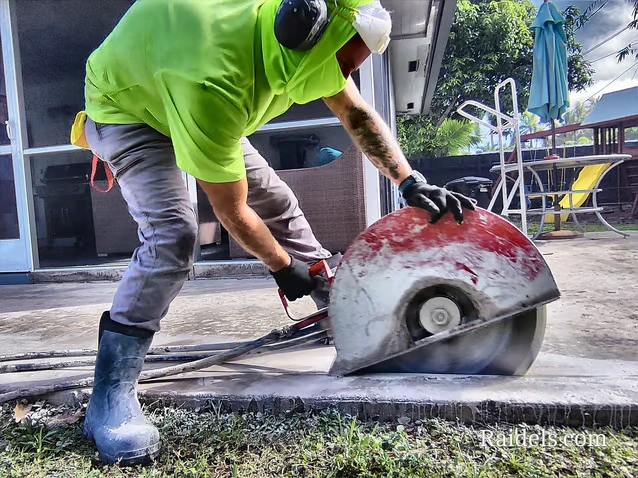
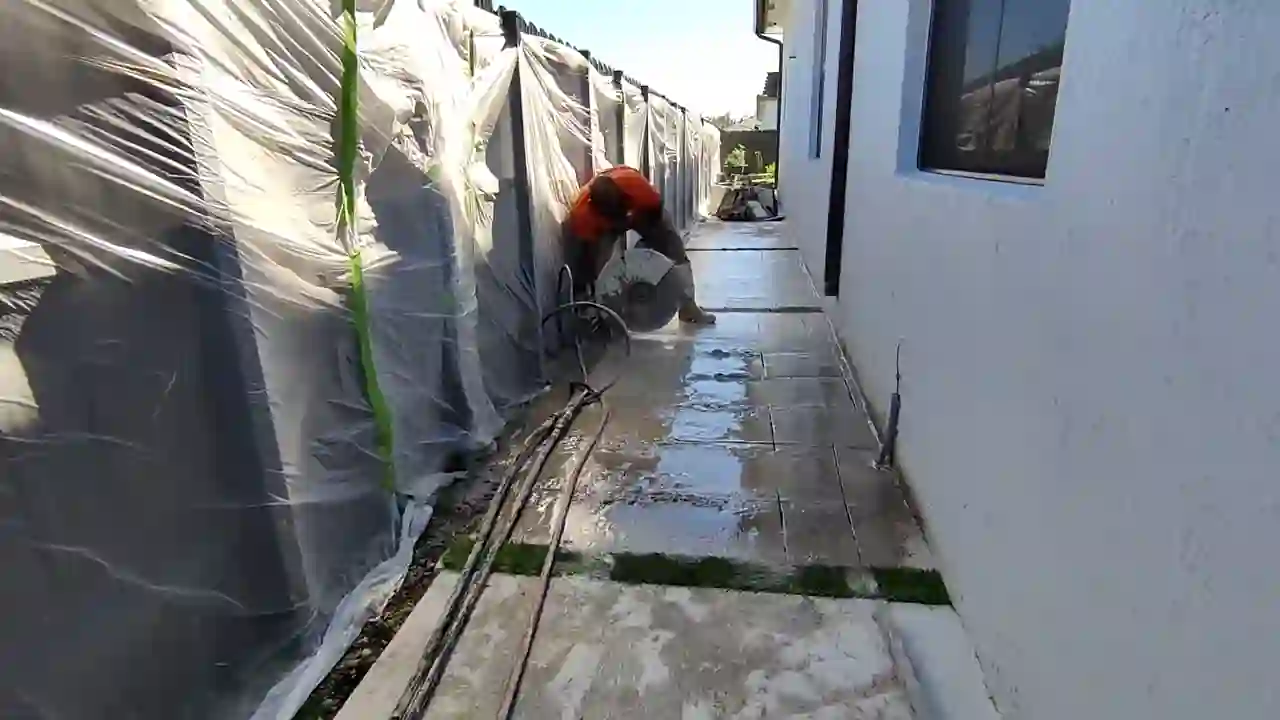
- Diamond Blade Flat Sawing — Best for horizontal slab removal, driveway demolition, and parking deck work. Effective on standard 3,000–5,000 PSI slabs. If you are pricing out a driveway removal project, understanding blade wear rates against Miami’s aggregate-heavy mixes is critical. Learn what concrete driveway cutting actually costs in Miami before you bid the job.
- Wall Sawing with Track-Mounted Diamond Blades — Used for vertical cuts in retaining walls, elevator shafts, and load-bearing panels. Precision is the advantage here, especially in occupied structures where vibration transfer to adjacent units is a liability issue.
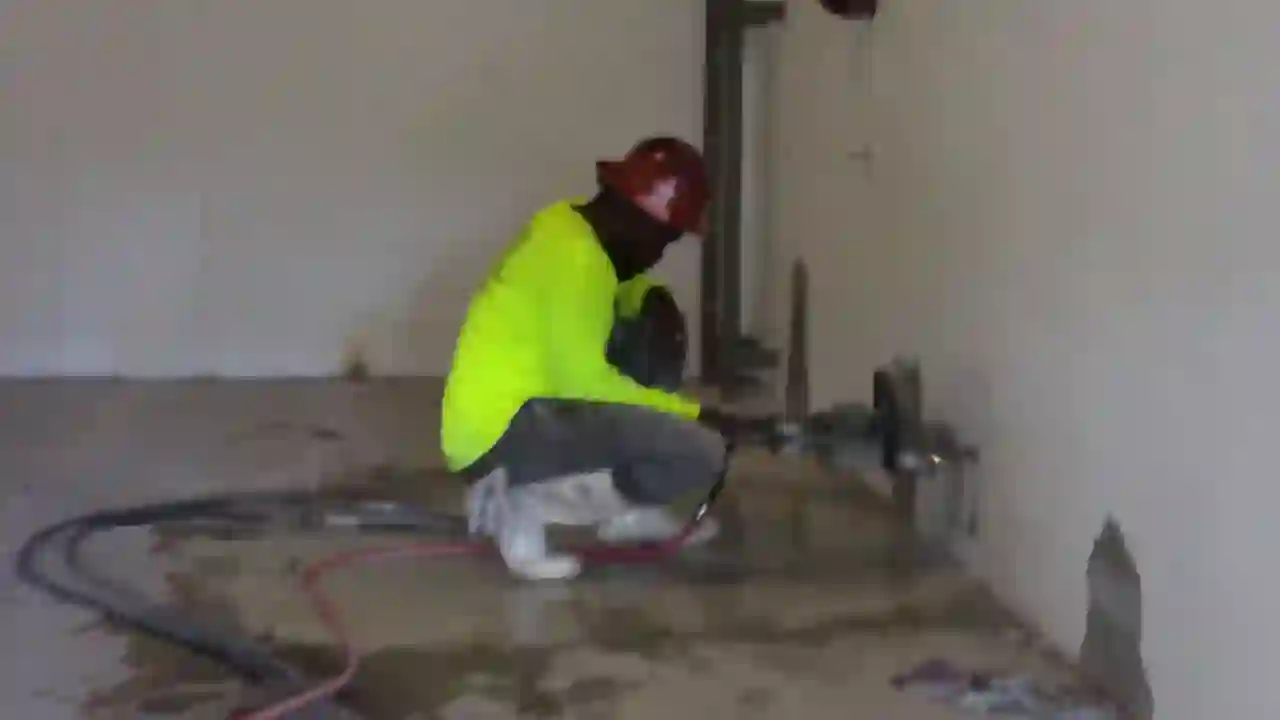
- Core Drilling — For utility penetrations, HVAC openings, and structural analysis cores. Miami’s high-rise construction boom means core drilling demand is constant, particularly for mechanical and electrical rough-in work.
- Hand Sawing for Tight Access — When you are working in confined spaces — stairwells, mechanical rooms, or between structural columns — a hand saw is often the only viable tool. Explore professional hand sawing applications for these exact scenarios.
- Wire Sawing for Massive Cross-Sections — On bridge abutments, thick foundation walls, and heavily reinforced marine structures along Miami’s waterfront, diamond wire sawing is the only method that can handle the geometry and material density without structural compromise.
Step Two — Demolition Sequencing That Keeps the Job Site Legal and Safe
Miami-Dade County requires a demolition permit for virtually any structural removal work. The permit process involves submitting a demolition plan, proof of asbestos survey completion (mandatory in structures built before 1989), and in many cases, a dust mitigation plan. Skipping any of these steps does not just risk a stop-work order — it risks personal liability for the contractor of record. The Florida Department of Environmental Protection (FDEP) and Miami-Dade DERM (Department of Environmental Resources Management) both have enforcement authority on demolition sites, and they exercise it.
Sequencing matters as much as permitting. On a full structural demolition, you work from the top down, removing non-structural elements first — MEP systems, interior partitions, roofing — before touching any load-bearing elements. On a partial demolition or selective removal, the sequence is dictated by the structural engineer’s shoring plan. In Miami’s humid climate, exposed rebar corrodes rapidly once the concrete cover is removed, so the window between selective demolition and new concrete placement needs to be tight. Coordinate your concrete cutting contractor, your rebar crew, and your pour schedule before the first cut is made.
Managing Debris Removal in Miami’s Regulatory Environment
Concrete debris from a Miami demolition project cannot simply be hauled to the nearest landfill. Miami-Dade County has specific C&D (Construction and Demolition) debris disposal requirements, and certain landfills are designated for inert materials like concrete, masonry, and asphalt. Clean concrete rubble — free of rebar, wood, and contamination — can often be recycled as road base or fill material, which reduces disposal costs significantly. Understand your debris removal options before you budget the job, because disposal costs in Miami can run $80–$150 per ton depending on contamination level and haul distance.
On-site crushing is an option for large-scale demolition projects where the volume of concrete waste justifies mobilizing a portable crusher. Crushed concrete can be reused as granular fill on the same project, reducing both disposal fees and imported material costs. This approach is increasingly common on Miami’s larger commercial and infrastructure demolition projects.
Step Three — Cost Control Strategies That Actually Work on Miami Demolition Projects
The biggest cost overruns on Miami construction and demolition projects come from three sources: unexpected subsurface conditions, equipment mobilization inefficiencies, and scope creep driven by permit revisions. Here is how to control each one.
On subsurface conditions, the GPR investment upfront — typically $800–$2,500 depending on the area scanned — pays for itself the first time it prevents a post-tension cable strike or an unmarked utility hit. Factor it into every bid as a non-negotiable line item. Review concrete sawing cost benchmarks for Miami to calibrate your estimates against real market data.
On equipment mobilization, consolidate your cutting operations. If you need flat sawing, core drilling, and wall sawing on the same project, use a single concrete cutting contractor who can mobilize all three capabilities in one trip. Split contracting between multiple specialty subs on a Miami demolition project adds coordination overhead and creates scheduling gaps that extend your project timeline unnecessarily. See why a professional concrete cutting company delivers better project economics than piecemeal subcontracting.
On permit revisions, engage your structural engineer and building department contact before submitting, not after the first rejection. Miami-Dade’s building department has specific formatting and documentation requirements that vary by municipality — Coral Gables, Hialeah, and the City of Miami each have their own intake processes. A pre-application meeting with the building official on complex demolition projects can save two to four weeks of revision cycles.
Pool Demolition and Backfill — A Miami-Specific Challenge
Pool removal is one of the highest-volume demolition tasks in South Florida, driven by property redevelopment, insurance cost reduction, and estate sales. Miami’s high water table makes pool demolition technically demanding. A standard pool abandonment involves perforation of the pool shell — drilling holes through the floor and walls to allow groundwater drainage — followed by partial demolition of the upper shell and engineered backfill compacted to meet Miami-Dade’s fill specifications. Understand South Florida pool construction and demolition requirements before pricing any pool removal project, because the water table depth on your specific site dictates the entire technical approach.
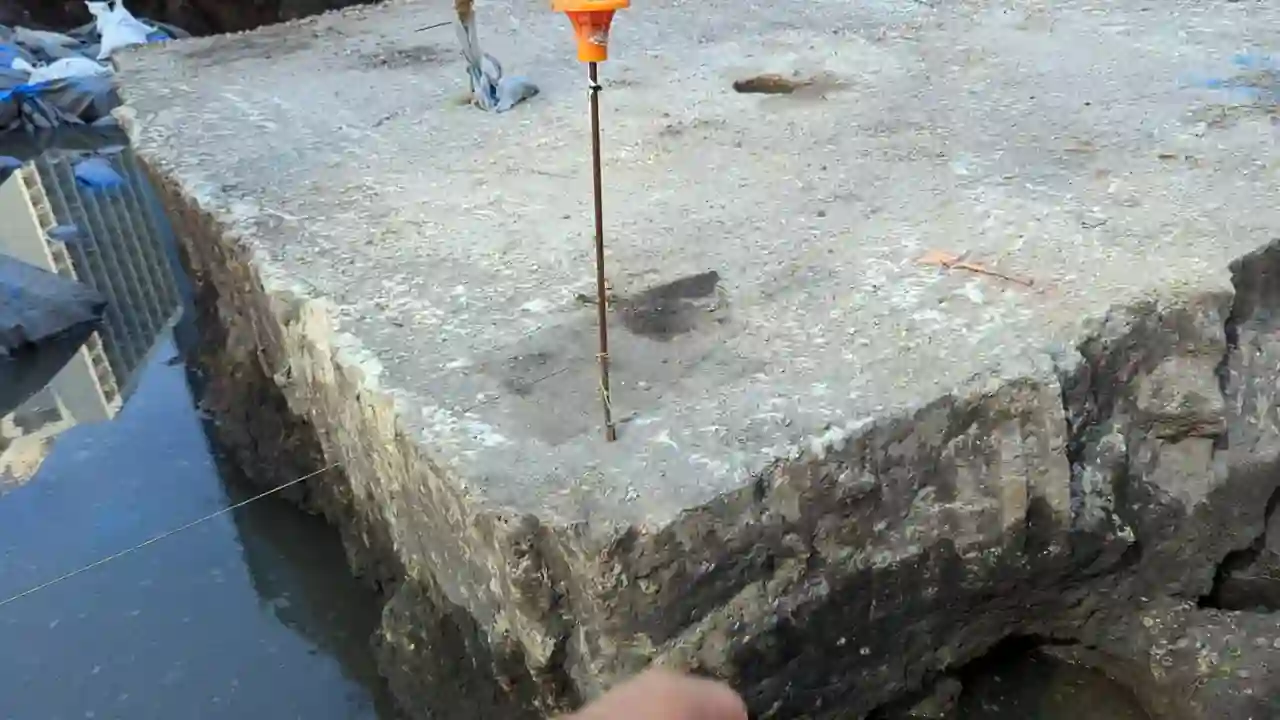
A full pool removal — where the entire shell is demolished and removed — requires significantly more concrete cutting work, a larger debris haul, and a compaction plan that satisfies the building department for future construction on the footprint. If the homeowner or developer intends to build over the former pool location, a full removal with engineered fill and compaction testing is the only defensible approach.
The Field Reality of Running Construction and Demolition in Miami Correctly
Miami’s construction and demolition sector is competitive, technically demanding, and heavily regulated. The contractors who consistently win profitable work here are not cutting corners — they are cutting concrete with precision, managing their permit timelines aggressively, and treating debris disposal as a cost center that can be optimized rather than a fixed expense. Every project starts with a thorough site investigation, proceeds through a disciplined sequencing plan, and closes with documentation that protects the contractor of record from future liability. That is not bureaucratic overhead — that is how you build a reputation in a market where word travels fast and bad actors get blacklisted quickly.
If your next Miami demolition project involves reinforced slabs, post-tension structures, pool removal, or selective structural demolition, the technical decisions you make before the first blade spins will define your outcome. Invest in the right equipment, the right expertise, and the right regulatory compliance framework — and Miami’s construction and demolition market will reward that discipline with repeat work and referrals.