Why Concrete Wall Cutting Generates More Environmental Risk Than Most Contractors Admit
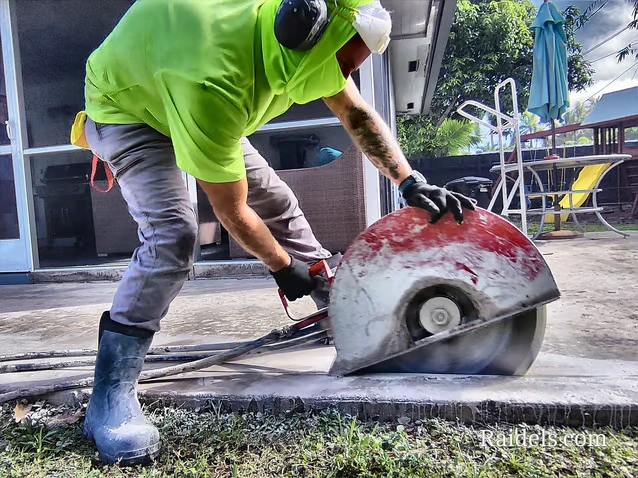
Concrete wall cutting is one of the most precise and technically demanding operations in the demolition and construction trade. Whether you’re opening a doorway in a reinforced tilt-up panel, cutting utility penetrations through a poured-in-place retaining wall, or sectioning a load-bearing CMU structure for a structural retrofit, the process demands more than a sharp diamond blade and a powerful wall saw. It demands a systematic, pre-planned approach to what comes out of that cut — specifically, the silica-laden, pH-elevated slurry that every wet-cutting operation produces in significant volume. In Miami-Dade and Broward Counties, where stormwater regulations, NPDES permit requirements, and municipal discharge ordinances carry real enforcement teeth, slurry mismanagement isn’t just an environmental problem. It’s a liability that can halt a project, trigger fines, and permanently damage a contractor’s standing with general contractors and owners who can’t afford regulatory delays.
The Chemistry of Concrete Slurry and Why It Cannot Enter Stormwater Systems
Concrete cutting slurry is not simply dirty water. It is an alkaline suspension with a pH typically ranging between 11 and 13, loaded with fine crystalline silica particles, calcium hydroxide, and — depending on the wall composition — trace heavy metals from fly ash additives or legacy pigments. When this material enters a stormwater drain, it doesn’t dilute harmlessly. It settles into collection infrastructure, raises the pH of receiving water bodies, and introduces respirable silica into aquatic sediment columns. The U.S. EPA classifies concrete slurry as a pollutant under the Clean Water Act, and Florida’s Department of Environmental Protection enforces discharge prohibitions through Chapter 62-621 F.A.C. with increasing scrutiny on construction sites.
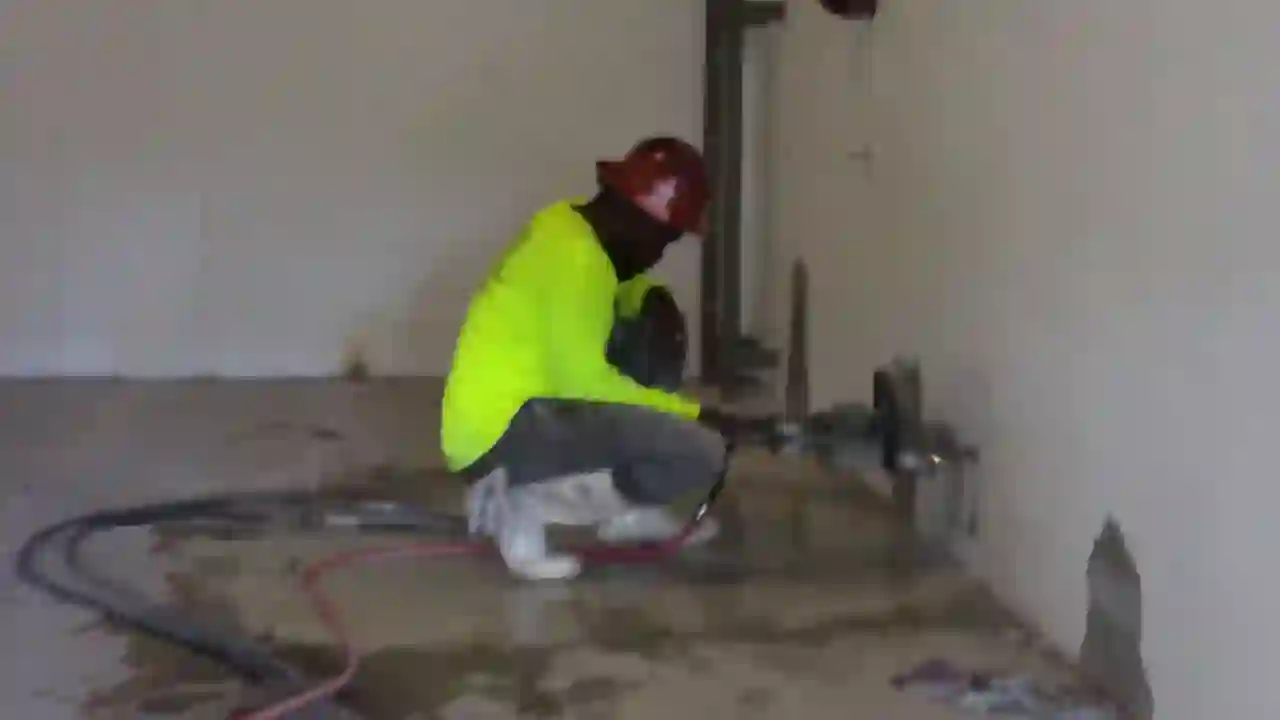
For wall cutting operations specifically, the challenge is compounded by geometry. Unlike flat slab cutting where gravity assists slurry pooling toward a central vacuum point, vertical wall cuts cause slurry to sheet downward across the face of the wall, spread laterally along the floor, and migrate toward floor drains before a crew can intercept it. This is why wet cutting operations require a containment strategy designed before the first blade rotation — not improvised once the water starts flowing.
Pre-Cut Site Assessment for Slurry Containment Planning
Every concrete wall cutting job at Concrete Cutting Miami begins with a site-specific slurry containment assessment. This is not a checklist exercise. It is a technical walkthrough that answers several critical questions before mobilization:
- What is the floor drain status? Active drains connected to sanitary or stormwater systems must be plugged with expandable test plugs before cutting begins. In occupied commercial buildings, this requires coordination with facility management and often a licensed plumber.
- What is the floor slope and slurry migration path? Using a digital level, crews map the floor gradient to predict where slurry will travel and position containment berms accordingly.
- What is the total estimated water volume? Wall saws operating at full depth on a 12-inch reinforced wall can consume 3 to 6 gallons of cooling water per minute. A 20-linear-foot cut at that rate generates substantial slurry volume that must be accounted for in vacuum capacity planning.
- Are there adjacent sensitive areas? Elevator pits, below-grade mechanical rooms, and crawl spaces adjacent to the cut wall must be sealed against slurry infiltration.
This kind of structured pre-planning is part of the broader project management discipline that separates professional concrete cutting contractors from operators who treat environmental compliance as an afterthought.
Physical Containment Systems Deployed During Active Wall Cutting
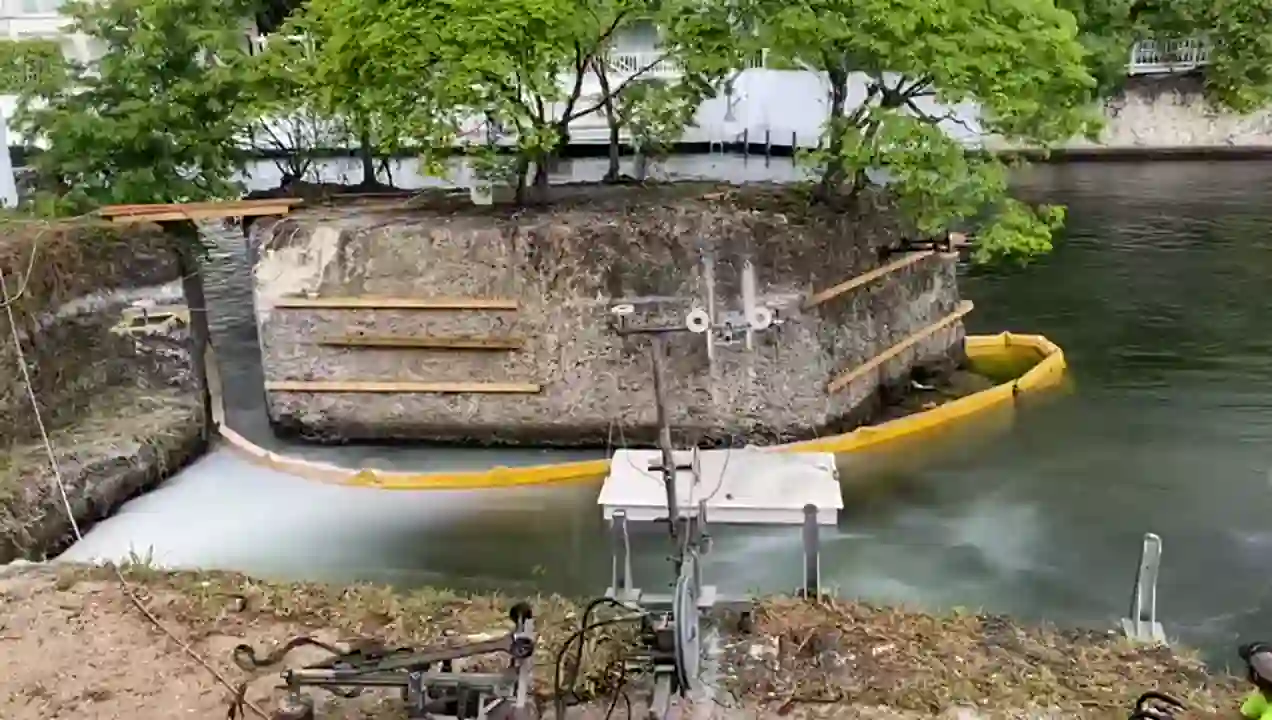
The physical containment setup for a concrete wall cutting operation involves multiple redundant barriers. No single measure is sufficient on its own, and the configuration varies based on wall orientation, floor type, and proximity to drainage infrastructure.
Perimeter Berms and Absorbent Sock Barriers
Foam backer rod and hydrophilic absorbent socks are deployed in a U-shaped perimeter around the base of the wall being cut. These are not decorative. They are the last passive line of defense against slurry reaching uncontrolled areas. On polished concrete or sealed epoxy floors — common in South Florida industrial facilities — slurry travels at speed, and berm placement must account for the full spread radius based on water flow rate and floor slope.
Vacuum Extraction at the Point of Cut
Industrial wet-dry vacuum systems with a minimum 20-gallon tank capacity are positioned directly at the base of the wall saw track. Operators continuously vacuum slurry as it sheets off the blade and wall face. High-production wall cutting jobs often require a dedicated crew member whose sole responsibility is vacuum management — moving the intake nozzle, monitoring tank levels, and preventing overflow. This is labor that must be budgeted in every proposal for South Florida excavation and structural cutting projects.
Containment Bladders for High-Volume Cuts
For extended cuts — doorway openings in thick shear walls, large utility penetrations, or multi-pass window enlargements — portable containment bladders with 50 to 100-gallon capacity are staged adjacent to the work area. Slurry is pumped from vacuum tanks into these bladders for controlled off-site disposal. This eliminates the risk of tank overflow during continuous cutting sequences and maintains a clean work environment that satisfies OSHA’s housekeeping requirements under 29 CFR 1926.25.
pH Neutralization Before Slurry Disposal
Collected slurry cannot simply be transported off-site and dumped. Depending on disposal method, pH adjustment is required to bring the material within acceptable discharge or landfill acceptance ranges. Dry ice (CO₂) injection is the most field-practical neutralization method for construction sites. CO₂ reacts with calcium hydroxide in the slurry to form calcium carbonate — a benign precipitate — while driving pH down toward the 6.5 to 8.5 range acceptable for many municipal wastewater acceptance facilities.
Citric acid solutions are an alternative for smaller volumes, but require more precise dosing and pH monitoring with a calibrated meter. Every slurry disposal load leaving a Concrete Cutting Miami job site is pH-tested and documented. This documentation is retained as part of the project record and is available to general contractors, environmental consultants, and regulatory agencies upon request. It’s the kind of verifiable compliance record that protects owners on projects subject to LEED documentation, green building certification, or federal funding environmental reviews.
Dry Cutting as a Slurry Elimination Strategy in Controlled Environments
It would be incomplete to discuss wall cutting slurry management without acknowledging that dry cutting techniques can eliminate liquid slurry entirely in specific applications. Dry diamond blade cutting paired with HEPA-filtered vacuum shroud systems captures airborne silica dust at the source, producing a dry waste stream that is easier to bag, transport, and dispose of than liquid slurry. However, dry cutting is not universally applicable to wall cutting. Blade heat management without water cooling limits cut depth and blade life, and is generally restricted to cuts under 4 inches in depth. For full-thickness structural wall cuts, wet cutting remains the standard, and slurry management remains non-negotiable.
Regulatory Compliance Documentation Every Wall Cutting Contractor Should Carry
Environmental compliance on concrete wall cutting jobs is only as strong as the documentation supporting it. Contractors operating in Miami-Dade, Broward, and Palm Beach Counties should maintain and be prepared to produce the following on demand:
- Site-specific slurry management plan — a written document describing containment methods, disposal pathway, and responsible party contacts
- pH test logs — timestamped records of slurry pH readings taken before disposal
- Waste manifest or disposal receipts — documentation from the receiving facility confirming lawful acceptance of slurry waste
- MSDS/SDS for any chemical neutralization agents used — required under OSHA Hazard Communication standards
- Crew silica exposure monitoring records — required under OSHA’s Respirable Crystalline Silica Standard (29 CFR 1926.1153) for construction
These records are not bureaucratic overhead. They are the documented proof that a contractor operated responsibly, and they become critically important when a project owner faces a regulatory inquiry or a downstream environmental complaint from adjacent property owners.
Setting the Standard for Compliant Wall Cutting in South Florida
Concrete wall cutting in South Florida’s regulatory environment demands a level of environmental discipline that goes well beyond what many contractors budget for or plan around. The combination of high water table sensitivity, aggressive stormwater enforcement, and the dense urban fabric of Miami’s commercial and industrial corridors makes slurry mismanagement a genuine project-ending risk. The contractors who thrive in this market are the ones who treat containment planning, pH management, and disposal documentation as core technical competencies — not as optional add-ons to the cutting scope. When the blade goes into a wall, everything that comes out of that cut is the contractor’s responsibility. That’s not just a regulatory position. It’s the professional standard.