What Control Joints Actually Do and Why Cutting Them Wrong Costs You Twice
Concrete shrinks. Every pour does it — as the mix hydrates and moisture evaporates, the slab wants to crack. The only question is whether those cracks happen where you planned them or where the slab decides on its own. Control joints, also called contraction joints, are pre-engineered weak planes cut into the surface to direct that cracking along predictable lines. When they’re placed correctly and cut to the right depth and spacing, the slab cracks invisibly beneath the joint. When they’re skipped, mistimed, or cut too shallow, you get random surface fractures that are expensive to repair and impossible to hide.
From a bidding standpoint, control joint work is deceptively nuanced. A flat rate per linear foot sounds simple until you factor in slab thickness, aggregate hardness, ambient temperature at pour time, joint spacing requirements by spec, and whether the client needs sealant installation as part of the scope. This post breaks down the technical process, the real cost drivers, and what a well-structured bid for this type of work should include.
The Technical Process of Cutting Control Joints Step by Step
Control joints are typically installed using one of three methods depending on timing and project type: early-entry dry-cut sawing, conventional wet-cut sawing, or hand-tooled jointing during the finishing stage. Each method has different cost implications and performance characteristics.
Early-Entry Dry-Cut Sawing
This is the preferred method on most commercial flatwork in South Florida. Early-entry saws — machines like the Soff-Cut series — use a specialized blade with a skid plate that prevents raveling on green concrete. Cutting begins as soon as the slab can support the machine’s weight without surface damage, typically 1 to 4 hours after finishing, depending on mix design and weather. In Miami’s heat and humidity, that window tightens considerably. Missing it means you’re either cutting too early (raveling the aggregate) or too late (the concrete has already begun stress cracking).
Early-entry cuts are typically made at one-quarter to one-third of the slab depth. On a 4-inch slab, that means a minimum cut depth of 1 inch. On a 6-inch slab, you’re targeting 1.5 to 2 inches. The blade kerf is narrow — usually 1/8 inch — which is ideal for later sealant application.
Conventional Wet-Cut Sawing
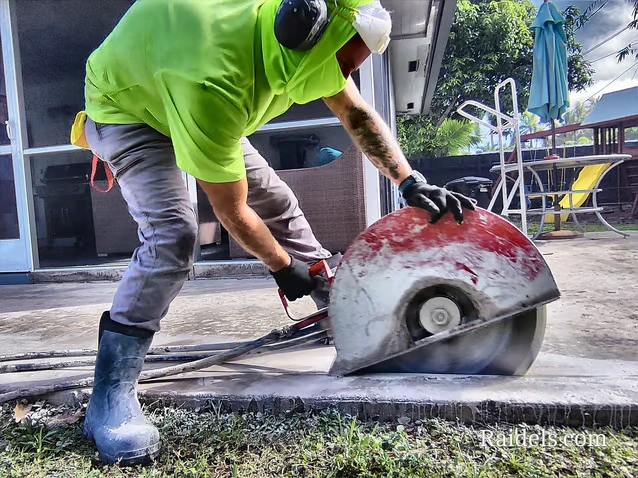
Wet-cut sawing with a walk-behind concrete saw is performed after the slab has cured sufficiently — generally 6 to 12 hours post-pour for residential flatwork, longer for heavier commercial slabs. Diamond blades are standard, and water is used as both a coolant and a dust suppressant. This introduces slurry management as a direct cost factor. On projects near storm drains, water bodies, or in environmentally sensitive areas, slurry containment and disposal adds labor and materials to the bid.
Wet-cut joints are typically wider — 1/8 to 3/16 inch — and require joint filler or backer rod plus sealant if the surface will see vehicle traffic or moisture infiltration is a concern.
Joint Spacing and Depth Specifications That Drive Scope
ACI 360R and industry standard practice recommend spacing control joints at intervals of 24 to 36 times the slab thickness. For a 4-inch slab, that’s 8 to 12 feet on center. For a 6-inch slab, 12 to 18 feet. Deviating from these ratios — which happens frequently when clients try to reduce the number of cuts to save money — dramatically increases the likelihood of uncontrolled cracking between joints.
On projects involving rebar-embedded reinforced slabs, joint placement requires coordination with the structural drawings. You cannot simply cut through a rebar mat at arbitrary intervals. The joint location must align with the reinforcement layout, and in some cases, the rebar is intentionally debonded at the joint location using plastic sheathing over a short segment to allow the slab to move without restraint.
Aggregate Hardness and Blade Selection
Miami-Dade and Broward County flatwork frequently uses limestone aggregate, which is relatively soft and cuts quickly. Projects using hard aggregates — trap rock, granite, or recycled concrete aggregate — require harder-bonded diamond blades that cost more per blade and wear faster. This is a legitimate bidding variable that inexperienced estimators often overlook. A job that quotes 1,000 linear feet at a standard rate can blow past its blade budget by 40% if the aggregate hardness wasn’t confirmed before pricing.
Real Cost Ranges and What Moves the Number
For straightforward flatwork in the Miami metro area, control joint cutting typically runs between $0.75 and $2.50 per linear foot for the saw cutting alone. That range is wide because it has to accommodate the following variables:
- Slab thickness — deeper cuts require more blade passes or slower feed rates, increasing time per linear foot
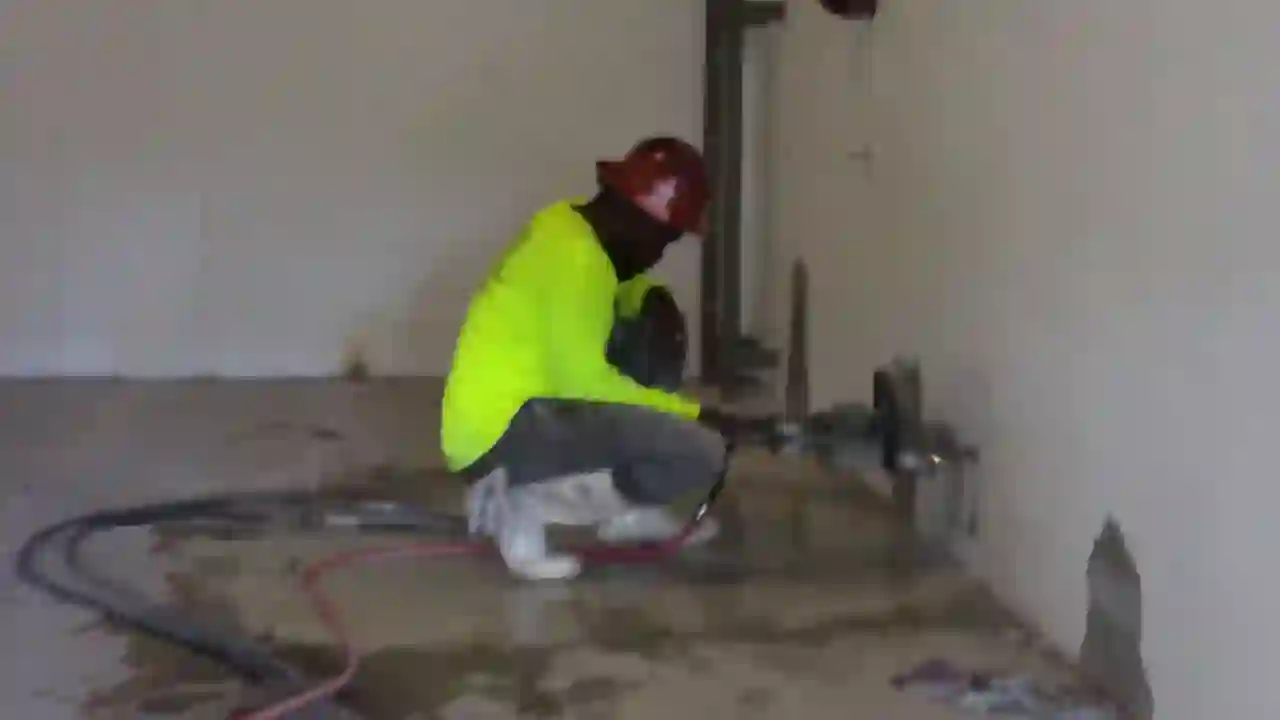
- Access and mobilization — tight residential sites or interior work requiring equipment breakdown adds mobilization cost
- Slurry management requirements — containment, vacuuming, and disposal on environmentally sensitive sites
- Number of cuts and total linear footage — larger volume jobs drive the per-foot rate down
- Joint sealant scope — if the bid includes backer rod installation and polyurethane or epoxy sealant, add $1.50 to $4.00 per linear foot depending on joint width and sealant type
- Timing constraints — early-entry work requiring a crew on standby for a pour commands a premium over scheduled post-cure cutting
A 10,000-square-foot warehouse slab on a 10-foot grid generates roughly 2,000 linear feet of control joints. At $1.25 per foot for cutting plus $2.00 per foot for sealant, you’re looking at a $6,500 scope just for jointing. Add mobilization, slurry disposal, and a layout crew, and a complete bid for that scope in Miami typically lands between $7,500 and $11,000 depending on site conditions.
Timeline Estimations by Project Type
For a standard 5,000-square-foot residential or light commercial pour, early-entry cutting can typically be completed within 2 to 4 hours of the finishing crew clearing the slab. Wet-cut work on a cured slab of the same size runs 4 to 6 hours with a two-person crew. Sealant application adds a half-day minimum, plus cure time before the surface can accept traffic.
Larger commercial projects — 20,000 square feet and up — are typically phased over multiple days. Pour sequencing, joint layout verification against structural drawings, and coordination with the general contractor’s schedule all add administrative time that should be captured in the bid as a project management line item, not buried in the per-foot rate.
Sidewalk and Flatwork Jointing in the Public Right-of-Way
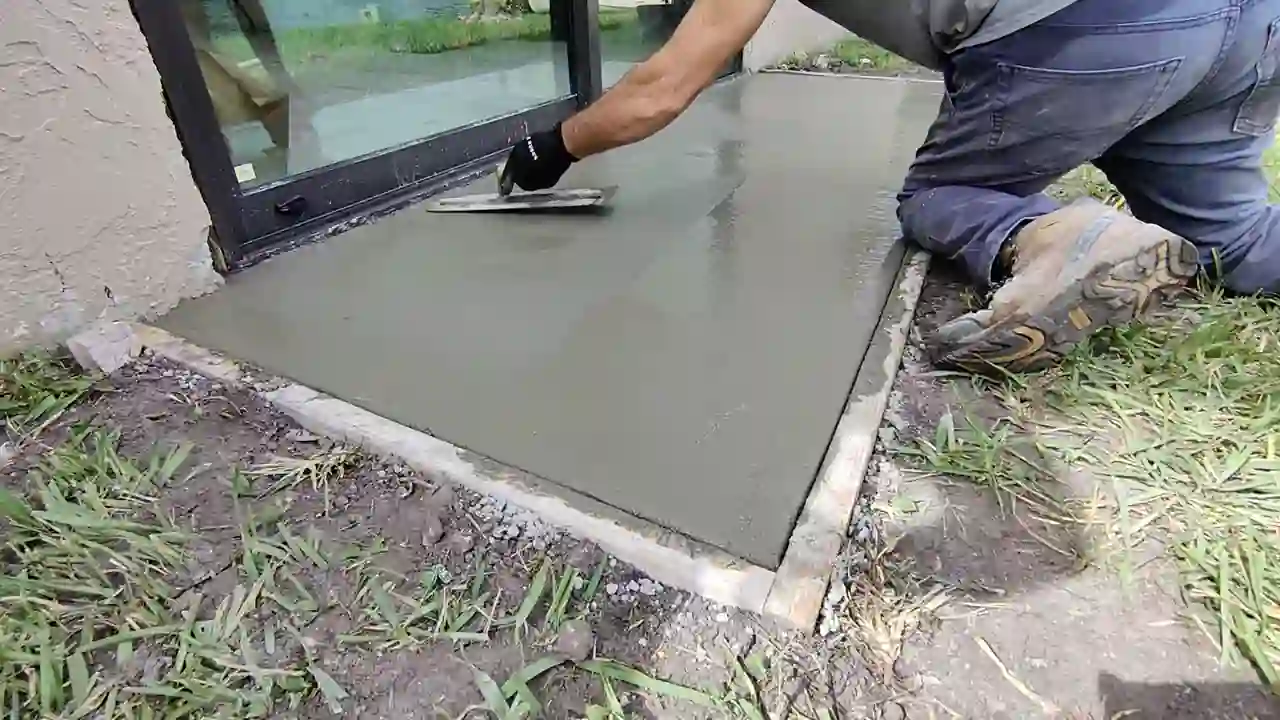
Municipal sidewalk replacement in Miami-Dade and Broward involves specific joint spacing and depth requirements set by the local public works standards. Panels are typically 5 feet by 5 feet, requiring tooled or saw-cut joints at 5-foot intervals. If you’re dealing with existing sidewalk panels that have heaved or cracked at the joint, that’s a trip hazard grinding situation before any new jointing work begins. Bidding sidewalk work without accounting for existing surface prep is a common mistake that eats margin fast.
What to Look for When Hiring a Contractor for This Work
Control joint cutting looks simple from the outside — it’s a saw making straight lines. But the timing judgment, blade selection, depth calibration, and slurry management are all skilled trades decisions. Property owners in Hollywood and across South Florida frequently make the mistake of hiring general contractors who subcontract this work to whoever is cheapest, rather than to a specialist with the right equipment and timing experience.
Ask any contractor you’re considering the following before signing a bid: What saw type do you use for early-entry work? How do you determine cut timing after a pour? What is your slurry disposal protocol? Do you carry the blade inventory for different aggregate types, or do you use one blade for everything? The answers will tell you whether you’re dealing with a specialist or a generalist who bought a saw.
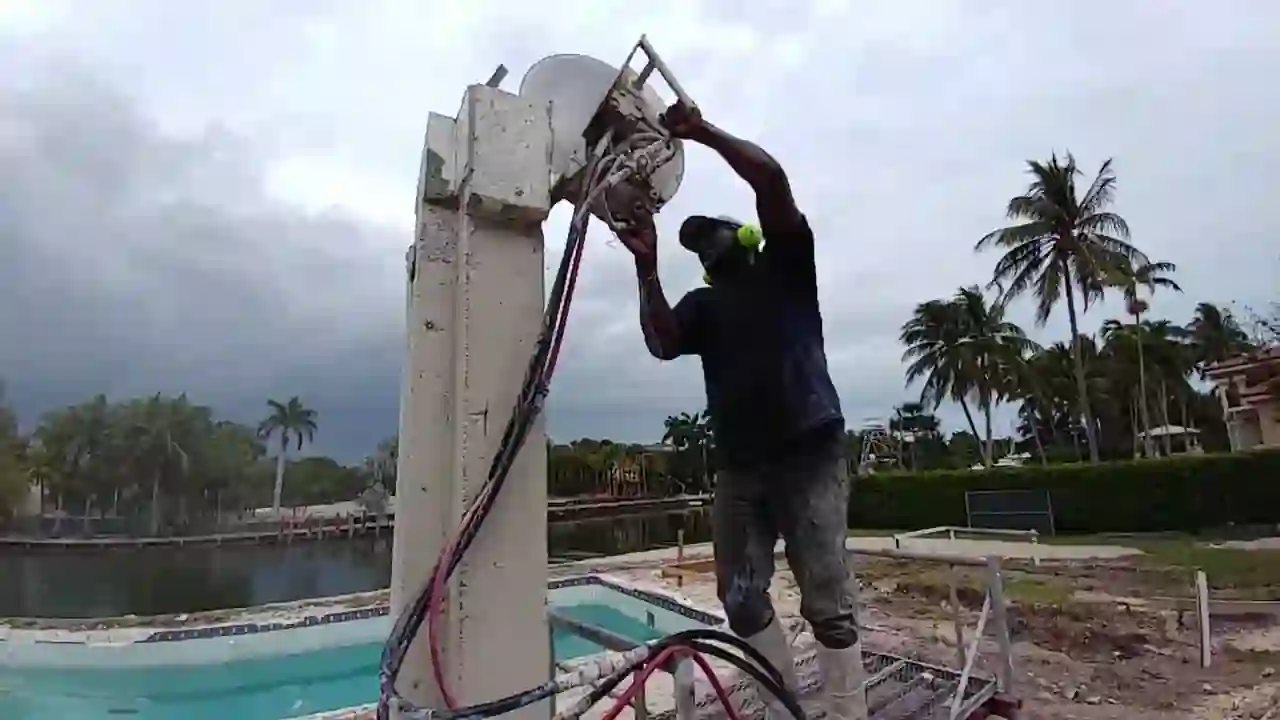
For projects involving pool surrounds, deck work, or hardscape near pool structures, joint placement and waterproofing sealant selection are especially critical. Improper jointing near water features leads to infiltration, undermining, and structural movement. Pool-adjacent concrete work requires a contractor who understands the interaction between the pool shell, the deck slab, and the bond beam — not just someone who can run a straight line.
Putting Together a Bid That Holds Up
A defensible control joint bid itemizes the following separately: mobilization, layout and marking, saw cutting by linear foot with blade type specified, slurry management if applicable, joint cleaning and preparation, backer rod installation, sealant by linear foot with product specified, and a contingency for timing delays on early-entry work. Bundling everything into a single per-foot number invites scope creep disputes and makes it impossible to identify where cost overruns occurred.
If you’re the GC or owner reviewing bids, be skeptical of any number that doesn’t break out sealant separately. Sealant is a consumable with significant material cost, and a contractor who lumps it in with cutting is either guessing on quantities or planning to use the cheapest product available regardless of what the spec requires.
Control joints done right are invisible. They do their job quietly over the life of the slab, directing stress where it belongs and keeping the surface looking clean. Control joints done wrong — or skipped entirely — show up as random cracking that costs two to five times more to address after the fact than the jointing would have cost to do correctly in the first place. The math on doing this right is straightforward. The only variable is whether the contractor you hire understands it as well as you do.