Why Concrete Cutting Rates in Miami Are Priced the Way They Are
When a project manager asks for a concrete cutting rate, they usually expect a simple number — dollars per linear foot, dollars per square foot, maybe an hourly floor saw rate. What they don’t always expect is a breakdown that includes vacuum slurry systems, containment berms, pH neutralization agents, and licensed waste hauling. But in Miami-Dade County, that breakdown isn’t a surprise. It’s the standard. Understanding why requires a closer look at what responsible wet-cutting operations actually involve — and why cutting corners on environmental compliance creates liability that dwarfs any short-term savings on a bid.
The Wet-Cutting Mandate and What It Generates
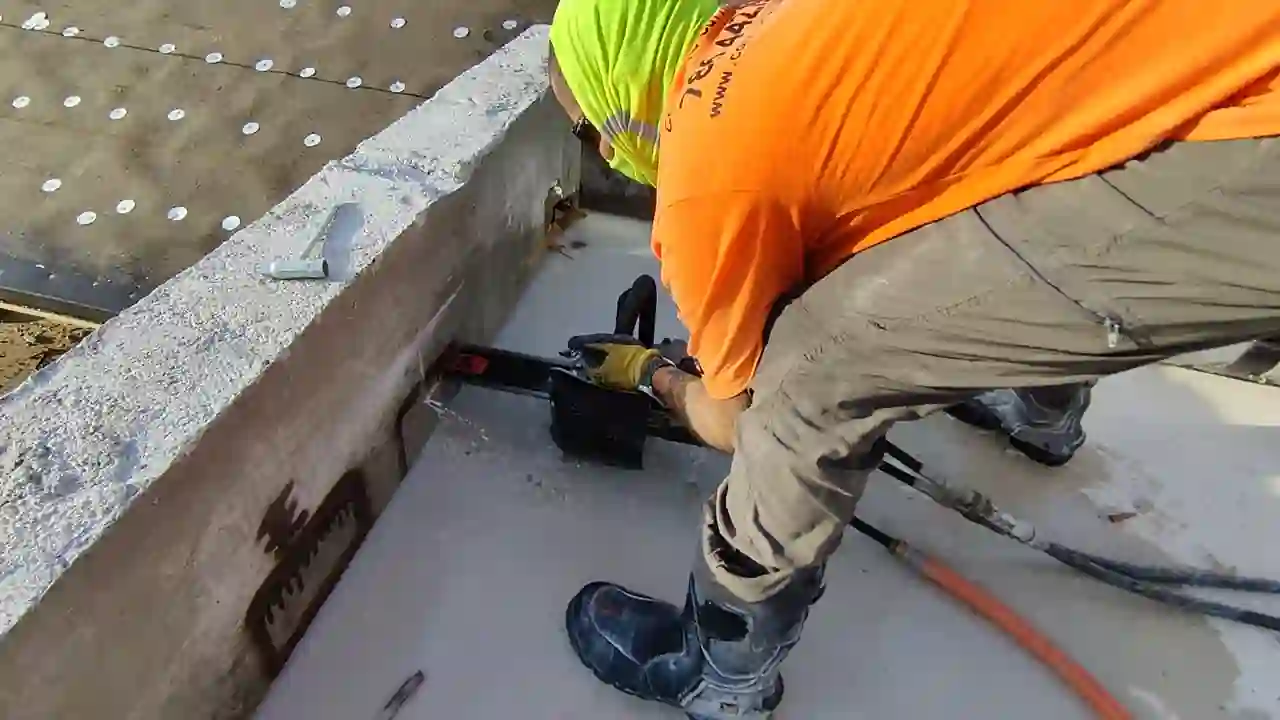
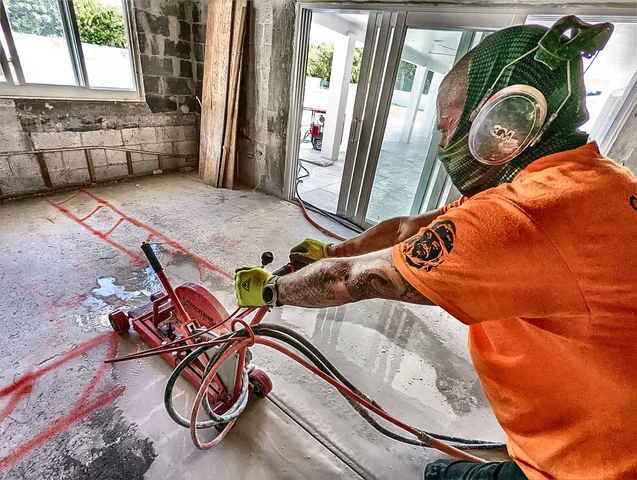
Diamond blade cutting — whether with a handheld saw, a walk-behind floor saw, or a wall saw mounted on a track system — requires water as a coolant and dust suppressant. There is no commercially viable way around this on most structural concrete applications. The water keeps blade temperatures within operating range, extends diamond segment life, and prevents the airborne silica dust that would otherwise trigger OSHA’s Respirable Crystalline Silica Standard (29 CFR 1926.1153).
What that water becomes after contact with freshly cut concrete is the problem. Concrete slurry is a suspension of fine silica particles, calcium hydroxide, calcium silicate hydrates, and trace heavy metals — all carried in water that typically tests between pH 11 and pH 13. That’s strongly alkaline. Discharge of that material into storm drains, surface water, or unprotected soil is a violation of the Clean Water Act, Florida’s Chapter 62-621 industrial stormwater rules, and Miami-Dade’s local stormwater management ordinances. The fines are real. The remediation costs are worse.
This is why slurry management comes first in any properly scoped concrete removal project, not as an afterthought. It’s engineered into the setup before the first blade makes contact with the slab.
Slurry Containment Systems and Their Effect on Concrete Cutting Rates
A compliant slurry containment setup for a mid-size commercial floor sawing operation in Miami typically includes the following components, each of which carries a real cost that feeds directly into the cutting rate you’re quoted:
- Vacuum slurry recovery units — These industrial wet-vacs run continuously alongside the saw, pulling slurry off the cut surface before it migrates. Units capable of handling high-volume floor saw operations cost between $8,000 and $25,000 to own and maintain. That capital cost is amortized into every job.
- Containment berms and dam systems — Portable rubber or foam berms are deployed around the cutting perimeter to prevent lateral slurry migration. On large slabs, this can require 200+ linear feet of berm material plus labor to install and reposition as cuts progress.
- pH adjustment and neutralization — Before slurry can be legally discharged to a sanitary sewer (with utility approval) or transported offsite, it must typically be neutralized to a pH between 6.0 and 9.0. Carbon dioxide injection systems or dry acid additives are used. This is a materials and equipment cost per job.
- Licensed waste hauling and disposal manifests — In many jurisdictions, including Miami-Dade, slurry that cannot be neutralized and discharged on-site must be transported by a licensed liquid waste hauler. This generates a manifest trail and a disposal fee that scales with volume.
- Operator certification and documentation — Compliance isn’t just equipment. It’s paperwork. OSHA silica exposure monitoring logs, disposal manifests, and site-specific water pollution prevention plans (WPPPs) all require trained personnel and time.
When you add these components together, a compliant slurry management setup can represent 15% to 30% of total project cost on interior slab cutting jobs. On exterior work near waterways — which is common in Miami’s coastal construction environment — that percentage can climb higher due to secondary containment requirements and more stringent discharge monitoring.
How Blade Selection Interacts with Water Consumption and Slurry Volume
The type of diamond blade used on a job doesn’t just affect cutting speed — it directly affects how much water is required and therefore how much slurry is generated. This is a technical detail that sophisticated project managers should understand when evaluating concrete cutting rates.
Segmented rim blades used for aggressive aggregate cutting generate coarser slurry with higher particulate load per gallon of water used. Continuous rim blades used for precision cuts in reinforced slabs tend to run at lower water volumes but require more consistent flow to prevent thermal cracking of the diamond matrix. Turbo blades fall somewhere in between. The specific blade specification affects not just cut quality but the downstream slurry management equation.
A higher water flow rate means faster slurry accumulation, which means more frequent vacuum recovery cycles, larger holding tanks, and potentially more haul loads. All of this is calculable in advance by an experienced contractor — and all of it should be reflected in a transparent rate structure.
Coastal and Below-Grade Applications Carry Elevated Compliance Burdens
Miami’s geography creates site conditions that amplify environmental compliance requirements beyond what inland contractors typically encounter. Groundwater tables in Miami-Dade are often within 2 to 6 feet of the surface. Core drilling or wall sawing in below-grade applications — basement walls, foundation repairs, underground utility penetrations — can intersect the water table, creating a bidirectional contamination risk: slurry migrating into groundwater, or groundwater diluting slurry and carrying it further than expected.
For foundation repair cutting work in Miami, this means pre-job hydrogeological assessment, dewatering pump staging, and sometimes the deployment of geotextile filter barriers around the work zone. These aren’t upsells. They’re engineering necessities driven by the site conditions.
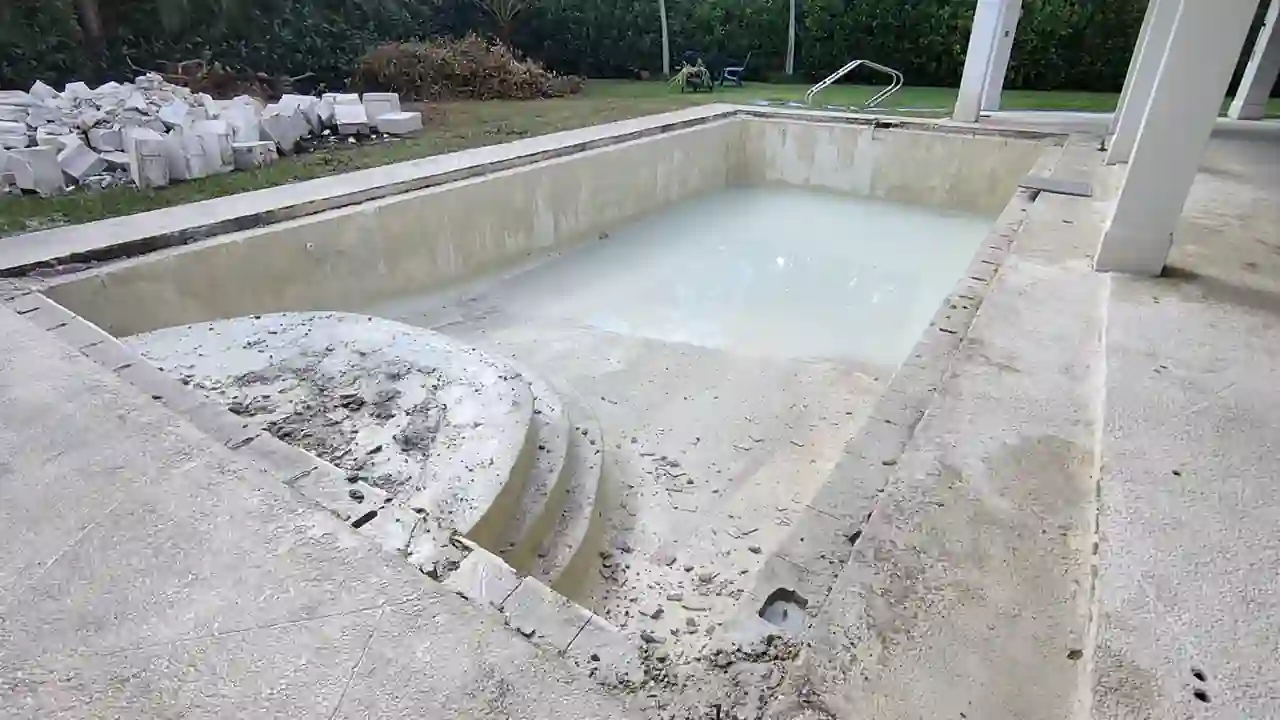
Similarly, pool deck and pool shell cutting — a high-volume work category in South Florida — requires special attention to slurry migration toward pool water, which is chemically sensitive and subject to its own regulatory framework. Pool demolition cutting scopes must account for slurry isolation from the pool basin, particularly when the pool is still holding water during partial demolition phases.
Breaking Down a Realistic Rate Structure for Compliant Operations
A transparent concrete cutting rate for a compliant Miami contractor on a commercial interior slab cutting project might look like this per linear foot of 6-inch-deep floor saw cut:
- Diamond blade wear and equipment depreciation — $0.85 to $1.40/LF depending on aggregate hardness and reinforcement density
- Operator labor (certified, OSHA 30) — $1.10 to $1.60/LF
- Slurry vacuum recovery system operation — $0.30 to $0.55/LF
- Containment setup and teardown (amortized) — $0.15 to $0.35/LF
- pH neutralization materials — $0.10 to $0.20/LF
- Slurry disposal (if haul-off required) — $0.25 to $0.75/LF depending on volume
- Documentation and compliance overhead — $0.10 to $0.20/LF
Total: approximately $2.85 to $5.05 per linear foot for a fully compliant operation. Bids that come in significantly below this range should prompt a direct question: where is the slurry going, and who is responsible when it ends up in the wrong place?
This kind of pricing transparency also connects to property value optimization — because environmental violations, stop-work orders, and remediation costs can derail project timelines and create lasting encumbrances on a property’s title and permitting history.
The Liability Transfer Problem in Low-Bid Scenarios
Here is the compliance reality that property owners and general contractors need to internalize: when a concrete cutting subcontractor improperly disposes of slurry, the liability does not stay with the subcontractor. Under CERCLA joint-and-several liability principles, and under Florida’s Water Quality Assurance Act, the property owner and the GC can be held responsible for cleanup costs and civil penalties.
A cutting subcontractor who saves $800 on a job by skipping proper slurry disposal can generate $15,000 to $80,000 in regulatory response costs for the project owner. That math makes the cheapest bid the most expensive option on any project where environmental compliance is a real factor — which, in Miami’s regulated coastal environment, is essentially every project.
Evaluating Contractor Compliance Before the Work Starts
Before accepting a concrete cutting rate, ask for documentation. Specifically:
- Slurry management plan — A written description of containment, recovery, neutralization, and disposal methods for the specific site
- Waste disposal manifests from recent comparable jobs — Proof that compliant disposal is standard practice, not a one-time accommodation
- Equipment list including vacuum recovery capacity — Rated in gallons per minute, matched to the expected water flow rate of the cutting equipment being used
- Operator silica exposure monitoring records — Compliance with OSHA’s silica standard requires air monitoring or documented use of Table 1 engineering controls
- Proof of contractor licensing for liquid waste handling — In Florida, transport of liquid waste requires a specific license from FDEP
Concrete cutting rates that include all of this aren’t inflated. They’re honest. The rate you’re paying isn’t just for the cut — it’s for the clean, compliant, documented execution of work that doesn’t come back to haunt the project months after the contractor has left the site. In Miami-Dade, where regulatory scrutiny on construction sites is active and where stormwater compliance is enforced by multiple overlapping agencies, that distinction is worth every dollar.