Why Equipment Specification Is the First Decision in Any Concrete Removal Project
Walk onto any concrete removal site without a clear equipment plan and you’re already behind. The single most expensive mistake contractors make when figuring out how to remove concrete isn’t the labor — it’s selecting the wrong saw platform or the wrong diamond tooling for the substrate they’re cutting. Concrete mix design, aggregate hardness, reinforcement density, slab thickness, and cure age all drive blade selection and machine power requirements. Ignoring any one of those variables means premature segment wear, blade glazing, motor overload, or worse — an uncontrolled cut that compromises structural integrity. This guide breaks down the technical specifications professionals rely on to match equipment to material, every single time.
Understanding Concrete Hardness and Its Direct Impact on Diamond Segment Bond
Diamond blades don’t cut concrete — the concrete cuts the blade’s steel matrix to expose fresh diamond crystals. That’s the fundamental mechanism, and it’s why bond hardness is the most critical spec on any diamond blade data sheet. Soft-bond segments are engineered for hard, dense concrete (typically 5,000 PSI and above) because the abrasive aggregate wears the matrix quickly enough to keep exposing new diamonds. Hard-bond segments are designed for soft, green, or low-PSI concrete where the matrix needs to resist wear longer to prevent the diamonds from pulling out prematurely.
In South Florida, contractors frequently encounter high-silica limestone aggregate and marine-grade concrete mixes with compressive strengths ranging from 3,500 PSI in older residential slabs to 8,000 PSI or higher in post-tensioned commercial decks. Misreading the substrate and running a hard-bond blade on dense high-PSI concrete will glaze the segments within minutes — the diamonds become buried and the blade stops cutting. Knowing your PSI range before you order tooling isn’t optional; it’s the foundation of every blade specification decision.
Aggregate Type and Mohs Hardness Ratings That Drive Segment Specification
Beyond compressive strength, the mineralogical hardness of the aggregate determines how aggressively the matrix wears. Quartz-rich aggregates rate 7 on the Mohs scale and are highly abrasive, accelerating matrix wear and demanding a harder bond. Limestone aggregates rate 3–4 on the Mohs scale and are far less abrasive, meaning a softer bond is needed to prevent glazing. Granite aggregates fall in the 6–7 range. When you’re removing concrete in Miami-Dade County specifically, you’ll often encounter oolitic limestone — a relatively soft aggregate — which means softer bond blades with higher diamond concentration are typically the correct specification.
Flat Saw Specifications for Full-Depth Slab Removal
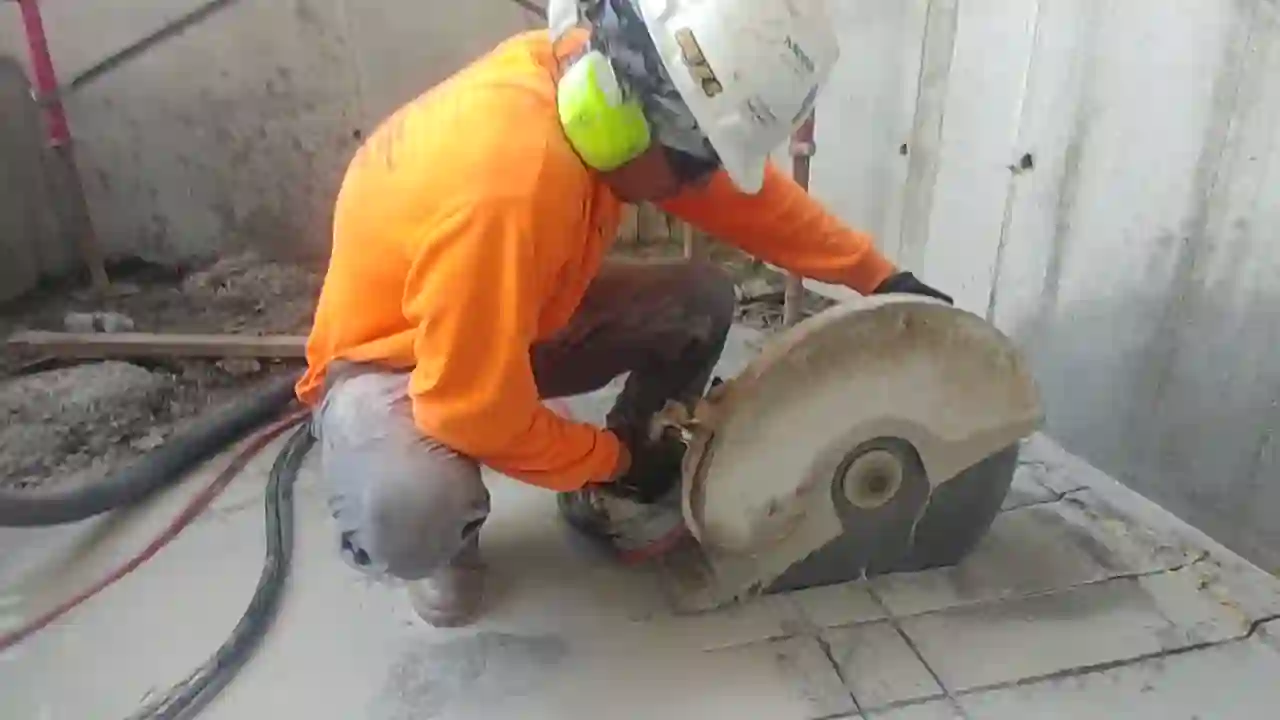
For horizontal slab removal — parking decks, warehouse floors, roadways — the walk-behind flat saw (also called a road saw or slab saw) is the primary platform. Machine selection here comes down to horsepower, blade diameter, and spindle speed (RPM). A proper flat saw for production concrete removal should deliver a minimum of 25 horsepower at the blade shaft, with high-end production units running 65–120 HP diesel engines for blades up to 60 inches in diameter. Blade diameter directly determines maximum cut depth: a 14-inch blade cuts approximately 4.5 inches deep, a 20-inch blade reaches roughly 7 inches, and a 36-inch blade can achieve depths approaching 13 inches.
Spindle RPM must be matched to blade diameter to maintain the correct peripheral speed — typically 3,200 to 5,500 surface feet per minute (SFPM) for wet-cutting diamond blades on concrete. Running a large-diameter blade at excessive RPM generates heat that destroys the bond; running it too slow fails to achieve the cutting action needed for efficient segment wear. Most professional flat saw platforms include variable RPM controls specifically to accommodate different blade diameters. For projects requiring deep cuts through heavily reinforced slabs, Miami concrete cutting specialists typically deploy 30- to 36-inch blades on high-horsepower diesel units with hydraulic blade feed controls.
Segment Height, Kerf Width, and Blade Diameter Selection for Flat Saw Work
Segment height on a production flat saw blade typically ranges from 15mm to 20mm for general concrete removal, with premium segments reaching 25mm for extended service life on large-volume projects. Kerf width — the width of material removed by the cut — ranges from 0.125 inches on thin-kerf blades to 0.187 inches or wider on production blades. Wider kerf blades require more horsepower but provide better cooling and debris clearance in the cut. For rebar-heavy concrete, look for blades with a reinforced steel core and a minimum segment height of 18mm to handle the impact loading from steel without cracking the segment weld.
Wall Saw and Ring Saw Specifications for Vertical and Overhead Removal
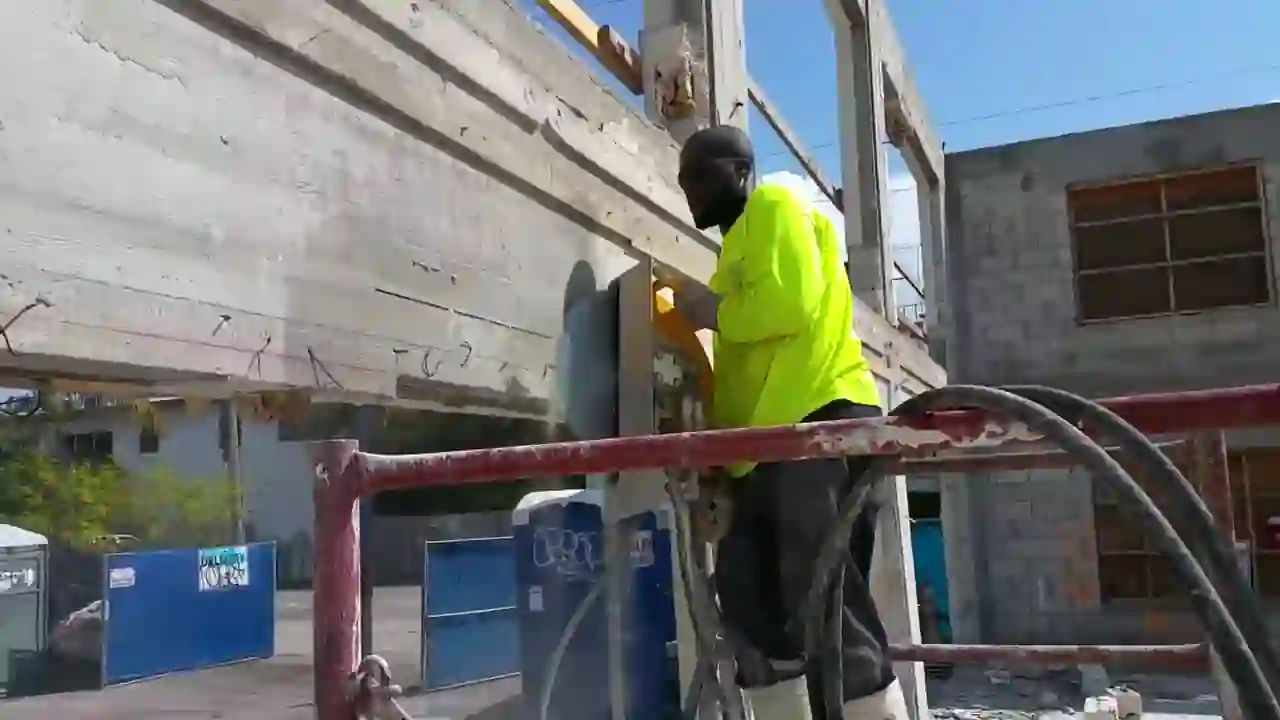
Wall saws — track-mounted circular saws that ride a rail system anchored to the concrete face — are the correct tool for vertical cuts in walls, bridge abutments, and elevated decks. Electric wall saw motors typically range from 15 to 30 HP, while hydraulic-powered units can deliver up to 50 HP at the blade. Blade sizes for wall saws range from 16 inches to 48 inches in diameter. The track system allows the operator to control feed rate precisely, which is critical for maintaining consistent segment contact pressure and preventing blade binding in deep cuts.
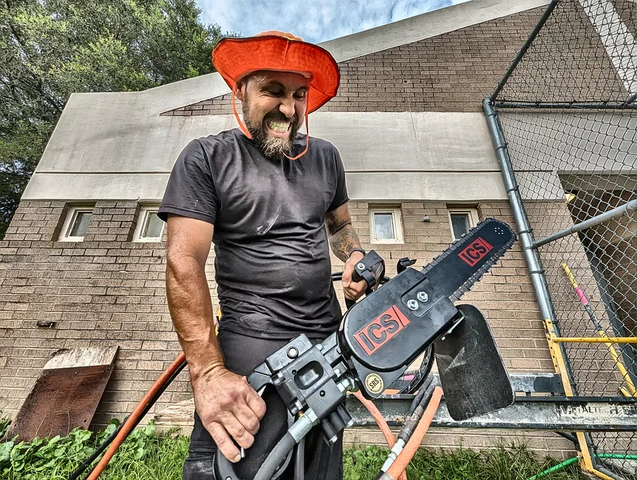
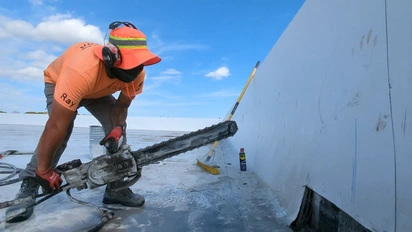
Ring saws — handheld tools using a circular blade with the motor mounted off-center — are specified for confined spaces where a wall saw track cannot be anchored. Ring saw blades typically range from 12 to 16 inches in diameter with a cutting depth of 5–6 inches, making them ideal for partial-depth removal, window and door openings, and utility penetrations. For overhead cutting applications such as concrete skylight and roof hatch openings, ring saws and wall saws are often used in combination to achieve complete perimeter cuts without overcutting corners.
Diamond Wire Saw Specifications for Mass Concrete and Post-Tensioned Structures
When slab thickness, reinforcement density, or geometry makes circular blade saws impractical, diamond wire sawing becomes the specified method. A diamond wire saw system consists of a continuous loop of steel cable strung with diamond-impregnated beads at regular intervals — typically every 25–30mm. The drive unit pulls the wire loop at speeds of 18–30 meters per second while the operator controls feed pressure. Wire diameter ranges from 6mm to 11mm depending on application, with bead diameter adding another 2–4mm to the effective cutting dimension.
Wire saw drive units are rated by pulling force (measured in kilonewtons) and motor horsepower. Production units for mass concrete removal deliver 30–75 HP and are capable of cutting cross-sections exceeding 10 square feet in a single setup. Wire saws are the only practical method for removing post-tensioned concrete because the wire can be threaded through pre-drilled pilot holes to avoid tendon locations, whereas a circular blade would require cutting directly through the tendon path. This is a critical safety and structural consideration — always obtain post-tension tendon shop drawings before specifying any removal method on PT slabs.
Core Drill Specifications for Perimeter Relief Holes and Anchor Points
Core drilling is frequently the first operation in a concrete removal sequence — whether you’re creating relief holes at slab corners, establishing wire saw threading points, or installing anchor bolts for saw track systems. Core drill motor selection depends on core diameter and concrete hardness. For cores up to 4 inches in diameter, a single-speed electric drill motor rated at 2–3 HP is typically sufficient. Cores from 6 to 18 inches require variable-speed motors in the 5–10 HP range with integrated water feed systems. Cores above 18 inches demand hydraulic drive units or specialized large-diameter rigs with torque ratings above 200 ft-lbs.
Core bit segment specification follows the same bond hardness logic as flat saw blades — soft bond for hard aggregate, hard bond for soft aggregate. Bit length is equally important: standard bits are 14–18 inches, but extension rods allow drilling depths up to 10 feet or more for through-slab applications in thick foundations or bridge piers. Proper vacuum and slurry management during core drilling keeps the bit cool, prevents segment loading, and maintains the clean hole geometry required for anchor installations. Dry core drilling is only appropriate for thin sections under 2 inches — anything deeper requires water cooling to prevent thermal damage to the diamond segments.
Dust and Slurry Management Equipment That Protects Tooling and Crews
Equipment specification for concrete removal doesn’t end at the cutting tool. Water delivery systems, vacuum rigs, and slurry containment equipment directly affect blade life and jobsite compliance. Wet-cutting systems should deliver water at a minimum of 0.5 gallons per minute directly to both sides of the blade at the cutting interface. Insufficient water flow causes thermal glazing of segments and can warp the blade core, leading to blade wobble and inaccurate cuts. For interior removal projects where wet cutting creates slurry management challenges, HEPA-filtered vacuum systems rated for concrete dust (OSHA Table 1 compliant) paired with shroud-equipped tools are the correct specification. Understanding OSHA silica dust requirements for industrial concrete cutting is non-negotiable for any removal project inside an occupied or partially occupied facility.
Matching the Full Equipment Package to the Removal Scope
Successful concrete removal is a systems problem, not a single-tool problem. The flat saw, wall saw, core drill, and wire saw each have defined performance envelopes — and the best contractors know exactly where those envelopes overlap and where they don’t. Start with the concrete’s compressive strength, aggregate hardness, reinforcement layout, and section geometry. Use those parameters to select blade bond hardness and segment height. Then match the blade specification to a machine platform with sufficient horsepower and RPM range to maintain correct peripheral speed throughout the cut. Layer in proper water or vacuum dust control, and you have a complete, defensible equipment specification that will deliver clean cuts, predictable blade life, and a removal sequence that stays on schedule.