Why Industrial Concrete Cutting Services Carry the Highest Safety Stakes on Any Job Site
Industrial concrete cutting services aren’t like residential slab work. When you’re operating flat saws, wall saws, wire saws, and core drilling rigs inside active manufacturing plants, power generation facilities, wastewater treatment stations, or high-rise structural renovation projects, the hazard profile escalates dramatically. You’re dealing with heavier reinforcement schedules, post-tensioned systems, embedded utilities, confined spaces, overhead loads, and a workforce density that multiplies exposure risk at every turn. I’ve been on job sites across South Florida for decades, and I’ll tell you plainly — the difference between a smooth industrial cut and a catastrophic incident almost always comes down to pre-task planning and disciplined protocol execution, not equipment quality alone.
OSHA 29 CFR 1926 Subpart Q and What It Actually Requires from Your Cutting Crew
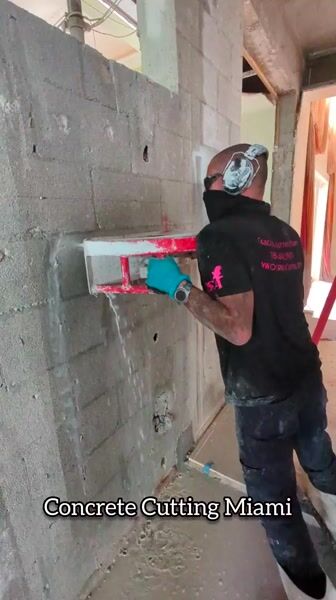
Most contractors know OSHA exists. Far fewer understand exactly how Subpart Q — Concrete and Masonry Construction — applies specifically to cutting operations in industrial environments. Under 29 CFR 1926.702, employers are required to ensure that equipment used in concrete work is inspected before each use and that all moving parts are properly guarded. For industrial concrete cutting services, this means every saw blade guard, every wet-cutting water delivery system, and every vacuum shroud on a core drill must be verified functional before the first cut is made.
Beyond equipment inspection, 29 CFR 1926.55 governs airborne contaminant thresholds, and this is where the 2016 OSHA Silica Rule — 29 CFR 1926.1153 — becomes the single most important compliance document your crew should have laminated on-site. The permissible exposure limit (PEL) for respirable crystalline silica is 50 micrograms per cubic meter of air, averaged over an 8-hour shift. Industrial concrete, particularly older reinforced slabs, can generate silica dust concentrations that exceed this threshold within minutes of dry cutting. Non-negotiable: wet cutting methods or integrated vacuum systems with HEPA filtration must be deployed on every industrial cut. If you’re working with a contractor who doesn’t have a written Exposure Control Plan on-site, walk away — or call us at Concrete Cutting Miami before you inherit someone else’s liability.
Silica Dust Engineering Controls Specific to High-Volume Industrial Cuts
Table 1 of the OSHA Silica Standard outlines specific engineering and work practice controls for each type of concrete cutting task. For walk-behind saws — the workhorses of industrial floor cutting — continuous water delivery that suppresses dust at the blade is the baseline requirement. But in industrial settings, “continuous water delivery” means a dedicated water supply system with a flow rate calibrated to the blade diameter and cutting speed, not an operator with a garden hose.
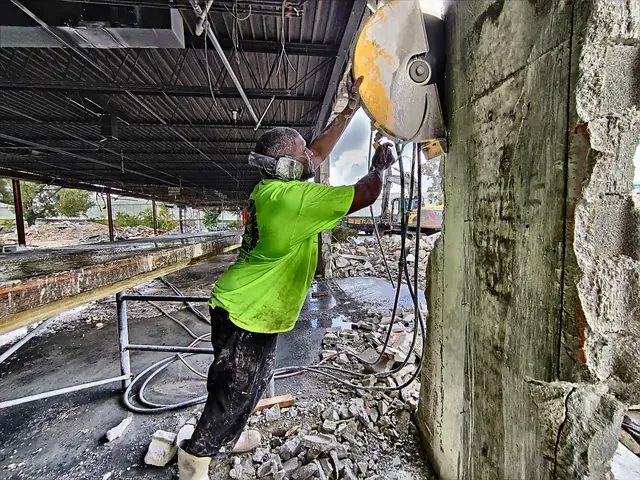
For wall saws and wire saws used in structural demolition or opening creation, the engineering controls shift. Wall saws operating in enclosed industrial spaces require local exhaust ventilation (LEV) systems positioned within 12 inches of the cutting face whenever wet cutting isn’t feasible due to electrical hazard proximity or freeze-sensitive equipment. Wire saw operations on large-section industrial cuts — think bridge abutment modifications or industrial foundation segmentation — generate massive slurry volumes that must be contained and disposed of per local environmental regulations. In Miami-Dade County, that means compliance with DERM (Department of Environmental Resources Management) slurry disposal protocols, not just OSHA.
Our core drilling operations in industrial settings use vacuum-shrouded bits with HEPA-rated collection units rated at 99.97% efficiency at 0.3 microns. That’s not a marketing claim — that’s the specification required to achieve compliance under Table 1 for rotary hammer and core drill operations without continuous water suppression.
Pre-Task Hazard Identification Protocols Before the First Blade Touches Concrete
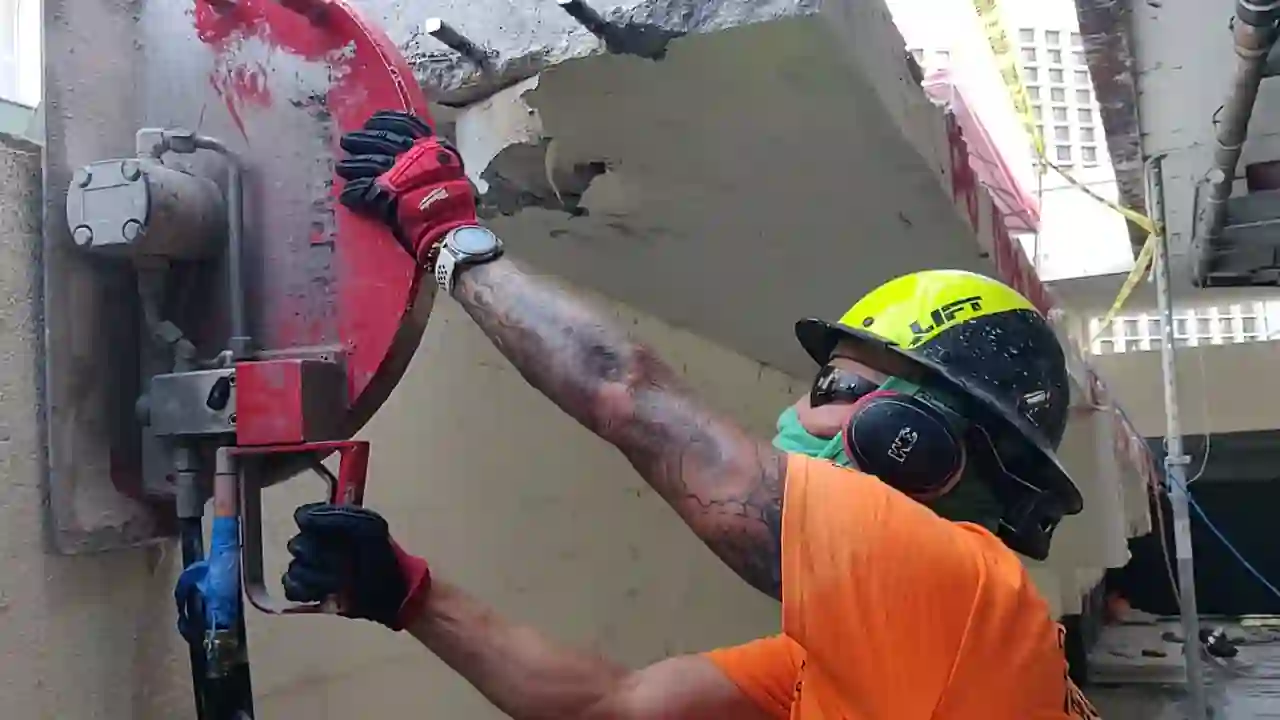
Every industrial concrete cutting job must begin with a formal Job Hazard Analysis (JHA), sometimes called a Job Safety Analysis (JSA). This isn’t paperwork for paperwork’s sake — it’s a structured process that identifies every task step, the associated hazards, and the specific controls that will be implemented. For industrial cuts, your JHA must address at minimum the following hazard categories:
- Embedded utilities and post-tensioned cables: Ground-penetrating radar (GPR) scanning must be completed before any coring or saw cutting begins. Striking a post-tensioned tendon under load is a life-safety event, not just a repair bill.
- Structural load redistribution: In industrial facilities with active loading — storage racks, overhead cranes, process equipment — any structural cut requires a licensed structural engineer’s written approval specifying temporary shoring requirements.
- Confined space entry: Cutting inside pits, tunnels, vaults, or tanks triggers OSHA 29 CFR 1910.146 permit-required confined space protocols, including atmospheric testing, continuous monitoring, and a trained attendant stationed at the entry point.
- Noise exposure: Industrial diamond saws operating at full depth in reinforced concrete regularly produce sound levels exceeding 100 dB(A). Hearing protection rated at NRR 25 or higher is mandatory, and exposure time limits under 29 CFR 1910.95 must be enforced.
- Vibration and hand-arm vibration syndrome (HAVS): Operators using handheld cutting equipment for extended periods must rotate tasks to limit cumulative vibration exposure, particularly on core drilling assignments.
Blade Kickback Prevention and Saw Control Discipline in Industrial Environments
Blade kickback is the most immediate mechanical hazard in any concrete cutting operation, and industrial environments amplify the risk because cuts are often longer, deeper, and executed under time pressure. Kickback occurs when a blade binds in the cut — typically because the slab shifts, the cut closes due to structural stress redistribution, or the operator deviates from the cut line. The blade stops rotating and the saw body is violently ejected in the opposite direction of blade rotation.
Prevention requires a multi-layer approach. First, blade selection must match the aggregate hardness and reinforcement density of the industrial slab being cut. Using a blade bonded for soft aggregate on hard quartzite-aggregate industrial flooring causes premature glazing, heat buildup, and binding. Second, all walk-behind flat saw operators must maintain two-hand grip control and never lean body weight over the blade guard. Third, on cuts exceeding 18 inches in depth — common in industrial foundation work — relief cuts perpendicular to the primary cut line must be made every 24 to 36 inches to prevent slab pinch. If you’re budgeting for industrial concrete cutting services and want to understand how these technical requirements affect project costs, our budgeting resources break down exactly what drives pricing on complex industrial cuts.
Wet Cutting Slurry Management and Environmental Compliance on Industrial Sites
Wet cutting is the gold standard for silica control, but it creates a secondary compliance obligation that many contractors ignore until they receive a stop-work order. Concrete cutting slurry has a pH typically ranging from 11 to 13 — highly alkaline — and contains heavy metals leached from cement and aggregate. Allowing slurry to enter storm drains, floor drains connected to municipal sewer systems, or natural waterways is a Clean Water Act violation that carries civil penalties starting at $25,000 per day per violation.
Industrial concrete cutting services must include a slurry containment and collection plan. This means berming the cut area with absorbent booms or foam dam material, collecting slurry with wet vacuums into sealed containers, and disposing of it through a licensed waste hauler or, where volume permits, neutralizing it to pH 6-9 before controlled discharge. If your project involves pool deck demolition or renovation work alongside industrial cutting, our pool excavation cost guides can help you understand how environmental compliance factors into total project budgeting.
Personal Protective Equipment Standards Specific to Industrial Cutting Operations
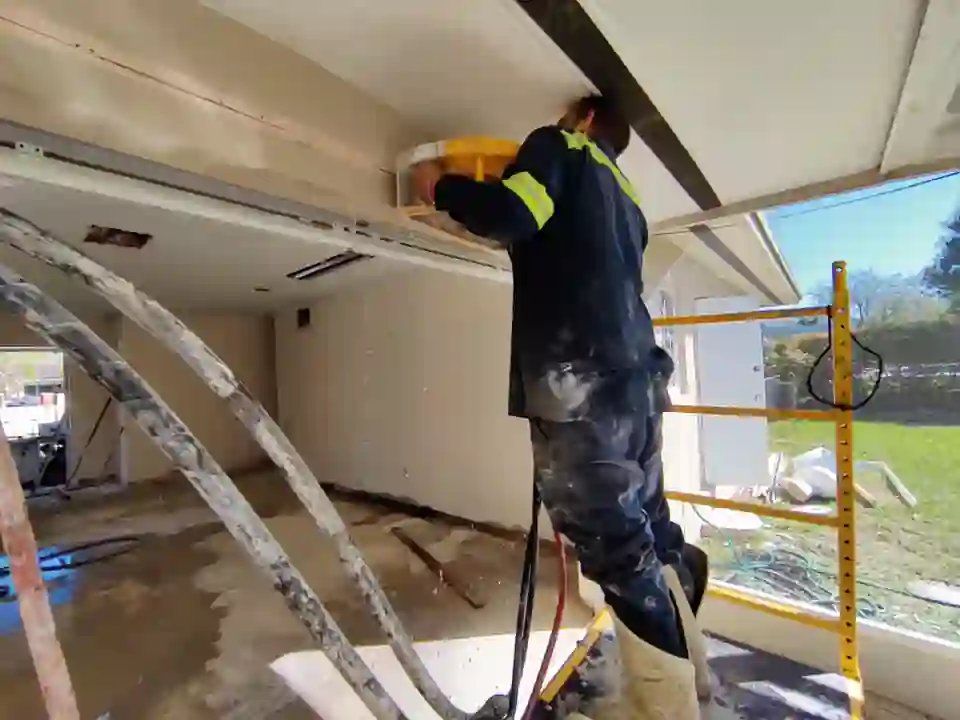
General construction PPE minimums don’t cut it — no pun intended — in industrial concrete cutting environments. Here’s the PPE matrix that our crews operate under on every industrial job:
- Respiratory protection: N95 minimum for incidental exposure; P100 half-face respirator for operators within the cutting zone; full-face supplied-air respirator for confined space cutting operations.
- Eye and face protection: ANSI Z87.1-rated safety glasses under a full face shield rated for high-velocity particle impact. Safety glasses alone are insufficient when cutting reinforced concrete — rebar fragments travel at projectile velocities.
- Cut-resistant gloves: ANSI/ISEA 105 Level A4 or higher for all material handling adjacent to cutting operations. Blade-contact gloves are not a substitute for blade guards — they’re a last line of defense only.
- Foot protection: ASTM F2413-18 rated boots with metatarsal guards for all saw operators. Industrial slabs being cut can weigh thousands of pounds per section — foot crush injuries are a real and documented hazard.
- High-visibility vests: Class 2 minimum in any industrial facility with active vehicle or forklift traffic operating within 50 feet of the cutting zone.
Post-Cut Structural Verification and Documentation Requirements
Once the cutting phase is complete, industrial concrete cutting services aren’t finished. Every cut opening, core penetration, or section removal must be documented with as-built measurements, photographic evidence, and a post-cut inspection report confirming that no unintended structural damage — micro-cracking, spalling, or tendon disturbance — occurred during operations. This documentation package protects the facility owner, the general contractor, and the cutting subcontractor in the event of future structural questions or insurance claims.
In industrial facilities subject to regulatory inspection — food processing plants, pharmaceutical manufacturing, water treatment infrastructure — the post-cut documentation may also need to satisfy agency-specific requirements beyond OSHA, including FDA facility modification records or EPA structural integrity certifications. Understanding these downstream documentation obligations before mobilizing is part of what separates a professional industrial concrete cutting services provider from a crew that just shows up with a saw.
At Concrete Cutting Miami, LLC, every industrial project begins with a comprehensive pre-task safety plan and ends with a complete documentation package. Our crews are OSHA 30-hour trained, silica-competent person certified, and equipped with GPR scanning capability on every industrial mobilization. When the stakes are this high, the contractor you choose matters as much as the protocol they follow.