Why the Wrong Blade Costs You More Than Just Money
Every experienced concrete cutter has a story about the job that went sideways because someone grabbed the cheapest blade off the shelf. Burned-out segments. Warped cores. Cracked slabs. In South Florida’s high-silica limestone aggregate environment, blade selection isn’t a minor detail — it’s the difference between a clean, controlled cut and a structural nightmare. Whether you’re slicing a control joint into a fresh pour, opening a trench through a 6-inch reinforced slab, or decommissioning a pool deck, the blade you mount determines everything downstream: cut speed, edge quality, tool wear, and job site safety.
The Core Architecture of a Diamond Blade and Why It Matters
Before you can make an intelligent blade selection, you need to understand what you’re actually buying. A diamond blade isn’t a blade in the traditional sense — it’s a steel core with diamond-impregnated segments brazed, laser-welded, or sintered along the rim. The diamonds do the cutting. The bond matrix — the metallic powder holding the diamonds in place — controls how quickly those diamonds are exposed and released.
A hard bond holds diamonds longer, which is ideal for soft, abrasive materials like green concrete or asphalt. A soft bond wears away faster, continuously exposing fresh diamonds — exactly what you need when cutting hard, dense concrete or natural stone. Getting this bond hardness wrong is the single most common blade failure mode we see on Miami job sites.
- Segment height — Taller segments (12–15mm) extend blade life on long cuts
- Segment spacing — Wider gullets improve debris evacuation and cooling
- Core thickness — Thicker cores resist lateral flex in deep cuts
- Diamond concentration — Higher concentration = longer life but slower initial cut speed
Matching Blade Type to Concrete Hardness and Aggregate Composition
Miami-Dade concrete is predominantly mixed with oolitic limestone aggregate — a material that is moderately hard but highly variable in density depending on the pour batch and age. This is a critical regional factor. A blade spec that performs perfectly in Atlanta’s granite-aggregate slabs will glaze over and stop cutting within 15 minutes on a Miami residential slab.
Here’s the practical breakdown by material category:
- Standard cured concrete (3,000–4,000 PSI): Use a medium-bond segmented diamond blade. A 14-inch blade rated for general concrete with a segment height of 10–12mm is your workhorse here.
- High-strength concrete (5,000+ PSI): Shift to a soft-bond blade. The increased hardness of the matrix demands faster diamond exposure to maintain cutting aggression.
- Green or freshly poured concrete: Hard-bond blades only. Soft aggregate and excess moisture will destroy a soft-bond blade in a single pass.
- Reinforced slabs with rebar: You need a blade specifically rated for steel-embedded concrete. Laser-welded segments outperform brazed segments here because the bond survives the thermal shock of hitting rebar. See our detailed breakdown on cutting rebar-embedded concrete while preserving structural integrity.
- Decorative or exposed aggregate concrete: A continuous rim blade produces the cleanest edge with minimal chipping — essential when finish quality matters.
Wet Cutting vs. Dry Cutting Blade Specifications
This is where most DIYers and even some contractors make a critical error — they run a wet-rated blade dry or vice versa. The consequences range from accelerated wear to catastrophic blade failure.
Wet Cutting Blades
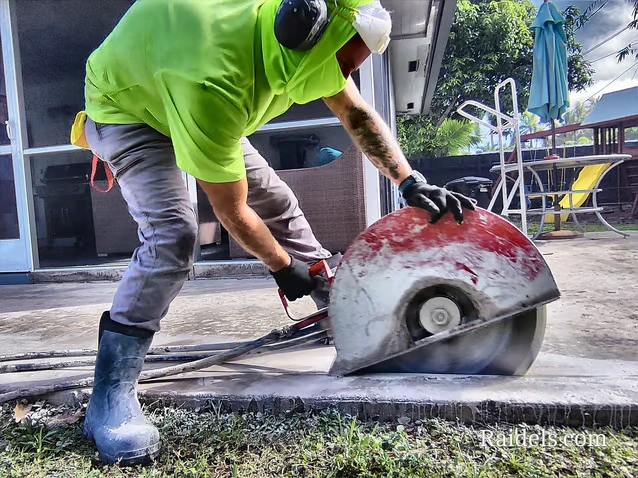
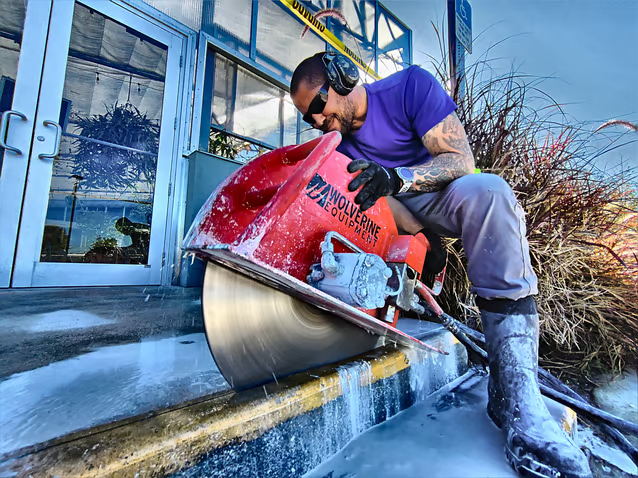
Wet blades are designed to operate with a continuous water supply that cools the blade, suppresses silica dust, and flushes debris from the cut. These blades typically have tighter segment spacing because the water handles the evacuation work. Running a wet blade dry causes thermal stress fractures in the steel core — a failure mode that can result in segment ejection at blade speeds exceeding 4,000 RPM. That’s not a tool problem. That’s a safety incident.
Dry Cutting Blades
Dry blades feature wider gullets and a serrated or turbo-style rim that generates airflow to cool the segment during cutting. They are rated for intermittent cutting — typically no more than 30–45 seconds of continuous contact before lifting to allow heat dissipation. Dry cutting is acceptable for shallow cuts (under 2 inches) in residential applications where water management is impractical. For anything deeper or in commercial settings, wet cutting is the professional standard.
Turbo Rim Blades for Dry Precision Work
Turbo blades represent a hybrid design — a continuous rim with serrated wave patterns that increase airflow and reduce heat buildup. They’re the go-to for dry cutting applications where a clean edge is required, such as cutting expansion joints in finished flatwork or trimming pavers. They cut faster than standard continuous rim blades but produce slightly more edge chipping than a true continuous rim under wet conditions.
Blade Diameter and Arbor Size Selection by Application
Blade diameter directly controls maximum cut depth. The industry rule is that usable cut depth equals approximately one-third of the blade diameter. Here’s how that maps to common applications:
- 4-inch blade: Up to 1.25-inch depth — ideal for grout lines, tile removal, and shallow control joints
- 7-inch blade: Up to 2.25-inch depth — residential slabs, curb cuts, thin flatwork
- 14-inch blade: Up to 4.5-inch depth — standard commercial slab cutting, most residential demolition
- 20-inch blade: Up to 6.5-inch depth — deep slab penetration, thick foundation walls
- 36-inch+ blades: Used on walk-behind flat saws and wire saws for full slab removal operations
Arbor compatibility is non-negotiable. Always verify that the blade’s arbor bore matches your saw’s spindle diameter. Adapters introduce runout and vibration that accelerate both blade and equipment wear.
RPM Ratings and the Speed-to-Diameter Relationship
Every diamond blade carries a maximum RPM rating stamped on the blade or printed on the label. Exceeding this rating is a code violation and a liability exposure — and it will destroy the blade. The relationship between blade diameter and optimal surface speed (measured in surface feet per minute, or SFPM) is fixed physics. Larger blades require lower RPM to maintain the same cutting surface speed.
The target SFPM for most diamond blades on concrete is between 4,500 and 5,500 SFPM. Use this formula: RPM = (SFPM × 3.82) ÷ Blade Diameter (inches). A 14-inch blade at 5,000 SFPM should run at approximately 1,364 RPM. Most electric flat saws and walk-behind saws are pre-configured for this range, but always verify before mounting a new blade diameter.
Specialty Blade Configurations for Non-Standard Cuts
Standard segmented blades handle the majority of concrete cutting work, but specific project types demand specialty configurations:
- Core drill bits: Cylindrical diamond-tipped bits for plumbing, electrical, and HVAC penetrations. Wet operation required for diameters above 2 inches.
- Wall saw blades: Large-diameter blades (24–60 inches) mounted on track-guided wall saws for window openings, door frames, and utility penetrations in vertical concrete.
- Wire saw systems: Diamond-bead wire for irregular cuts, mass concrete demolition, and applications where blade geometry is impractical — commonly used in pool excavation and removal projects.
- Angle grinder blades (4–4.5 inch): For detail work, crack chasing, and prep work before patching. Always use a guard and never exceed rated RPM on handheld equipment.
Reading Blade Wear and Knowing When to Replace
A glazed blade — one that has stopped cutting aggressively despite appearing intact — has a bond that’s too hard for the material being cut. The fix is to dress the blade by making several passes through a soft abrasive material like aerated concrete block or a dressing stick. This removes the glazed surface layer and re-exposes fresh diamonds.
Segment loss, core cracks, or visible warping are immediate pull-from-service conditions. No production timeline justifies running a damaged blade. The crack propagation risk from a failed blade extends well beyond the blade itself — a damaged core can transfer vibration stress directly into the slab, initiating fractures that compromise the entire cut.
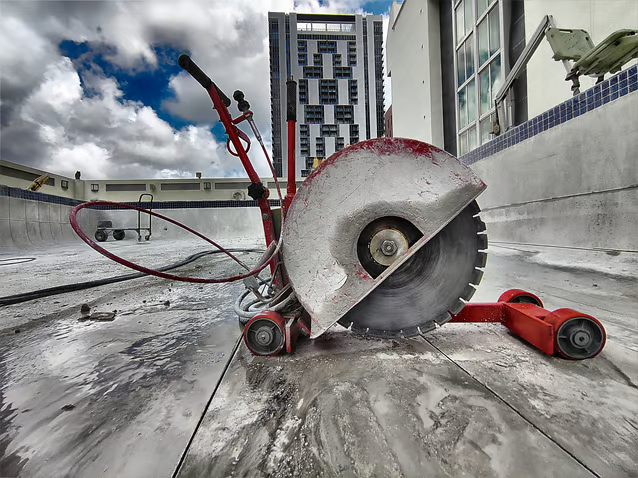
The Professional Standard for Blade Selection in Miami’s Climate
Miami’s ambient heat, humidity, and the specific aggregate composition of South Florida concrete create a unique operating environment. Blades that perform well in cooler, drier climates will run hotter here, which accelerates bond wear and increases the risk of core warping on extended cuts. For any cut exceeding 50 linear feet in Miami’s summer conditions, wet cutting is the professional baseline — not an option. Blade life in dry conditions during peak summer months can drop by 30–40% compared to the same blade used with water cooling.
When sourcing blades for Miami projects, prioritize manufacturers that publish bond hardness ratings and SFPM specifications — not just generic “for concrete” labels. The additional 20–30 minutes of research before a job starts is the difference between a blade that lasts through the project and one that fails on the second cut.
Blade selection is a technical discipline. Treat it that way, and your cuts will be clean, your equipment will last, and your job sites will stay safe.