How to evaluate demolition companies in Miami beyond the search results
When a Miami property owner searches for demolition companies in Miami, they get a list of contractors sorted by proximity, ratings, and marketing budget. A five-star rating with 50 reviews does not tell you whether the company has a valid Florida contractor license for structural demolition. A polished website does not tell you whether they carry pollution liability insurance for the asbestos they might encounter in a pre-1981 building. A low quote does not tell you which steps they are skipping to achieve that price — the asbestos survey, the engineering review, the GPR scanning before concrete cutting, the proper debris disposal at a permitted facility.
Evaluating demolition companies in Miami requires looking past the search results to the substance of what makes a demolition contractor qualified, insured, and prepared for the specific demands of your project. The evaluation criteria are objective — licensing can be verified, insurance can be confirmed, experience can be referenced. The challenge for property owners is knowing which criteria matter and which are marketing that sounds impressive but means nothing for the actual quality and safety of the demolition.
We are one of the demolition companies serving Miami-Dade County, and we believe that an informed customer makes better decisions. Whether you hire us or another qualified contractor, you should know what separates a professional demolition company from one that is hoping nothing goes wrong on your project.
Licensing: the non-negotiable baseline
The single most important piece of information about any demolition company in Miami is their Florida contractor license. In Florida, structural demolition requires a Certified General Contractor (CGC) license or a Certified Building Contractor (CBC) license issued by the Florida Department of Business and Professional Regulation (DBPR). Some demolition activities may also be performed under specialty licenses, but structural demolition — removing load-bearing elements of a building — demands a CGC.
Verify the license before you accept any quote:
- Ask the contractor for their Florida contractor license number.
- Go to the DBPR website (myfloridalicense.com) and search the license number.
- Verify the license type (CGC, CBC, or specialty), the status (active, not expired or suspended), and the qualifying agent (the individual whose examination and experience qualify the company).
- Check for any disciplinary actions, complaints, or citations on the license record.
A contractor who cannot or will not provide a verifiable license number should be eliminated immediately. An unlicensed contractor performing structural demolition is operating illegally and exposing you to liability for any property damage, worker injury, or regulatory violation that occurs on your property.
Insurance: what you need them to carry
Demolition is high-risk construction activity. The insurance requirements for a demolition contractor reflect this risk. Before work begins, verify the following coverages with current certificates of insurance, and confirm with the insurance provider that the policies are active:
- General liability insurance: Minimum one million dollars per occurrence with a two-million-dollar aggregate. This covers property damage and bodily injury caused by the contractor’s work. The certificate should name you or your property as an additional insured for the duration of the project, giving you direct access to the coverage if a claim arises.
- Workers compensation insurance: Required by Florida law for any construction company with one or more employees. This coverage protects you from liability if a worker is injured on your property. It also provides medical care and lost-wage benefits for the injured worker. A contractor working without workers compensation insurance is a significant liability risk for you as the property owner.
- Automobile liability insurance: Covers the contractor’s vehicles — dump trucks, equipment trailers, service trucks — while they are on your property and on the road transporting debris. A loaded dump truck leaving your property creates risk that should be covered by the contractor’s insurance, not yours.
- Pollution liability / contractor’s pollution liability: Covers environmental contamination from demolition activities — asbestos release, lead dust, silica exposure, fuel or hydraulic fluid spills. Standard general liability policies often exclude pollution claims, so a separate pollution liability policy (or an endorsement to the general liability policy) is important for demolition work, particularly when the building being demolished is older and may contain hazardous materials.
Miami-Dade County permit experience
Demolition in Miami-Dade County requires permits, and the permit process is specific to the county. A contractor who has pulled Miami-Dade demolition permits knows the process, the paperwork, the review timelines, and the common issues that delay permit approval. A contractor who does not regularly work in Miami-Dade may not know:
- The specific requirements for the demolition plan — Miami-Dade reviewers expect certain information in certain formats, and a plan that would be approved elsewhere may be returned for revisions here.
- The asbestos survey requirements — Florida law mandates asbestos surveys for certain building types and ages, and Miami-Dade enforces these requirements strictly.
- The utility disconnect confirmation process — different utility companies have different procedures and timelines for disconnecting service before demolition, and coordinating these is part of the demolition planning.
- The erosion and sediment control requirements — Miami-Dade’s location between Biscayne Bay and the Everglades means environmental regulations for demolition are enforced more aggressively than in inland counties.
- The final inspection and permit closeout process — the demolition is not complete until the county inspector signs off, and a contractor who does not know how to schedule and pass this inspection delays your project.
Ask any demolition company you are considering how many demolition permits they have pulled in Miami-Dade County in the last two years. A contractor who has done it many times can give you a specific number and can describe the process from start to finish. A contractor who has not should be evaluated carefully — they may be qualified but will likely be slower and less efficient navigating the county’s requirements.
Equipment and capability
Demolition companies in Miami vary in their equipment holdings and capabilities. Some are full-service demolition contractors with their own fleet of excavators, skid steers, dump trucks, and concrete cutting equipment. Others are smaller operations that rent equipment per job or subcontract portions of the work. Neither model is inherently better — but you should know which one you are dealing with, because it affects scheduling, cost, and accountability.
Questions to ask about equipment and capability:
- “Do you own your primary demolition equipment or do you rent it?” Ownership means the equipment is available when your project needs it. Renting means the contractor depends on equipment yard availability, which can delay the project if demand is high.
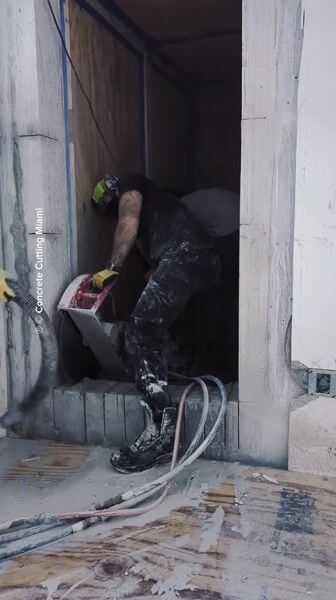
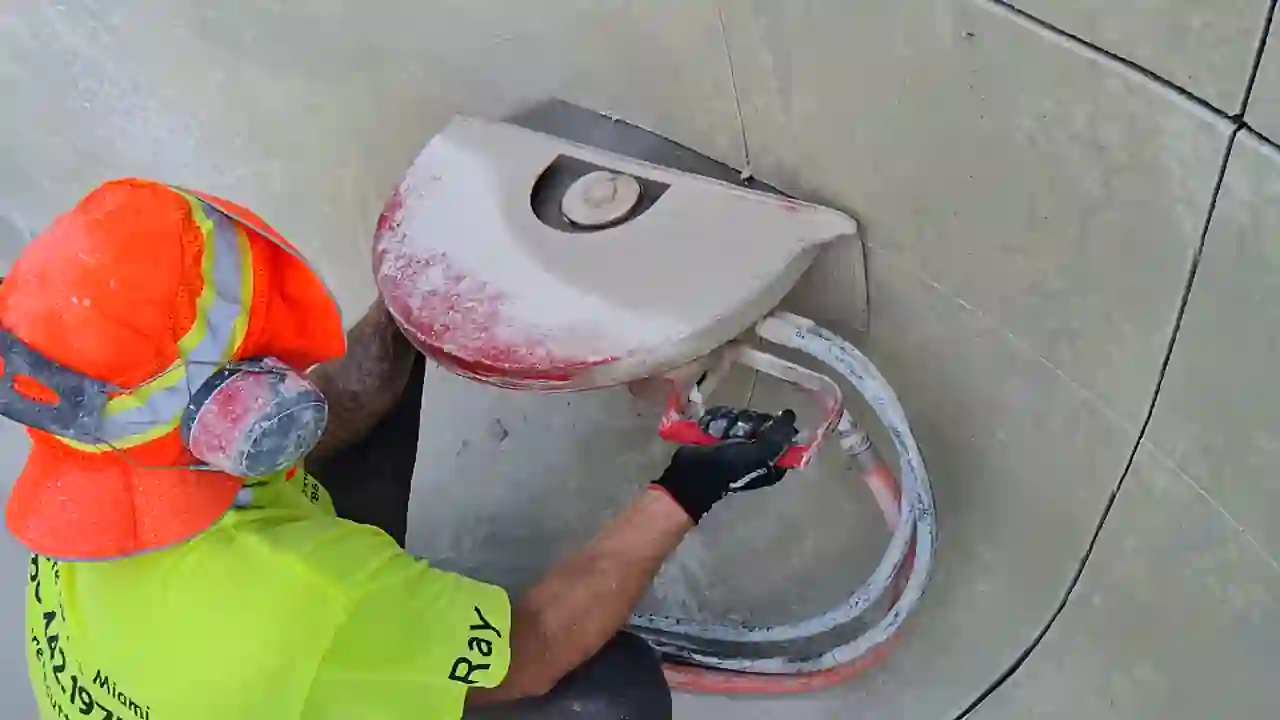
- “Do you perform concrete cutting in-house or do you subcontract it?” Many demolition companies subcontract concrete cutting to specialized concrete cutting contractors. This is not a problem — it means the cutting is done by specialists — but you should know who is performing which parts of the work and that all subcontractors are licensed and insured to the same standard as the primary contractor.
- “What is the largest demolition project you have completed that is similar to mine?” Look for experience that matches your project in scale, construction type, and site conditions. A company that primarily demolishes wood-frame houses may not be the right choice for a concrete block commercial building, and vice versa.
Comparing quotes from demolition companies
Demolition quotes can vary widely — by 50 percent or more between the lowest and highest bidder. The variation is not random; it reflects what is included and excluded, and how the contractor plans to execute the work. When comparing quotes, check that each quote includes:
- Permit costs: The permit application fee paid to Miami-Dade County. Some contractors include this in their quote; others list it as an owner responsibility. The comparison is only valid if you are comparing total costs, not just contractor fees.
- Asbestos survey: If required for your building type and age. A quote that excludes the survey is cheaper on paper but will increase when the survey is required for permit issuance.
- Utility disconnections: Some contractors handle utility coordination; others require you to manage it. Clarify who is responsible for what.
- Debris disposal: The quote should identify the disposal facility and the estimated disposal volume and cost. A quote without disposal costs is incomplete.
- Site restoration: After demolition, what condition will the site be left in? Graded and compacted, ready for new construction? Or rough-graded with debris residue? The scope of restoration dramatically affects the cost.
- Exclusions: What is not included in the quote? Hazardous material abatement beyond the asbestos survey findings? Erosion control beyond the basic silt fence? The exclusions list tells you what additional costs may arise.
Red flags when evaluating demolition companies in Miami
- No license or insurance documentation: Eliminate from consideration.
- The quote is significantly lower than others for the same scope: Demolition costs are driven by equipment, labor, disposal, and insurance — all of which have real, unavoidable costs. A quote that is dramatically lower than others is omitting something that will either be added later as a change order or simply not done. Neither outcome benefits you.
- No written demolition plan: A professional contractor provides a written plan describing the method, sequence, equipment, and safety measures. A contractor who cannot or will not produce a plan is planning to figure it out on site.
- No Miami-Dade County experience: A contractor who has never pulled a Miami-Dade demolition permit is learning the process on your project. The learning curve is real, and it extends your project timeline.
- Cash-only pricing or no written contract: Professional contractors provide written contracts with detailed scope, payment terms, and conditions. A contractor who wants cash and a handshake is operating off the books — which means no insurance coverage, no permit accountability, and no recourse if the work is done incorrectly.
The best demolition company in Miami for your project is the one with the right license, the right insurance, the right Miami-Dade experience, and the right equipment for your specific structure and site conditions. Price matters, but it is not the most important criterion. The cheapest quote on a job that goes wrong is the most expensive money you ever spent.