Why Equipment Selection Defines Every Control Joint Cut You’ll Ever Make
A control joint in concrete is not a decorative line. It is a precisely engineered stress relief plane — a deliberate weak point that guides where the slab will crack as it shrinks, thermally expands, and settles over time. Get the cut depth wrong, use the wrong blade, or run a saw that’s underpowered for the aggregate hardness you’re dealing with, and you’ve done nothing but scratch the surface while the slab cracks wherever it wants. In South Florida’s high-humidity, high-temperature environment, that failure mode happens fast. The concrete moves constantly, and your joint has to be there — fully cut, correctly proportioned — before it does. That means equipment decisions aren’t secondary considerations. They are the job.
The Depth-to-Thickness Rule and What It Demands From Your Blade Diameter
The industry standard for control joint depth is one-quarter of the slab thickness. For a 4-inch slab, that’s a 1-inch cut. For a 6-inch slab, you’re targeting 1.5 inches. That sounds simple until you account for blade arbor size, saw guard geometry, and the actual usable cutting depth of your diamond blade versus its nominal diameter. A 14-inch blade on a standard walk-behind saw typically delivers between 4.5 and 5 inches of usable cutting depth — more than adequate for residential flatwork. But when you’re dealing with 8-inch industrial slabs or post-tensioned commercial pours, you need to move to a 16-inch or 18-inch blade configuration, and your saw platform has to support that upgrade without compromising blade RPM stability.
Blade diameter directly dictates peripheral speed. Most diamond blades are engineered to perform optimally at a surface speed of 4,500 to 5,500 surface feet per minute (SFPM). Drop below that band and the diamonds don’t shear aggregate cleanly — they plow and glaze. Exceed it without the right bond hardness and you burn through segments prematurely. This is why matching blade diameter to saw RPM output is non-negotiable before you ever drop a cut.
Walk-Behind Saw Specifications for Standard Residential and Light Commercial Joints
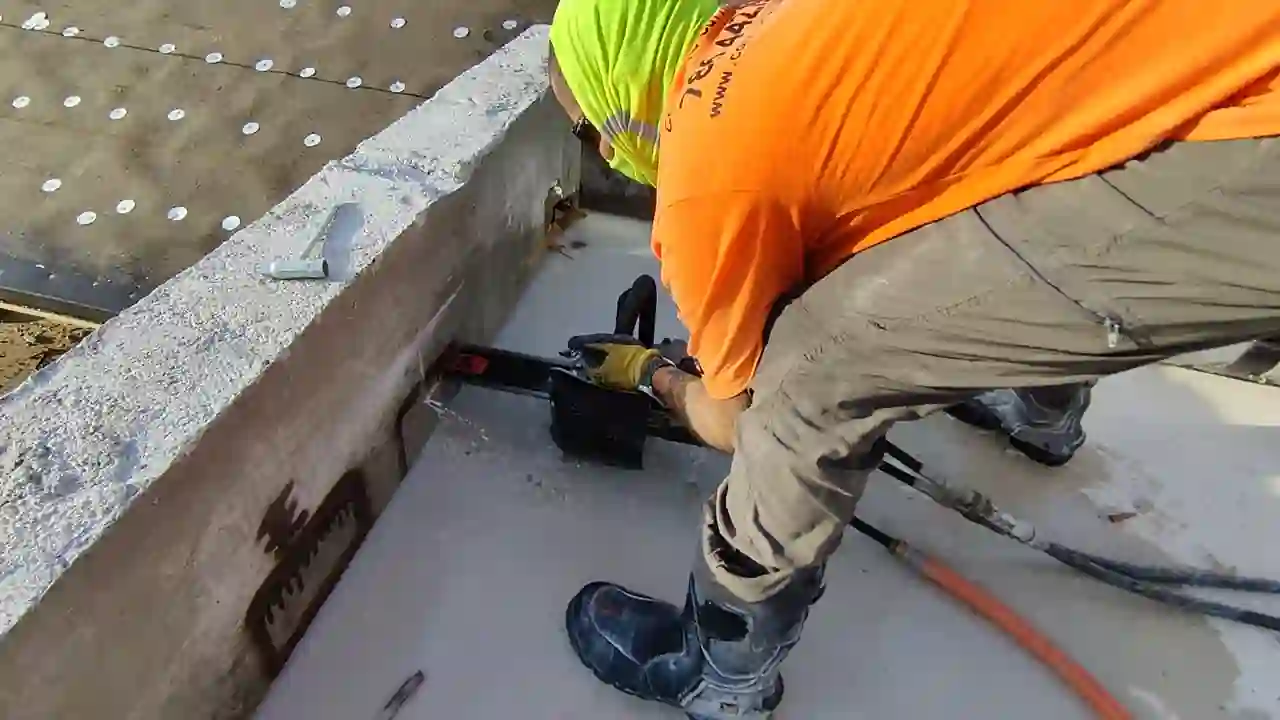
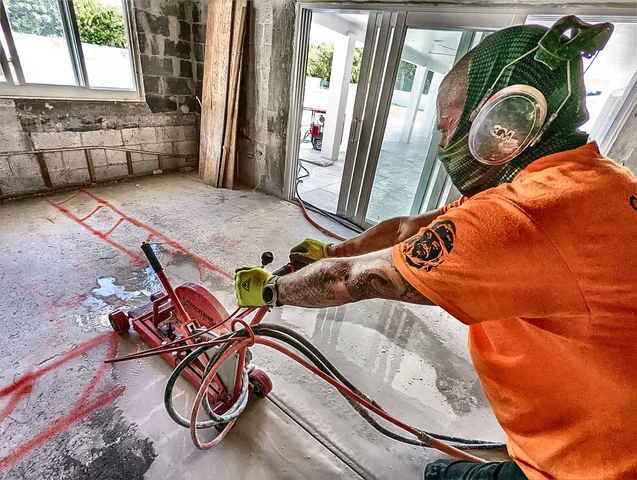
For control joints in 4- to 6-inch slabs — the bread and butter of Miami residential work, pool decks, and light commercial flatwork — a walk-behind concrete saw rated between 13 and 20 horsepower is your working range. Gas-powered units in this class typically run a 14-inch blade at 3,000 to 3,800 RPM. That puts you squarely in the target SFPM window for most general-purpose segmented diamond blades. Electric walk-behinds are increasingly viable in enclosed or interior settings where exhaust is a liability, but their torque curves differ from combustion units, and you need to confirm that low-end torque is sufficient to push through hard Miami limestone aggregate without bogging.
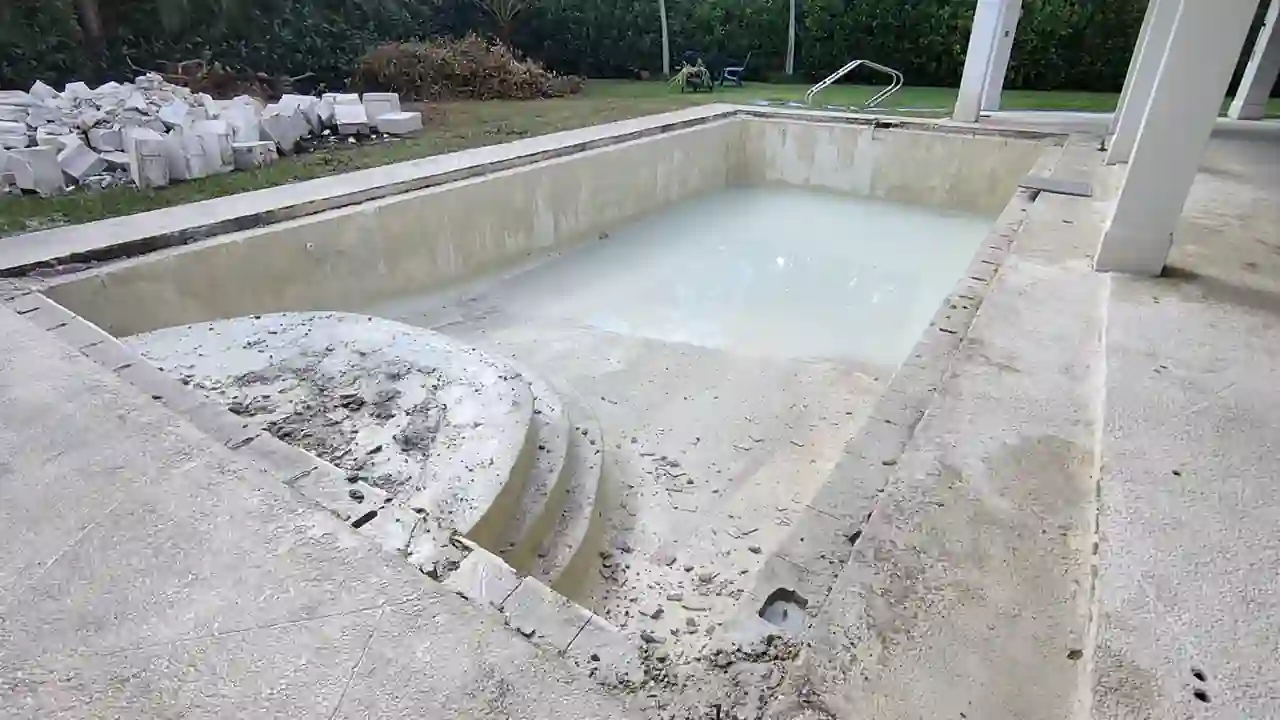
For pool deck work, where control joints are critical to managing thermal movement in thin decorative overlays over structural concrete, smaller 12-inch blades on hand-held saws are sometimes used for shallow relief cuts. But these are supplementary tools — not primary joint cutters for structural slabs.
Diamond Blade Segment Geometry and Bond Hardness for Miami Aggregate Conditions
Miami-Dade concrete is predominantly mixed with Miami oolitic limestone aggregate — a relatively soft, porous material that wears diamond segments differently than hard granite-based aggregates found in northern markets. Soft aggregate requires a harder bond matrix to prevent premature segment loss. If you run a soft-bond blade — designed for hard aggregate — on Miami limestone, the bond matrix wears away faster than the diamonds can do their work. You’ll burn through segments in a fraction of the expected lifespan.
For control joint cuts in standard Miami flatwork, specify a blade with a medium-to-hard bond, high diamond concentration, and a segmented rim with turbo or sandwich-style segments. The turbo geometry improves slurry evacuation in wet cutting, which matters significantly when you’re running a water-cooled saw on a long joint cut across a full commercial pour. Segment height should be a minimum of 10mm for standard flatwork, and 12mm or higher if you’re cutting joints in heavily reinforced structural slabs where the blade will encounter rebar during depth passes.
Wet Versus Dry Cutting Blade Specifications and When Each Applies
Wet cutting is the professional standard for control joints in concrete. Water suppresses silica dust — a serious OSHA compliance issue — while simultaneously cooling the blade and flushing slurry from the cut. Wet-cut blades use a continuous or segmented rim designed to channel water into the kerf. If your saw’s water delivery system can’t maintain a minimum flow rate of 1 to 2 gallons per minute at the blade, you’re running a wet blade dry, which causes thermal stress cracking in the steel core and destroys blade geometry.
Dry cutting is acceptable for shallow, short-duration cuts — typically under 1.5 inches deep and under 20 linear feet without a pause. Dry-cut blades feature wider segment gaps and a serrated or turbo rim to maximize airflow cooling. They are never appropriate for deep joint cuts in full slabs. In Miami’s ambient temperatures — regularly exceeding 90°F at the slab surface — dry cutting a deep joint is a blade failure waiting to happen. For structural concrete applications, wet cutting is mandatory without exception.
Early-Entry Saw Technology and Timing Windows for Freshly Poured Slabs
One of the most technically demanding scenarios in control joint work is early-entry cutting — sawing joints into green concrete before the slab has fully cured, specifically to prevent random cracking from initiating before the joints are established. The cutting window is narrow: typically 1 to 4 hours after finishing, depending on ambient temperature, humidity, and mix design. Miss it, and you’re chasing cracks.
Early-entry saws are purpose-built machines — lighter than standard walk-behinds, with skid plates that prevent blade-induced surface raveling, and designed to run smaller-diameter blades (typically 6 to 10 inches) at controlled depths. The blade specification for early-entry work is entirely different from standard cured-concrete cutting. You need a blade with a very fine diamond grit — typically 30 to 40 mesh — and a soft-to-medium bond that allows the diamonds to engage the partially hydrated paste matrix without tearing aggregate from the surface. Running a coarse-grit, hard-bond blade on green concrete will ravel the joint edges badly, compromising both aesthetics and the structural integrity of the joint plane.
This is also where saw weight becomes a critical spec. Early-entry machines are typically under 200 pounds. Standard walk-behinds run 300 to 600 pounds. Putting a heavy saw on green concrete causes surface depression and blade deflection — both of which destroy joint quality.
Blade Arbor Compatibility and Flange Specifications You Cannot Ignore
Blade arbor size must match your saw’s spindle exactly. The two most common arbor sizes in the U.S. market are 1-inch and 20mm — close enough in dimension that mismatched blades can physically mount but will run with dangerous lateral wobble. Wobble at operating RPM means an inconsistent kerf width, accelerated segment wear on one side of the blade, and the real possibility of blade fracture. Always verify arbor compatibility before mounting. For larger-diameter blades (16 inches and up), flanged mounting with a locking nut torqued to manufacturer spec is essential — under-torqued flanges allow micro-slippage that telegraphs into cut quality and blade longevity.
For projects involving structural modifications like door and window openings, where control joints in adjacent slabs must be preserved or re-established after cutting, blade selection for the secondary joint work must account for any contamination of the concrete from the primary cut — dust, debris, or aggregate displacement can alter the effective hardness profile the blade encounters.
Saw Horsepower, Torque Curves, and Why Underpowered Equipment Ruins Joints
Horsepower is a peak number. Torque at the blade under load is what actually matters. When a diamond blade enters a control joint cut and encounters a piece of rebar, a hard aggregate nodule, or a change in mix density, the saw needs reserve torque to maintain blade speed without stalling. A stalled blade in a concrete cut doesn’t just slow down — it can twist, deflect, and score the joint walls unevenly. In worst-case scenarios, blade pinching in a deep cut causes kickback events that are genuinely dangerous.
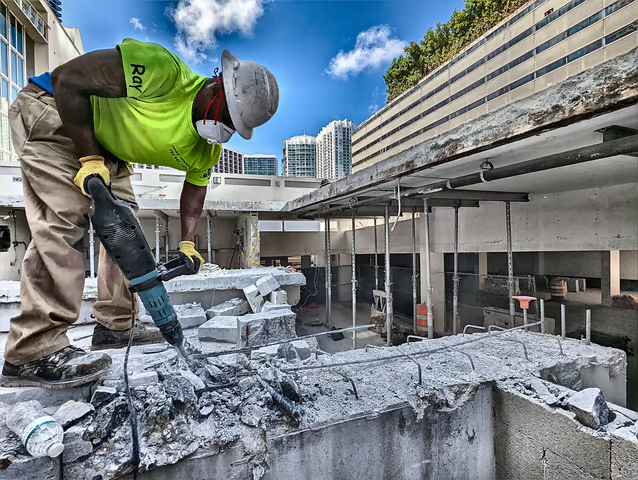
For cuts deeper than 2 inches, specify a saw with a minimum of 20 horsepower and a demonstrated torque curve that maintains 85% or more of peak torque under load. Hydraulic walk-behind saws are excellent in this regard — their torque delivery is smoother and more consistent than belt-driven gas units, making them preferred for deep joint work in structural concrete. For projects where jackhammer work is also involved in adjacent areas, coordinate sequencing so vibration from impact tools doesn’t compromise green joints or displace slurry into freshly cut kerfs.
Projects involving environmental sensitivity — particularly near coastal areas or where gravel or debris removal intersects with the work zone — require slurry containment planning as part of the saw setup. Wet cutting generates significant slurry volume, and in Miami’s proximity to waterways and storm drains, that slurry must be vacuumed and contained, not flushed. Factor this into your equipment list: a wet-vac or slurry pump rated for abrasive material is part of a compliant control joint cutting setup, not an optional add-on.
Kerf Width Specifications and Their Relationship to Joint Filler Selection
The kerf width of your cut — determined by the blade’s segment width — directly controls what joint sealant or filler system you can install. Standard segmented blades produce a kerf of approximately 0.125 to 0.187 inches (1/8 to 3/16 inch). This is the appropriate width for most polyurethane and silicone sealant systems used in residential and light commercial control joints. Wider kerfs — produced by wider-segment specialty blades — are specified when the joint will receive a semi-rigid epoxy filler or a preformed compression seal, both of which require a minimum opening width to function correctly.
For seawall and marine concrete applications, where control joints must accommodate significant tidal movement and chemical exposure, wider kerfs with marine-grade sealant systems are standard. The blade specification shifts accordingly — wider segments, higher diamond concentration to maintain cut quality over the full segment width, and often a premium steel core to handle the lateral forces that a wider kerf cut generates.

Every control joint in concrete is a system — not a line. The saw, the blade, the cut timing, the depth, the kerf width, and the eventual filler material all interact. Getting one element wrong degrades the entire system. At Concrete Cutting Miami, LLC, our equipment inventory is specified precisely for South Florida’s aggregate conditions, ambient temperatures, and project type diversity. When the joint has to be right — structurally, dimensionally, and on schedule — equipment selection is where that outcome is either secured or compromised before the first pass is ever made.