888 828-8646

Concrete in Miami Is a Different Material Than You Think

Most people assume concrete is concrete, the same gray slab whether you are in Hialeah or in Houston. That assumption costs South Florida property owners real money. Concrete in Miami is shaped by three forces most national guides never mention: salt air off the Atlantic, coral and limestone aggregate pulled from local pits, and a water table that sits just a few feet below the surface in most of Miami-Dade County.

These three forces change how concrete cures, how it reacts to cutting, and how long it survives before it needs repair. If you are planning to cut into an existing slab, drill a penetration, or pour something new, understanding the local material is the difference between a job that lasts twenty years and one that spalls apart in ten. Let me walk you through what makes our concrete unique.

Concrete Miami Why Local Aggregate Salt Air and Water Change Everything

Coral Aggregate Is Softer Than You Think and That Changes the Blade

Much of the aggregate in South Florida concrete is crushed coral and oolitic limestone, not the hard granite and river rock you find in northern mixes. That softer aggregate is actually good news for cutting. A diamond blade slices through coral aggregate faster and with less wear than it would through granite. But it also means the concrete is more porous, which is where salt and water creep in.

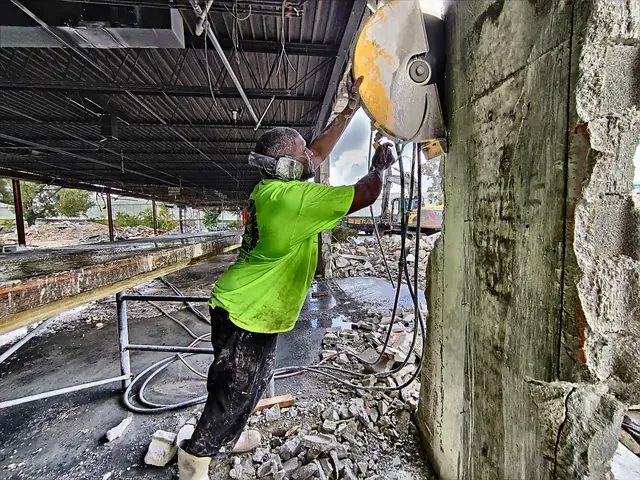
For anyone running a saw on a Miami slab, the softer aggregate means you can often use a blade with a slightly harder bond and get a faster, cleaner cut. It also means the slab is more forgiving to drill. But do not let that fool you into thinking the job is easy. The blade selection still has to match the aggregate, or you will glaze the blade and turn the job into a slow grind.

Salt Air and the Corrosion Problem Nobody Sees

Live within a few miles of the coast, in neighborhoods like Brickell, Coconut Grove, or Miami Beach, and the salt air is working on your concrete every single day. Salt does not attack the concrete itself so much as the steel inside it. Rebar and wire mesh corrode when chlorides penetrate the porous surface and reach the reinforcement. As the steel rusts, it expands, and the expansion is what blows the concrete apart from the inside.

That is why so many older coastal structures show spalling at the corners and along the edges. It is also why cutting reinforced concrete near the coast often reveals rebar that is already rusting. When we cut into a beam and find corroded steel, the opening is rarely the whole story; the surrounding concrete usually needs attention too.

The Water Table and Why Your Slab Never Really Dries

In most of Miami-Dade, the water table is close enough to the surface that a shallow excavation will hit it. That constant moisture is why basements are essentially unheard of here and why slabs are built on grade. It also means concrete stays damp longer, which affects curing, cutting, and long-term durability.

For cutting, the moisture matters in a practical way. Wet concrete cuts cooler and produces less airborne dust, which is a safety advantage. But the water we use for cooling combines with that high water table to create a slurry management problem. Slurry from a Miami cut cannot simply be washed into the soil; it has to be contained and disposed of properly. Our guide to silica dust and slurry safety explains why this is non-negotiable on local jobs.

Concrete Miami Why Local Aggregate Salt Air and Water Change Everything

Pouring New Concrete in Miami Has Its Own Rules

If you are cutting out old concrete to pour new, the local conditions dictate the mix design. You want a mix with low permeability, the right air entrainment for our humidity, and reinforcement that can resist chloride attack. Coastal projects increasingly use epoxy-coated or stainless rebar, and many spec a corrosion inhibitor in the mix. These upgrades cost more up front but pay for themselves in a place where the environment is actively trying to destroy your concrete.

The curing window matters here too. Miami heat can flash-cure a slab if you are not careful, leaving a surface that dusts and spalls early. A proper cure, kept damp and shaded during the first days, is the difference between a driveway that lasts decades and one that starts chalking in a year.

The Signs That Your Miami Concrete Needs Attention

Local concrete tells you when it is struggling, if you know what to look for. Hairline cracks that widen over time, a surface that dusts or chalks underfoot, and spalling at the edges and corners are all signs the material is reacting to salt, moisture, or age. Near the coast, rust stains bleeding through the surface are a telltale sign the rebar underneath is corroding and expanding.

Catching these signs early is the difference between a patch and a replacement. A small spalled area can be chipped back, treated, and repaired, but once the corrosion spreads through the reinforcement, the concrete is structurally compromised. Our guide to fixing concrete chipping explains how to act before a small problem becomes a big one.

Why Pouring and Cutting Go Hand in Hand

New concrete and concrete cutting are often treated as separate trades, but in Miami they are deeply connected. Almost every pour is followed by control joints cut into the fresh slab, and almost every remodel starts with cutting into an existing slab before new concrete goes down. Getting both right is how you avoid the cracks that come from uncontrolled shrinkage and the jagged openings that come from sloppy cutting.

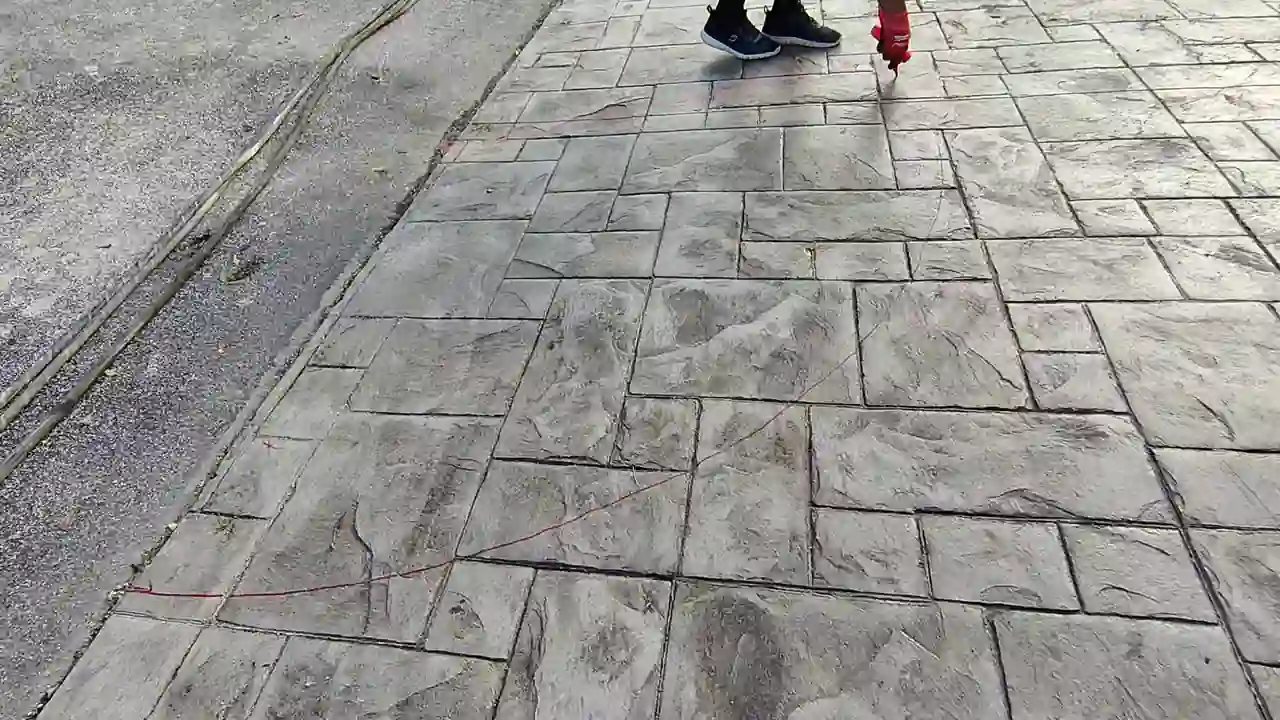
The timing of those control joints matters. They need to be cut soon enough after the pour that the slab cracks at the joint instead of randomly, and deep enough to actually guide the crack. A contractor who understands Miami concrete knows both the mix and the saw. Our guide to concrete driveways in Miami shows how the pour and the cut work together.

Choosing Materials and Methods for the Coast

If you are within a few miles of the ocean, the material choices change. You want a low-permeability mix, reinforcement that resists chloride attack, and often a corrosion inhibitor added at the batch plant. These upgrades cost more up front, but they are cheap compared to tearing out a spalled coastal slab in ten years.

The same coastal logic applies to the work you do on existing concrete. Cutting and drilling near the coast means planning for the corroded rebar you will likely find, and repairing it properly rather than patching over it. Our guide to residential concrete cutting covers how coastal homes are handled.

One local detail that surprises out-of-state owners is how much the aggregate affects the mix design itself, not just the cutting. Because South Florida aggregate is softer and more porous than northern stone, a Miami mix often needs a lower water-cement ratio and a denser surface treatment to resist moisture ingress. The same concrete placed in Atlanta would behave completely differently, which is why national specifications rarely translate cleanly to a Miami pour.

If you are planning a cut or a drill on an older Miami slab, expect the unexpected at the edge of the cut. Decades of salt and moisture often mean the concrete just behind the surface is softer than the surface suggests, and corroded rebar is common within a few miles of the coast. That is not a reason to avoid the work; it is a reason to budget for the possibility that a small opening reveals a repair that should happen at the same time.

Working With the Material, Not Against It

Concrete in Miami is a local material with local rules. The coral aggregate cuts easy but lets salt in. The water table keeps everything damp and makes slurry control mandatory. The salt air attacks steel from the inside out. None of this is a reason to avoid concrete work here; it is a reason to do it the right way. When you understand the material, you can cut it, drill it, and pour it so it stands up to everything South Florida throws at it.

Related Content

↑ Back to Top
[noptin-form id=33038]