What Breaking a Concrete Slab Actually Involves Before Anyone Picks Up a Jackhammer
Most property owners and even some general contractors assume that breaking a concrete slab is a straightforward task — rent a jackhammer, swing a sledge, haul the debris. That assumption costs money. A lot of it. The reality is that slab demolition is a structured, multi-phase operation where pre-job assessment directly determines your final invoice. Whether you’re dealing with a residential garage floor, a commercial warehouse pad, or a post-tension slab in a Miami high-rise, the cost and timeline are shaped by factors that must be evaluated before a single blade or breaker bit touches the surface. This post walks through the technical and financial anatomy of a concrete slab break — from soil conditions to disposal logistics — so you can bid accurately, schedule realistically, and avoid the change orders that kill project margins.
Slab Thickness Is the First Number That Sets Your Budget
Before any demolition method is selected, slab thickness must be confirmed — not estimated, confirmed. A standard residential slab in South Florida runs between 4 and 6 inches. Commercial slabs commonly range from 6 to 8 inches. Industrial pads and equipment foundations can exceed 12 inches. Each additional inch of thickness doesn’t just mean more concrete — it means longer machine time, faster bit wear, increased debris volume, and heavier haul loads. All of that compounds your cost per square foot.
For reference, here’s a general cost framework based on thickness alone, assuming standard reinforcement and accessible site conditions in the Miami metro area:
- 4-inch unreinforced slab: $2.50–$4.00 per square foot for break and remove
- 4-inch wire mesh reinforced slab: $3.50–$5.50 per square foot
- 6-inch rebar-reinforced slab: $5.00–$8.00 per square foot
- 8-inch+ heavily reinforced or post-tension slab: $9.00–$16.00+ per square foot
These are starting ranges. They shift significantly once site access, reinforcement type, proximity to utilities, and disposal distance enter the equation. If you’re unsure about your slab’s actual thickness, read our detailed breakdown on what every Miami contractor needs to know about house slab thickness before the first blade drops — it’s required reading before submitting any bid.
Reinforcement Type Changes the Entire Demolition Strategy
Plain concrete breaks fast. Reinforced concrete does not. The type of steel inside the slab determines which equipment gets mobilized, how long the job runs, and whether secondary cutting operations are needed to size debris for hauling. Here’s how reinforcement type maps to method selection and cost impact:
- Wire mesh (WWF): Manageable with electric or pneumatic breakers. Debris can be broken into manageable chunks. Minimal additional cutting required.
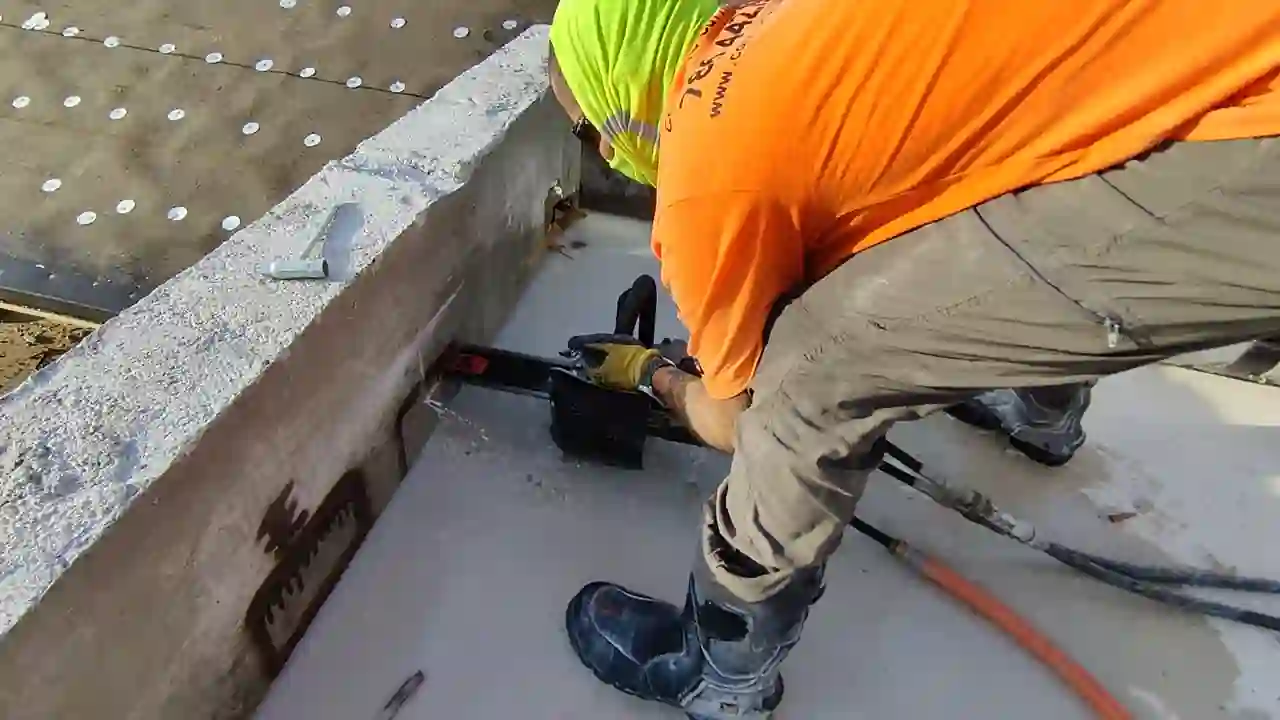
- Rebar (#3 to #5): Requires hydraulic breakers or rotary demolition hammers. Steel must be cut with angle grinders or reciprocating saws. Adds 20–40% to labor time.
- Post-tension cables: Requires controlled saw cutting to relieve tension before any breaking begins. Failure to do so is a life-safety issue. Adds significant cost and mandatory pre-work time — typically 1–3 hours of saw cutting before demolition can start.
- Fiber-reinforced concrete (FRC): Breaks differently than steel-reinforced slabs. Debris tends to crumble rather than fracture in clean sections. Can be faster to break but harder to load efficiently.
For projects where hand tools are part of the scope — either due to access limitations or budget constraints — our technical guide on how to break concrete with hand tools covers the practical methodology in detail, including which scenarios make manual methods viable versus when you’re burning money.
Equipment Selection and Day-Rate Costs for Slab Demolition in Miami
Equipment selection is where bids diverge dramatically. The right tool for the job isn’t always the cheapest tool for the job, and using undersized equipment on a thick reinforced slab will extend your timeline and inflate your labor cost past any equipment savings. Here’s a working breakdown of common equipment deployed for slab demolition and their associated day-rate ranges in the South Florida market:
- Electric SDS rotary hammer (demo mode): $80–$150/day rental. Suitable for slabs under 4 inches, unreinforced, in confined spaces.
- Pneumatic jackhammer (60–90 lb class): $150–$250/day with compressor. The workhorse for residential and light commercial slab breaking. Requires experienced operator to avoid over-fracturing near utilities.
- Hydraulic breaker on skid steer: $600–$1,200/day. Ideal for open-access slabs 6 inches and above. Dramatically reduces labor hours on large footprints.
- Excavator-mounted hydraulic hammer: $1,500–$3,500/day. Reserved for thick industrial pads, large commercial footprints, or where debris must be simultaneously loaded into haul trucks.
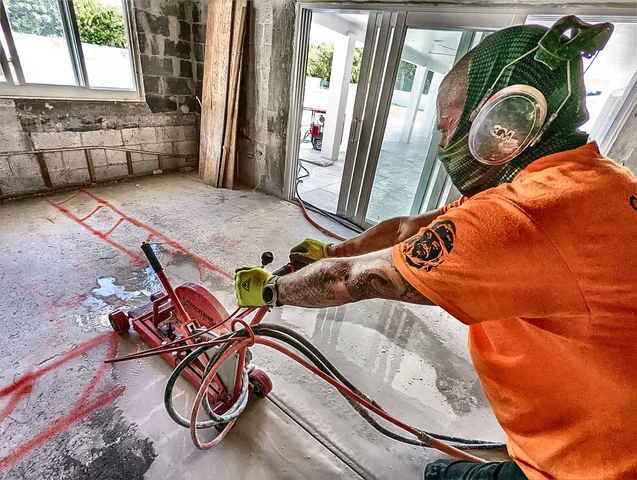
- Diamond blade saw for perimeter cuts and expansion joint relief: $300–$700/day depending on blade spec and horsepower class.
A properly scoped bid will specify equipment by class, not just by task. Any subcontractor who gives you a lump-sum number without identifying the equipment they’re mobilizing should raise a flag during bid review.
Timeline Estimations by Project Scale
Timeline is where unrealistic expectations create the most friction between owners and contractors. Slab demolition timelines are driven by square footage, thickness, reinforcement density, debris staging area availability, and haul frequency. Use these benchmarks as baseline planning tools:
- Small residential slab (200–500 SF, 4-inch unreinforced): 4–8 hours with a two-person crew and pneumatic equipment. Same-day completion is realistic.
- Mid-size residential or light commercial (500–1,500 SF, 4–6 inch with wire mesh): 1–2 full days. Debris hauling may require a second trip or roll-off dumpster coordination.
- Large commercial slab (1,500–5,000 SF, 6-inch rebar reinforced): 2–4 days with hydraulic skid steer breaker and dedicated haul truck. Perimeter saw cutting adds a half-day on the front end.
- Industrial or post-tension slab (5,000+ SF or 8+ inches thick): 5–10+ days depending on access, reinforcement density, and haul logistics. Pre-tension relief cutting is non-negotiable and must be sequenced before breaking begins.
These timelines assume no buried utility conflicts, no standing water, and no permitting delays. In Miami-Dade County, work near existing structures or in historically designated zones may require additional coordination. Our team’s work in historical preservation projects demonstrates how site constraints can reshape both timeline and method selection significantly.
Debris Disposal — the Line Item Most Bids Underestimate
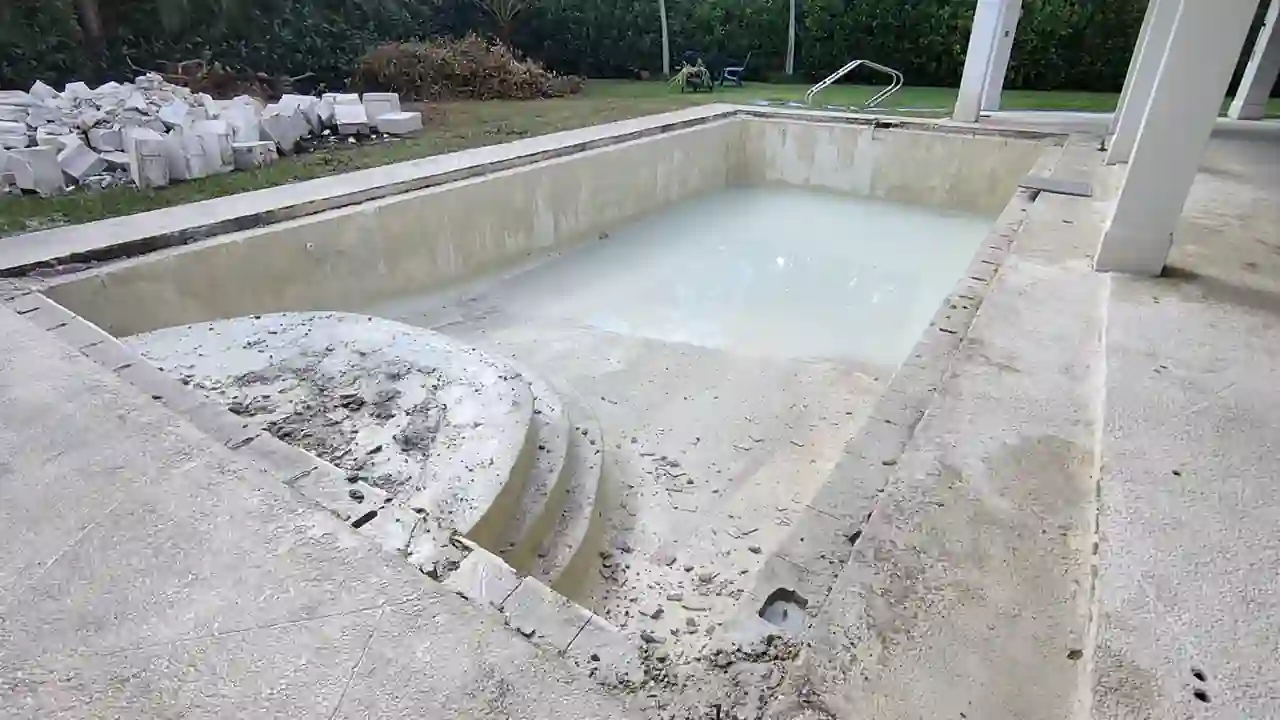
Concrete is heavy. One cubic yard of broken concrete weighs approximately 2,000–2,500 pounds. A 1,000 SF slab at 4 inches thick generates roughly 12 cubic yards of debris — that’s 24,000–30,000 pounds of material that needs to be loaded, transported, and tipped at a licensed facility. In Miami, concrete disposal fees at recycling facilities typically run $50–$90 per ton. A standard dump truck carries 10–14 tons. Do that math before you finalize any bid.
Disposal cost variables include distance to the nearest concrete recycling facility, whether the debris contains embedded steel (which affects sorting requirements), and whether same-day haul is required or if staging on-site is permitted. Staging saves haul trips but requires adequate lay-down space — not always available on urban Miami job sites.
Key Bidding Factors That Separate Accurate Proposals from Guesswork
Experienced demolition contractors price slab breaking jobs by walking the site, not by reviewing photos. The following site conditions must be physically verified before a number goes on paper:
- Utility scan results: Ground-penetrating radar (GPR) scans should be completed before breaking begins. Hitting a conduit or water line mid-demo turns a $4,000 job into a $15,000 problem.
- Access width for equipment: Can a skid steer enter the work zone? Is there a gate width restriction? Equipment downgrade due to access limitations can double your labor hours.
- Sub-base condition: Saturated or unstable sub-base material beneath the slab affects how debris fractures and how equipment performs. Soft ground also creates equipment sinking risk during hydraulic breaker operation.
- Proximity to adjacent structures: Vibration management near existing foundations, walls, or columns adds scope — either through saw cutting to create isolation joints or through method substitution with lower-vibration equipment.
- Permit requirements: Miami-Dade County requires demolition permits for slabs above certain thresholds. Permit timeline adds 5–15 business days to project start. Build that into your schedule, not your contingency.
Keeping your equipment in top condition is also a non-negotiable part of accurate bidding. Worn bits, dull blades, and poorly maintained breakers extend job time and inflate cost. Our internal standards around equipment maintenance directly influence how we price and guarantee our project timelines.
What a Realistic Bid Package Should Include
A professional bid for concrete slab demolition should be a document, not a number on a napkin. At minimum, expect these components in any proposal you submit or receive:
- Confirmed slab dimensions and measured square footage
- Slab thickness (verified, not assumed)
- Reinforcement type and density (based on site review or existing drawings)
- Equipment list with class specifications
- Labor hours broken out by phase (saw cutting, breaking, loading, cleanup)
- Disposal volume estimate and tipping fee line item
- Permit cost and timeline if applicable
- Exclusions — what the bid does NOT cover (utility conflicts, hazmat, sub-base removal)
- Mobilization fee if applicable
- Payment schedule tied to project milestones
The difference between a $6,000 job and a $14,000 job on identical square footage is almost always found in these line items. Contractors who win bids by omitting disposal, skipping the permit line, or assuming unreinforced when the slab is actually post-tension will either eat the difference or create adversarial change order situations. Neither outcome serves the project.
Breaking concrete correctly is a technical discipline with real financial stakes. Whether you’re managing a small residential demo or a multi-phase commercial teardown, the accuracy of your pre-job assessment is what separates a profitable scope from a margin-killing one. Get the site data, specify the equipment, and price the disposal honestly — that’s how the best jobs in this market get done right the first time.