Why Concrete Slab Foundation Thickness Is the First Number Every Field Crew Needs to Know
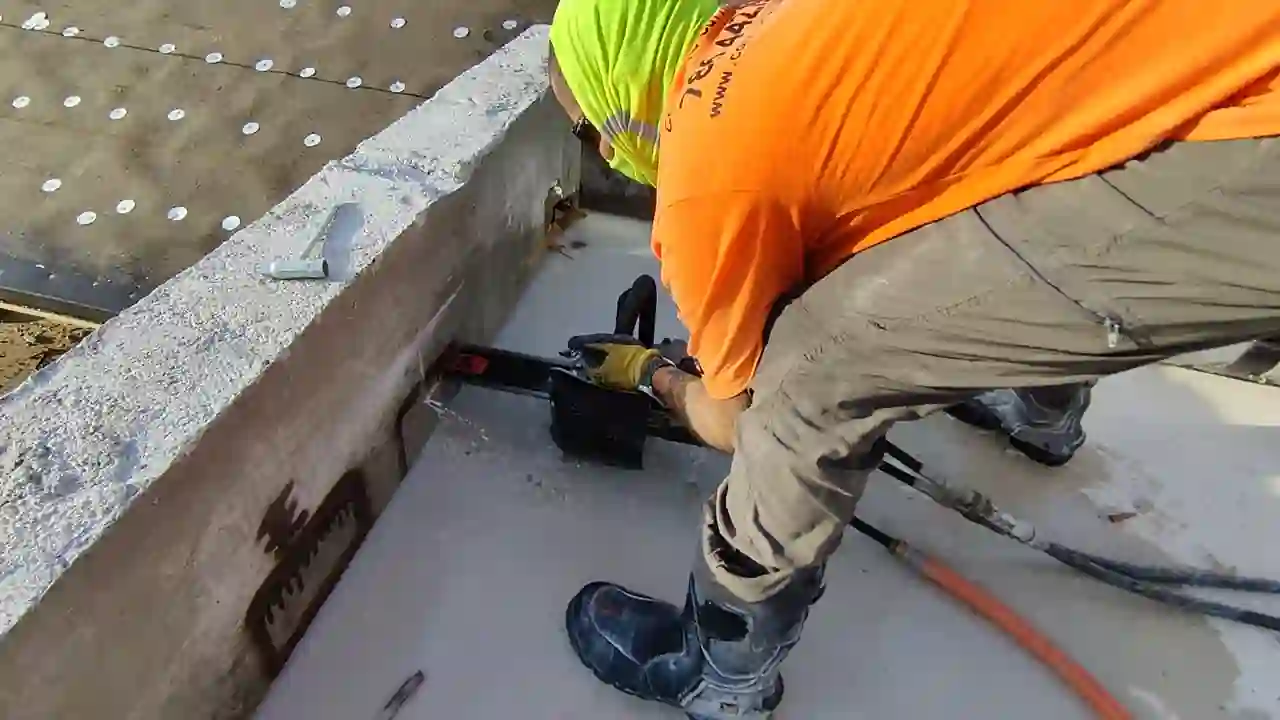
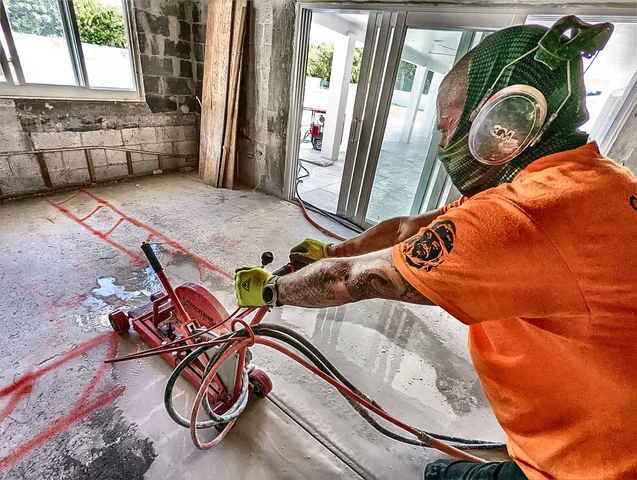
Before a single blade makes contact with a Miami slab, the most important number on the job isn’t the square footage, the timeline, or the contract value — it’s the thickness of the concrete you’re cutting through. Concrete slab foundation thickness directly controls blade selection, equipment sizing, water management, pass depth strategy, and most critically, whether your standard equipment can even fit through the access point. In South Florida, where residential builds, commercial retrofits, and aging industrial slabs all share the same zip codes, thickness ranges from a modest 4 inches in older residential pours to well over 12 inches in post-tensioned commercial foundations. That’s not a minor variance. That’s the difference between a walk-behind saw and a full wall saw rig — and between a job that flows and one that stalls at the threshold.
Standard Thickness Ranges Across Slab Types and What They Signal to the Cutting Crew
Not all slabs are created equal, and experienced concrete cutting professionals read thickness data the way a surgeon reads imaging results — with immediate operational implications. Here’s how the common thickness categories break down in real-world Miami jobsite terms:
- 4-inch residential slabs: Typical in older South Florida homes built before modern code revisions. These are often unreinforced or lightly mesh-reinforced, meaning blade wear is lower but the slab may be more prone to cracking under vibration from adjacent cuts.
- 5- to 6-inch slabs: The current residential standard under Florida Building Code for most slab-on-grade construction. Usually includes rebar at 18-inch centers. Requires a 14-inch blade minimum for full-depth single-pass cutting.
- 8-inch commercial slabs: Common in retail, warehouse, and light industrial applications. Often includes #4 or #5 rebar on a 12-inch grid. Multi-pass cutting is standard protocol here, and water volume requirements increase substantially.
- 10- to 14-inch post-tensioned slabs: Found in parking structures, high-rise podium levels, and heavy commercial foundations throughout Miami-Dade. These require GPR scanning before any cutting begins — severing a tensioned cable is a catastrophic and potentially fatal event.
The thickness number also tells you something about the substrate below. Thicker slabs in South Florida are frequently poured over compacted fill with vapor barriers, and the void space beneath can affect how the slab behaves under cutting load. A slab that flexes — even slightly — during cutting changes your blade speed, feed rate, and the risk of blade binding mid-cut.
Confined Space Cutting Protocols When Foundation Thickness Demands Heavier Equipment
Here’s where the technical challenge compounds: the jobs that involve the thickest slabs are often the same jobs with the most severe access restrictions. A 12-inch post-tensioned podium slab in a parking garage sub-level doesn’t come with wide-open access. You’re working in a space with low overhead clearance, structural columns at tight intervals, active drainage systems, and ventilation constraints that make extended dry cutting essentially non-negotiable from a health and safety standpoint.
When concrete slab foundation thickness pushes beyond 8 inches in a confined access environment, the cutting methodology has to adapt on multiple fronts simultaneously:
- Equipment footprint reduction: Full-size floor saws with 20-inch blades simply cannot maneuver in many sub-grade mechanical rooms or elevator pit areas. Compact track-mounted saws or hand-held ring saws with depth-extension systems become the primary tools, even if they require more passes to achieve full depth.
- Slurry containment in enclosed spaces: Wet cutting in a confined basement or crawlspace generates slurry that has nowhere to drain naturally. Vacuum extraction systems must be staged before cutting begins, and the volume of slurry produced increases proportionally with slab thickness. A 12-inch cut produces roughly three times the slurry of a 4-inch cut at the same linear footage.
- Blade change frequency: In tight spaces, changing a 20-inch blade on a wall saw mounted to a confined ceiling track is a two-person minimum operation with full PPE. Thicker slabs accelerate segment wear, meaning blade changes happen more often — and each change in a confined space adds significant time and ergonomic risk.
- Ventilation and silica dust management: OSHA Table 1 requirements for silica exposure apply regardless of how small the room is. In fact, confined spaces make compliance harder. Local exhaust ventilation systems need to be engineered for the specific space dimensions when you’re cutting through thick, high-PSI concrete in a basement or utility corridor.
GPR Scanning as a Non-Negotiable Step Before Cutting Thick Foundation Slabs
Any slab exceeding 6 inches in a commercial or mixed-use application in Miami should be treated as a potential post-tensioned structure until proven otherwise. Ground-penetrating radar scanning isn’t an upsell — it’s the professional standard that separates responsible concrete cutting contractors from liability exposure. Concrete slab foundation thickness in post-tensioned systems often conceals cables running at varying depths within the slab cross-section, meaning a 10-inch slab might have tendons at 3 inches, 5 inches, and 7 inches depth depending on the structural engineer’s design.
In confined spaces, GPR scanning takes on additional logistical weight. The scanner operator needs clear floor access along the full cut line, which in a cramped mechanical room or between structural columns may require temporary equipment relocation before scanning can even begin. Rushing this step to save setup time is how projects end up with severed tendons, explosive slab failures, and injury claims. The scan data also informs the cutting crew about rebar density and orientation, embedded conduit, and post-pour anchor systems — all of which affect blade selection and feed rate for thick slabs.
Sequencing Multi-Pass Cuts on Thick Slabs in Low-Clearance Environments
When slab thickness exceeds the single-pass capacity of available equipment in a confined space, multi-pass cutting sequences require precise planning. The general rule is to never exceed 60 to 70 percent of blade diameter as usable cutting depth, which means a 14-inch blade gives you approximately 8 to 9 inches of effective depth. For a 12-inch slab, you’re looking at a minimum of two passes — and in a confined space, the logistics of each pass matter independently.
Pass one establishes the cut line and removes the top portion of the slab, generating the bulk of the slurry and heat. Pass two runs deeper and encounters the most heavily stressed zone of a reinforced slab — typically where the bottom mat of rebar sits. Blade speed on the second pass should be reduced by 10 to 15 percent to account for increased lateral loading from the rebar engagement. In confined spaces with limited visibility, the operator is often working by feel and sound as much as sight, which is why experienced crews develop an ear for the acoustic signature of a blade under stress versus a blade cutting cleanly.
Access Planning Checklists That Account for Slab Thickness Variables
Before mobilizing to any job where concrete slab foundation thickness is a primary variable, a professional pre-job access audit should document the following:
- Doorway and corridor dimensions relative to the widest equipment component (often the saw deck, not the blade assembly)
- Overhead clearance at the cut location and along the entire equipment travel path from the entry point
- Electrical service availability for high-amperage saw motors — thick slab cutting on compact equipment often requires 240V 60A service, which may not exist in older sub-grade mechanical spaces
- Water supply proximity and drain access for slurry management scaled to the expected volume from the target slab thickness
- Emergency egress routes for the cutting crew that remain clear even when equipment and slurry containment systems are fully staged
- Structural load path documentation confirming that the slab section being removed isn’t a load-bearing element without proper temporary shoring in place
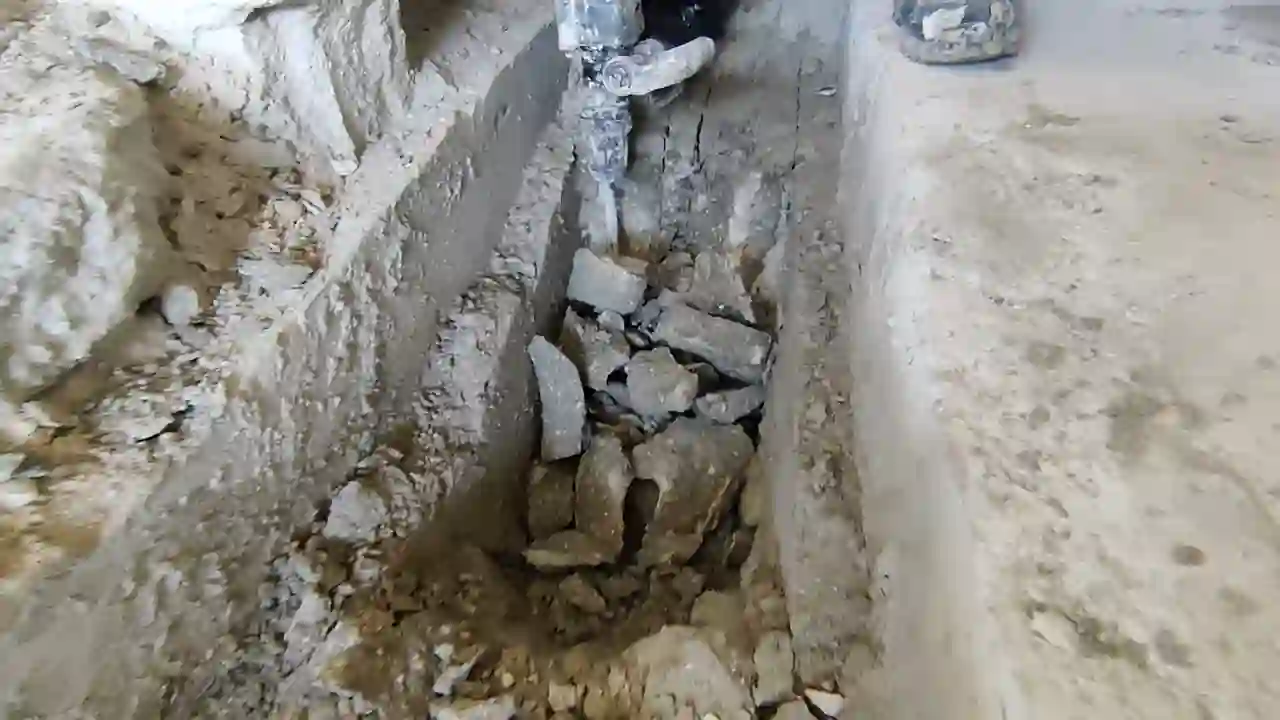
The Real Cost of Underestimating Slab Thickness in Tight-Access Miami Projects
Mobilization costs, blade costs, labor hours, and project timelines are all directly tied to concrete slab foundation thickness — and all of them escalate when access limitations are layered on top. A contractor who quotes a confined-space foundation cut based on assumed 6-inch thickness and arrives to find a 10-inch post-tensioned slab isn’t just facing a cost overrun. They’re facing a job that may require entirely different equipment, a GPR scanning mobilization, additional OSHA compliance measures, and a revised slurry management plan — all before the first cut begins.
In Miami’s competitive concrete cutting market, the contractors who consistently win complex foundation jobs are the ones who treat thickness verification and access assessment as pre-bid requirements, not post-award surprises. Concrete Cutting Miami, LLC approaches every foundation project with a field verification protocol that confirms slab thickness, reinforcement type, access dimensions, and utility conflicts before any scope or pricing is finalized. That process protects the client, protects the crew, and produces results that hold up under the scrutiny of structural engineers, general contractors, and building inspectors alike.
Understanding concrete slab foundation thickness isn’t just technical knowledge — in confined, access-limited Miami jobsites, it’s the variable that determines whether your project gets done right the first time or becomes an expensive lesson in pre-job planning.