What Quick Cut Concrete Cutting Actually Means in the Field
Quick cut concrete cutting — also called early entry or soft-cut sawing — refers to the practice of cutting control joints into freshly placed concrete slabs before the material fully hardens. The objective is straightforward: relieve internal tensile stress before random cracking begins. But executing it correctly is anything but simple. Timing windows are tight, blade selection is critical, and the consequences of getting it wrong range from cosmetic raveling to full structural joint failure. If you’re managing a flatwork pour in Miami’s climate, where ambient temperatures and humidity accelerate set times dramatically, understanding the mechanics of quick cut concrete cutting isn’t optional — it’s the difference between a clean slab and an expensive callback.
The Science Behind Early Entry Saw Timing and Concrete Stress Windows
Concrete begins generating internal tensile stress almost immediately after placement as the hydration process progresses and the slab starts to shrink. The critical window for quick cut concrete cutting typically opens between one and four hours after finishing, depending on mix design, water-cement ratio, ambient temperature, and subbase conditions. In South Florida’s heat, that window can compress to under 90 minutes on a hot, sunny pour day.
The goal is to cut before the concrete reaches enough tensile strength to resist cracking on its own — but after it’s firm enough that the saw blade won’t ravel or tear aggregate from the surface. This zone is often called the raveling threshold. Cutting below this threshold produces a ragged, torn joint edge. Cutting above the stress accumulation point means the slab may have already cracked elsewhere before your blade hits the surface.
- Too early: Blade pulls aggregate, creates raveled joint edges, weakens joint integrity
- Too late: Random cracking initiates before joints are established, defeating the purpose entirely
- On time: Clean joint, controlled crack plane, long-term slab performance maintained
Selecting the Right Early Entry Diamond Blade for South Florida Mixes
Not every diamond blade is engineered for quick cut concrete cutting. Standard wet-cut blades are completely inappropriate for early entry work — the water introduces slurry into a fresh slab surface and can cause surface delamination. Early entry applications demand dry-cutting, segmented diamond blades specifically designed with a hard bond matrix that resists the abrasive action of soft, partially cured aggregate.
For typical Miami-area flatwork using 4,000 PSI mixes with limestone aggregate, a medium-hard bond blade in the 4-inch to 6-inch diameter range is standard. Harder aggregate mixes — such as those incorporating recycled concrete or granite — require a softer bond matrix that exposes fresh diamond crystals more aggressively. Running the wrong bond hardness on a quick cut application accelerates blade glazing, increases heat buildup, and produces inconsistent joint depth.
Blade Skid Plate Function in Early Entry Saws
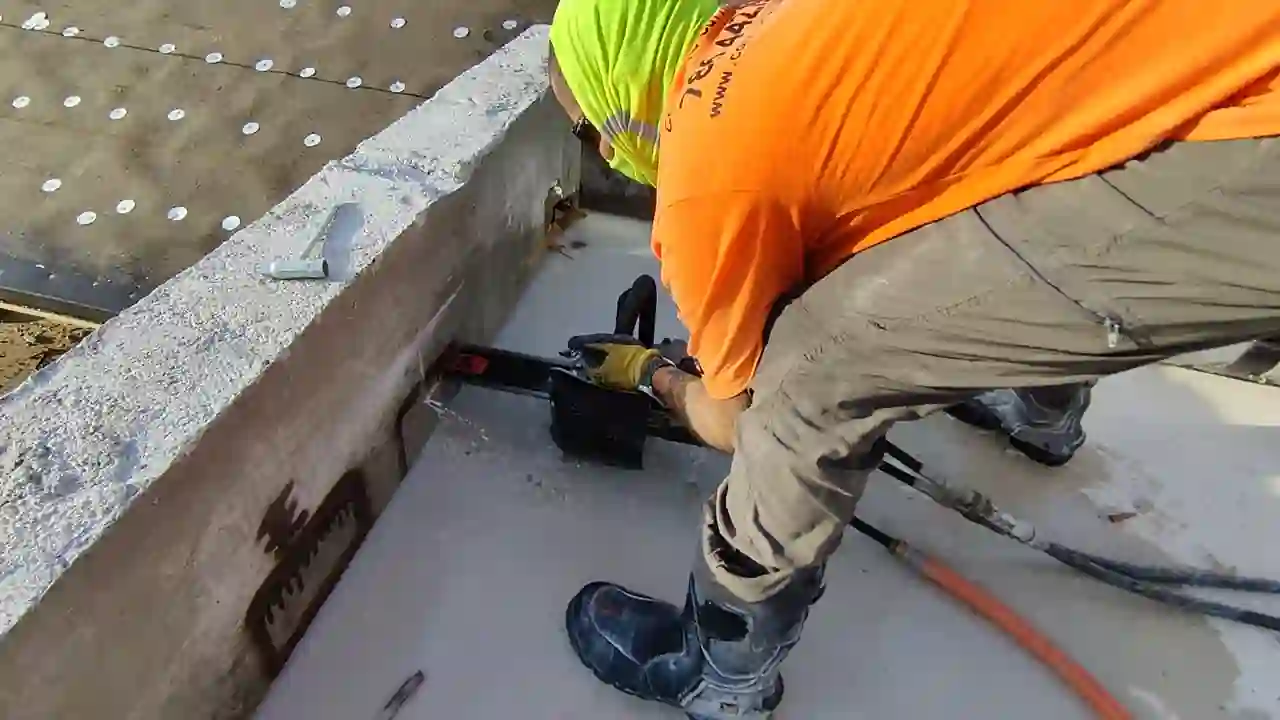
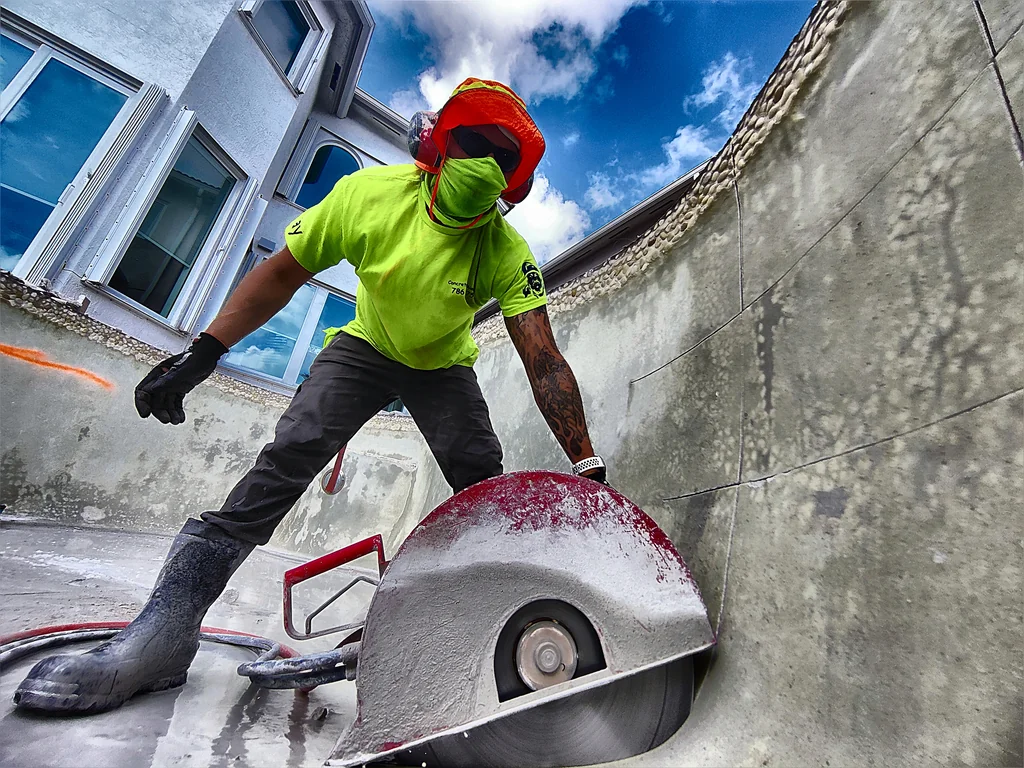
One of the defining features of a purpose-built early entry saw is the skid plate — a replaceable carbide or polymer plate that rides directly on the fresh concrete surface ahead of the blade. This plate serves two functions: it stabilizes the saw against the soft surface, preventing blade deflection, and it protects the joint edges from raveling by confining the cutting zone. Skid plates are consumables and must be matched to the concrete’s current hardness. Using a worn or mismatched skid plate on a quick cut operation is one of the most common causes of joint edge damage in the field.
Depth of Cut Requirements for Effective Joint Crack Induction
Industry standards — specifically ACI 360R and the Portland Cement Association’s slab-on-ground guidelines — specify that control joints must be cut to a minimum depth of one-quarter the slab thickness to reliably induce cracking at the joint plane rather than randomly across the surface. For a standard 4-inch residential or commercial flatwork slab, that means a minimum 1-inch cut depth. For 6-inch industrial slabs, you’re looking at 1.5 inches minimum.
In quick cut concrete cutting, achieving this depth with an early entry saw requires careful blade selection — most early entry blades max out at around 1.5 to 2 inches of cutting depth. If your slab thickness demands deeper cuts, you have two options: make a second pass with a conventional walk-behind saw once the concrete has cured sufficiently, or use a larger early entry unit capable of deeper cuts. Skipping this step and relying on shallow quick cuts that don’t meet the one-quarter depth threshold is a primary cause of mid-panel cracking failures.
Joint Spacing Calculations for Miami Flatwork Pours
Joint spacing isn’t arbitrary. The standard rule of thumb — spacing joints at 24 to 36 times the slab thickness in inches — gives you a working range, but local conditions in Miami demand you err toward the tighter end of that range. High ambient temperatures accelerate moisture loss and thermal contraction, meaning stress accumulates faster and more intensely than in cooler climates. For a 4-inch slab, that means joints every 8 to 10 feet maximum, not the 12-foot spacing some contractors attempt to use.
- 4-inch slab: joints every 8–10 feet on center
- 5-inch slab: joints every 10–12 feet on center
- 6-inch slab: joints every 12–15 feet on center
- High-shrinkage mixes or fiber-reinforced concrete: reduce spacing by 10–15%
Accounting for Rebar and Wire Mesh in Joint Layout
Quick cut joints must be positioned to avoid cutting through continuous reinforcing steel. Joints placed directly over rebar without accounting for bar spacing create a conflict — the joint wants to open and transfer load through aggregate interlock, but the rebar resists that movement and can cause spalling at the joint face over time. Always coordinate joint layout with the reinforcement plan before the pour begins, not after the concrete is on the ground.
Step-by-Step Execution Protocol for Quick Cut Concrete Cutting Operations
Executing a successful quick cut operation requires pre-planning, staged monitoring, and disciplined saw operation. Here is the field protocol used by experienced concrete cutting crews in Miami:
- Step 1 — Pre-pour layout: Mark joint lines on the forms or subbase with chalk lines or spray paint before concrete placement begins. Know your spacing, know your saw path.
- Step 2 — Monitor set progression: After finishing is complete, begin checking surface hardness every 20–30 minutes using the thumb-press test. When a firm thumb press leaves a 3–4mm indentation without pulling aggregate, you’re approaching the cut window.
- Step 3 — Test cut: Make a 12-inch test cut in an inconspicuous area. Inspect the joint edge for raveling. Clean edges with minimal aggregate disturbance indicate readiness. Torn or pulled aggregate means wait another 15–20 minutes.
- Step 4 — Begin systematic cutting: Work in a consistent pattern — typically cutting the longest joints first to relieve the greatest stress spans. Keep the saw moving at a steady pace; stopping mid-joint creates blade burn marks and uneven depth.
- Step 5 — Document cut times: Record the time each joint was cut relative to pour completion. This documentation is critical for quality assurance and any future warranty or dispute resolution.
Common Quick Cut Failures and How to Prevent Them on Your Next Pour
Even experienced crews run into problems with early entry cutting. The most frequent failure mode is delayed cutting due to crew scheduling conflicts — the finishers wrap up and leave before the saw operator arrives, and by the time cutting begins, random cracks have already initiated. The fix is simple but requires discipline: the saw operator must be on-site and monitoring from the moment finishing wraps up, not called in after the fact.
The second most common failure is inadequate joint depth on thick slabs. Operators using standard early entry equipment on 6-inch or thicker slabs often fail to achieve the required one-quarter depth, leaving the slab vulnerable to mid-panel cracking between joints. Always verify blade depth capacity against slab thickness before mobilizing equipment.
A third issue specific to Miami conditions is rapid surface drying before cutting. High wind, direct sun, and low humidity can create a surface skin that appears firm enough to cut while the underlying concrete is still too soft. This leads to blade chatter, uneven depth, and joint edge damage. Use evaporation retarder spray on the surface immediately after finishing to slow moisture loss and maintain consistent set progression through the full slab depth.
When to Call a Professional Concrete Cutting Crew Instead of Going DIY
Quick cut concrete cutting on small residential flatwork — a driveway apron, a backyard patio — can be managed by an experienced contractor with rented early entry equipment. But for commercial slabs, industrial floors, or any pour exceeding 500 square feet, the risk-to-reward calculation shifts decisively toward hiring a dedicated concrete cutting crew. The equipment costs, blade selection expertise, and real-time timing judgment required to execute early entry cutting correctly on large pours are not skills developed quickly.
Concrete Cutting Miami, LLC deploys fully equipped early entry cutting teams with calibrated equipment, proper blade inventories for South Florida aggregate types, and the field experience to read set progression accurately in our local climate. Whether you’re managing a warehouse floor pour in Doral or a commercial parking structure in Brickell, getting the quick cut right the first time is always less expensive than grinding out and repairing random cracks after the fact.