Why Pool Fill Costs in Miami Vary So Wildly Between Bids
If you’ve collected three bids to fill an inground pool with dirt and every number looks completely different, you’re not imagining things. Pool fill pricing in South Florida is genuinely complex, driven by variables that most homeowners never see on a line item. Soil type, pool construction method, permit jurisdiction, drainage requirements, and haul distance all compound on each other. A 12×24 gunite pool in Coral Gables and a 14×28 vinyl liner pool in Homestead might look similar on paper but carry wildly different cost profiles. This post breaks down every major cost driver, gives you real per-cubic-yard numbers, and explains exactly what a legitimate contractor should be pricing when they hand you a proposal.
Full Pool Abandonment vs. Partial Fill — The Cost Split Nobody Explains
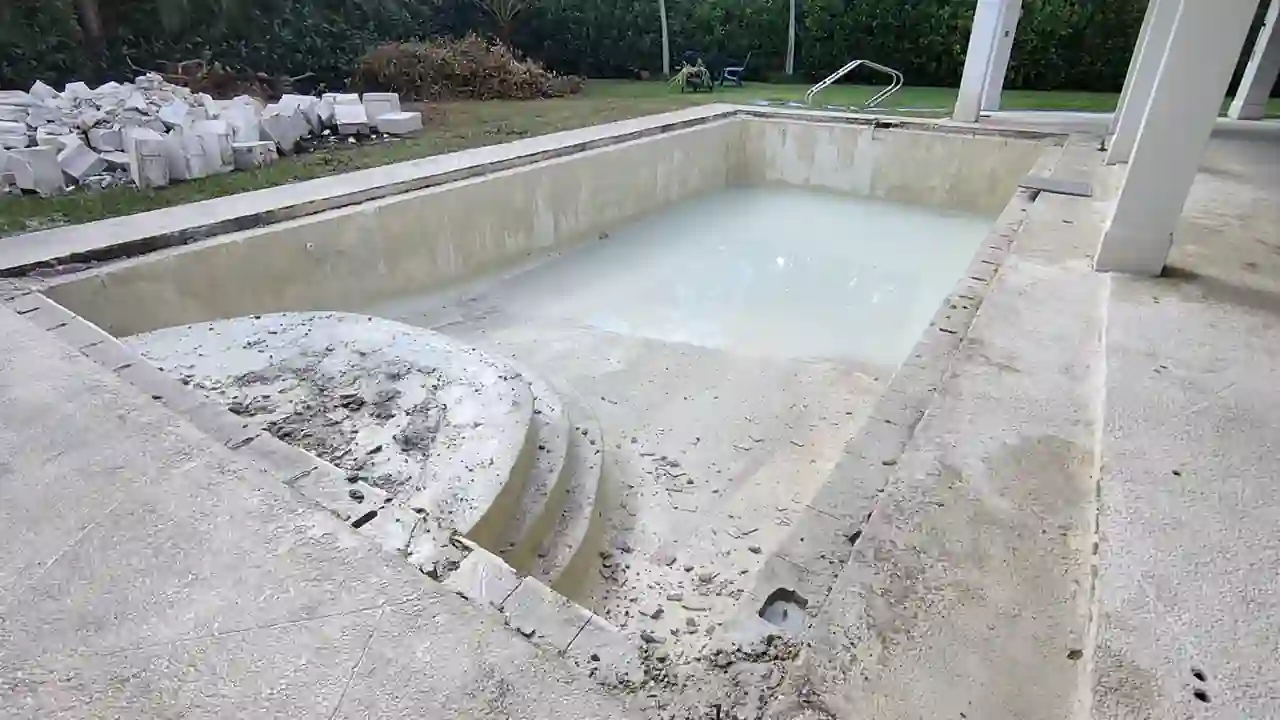
Before any dirt moves, you need to decide between a full pool removal and a partial fill abandonment. These are not interchangeable terms and the price gap between them is significant. A full removal means demolishing the entire pool shell — walls, floor, coping — hauling all that concrete debris off-site, then backfilling the excavation with engineered fill. A partial fill abandonment means punching drainage holes in the pool floor, crushing or cutting down the walls to a specified depth (typically 18–36 inches below finished grade depending on local code), and filling the remaining void with dirt or a dirt-gravel combination.
In Miami-Dade County, partial abandonment is the more common residential choice and typically runs $3,500 to $9,000 for a standard 15×30 pool. Full demolition and fill on the same pool can run $9,000 to $18,000 depending on concrete thickness and debris haul fees. The delta is real and it matters for resale — a partial fill must be disclosed and will limit what a future owner can build over that footprint. For Miami construction projects where the lot will be redeveloped, full removal is almost always the right call.
Dirt Volume Calculations and Why Getting Them Wrong Destroys Your Budget
The volume of fill material required is the single most manipulated number in pool fill bids. Contractors who underquote volume win the bid, then hit you with change orders mid-project. Here’s how to check the math yourself.
A standard inground pool holds between 800 and 2,500 cubic feet of volume depending on shape and depth. Convert to cubic yards by dividing by 27. A 15×30 pool with an average depth of 5 feet holds roughly 2,250 cubic feet — that’s approximately 83 cubic yards of fill material. But here’s what most bids miss: fill dirt compacts. Clean fill compacts at roughly 10–15% after placement and watering. That means you need to order 10–15% more material than the raw pool volume suggests, or you’ll end up with a sunken depression in your yard six months later.
Fill dirt pricing in Miami currently runs $12 to $28 per cubic yard delivered depending on source, quality, and haul distance. Clean fill from a nearby excavation job is cheapest. Screened topsoil blends are at the high end. For an 83-cubic-yard job at the midpoint, you’re looking at roughly $1,660 to $2,300 just in material cost before any labor or equipment touches the site.
Concrete Cutting and Wall Demolition — The Labor Cost That Changes Everything
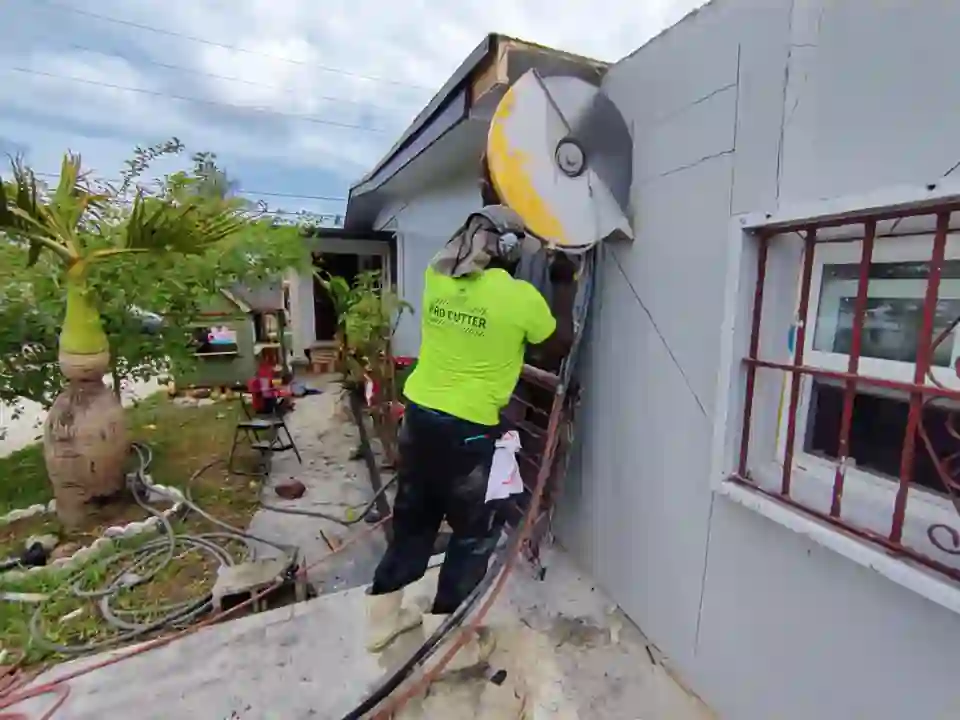
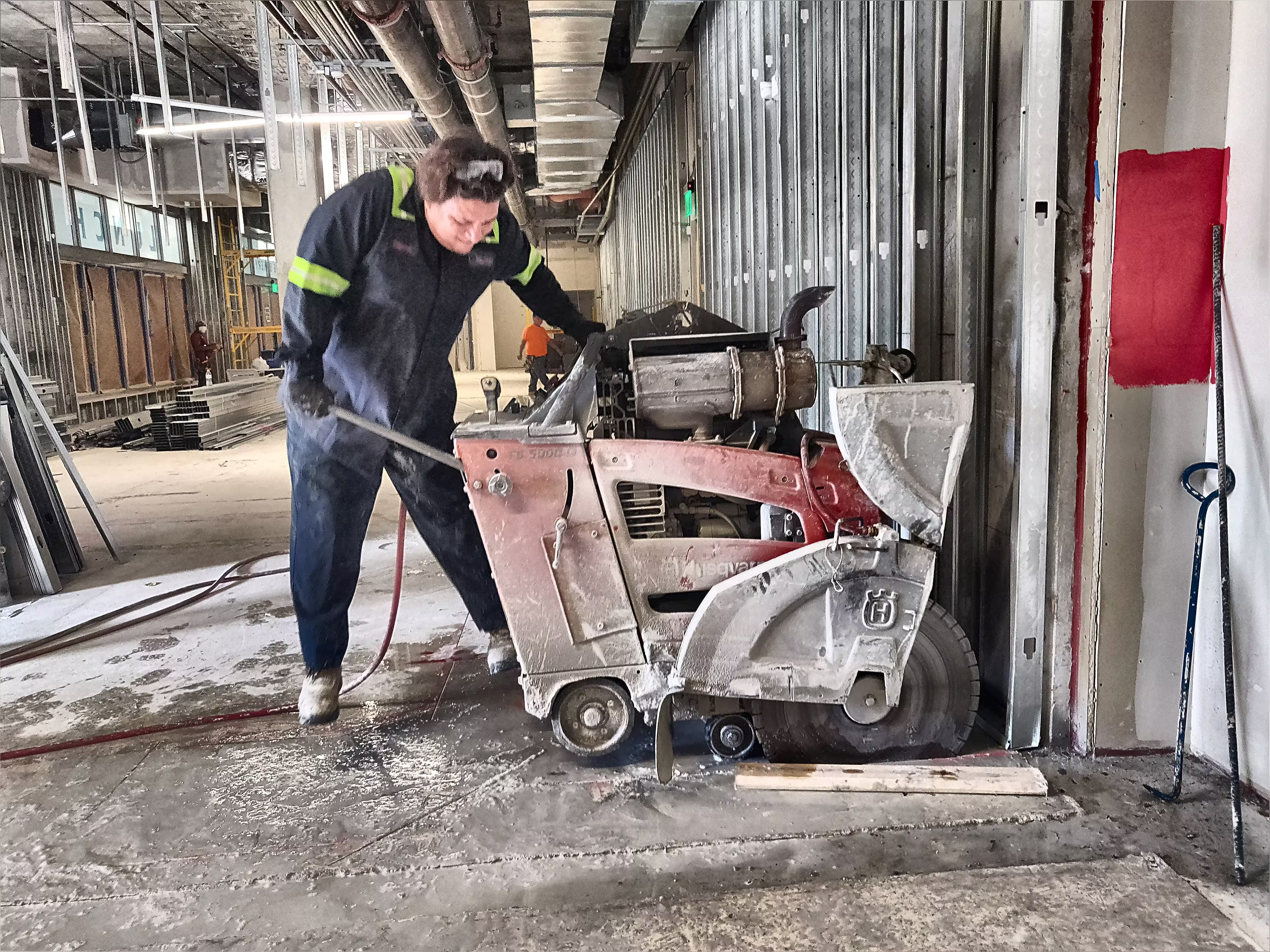
For gunite or shotcrete pools, the wall and floor demolition phase is where most of the skilled labor cost lives. If you’re doing a partial abandonment, the top section of the pool walls must be cut down and broken out. This is not a sledgehammer job — it’s controlled concrete demolition that requires proper equipment to avoid undermining adjacent structures, irrigation lines, or deck footings.
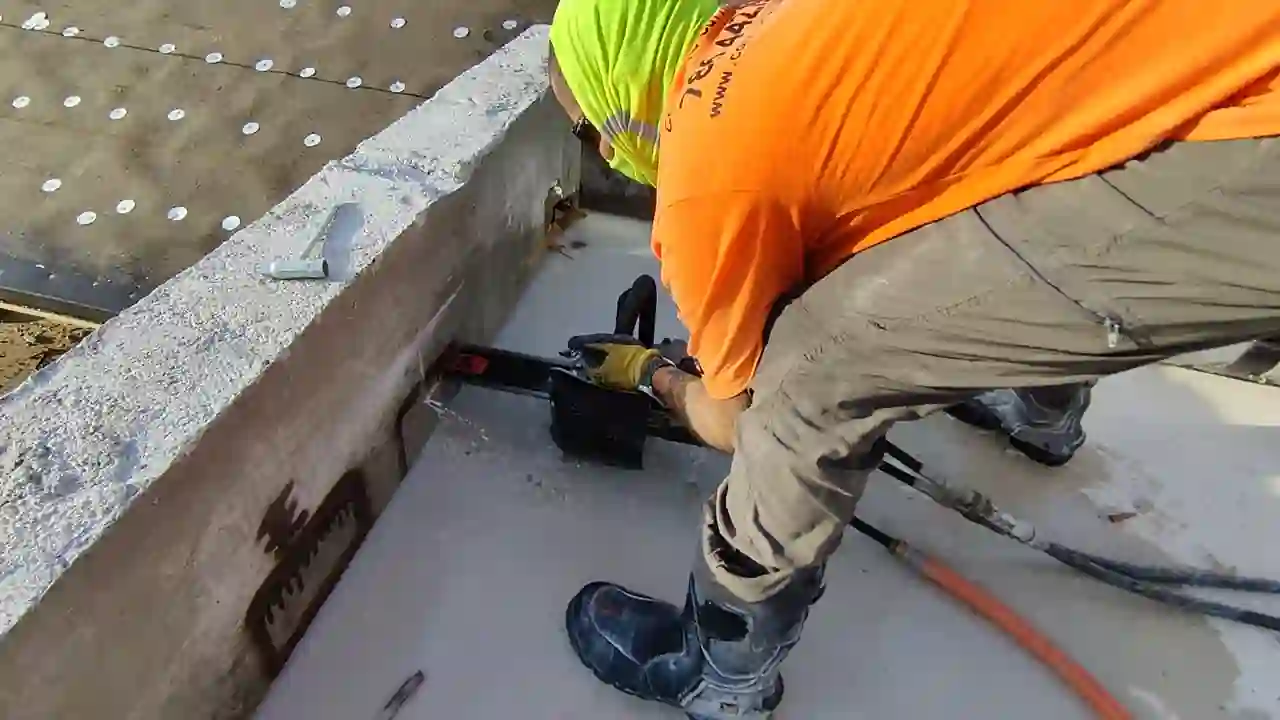
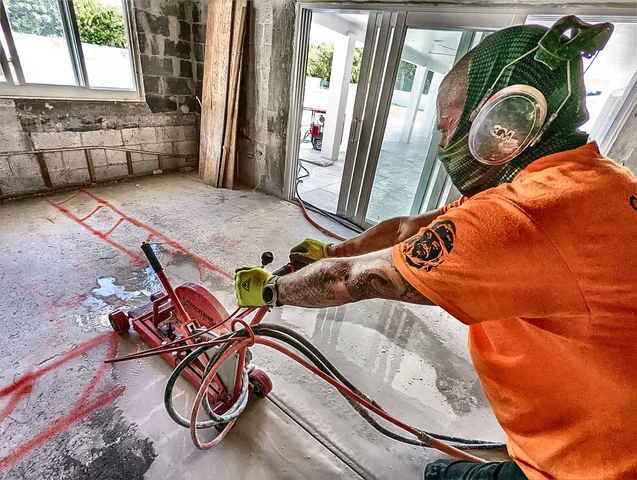
Hydraulic breakers, electric chipping hammers, and in tighter access situations, concrete chain saw operation are the tools of choice. Chain saws with diamond-tipped bars allow operators to make precise horizontal cuts through gunite walls at exact depth, which is critical when the pool sits close to a home foundation or retaining wall. The drainage perforation work on the pool floor — typically a grid of 4–6 inch holes punched every 4 to 6 feet — is done with core drilling equipment. Expect to see $800 to $2,500 in demolition and cutting labor on a standard residential pool abandonment, separate from fill and grading work.
If the pool deck is being removed simultaneously, that adds another layer of cost. Concrete deck demolition and haul-out on a 600-square-foot deck runs approximately $1,200 to $2,800 in Miami depending on thickness and reinforcement. See our resources on diamond tooling and equipment for a deeper look at what proper concrete cutting requires on a job like this.
Permit Fees, Inspections, and Timeline Realities for Miami-Dade and Broward
This is the section most contractors gloss over in their proposals. In Miami-Dade County, pool abandonment requires a permit through the Building Department. The permit fee is typically $150 to $400 for a residential abandonment, but the real cost is time. Permit processing in Miami-Dade currently runs 3 to 6 weeks for residential projects. Add a required inspection at the drainage perforation stage and a final compaction inspection, and you’re looking at a project timeline of 6 to 10 weeks from contract signing to final sign-off under normal conditions.
Broward County municipalities vary — some cities like Pembroke Pines process pool abandonment permits faster, while Fort Lauderdale proper can run longer. Any contractor who tells you they can complete a permitted pool fill in two weeks in Miami-Dade is either pulling permits after the fact or not pulling them at all. Both scenarios create title problems at resale and can result in stop-work orders. Proper project maintenance and compliance documentation protects your investment long after the dirt is graded.
Compaction Standards That Separate Professional Fill Jobs from Future Sinkholes
Fill dirt placed in a pool void without proper compaction lifts will settle unevenly for years. The industry standard for residential pool fill is compaction in 12-inch lifts — meaning each foot of fill must be mechanically compacted before the next layer goes in. A plate compactor handles shallow work; a jumping jack tamper or vibratory roller is needed for deeper lifts. Each compaction pass should be documented for the final inspection.
Contractors who dump all the fill in at once and run a plate compactor over the top are cutting corners that will cost you. Proper lift compaction on an 83-cubic-yard fill job adds roughly 4 to 8 hours of equipment time to the project. At Miami equipment and labor rates, that’s an additional $400 to $900 — but it’s the difference between a stable yard and a subsidence claim five years from now.
For projects where the filled area will eventually support a structure — a patio, an ADU, a new addition — a compaction test report (Proctor test) should be required. This adds $200 to $400 to the project cost but is non-negotiable for any future permitted construction over the fill zone. Projects tied to larger structural modification work almost always require this documentation upfront.
Reading a Pool Fill Bid Line by Line — What Should and Shouldn’t Be There
A professional bid for pool fill work should break out these line items separately so you can compare apples to apples across contractors:
- Permit procurement and fees — should be itemized, not buried in overhead
- Pool floor perforation (core drilling) — number of holes, diameter, and equipment type
- Wall demolition and depth — specified depth below finished grade, disposal included or excluded
- Concrete debris haul-out — per-ton or lump sum, with a cap or not
- Fill material volume and type — cubic yards, compacted or loose, material specification
- Compaction method and lift schedule — number of lifts, equipment used
- Final grading and seed/sod — often excluded and added as a change order
- Inspection coordination — who schedules, who is on-site
Any bid that presents a single lump sum with no line items is a red flag. You have no way to verify scope, no basis for comparison, and no leverage if scope changes mid-project. Total project cost for a properly permitted, professionally executed pool fill abandonment in Miami typically falls between $5,500 and $12,000 for a standard residential pool. Full removal projects start around $9,500 and can exceed $20,000 for large pools with heavy gunite construction or difficult access.
Access Constraints and Equipment Staging — The Hidden Cost Multiplier
Miami lots are tight. Many pools in older neighborhoods were built before fences, additions, and mature landscaping closed off equipment access. When a standard skid steer or mini excavator can’t reach the pool from the street, costs jump. Hand excavation of concrete debris, conveyor belt systems for moving fill over obstacles, and extended equipment rental days all add to the bottom line.
If your pool is behind a 36-inch gate with a 60-foot run to the backyard, expect a 15 to 25% access surcharge on the base bid. Contractors who don’t ask about access during site visit are not pricing the job accurately. Demand a site walk before any proposal is submitted — any professional crew doing Miami construction work at this scale should be inspecting access, overhead clearance, and utility conflicts before a single number goes on paper.
The cost to fill a pool with dirt is never just the cost of the dirt. It’s a demolition project, a compaction project, a permitting project, and a site logistics project rolled into one. Contractors who understand all four phases and price them transparently are worth every dollar of their premium over the low bid that leaves half the scope off the proposal.