Why Concrete Cutting for Windows Carries a Higher Risk Profile Than Most Structural Work
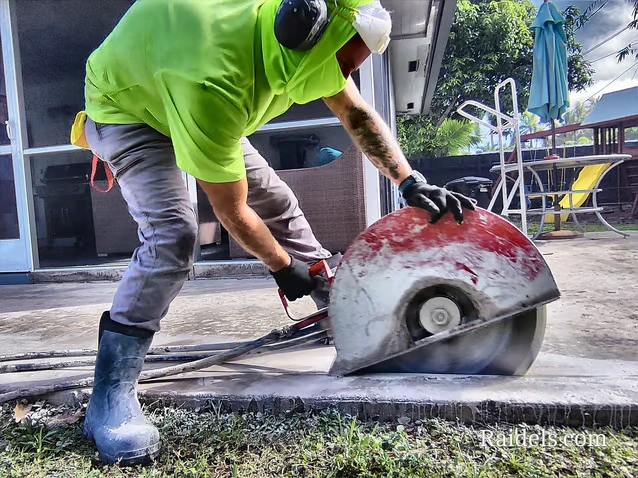
Concrete cutting for windows isn’t simply a matter of drawing a rectangle on a wall and running a blade through it. When you’re opening a new window aperture in an existing concrete or masonry wall — whether it’s a tilt-up panel, a poured-in-place structure, or a CMU block assembly — you are introducing a permanent discontinuity into a load-bearing or partially load-bearing system. The hazards stack fast: uncontrolled dust, blade kickback, rebar tension release, structural instability, and electrical conduit strikes are all live threats on any given cut. Before a single blade touches concrete, a disciplined safety protocol must be in place, documented, and enforced. At Concrete Cutting Miami, LLC, we treat every window opening job as a high-consequence operation, and in this post we’re breaking down exactly how that’s done — technically and legally.
Pre-Cut Structural Assessment and Load Path Verification
The first non-negotiable step is a structural assessment. Before any cutting equipment is mobilized, the wall in question must be evaluated for its role in the building’s load path. Is it a shear wall? Does it carry gravity loads from a floor or roof above? Is there a beam or lintel already embedded above the proposed opening, or does one need to be installed before cutting begins?
In Florida’s construction environment, where hurricane load requirements under the Florida Building Code (FBC) are among the strictest in the nation, removing wall material without engineering sign-off can trigger catastrophic structural failure — particularly in older tilt-up or unreinforced masonry buildings. A licensed structural engineer must review the proposed opening dimensions, specify temporary shoring requirements, and confirm the header or lintel design before cutting proceeds.
GPR (Ground Penetrating Radar) scanning of the wall is equally mandatory. Rebar placement, post-tension cables, conduit runs, and embedded utilities must be fully mapped. Striking a post-tension tendon during a wall saw cut doesn’t just damage the blade — it releases stored energy violently enough to cause serious injury or death. GPR scanning eliminates that variable entirely.
OSHA Silica Dust Compliance for Window Opening Cuts
OSHA’s Crystalline Silica Standard (29 CFR 1926.1153) is the most operationally impactful regulation governing concrete cutting for windows. Cutting through concrete generates respirable crystalline silica at concentrations that can exceed the OSHA Permissible Exposure Limit (PEL) of 50 micrograms per cubic meter of air as an 8-hour TWA within seconds of blade contact. Silicosis is irreversible and fatal — there is no acceptable threshold for non-compliance here.
For wall saw operations used in window cutting, OSHA’s Table 1 specifies the engineering controls required. Wet cutting with continuous water delivery to the blade is the primary control method. The water must be applied directly at the blade-to-concrete interface, not sprayed peripherally. Water flow rates must be sufficient to suppress dust generation at the source — typically a minimum of 0.5 gallons per minute for most wall saw configurations, though blade diameter and material hardness affect this.
- Wet cutting systems must be operational before the blade engages the concrete and must remain active throughout the cut.
- Local exhaust ventilation (LEV) with a HEPA-filtered vacuum is required when wet cutting is not feasible (e.g., interior cuts where water runoff creates secondary hazards).
- Respiratory protection — minimum N95 respirator, but a half-face elastomeric respirator with P100 filters is the professional standard for enclosed or partially enclosed spaces.
- Exposure monitoring is required for new task assignments or when engineering controls change.
- Written Exposure Control Plan must be maintained on-site and available for inspection.
Failure to comply with Table 1 requirements exposes contractors to citations starting at $15,625 per violation for serious violations and up to $156,259 for willful or repeated violations as of current OSHA penalty schedules. Beyond the financial exposure, the reputational damage to a concrete cutting operation is permanent.
Wall Saw Setup, Blade Selection, and Kickback Prevention Protocols
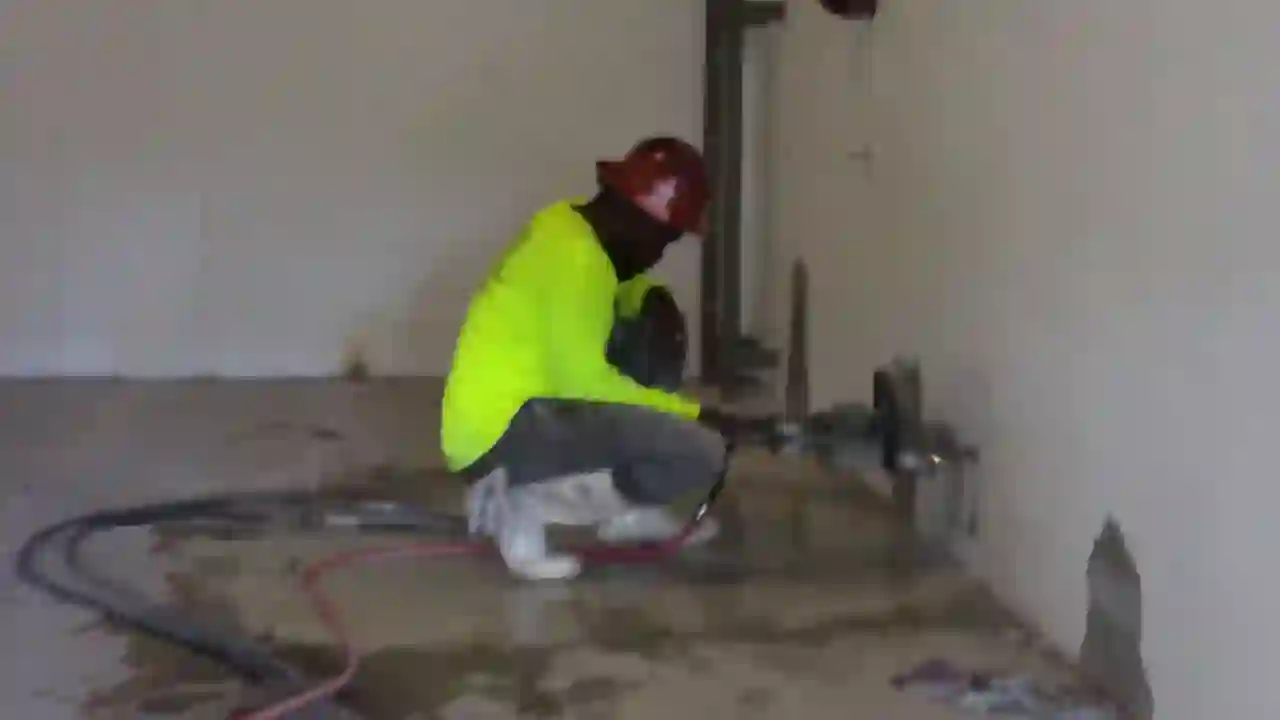
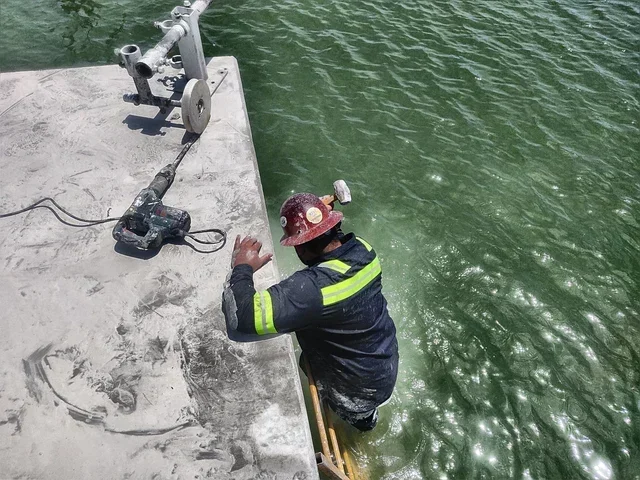
For window openings in concrete walls, the hydraulic wall saw is the tool of choice in most professional applications. It delivers controlled, trackable cuts at precise depths without the operator needing to be directly behind the blade — a critical safety advantage over handheld angle grinders or circular saws on larger cuts.
Blade selection for concrete cutting for windows depends on aggregate hardness, PSI rating of the concrete, and the presence of rebar. For standard 3,000-4,000 PSI concrete with #4 or #5 rebar, a 14-inch to 18-inch diamond segmented blade rated for reinforced concrete is appropriate. For high-strength concrete above 6,000 PSI — common in South Florida’s newer commercial construction — a softer bond diamond blade is required to allow adequate diamond exposure as the bond matrix wears.
Kickback is the leading cause of blade-related injuries in wall cutting operations. It occurs when the blade binds in the kerf, typically due to wall movement as the cut progresses and the unsupported concrete shifts. Proper shoring of the concrete panel above and adjacent to the cut zone prevents this. Kerf wedges — non-sparking plastic or aluminum — should be inserted into completed cut segments to maintain the kerf opening as the cut advances around the perimeter of the window opening.
Track rail alignment is equally critical. The wall saw track must be mounted plumb and level, with anchor bolts torqued to manufacturer specifications. A misaligned track causes the blade to run off-line, increases blade stress, and creates an unpredictable cutting path. Always use a laser level for track installation on window cuts — eyeballing it is not a professional practice.
Electrical and Mechanical Utility Strike Prevention
Beyond GPR scanning, a physical utility verification should be conducted by reviewing as-built drawings, contacting the building’s MEP engineer of record, and using a hand-held rebar/conduit locator as a secondary confirmation. Electrical conduit strikes during concrete cutting for windows are more common than the industry acknowledges, particularly in older commercial buildings where as-built drawings are incomplete or inaccurate. Lock-out/tag-out (LOTO) procedures for circuits within the work zone are mandatory under OSHA 29 CFR 1910.147 and should be completed before any cutting begins.
Temporary Shoring Requirements During the Window Cut
Once the structural engineer has specified shoring, it must be installed before the first cut is made — not after. Temporary shoring for window opening cuts typically involves vertical shores placed at intervals specified by the engineer, bearing on the floor slab below and transferring load away from the section of wall being removed. In multi-story structures, shoring may need to be stacked through multiple floors.
Shoring materials must be rated for the loads they will carry. Adjustable steel shores are preferred over timber in professional operations because their load capacity is certified and consistent. All shoring must be inspected by a competent person before cutting begins and re-inspected after each cutting session if the work spans multiple days.
This same level of shoring discipline applies to other structural cutting operations. If you’ve worked on loading dock pit cutting and expansion projects, you understand how critical shoring is when removing concrete in load-bearing zones — the principles transfer directly to window opening work.
Slurry and Waste Water Management on Window Cutting Jobs
Wet cutting generates concrete slurry — a mixture of water, fine concrete particles, and crystalline silica — that must be managed as a regulated waste stream. Allowing slurry to flow into storm drains violates the Clean Water Act and local stormwater ordinances. In Miami-Dade County, the penalties for uncontrolled slurry discharge are enforced actively.
Slurry containment starts with physical barriers: foam backer rod or foam tape sealed around the perimeter of the cut zone on the floor, directing slurry to a central collection point. Wet-dry vacuums with HEPA filtration collect the slurry for proper disposal. For larger window cutting operations, a slurry separator system allows water to be recycled and solids to be dried and disposed of as solid waste. Our team’s approach to concrete waste management covers this in detail — proper slurry handling is not optional, it’s a compliance requirement.
PPE Hierarchy for Window Opening Cuts in Enclosed Spaces
Window cutting in interior spaces — particularly in occupied or partially occupied buildings — demands a full PPE protocol beyond basic dust control. The enclosed environment concentrates noise, dust, and vibration in ways that open exterior cuts do not.
- Hearing protection rated for NRR 25 or higher — wall saws operating in enclosed spaces routinely exceed 95 dB(A).
- Eye and face protection — safety glasses alone are insufficient; a full face shield over safety glasses is required when cutting overhead or at face level.
- Cut-resistant gloves rated to ANSI/ISEA 105 Level A4 or higher for handling cut concrete sections.
- Steel-toed boots with puncture-resistant soles — falling concrete sections during window panel removal are a primary foot injury vector.
- High-visibility vest when working in areas with active equipment or vehicle traffic.
Hand-arm vibration syndrome (HAVS) is a long-term occupational hazard for workers using handheld cutting equipment. While wall saws reduce direct vibration exposure compared to handheld tools, any supplementary grinding or hand cutting should be tracked against HAVS exposure limits. Anti-vibration gloves alone are not a substitute for exposure time management.
Connecting Window Cutting Safety to Broader Site Hazard Management
The safety discipline required for concrete cutting for windows doesn’t exist in isolation. It connects to every other structural modification happening on a job site. Understanding how to address Miami’s most persistent concrete damage problems gives contractors the broader context for why structural integrity assessments before cutting are so critical — pre-existing damage in a wall changes the load distribution and can make a planned cut far more dangerous than anticipated.
Similarly, precision cutting work like concrete curb cutting in Miami shares the same foundational safety principles — proper blade selection, dust suppression, and utility verification — even though the structural stakes differ. And for contractors who also work on residential projects, understanding the structural implications of concrete removal, as explored in resources like this guide on pool removal for homeowners, reinforces why professional concrete cutting is never a DIY operation.
For specialized cutting tools used in confined or utility-dense environments, reviewing concrete pipe cutter applications provides useful technical context on blade geometry and cutting dynamics that apply across multiple concrete cutting disciplines.

The Competent Person Requirement and Documentation Before Any Blade Turns
OSHA requires that a “competent person” — defined as someone capable of identifying existing and predictable hazards and authorized to take corrective action — oversees concrete cutting operations. For window opening cuts, this person must be on-site during active cutting, not available by phone. They are responsible for verifying that all pre-cut protocols have been completed: GPR scan reviewed, shoring installed and inspected, dust control systems operational, PPE verified, LOTO completed, and the crew briefed on the specific hazards of the day’s work.
Documentation is your legal protection. A pre-task safety plan specific to the window cut, signed by the competent person and crew members, creates a defensible record of compliance. Photograph the shoring installation, the GPR scan results, and the dust control setup before cutting begins. In the event of an OSHA inspection — triggered by an injury, a complaint, or a random site visit — this documentation is the difference between a citation and a clean record.
Concrete cutting for windows, done correctly, is a precise and manageable operation. Done carelessly, it is one of the most dangerous tasks in structural modification work. The protocols described here aren’t bureaucratic overhead — they are the technical foundation that separates professional concrete cutting contractors from liability-generating amateurs. At Concrete Cutting Miami, LLC, every window opening project begins with this foundation, and it never gets skipped.