Technical Overview of Miami’s Concrete Degradation Factors
Miami’s concrete suffers unique damage patterns unseen in most mainland environments. With 95% average humidity, saltwater exposure, and extreme UV radiation, standard repair methods often fail within months. This guide details specialized approaches developed through 23 years of correcting failed repairs across Miami-Dade County.
Critical Failure Points in Coastal Concrete Structures
Three primary damage modes dominate Miami’s concrete infrastructure:
- Chloride-induced rebar corrosion from saltwater intrusion
- Differential settling cracks in limestone substrates
- Spalling from thermal cycling and humidity swings
Diagnosing Saltwater-Induced Spalling in Coastal Foundations
Salt crystallization within concrete pores creates internal pressures exceeding 3,000 PSI. Follow this protocol:
- Mark affected areas with chalk, extending 6″ beyond visible damage
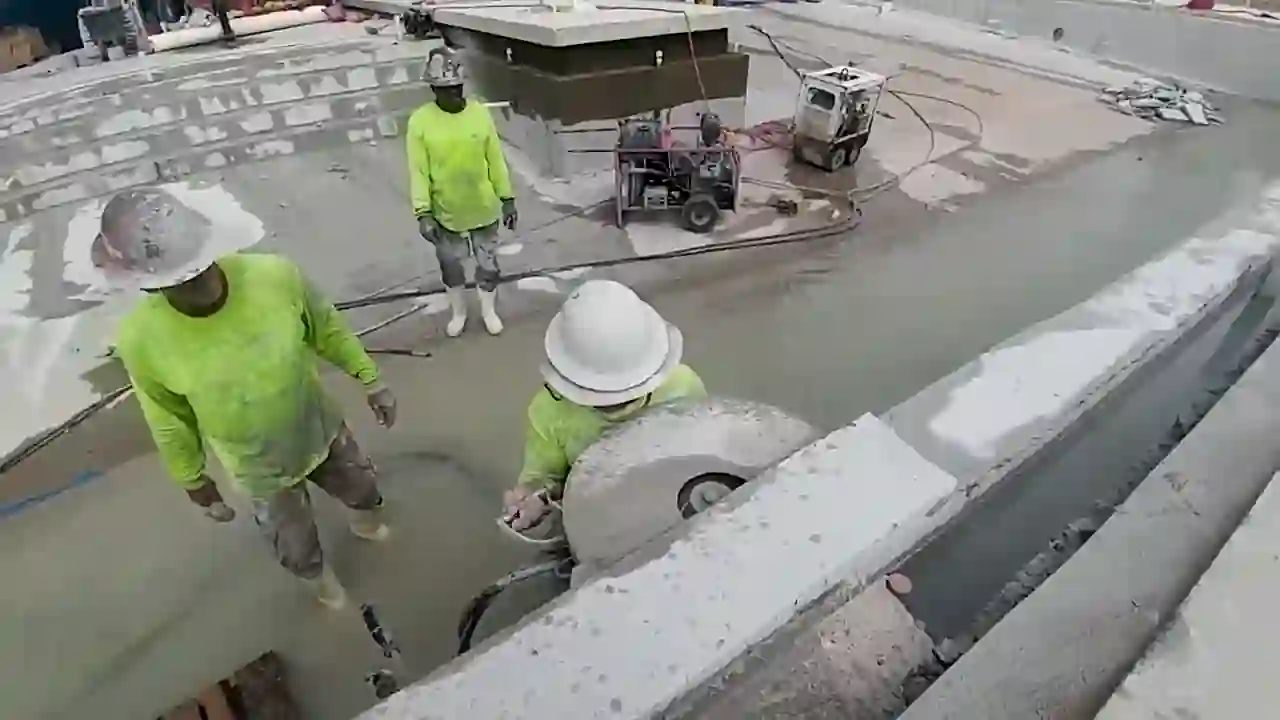
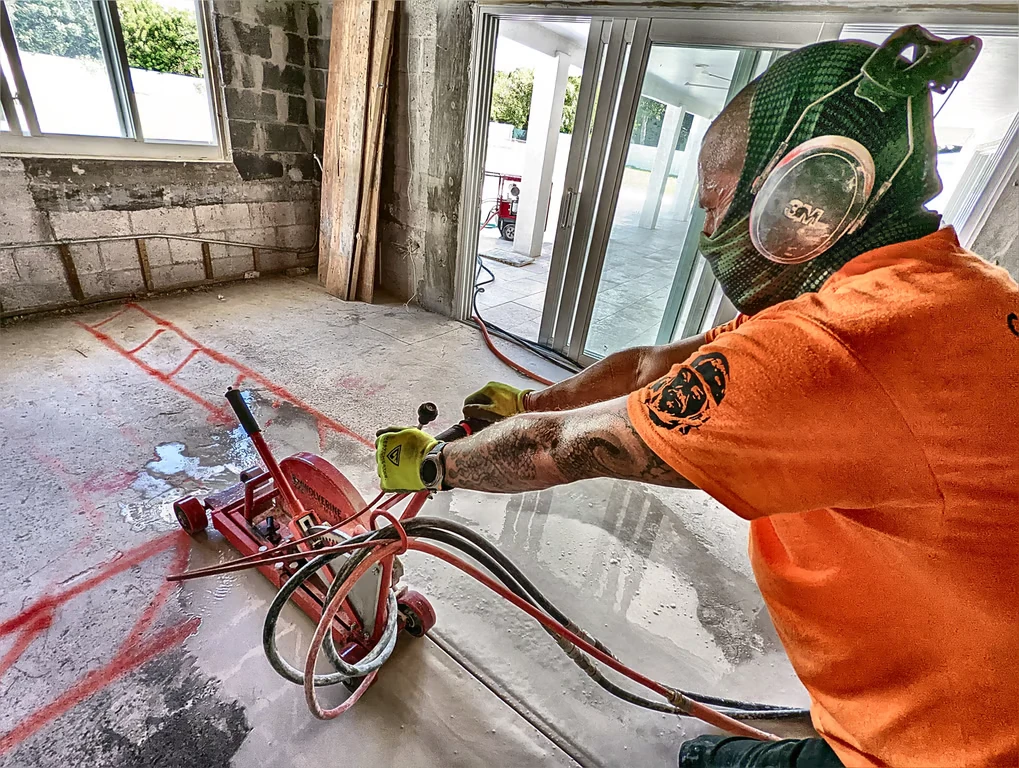
- Use hydraulic concrete cutting tools to remove compromised sections
- Test remaining concrete with Schmidt hammer (accept only readings > 40 N/mm²)
Rebar Rehabilitation Sequence
Corroded reinforcement requires:
- Sandblasting to SSPC-SP 10 near-white metal standard
- Zinc-rich epoxy coating (minimum 16 mil DFT)
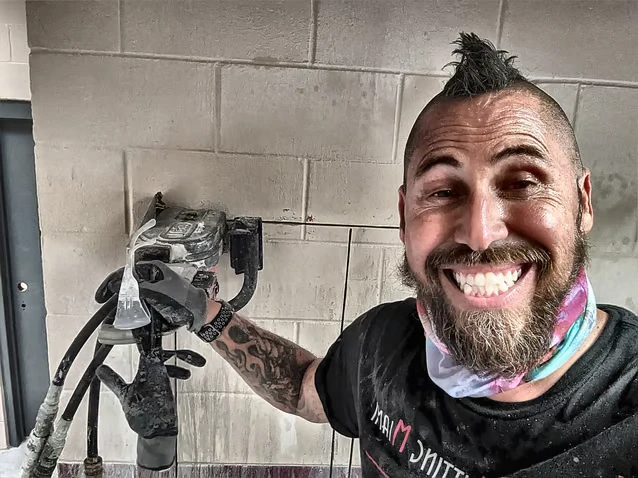
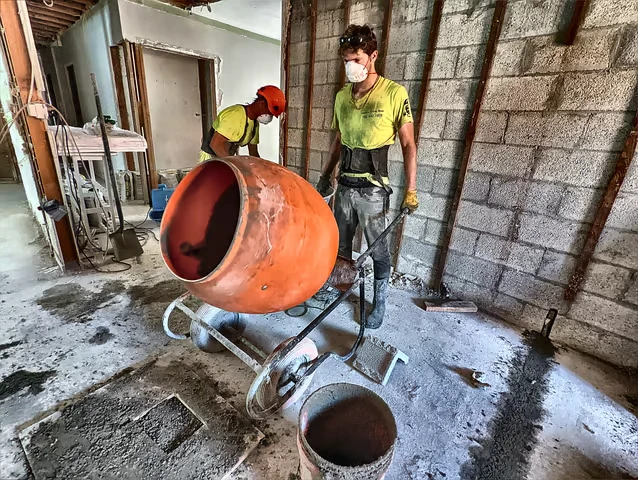
- Non-shrink repair mortar application using precision sawing templates
Combatting Thermal Expansion Cracks in Pool Decks
Miami’s 40°F daily temperature swings cause cumulative damage. Effective repair demands:
- V-cut cracks at 45° angle using diamond blades
- Install backer rod at 2/3 depth
- Inject polyurethane resin with 400% elongation capacity
Moisture Mitigation for Garage Slabs
High water tables require:
- Vapor barrier installation per ASTM E1745
- Controlled chipping for slope correction (minimum 2% grade)
- Crystalline waterproofing admixtures in repair mixes
Advanced Corrosion Inhibition Techniques
Galvanic anode systems outperform epoxy coatings in tidal zones:
- Install zinc anodes at 4′ intervals
- Connect to rebar via 14 AWG HMWPE wire
- Monitor potential with Cu/CuSO4 reference electrode
Slab Stabilization for Sinkhole Areas
Limestone voids demand:
- Polyurethane foam injection at 300 PSI
- Slab jacking with 1/8″ lift increments
- Continuous laser level monitoring
UV-Resistant Surface Treatments
Standard sealers degrade in 6 months. Use:
- Silane-siloxane blends (minimum 5% solids)
- Aliphatic urethane topcoats
- Application at 300 SF/gallon rate
All repairs require 72-hour cure time with relative humidity maintained below 70%. Never apply materials when temperatures exceed 90°F surface temp.