What Nobody Tells You About the Site Before the First Load of Fill Arrives
Every week in Miami-Dade and Broward counties, homeowners and commercial property managers decide to fill a swimming pool with dirt and reclaim the yard space. On paper, it seems like a straightforward haul job — bring in fill material, dump it in the hole, compact it, and done. In practice, the moment you start evaluating the actual site, the complexity multiplies fast. Confined concrete shells, zero equipment clearance, drainage complications, and structural wall conditions turn what looks like a simple backfill into a multi-phase operation that demands serious pre-planning. This post breaks down the real site logistics, the confined space challenges, and the access limitations that define every pool abandonment project we take on.
Evaluating the Concrete Shell Before Any Fill Material Is Ordered
The gunite or shotcrete shell of a residential swimming pool is typically 6 to 8 inches thick with a steel rebar matrix embedded throughout. Before you can responsibly fill a swimming pool with dirt, that shell has to be evaluated for its current structural condition. Cracked walls, delaminated plaster, failing bond beams, and corroded rebar all affect how the fill will settle over time. A compromised shell that isn’t properly addressed before backfilling will create voids, differential settlement, and long-term ground instability — which is a serious liability issue on any property.
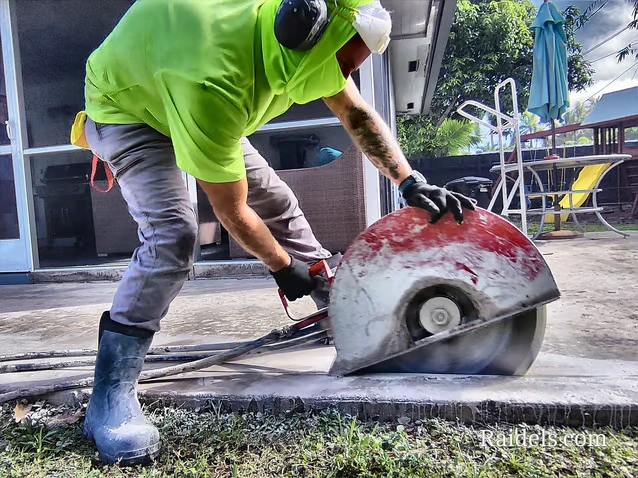
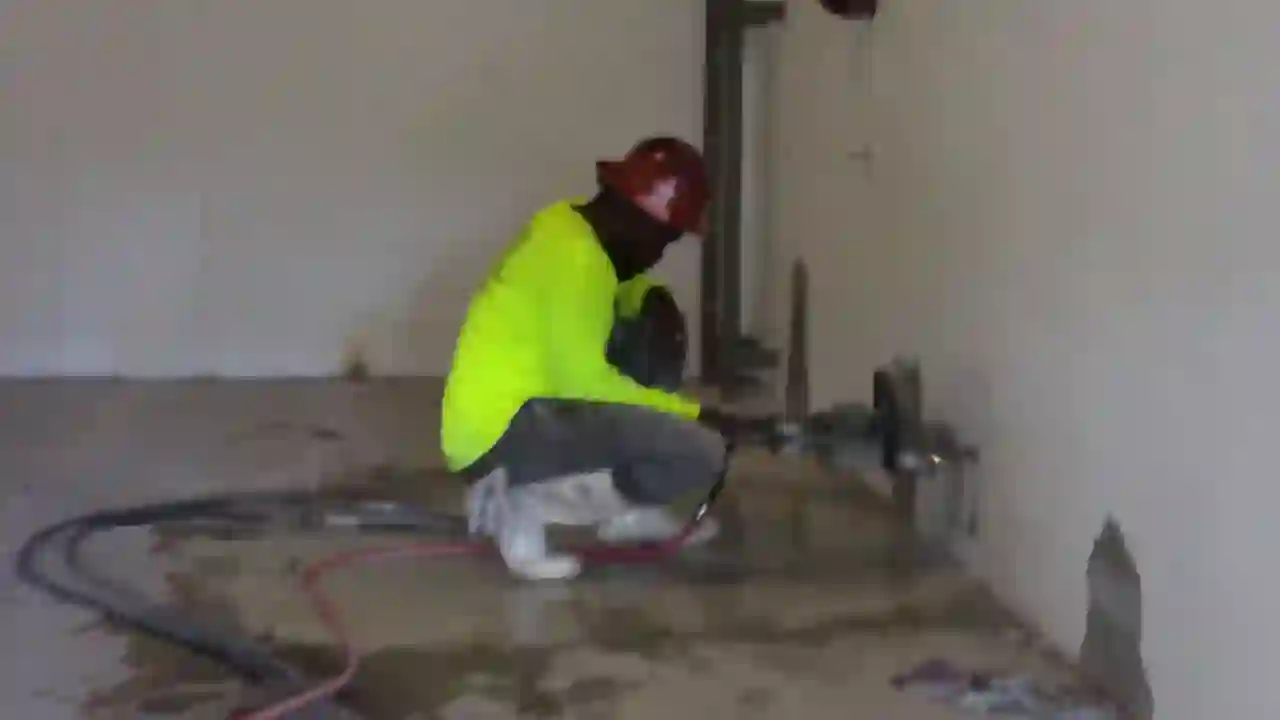
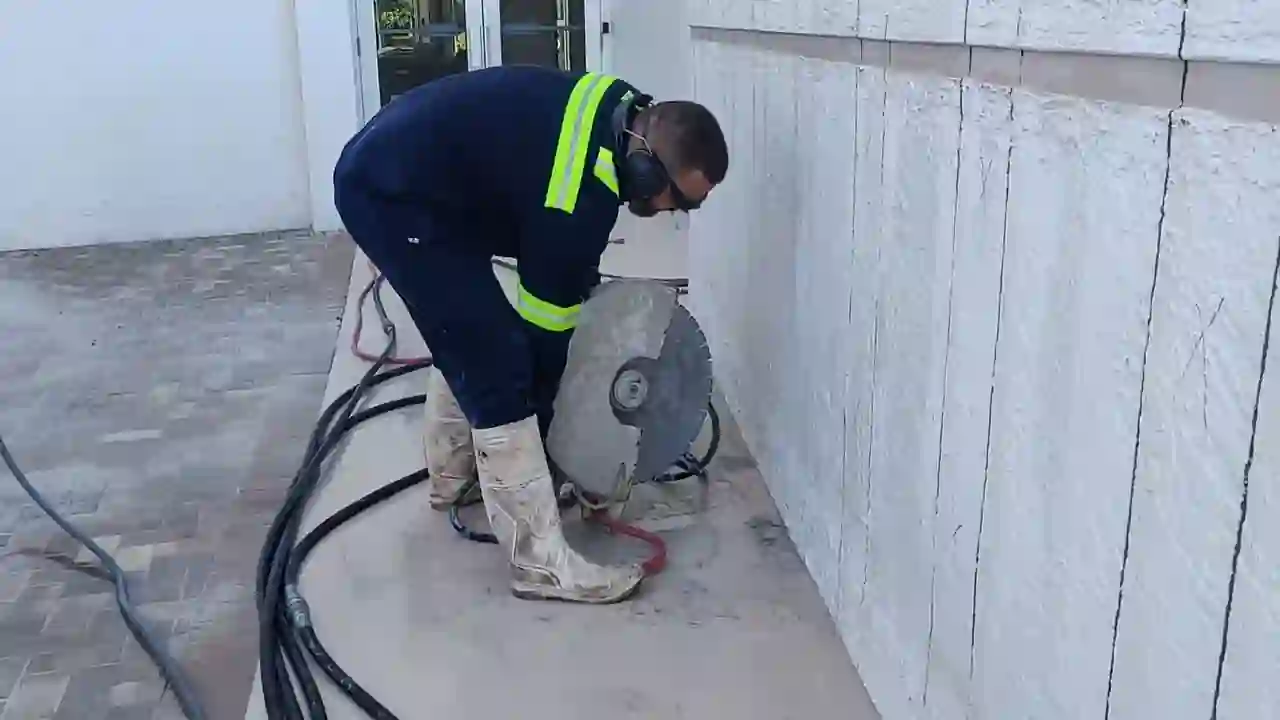
The standard industry practice, and what most municipalities in Miami require for permitted pool abandonments, is to perforate the pool floor with drain holes before filling. This prevents hydrostatic pressure from building up beneath the fill material. Those drain holes need to be cut or core-drilled at specific intervals — typically every 8 to 10 square feet across the floor slab. That’s a confined space operation with a concrete saw or core drill working inside a structure that was never designed for worker access with power equipment. Understanding the cutting techniques appropriate for this environment is critical — you’re not using the same blade speed or feed rate you’d use on a flat slab in an open warehouse.
Confined Space Hazards Inside a Drained Pool Shell
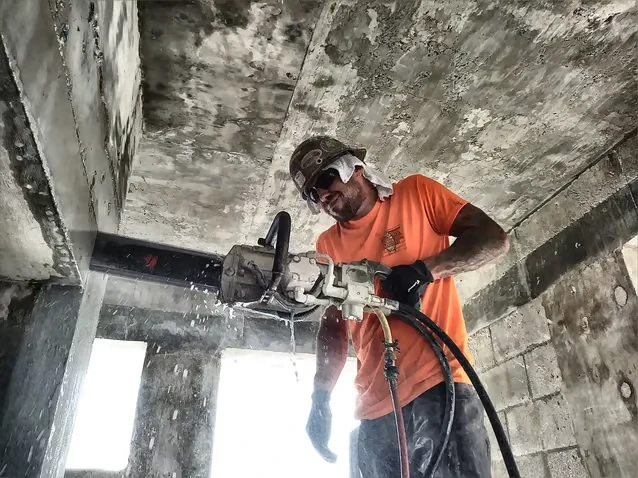
A drained swimming pool is classified as a permit-required confined space under OSHA 29 CFR 1926.1203 when the work involves hazardous atmospheres, engulfment risk, or restricted means of entry and exit. In Miami’s climate, an enclosed gunite shell that has been holding water can harbor hydrogen sulfide gas from algae decomposition, carbon monoxide from adjacent equipment, and dangerously low oxygen levels if the space isn’t ventilated before workers enter.
When our crews are running electric or gas-powered cutting equipment inside a pool shell, atmospheric monitoring is mandatory. We use continuous gas detectors for O2, CO, H2S, and LEL readings. Forced-air ventilation is set up before entry. A competent person monitors from the deck level at all times. These aren’t bureaucratic checkboxes — in a 5-foot-deep shell with vertical walls and a single ladder as the only exit, a sudden atmosphere change is a fatal event if the crew isn’t prepared.
The geometry of the pool itself creates secondary hazards. Curved walls, the hopper at the deep end, and the transition slopes between shallow and deep sections all create unstable footing for workers operating rotary hammer drills or walk-behind saws. Equipment has to be rigged carefully, and in many cases, hand-held core drilling replaces walk-behind cutting simply because the floor geometry won’t support a wheeled machine safely. These are the kinds of access limitations in concrete work that require experienced judgment, not just equipment.
Tight Perimeter Access and Equipment Staging Constraints
The second major site logistics problem is getting fill material and equipment into the yard at all. A significant percentage of residential pools in Miami were built when the homes were new, and the landscaping, fencing, and structures that have grown up around them since then have effectively landlocked the pool from any practical equipment access. We regularly encounter sites where the usable gate width is 36 to 42 inches — enough for a wheelbarrow, not enough for a skid steer or mini-excavator.
When a standard concrete or block wall fence surrounds the property, the only realistic option is a temporary fence panel removal or a controlled fence breach. We’ve worked alongside fence contractors on dozens of jobs where a section of concrete fence had to be carefully removed to create a haul route wide enough for a Bobcat or compact track loader. That temporary opening has to be planned into the project schedule, permitted if required by the municipality, and restored to its original condition after fill operations are complete. It adds time and cost, but it’s the difference between a project that gets done right and one that relies entirely on manual labor for hundreds of tons of fill.
On commercial properties — hotels, apartment complexes, HOA communities — the constraints are even more pronounced. Utilities, irrigation lines, lighting conduit, and gas lines are often buried in the areas where equipment needs to travel. A pre-dig utility mark-out through Sunshine 811 is required, but in South Florida’s densely developed urban core, private utilities that aren’t registered with the state system are everywhere. Ground-penetrating radar (GPR) scanning of the haul path before equipment moves is standard practice on any commercial pool abandonment we manage.
Sequencing the Fill Operation to Prevent Wall Blowout
One of the most technically critical aspects of filling a swimming pool with dirt is the fill sequencing. Pool walls — particularly older gunite shells — are designed to resist hydrostatic pressure from the outside when the pool is empty, and water pressure from the inside when the pool is full. They are not designed to resist asymmetric lateral earth pressure from fill material being loaded unevenly on one side.
If fill is dumped into one end of the pool and allowed to build up before the other side is filled, the lateral pressure differential can crack or displace the pool wall. On sites with restricted access where fill can only be introduced from one direction, this is a genuine structural risk. The solution is controlled lifts — fill is introduced in 12 to 18-inch compacted lifts across the entire floor simultaneously, maintaining uniform height across the shell at all times. On sites where equipment access is limited to one corner, this requires careful hand-spreading and compaction with plate compactors before the next lift is added.
Proper compaction is also essential for long-term ground stability. Loose fill in an abandoned pool shell will settle unevenly for years, creating depressions and surface cracking in whatever hardscape or landscaping is installed above it. We specify engineered fill material — typically clean, well-graded granular fill with less than 12% fines — and require compaction testing at every other lift on commercial projects. This is the foundation work that prevents water damage and drainage failures years after the project is complete.
Partial Demolition vs Full Shell Removal and Why It Changes Everything
Miami-Dade County’s building code requires that the top 12 to 18 inches of the pool shell be demolished and removed before fill is placed. This prevents a void from forming at the surface level as the fill settles below the original shell rim. That demolition work — breaking out the bond beam, the upper wall section, and the deck coping — is concrete chipping and breaking work that generates significant debris and dust in a confined area immediately adjacent to the home’s foundation, windows, and HVAC intakes.
On some projects, the decision is made to remove the entire shell rather than fill it in place. Full removal eliminates long-term settlement risk and gives the property owner a clean slate, but it dramatically increases the scope of work. Excavation, concrete breaking, hauling, and backfill all expand in scale. The access hatch and confined space entry planning that applies to partial fills becomes even more critical during full removal, because the excavation walls are now exposed and the risk of cave-in must be managed with proper shoring or sloping.
Permit Requirements and Final Inspection Benchmarks in Miami-Dade
A permitted pool abandonment in Miami-Dade requires a demolition permit, a site plan showing the pool location relative to property lines and structures, and a fill specification that meets the county’s compaction requirements. Final inspection typically includes a visual check of the fill surface, confirmation that the pool shell has been perforated for drainage, and documentation that the top section of the shell has been demolished to the required depth.
Unpermitted pool fills are common, but they create serious problems at the point of sale. Title companies and lenders are increasingly requiring proof of permitted demolition for any pool that appears on a survey as “abandoned.” An unpermitted fill that settles unevenly or creates drainage issues also becomes a code enforcement matter that falls back on the current property owner — not the contractor who did the work years earlier.
The bottom line is this — filling a swimming pool with dirt is a legitimate, cost-effective way to reclaim yard space and reduce liability, but the site logistics, confined space requirements, and structural sequencing involved are far more complex than the phrase “fill it with dirt” suggests. Every site is different, every shell has a different condition, and every access constraint requires a different equipment and staging solution. Getting this right from the start is the only way to ensure the finished grade holds, the drainage works, and the permit closes without issue.