Why Reinforced Concrete Pipe Repair Is One of the Highest-Risk Operations in Underground Construction
Let’s be direct: reinforced concrete pipe (RCP) repair is not a routine maintenance task. It sits at the intersection of confined space entry, high-powered cutting equipment, structural instability, and airborne hazards that can permanently injure or kill workers who aren’t operating under a disciplined safety framework. In Miami’s aging stormwater and sewer infrastructure — much of it installed during the construction booms of the 1960s through 1990s — RCP repair work is increasingly common, and the hazard profile is serious. Whether you’re patching a spalled section, cutting out a failed joint, or removing a collapsed barrel to install a liner, every phase of this work demands a site-specific safety plan that goes well beyond a generic toolbox talk.
The challenges inherent in RCP repair don’t just come from the material itself — though cutting through steel-reinforced pipe walls presents its own set of blade and equipment demands. They come from the environment: below-grade, often partially submerged, frequently in active flow, and surrounded by unstable native soil that has been compromised by the same pipe failure that brought you there in the first place. Understanding the full hazard matrix before mobilizing is not optional. It is the operational foundation.
OSHA Regulatory Framework Governing RCP Repair Operations
OSHA’s standards don’t address reinforced concrete pipe repair as a single discrete activity, which is precisely why so many contractors get it wrong. The work triggers multiple overlapping regulatory requirements simultaneously. Your safety officer needs to be fluent in all of them before anyone descends into that excavation.
29 CFR 1926 Subpart P — Excavations and Trenching
Any RCP repair that requires open-cut excavation to expose the pipe triggers Subpart P requirements. In Miami’s predominantly sandy, Class C soil conditions, trench walls must be sloped at a minimum 1.5H to 1V ratio, or shored with an engineered system. Do not assume that a pipe that has been in place for decades has stabilized the surrounding soil — pipe failure often correlates directly with soil saturation and void formation, meaning the ground adjacent to your work zone may be in its most unstable state at the exact moment you’re excavating. A competent person must classify soil conditions daily, and after any rain event, that classification resets.
29 CFR 1910.146 — Permit-Required Confined Spaces
Any RCP with an internal diameter of 24 inches or greater that workers enter — even partially — is a permit-required confined space under OSHA’s definition. This means a written entry permit, atmospheric testing for oxygen levels (19.5%–23.5% acceptable range), combustible gases (below 10% LEL), and toxic contaminants including hydrogen sulfide and carbon monoxide before entry and continuously during occupancy. An attendant must remain stationed at the entry point at all times. A rescue plan with non-entry retrieval capability must be in place before the permit is signed. In active sewer lines, methane accumulation is not a theoretical risk — it is an operational certainty that must be managed with continuous four-gas monitoring and forced-air ventilation.
29 CFR 1926.1153 — Respirable Crystalline Silica in Construction
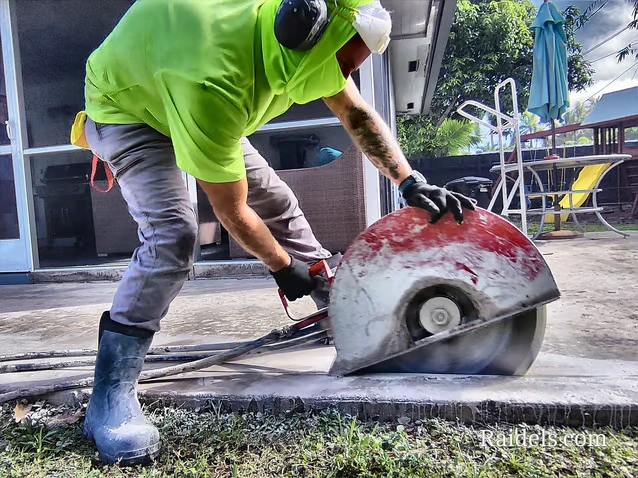
Cutting, grinding, or jackhammering reinforced concrete pipe generates respirable crystalline silica at concentrations that can exceed the OSHA Permissible Exposure Limit (PEL) of 50 micrograms per cubic meter within minutes of work beginning. In a confined pipe environment, those concentrations build rapidly. The Table 1 controls for cutting concrete with hand-held grinders or saws require wet methods or local exhaust ventilation (LEV) at the tool, and in confined spaces, both are mandatory simultaneously. Workers must be enrolled in a medical surveillance program if they are exposed at or above the action level (25 µg/m³) for 30 or more days per year. This isn’t bureaucratic overhead — silicosis is irreversible and fatal.
Pre-Entry Hazard Assessment Protocol for RCP Repair Sites
Before any worker approaches the pipe opening, a structured hazard assessment must be completed and documented. The following sequence reflects best practice for Miami-area RCP repair operations, where groundwater intrusion, hydrogen sulfide from organic sediment, and structural compromise from root intrusion or corrosion are the dominant risk drivers.
- CCTV Pre-Inspection: Deploy a camera inspection system through the pipe from both upstream and downstream access points. Identify the full extent of damage, presence of standing water, active flow velocity, and any evidence of barrel collapse or joint separation that could create structural instability during repair operations.
- Atmospheric Pre-Testing: Test the confined space atmosphere from the surface before any entry. Use a calibrated four-gas monitor lowered into the space on a lanyard. Record readings and verify they are within acceptable ranges before issuing the entry permit.
- Ventilation Establishment: Install a forced-air blower capable of achieving at least 20 air changes per hour within the pipe segment being repaired. Continuous monitoring must confirm that ventilation is maintaining acceptable atmospheric conditions throughout the work period.
- Structural Assessment: A qualified engineer or experienced competent person must evaluate the pipe’s structural integrity before workers enter. Severely spalled or cracked sections may require temporary shoring before repair work begins.
- Isolation and Flow Control: Coordinate with the relevant utility authority to reduce or isolate flow. In active stormwater systems, this requires weather monitoring — any rainfall event during operations must trigger immediate evacuation protocols.
- PPE Verification: All workers entering the space must be equipped with a full-face air-purifying respirator rated for silica and H2S, chemical-resistant gloves, waterproof boots, hard hat rated for confined space use, and a retrieval harness connected to a mechanical retrieval system at the entry point.
Diamond Blade Selection and Rebar Cutting Protocols Inside RCP
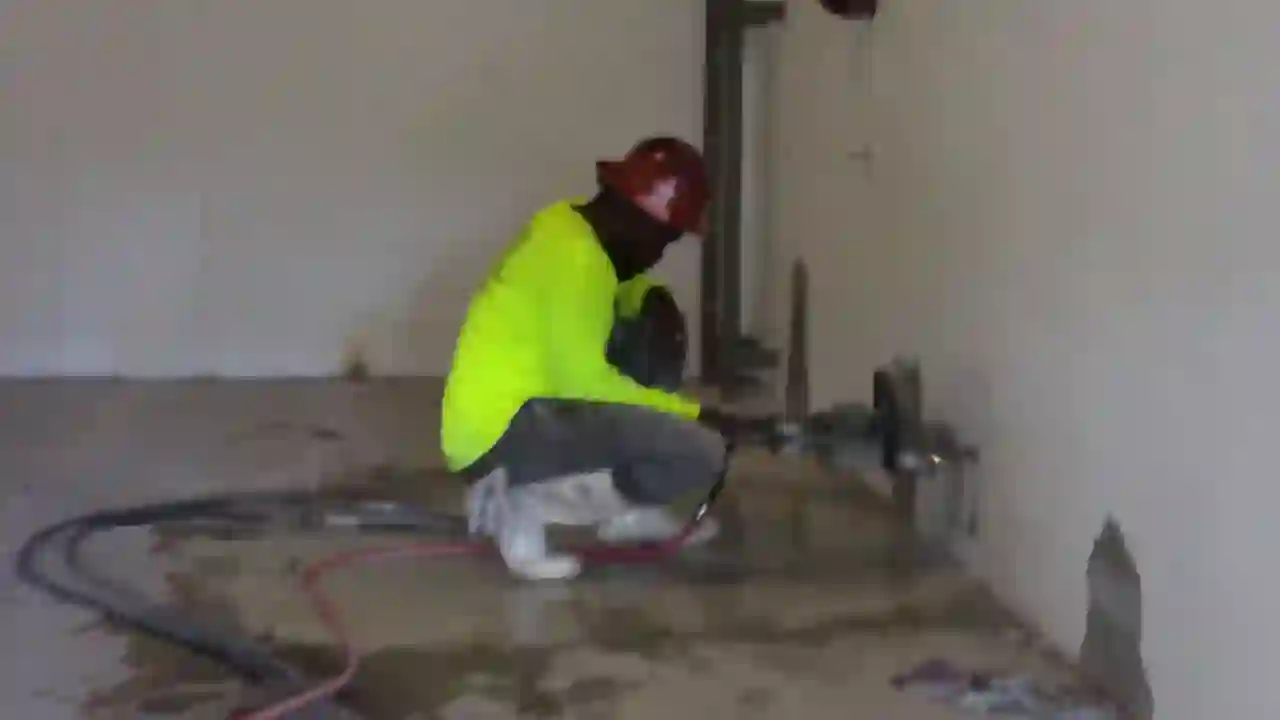
The cutting phase of RCP repair introduces a concentrated set of mechanical and airborne hazards. Diamond blade performance against rebar is a critical variable — using a blade not rated for steel reinforcement in a confined, wet environment creates blade segment loss risk, which in a pipe is a projectile hazard with no escape vector. Blades must be specifically rated for green concrete or reinforced concrete with steel, and operators must visually inspect blade segments before every use. Any blade showing segment loss, cracking at the core, or deformation must be removed from service immediately.
Wet cutting is mandatory in confined pipe environments for both silica control and blade cooling. The water delivery system must be confirmed operational before cutting begins — dry cutting in an RCP is not an acceptable workaround under any circumstances. The cutting operator must be positioned to avoid standing in the water runoff path, which will carry silica-laden slurry. That slurry must be collected and disposed of as a regulated waste material, not flushed into the active storm or sewer system.
This level of precision in infrastructure repair supports long-term community resilience — protecting both the workers on-site and the downstream public from the consequences of improper waste handling and structural failure.
Emergency Response Readiness Specific to RCP Repair Environments
Standard job-site first aid protocols are insufficient for confined space RCP repair. Emergency response planning must account for the specific extrication challenges of a pipe environment. The rescue plan must be written, rehearsed, and posted at the entry point. Key elements include a mechanical retrieval system (tripod and winch) rated for the worker’s weight plus equipment, a standby rescue team that has been trained in confined space rescue (not just first aid), and pre-established communication with the nearest hyperbaric facility if hydrogen sulfide exposure is a credible risk in sewer applications.
All work performed in these conditions — from stormwater pipe repair to structural demolition projects above grade — demands the same disciplined approach to pre-task planning. The hazard changes; the rigor does not.
Workers must also be briefed on the specific symptoms of acute silica exposure, hydrogen sulfide poisoning, and heat stress — all of which are elevated risks in Miami’s climate when working in enclosed underground environments. Supervisors must know the threshold at which work stops and medical evaluation begins. That threshold is not “when someone collapses.” It is when any worker reports dizziness, chest tightness, or unusual fatigue.
Documentation, Permit Management, and Post-Repair Verification
Every RCP repair operation must generate a complete documentation package: the confined space entry permit, atmospheric monitoring logs, equipment inspection records, soil classification documentation, and the post-repair structural inspection report. This documentation is not administrative overhead — it is your legal protection in the event of an OSHA inspection or a worker’s compensation claim, and it is the institutional record that informs future maintenance decisions on the same infrastructure asset.
Post-repair CCTV inspection confirms that the repair has restored structural integrity and that no secondary damage was introduced during the cutting and patching process. This final verification step closes the safety loop and provides the asset owner with documented evidence of repair quality. For contractors operating in Miami’s highly competitive infrastructure market, that documentation record is also a business differentiator. Crews that operate with this level of professional discipline and accountability build the kind of client relationships that generate repeat work on the most demanding projects in South Florida.
Reinforced concrete pipe repair will always carry inherent risk. The goal is not to eliminate risk — it is to identify, quantify, and control every hazard through systematic protocol so that the work gets done correctly, the infrastructure gets restored, and every worker returns home at the end of the shift. That is the standard. Anything less is unacceptable.