Breaking Down the Real Cost of a Demolition Pool Project in Miami-Dade
When a homeowner or general contractor calls us about a demolition pool job, the first question is almost always the same: “What’s it going to cost?” The honest answer is that pool demolition pricing is a layered technical estimate — not a flat rate pulled from a price sheet. In Miami-Dade County specifically, factors like soil saturation, reinforcement density, slab thickness, site access, and permitting requirements all stack on top of each other to produce a final number. Understanding how those layers interact is what separates a credible bid from a guess. This post walks through every major cost driver, realistic timeline windows, and the bidding methodology we use on every demolition pool project we take on.
Partial Removal vs. Full Demolition — The Bid Starts Here
Before any measurements are taken, the first fork in the road on any demolition pool estimate is whether the scope calls for a partial removal (also called a “fill-in”) or a complete structural demolition and haul-off. These two scopes carry significantly different cost ceilings.
A partial removal involves breaking the top 18–24 inches of the pool shell, punching drainage holes through the bottom slab, and backfilling with compacted aggregate and native soil. In Miami-Dade, partial removals typically run between $5,000 and $9,500 for a standard residential pool in the 12,000–18,000 gallon range. The lower cost comes from reduced concrete haul-off volume and faster machine time.
A full demolition means complete excavation and removal of all concrete, rebar, plumbing stubs, and decking — down to undisturbed subgrade. Full removals in this market range from $10,000 to $22,000+ depending on size, depth, and accessibility. If the property is being redeveloped or the pool sits under a planned structure, full removal is non-negotiable, and that drives the bid into the upper tier. For properties with specific environmental or drainage compliance requirements, proper backfilling protocols for Miami-Dade County must be factored into the scope from day one.
Concrete Volume and Reinforcement Density as Primary Cost Multipliers
Once the removal type is established, the next calculation is raw concrete mass. A standard gunite or shotcrete pool shell in South Florida is typically 6 to 8 inches thick on the walls and 8 to 12 inches on the floor slab, with rebar spacing at 12 inches on center in both directions. A 15×30 foot pool at 5.5 feet average depth contains roughly 18 to 24 cubic yards of reinforced concrete — and that’s before accounting for the deck, coping, and any attached spa structure.
Concrete disposal in Miami-Dade runs approximately $75 to $110 per ton including transport and tipping fees at regional recycling facilities. Reinforced concrete averages about 4,050 lbs per cubic yard, so a 22-cubic-yard pool shell produces roughly 44 tons of material — that’s a disposal line item between $3,300 and $4,840 before a single saw cut is made.
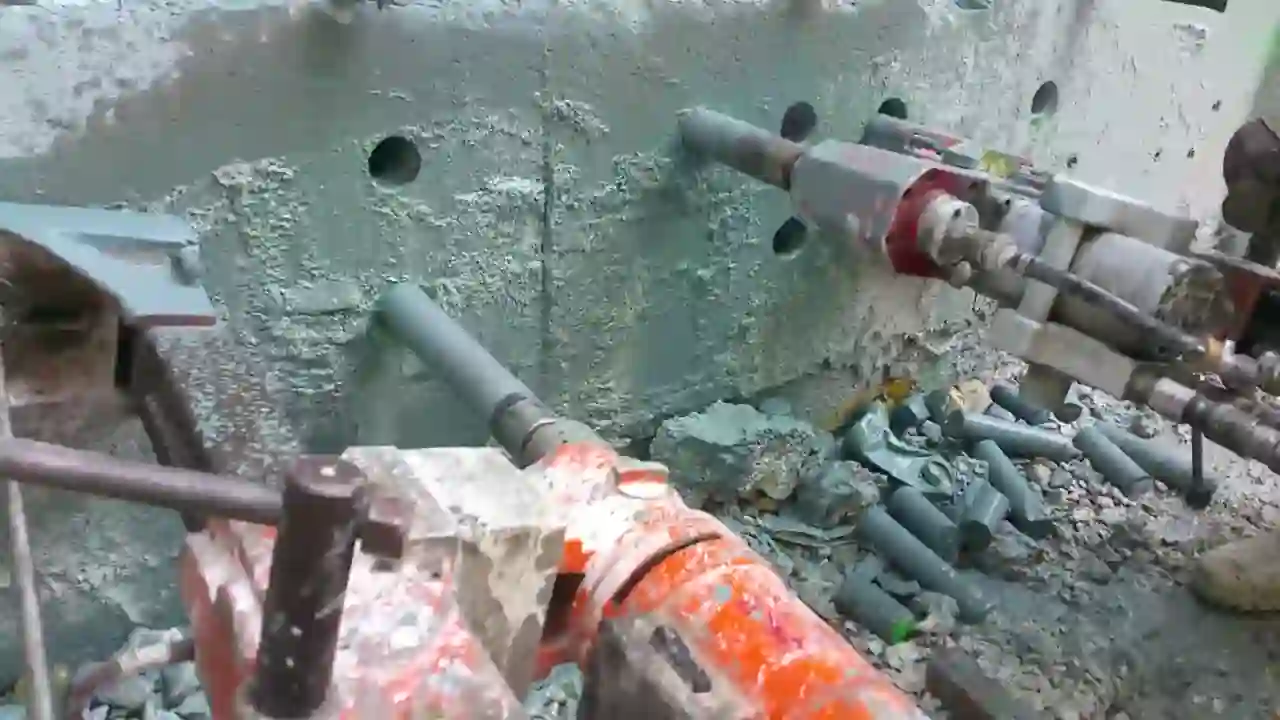
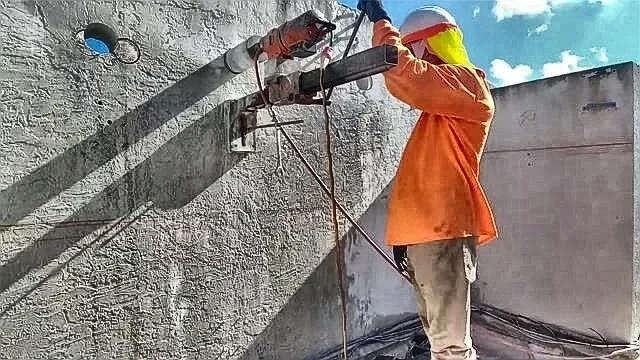
Rebar density matters because it directly affects cutting speed and blade consumption. Pools built before 1990 often used #4 rebar at 6-inch spacing — nearly double the steel mass of modern builds. When our estimators encounter older pools, we account for increased diamond cutting time in Miami and higher consumable costs in the line items. A heavily reinforced shell can add $800 to $1,500 to the cutting phase alone.
Site Access Constraints and Equipment Selection on Demolition Pool Bids
Equipment access is one of the most underestimated cost drivers in pool demolition estimating. In Miami’s older residential neighborhoods — Coral Gables, South Miami, Coconut Grove — pools are frequently surrounded by mature landscaping, narrow side yards, and fencing that limits machine entry to openings under 36 inches. When a standard excavator or skid steer can’t reach the work zone, the job shifts to handheld hydraulic breakers, electric chipping hammers, and manual concrete removal — all of which dramatically increase labor hours.
A job that takes a mini-excavator with a hydraulic hammer 6 hours to complete might require a two-man hand-demo crew 18 to 24 hours to match. At prevailing labor rates of $85 to $120 per hour per technician, that access penalty can add $2,000 to $4,000 to the total bid. Estimators who don’t walk the site before bidding routinely get burned on access issues — it’s one of the most common sources of change orders in this trade.
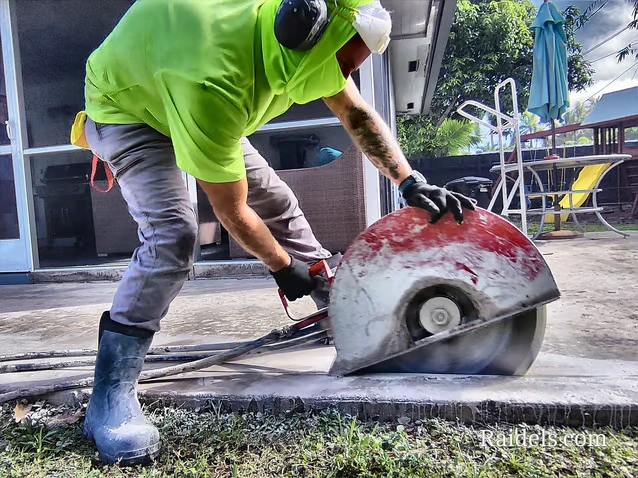
For pools adjacent to structures, structural concrete sawing techniques are used to section the shell into manageable panels without transmitting shock loads to the home’s foundation. This is especially relevant for two-story house properties where foundation proximity requires controlled cutting rather than impact demolition.
Permitting Timelines and Their Effect on Project Scheduling
Miami-Dade County requires a demolition permit for pool removal, and that permit process has a direct effect on your project timeline. Standard residential demolition permits for pool removal are typically issued within 10 to 21 business days through the online portal, assuming clean documentation. However, properties in historic districts, flood zones (AE or VE designation), or with active code violations can see permit timelines stretch to 45 to 60 days.
From a bidding standpoint, contractors should always confirm the permit status before committing to a mobilization date. We include a permit procurement line item in every bid — typically $350 to $650 covering application fees, as-built documentation, and coordination with the county inspector for the final compaction sign-off. Skipping this line item in a low-ball bid doesn’t make the cost disappear — it just means the contractor absorbs it.
Timeline from signed contract to project completion on a standard full-removal demolition pool job in Miami-Dade runs approximately 3 to 6 weeks total — 2 to 3 weeks for permitting, 1 to 3 days for active demolition, and 2 to 5 days for backfill, compaction testing, and site restoration.
What Separates a Credible Bid from a Low-Ball Number
The demolition pool market in South Florida has no shortage of unlicensed operators willing to quote $3,500 for a job that legitimately costs $12,000. Understanding what a compliant, technically sound bid includes helps owners and GCs evaluate competing proposals accurately.
- Permit fees and inspection coordination — always a separate line item, never bundled invisibly
- Concrete disposal and haul-off — priced by estimated tonnage, not a flat “dump fee”
- Compaction testing — required by Miami-Dade for permitted demolitions; typically $200–$400 for a third-party geotechnical report
- Slurry and water containment — required on wet cuts near drainage or water features
- Equipment mobilization — mini-excavator or full-size machine, delivery and fuel
- Rebar recycling credit — legitimate contractors pass through scrap steel credits that can offset $150–$400 of total cost
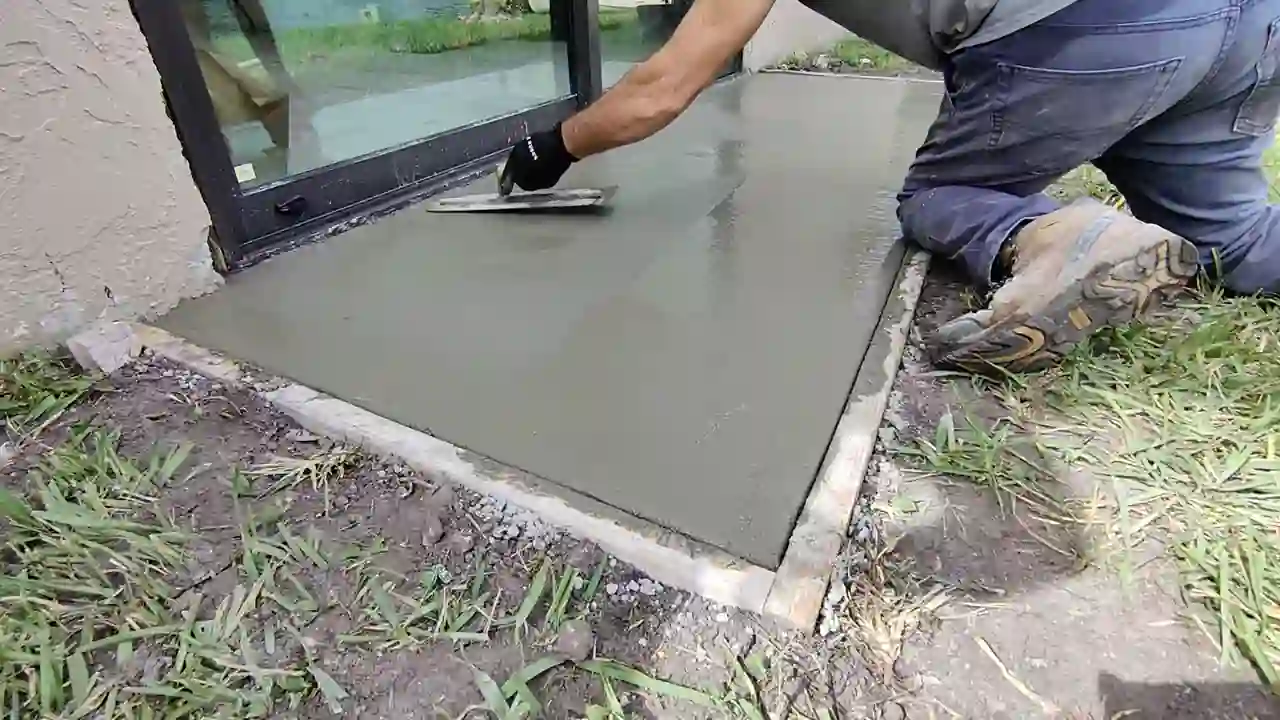
- Site restoration — grading, sod, or hardscape repair depending on scope
The science of accurate concrete estimation is rooted in material physics and site-specific variables — if you want to understand how concrete behaves under cutting and breaking loads, the science behind concrete cutting explains the mechanics that drive every line item in a professional demolition bid.
Safety Planning as a Bid Component, Not an Afterthought
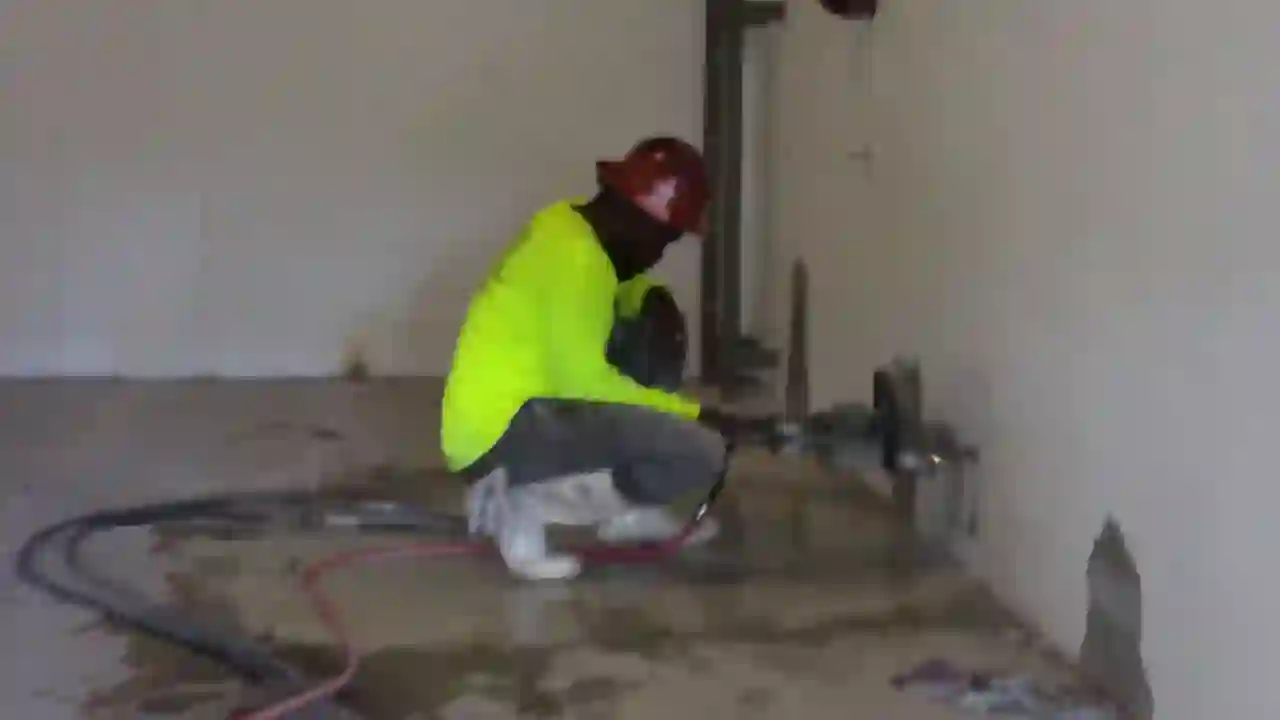
Every demolition pool project in Miami-Dade requires a site-specific safety plan, and that plan has real cost implications. Utility locates (Sunshine 811), perimeter fencing, dust suppression, and worker PPE are all mandatory components of a compliant job. Safety compliance on concrete demolition sites isn’t optional — and any bid that doesn’t account for it is either cutting corners or hiding the cost elsewhere.
Silica dust control is a particular concern on dry-cut pool demolition work. OSHA’s Table 1 requirements for handheld grinders and chipping hammers mandate wet methods or HEPA vacuum systems on all cutting operations. Compliant dust suppression equipment adds approximately $300 to $600 to job cost — a small number relative to total project value, but one that separates professional operators from those working outside regulatory compliance.
Final Bid Checklist for Demolition Pool Projects in Miami-Dade
When reviewing or preparing a demolition pool bid, these are the technical checkpoints that determine whether a number is defensible:
- Pool dimensions, shell thickness, and estimated concrete volume confirmed on-site
- Rebar spacing and gauge documented from original plans or field inspection
- Site access width measured and equipment type confirmed before bid submission
- Flood zone designation pulled from FEMA FIRM maps — affects permit complexity
- Utility locate completed or scheduled prior to mobilization
- Disposal facility confirmed with current tipping rate per ton
- Compaction testing vendor identified and quoted
- Permit timeline estimated based on current county processing backlog
- Scope of backfill and site restoration defined in writing
A demolition pool project priced correctly from the start avoids the change orders, schedule delays, and compliance issues that plague under-bid jobs. The numbers in this post reflect current market conditions in Miami-Dade County and are updated as material and disposal costs shift. If you’re putting together a bid or evaluating one, use this framework as your technical baseline — and call us if the scope requires a second set of experienced eyes.