Why Concrete Removal in Miami Is a Regulated Demolition Job, Not a Dumpster Rental Project
When homeowners and commercial property managers in Miami search for concrete removal, what they usually picture is a crew with jackhammers and a roll-off dumpster. That image represents maybe a third of what a compliant concrete removal job actually requires in Miami-Dade County. The rest involves permits you did not know existed, slurry containment protocols you have never heard of, and structural assessments that determine whether the slab you want removed is actually doing something you cannot afford to lose — like anchoring a retaining wall against hydrostatic pressure from a water table that sits less than two feet below grade in parts of Coral Gables. As a senior concrete contractor who has overseen removal projects from Homestead to Hallandale Beach, I can tell you that the difference between a $2,500 removal quote and a $9,000 removal quote is rarely about equipment. It is about what the cheaper contractor is choosing to ignore.
The Five Cost Drivers Behind Every Legitimate Miami Concrete Removal Bid
Before you accept any number, you need to understand what that number represents. A legitimate concrete removal bid in Miami breaks down into specific line items. A lump-sum number followed by the words “includes everything” is a bet the contractor is making against your willingness to read the fine print on your own liability exposure. Here is what actually drives the cost.
Slurry Generation and Disposal
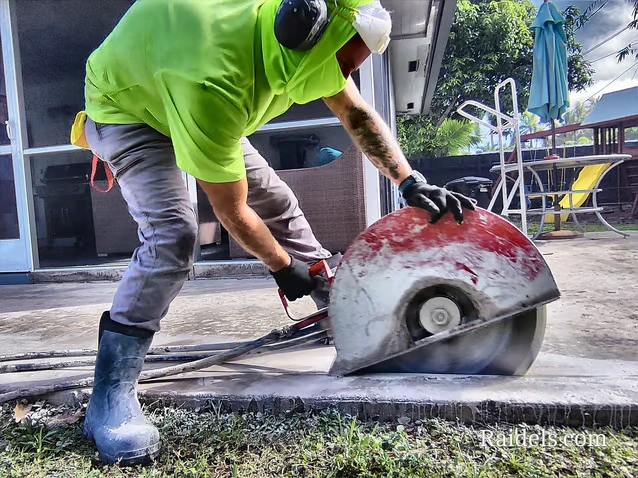
Any concrete removal that involves wet sawing — which is virtually all precision removal work — generates concrete slurry classified as industrial wastewater under the Clean Water Act. In Miami-Dade, that slurry cannot be washed into a storm drain, cannot be left to dry on-site without secondary containment, and cannot be disposed of in a standard construction dumpster without solidification and pH neutralization. A compliant contractor’s bid includes a slurry management line item that specifies containment method, disposal facility, and volume estimate. A non-compliant contractor’s bid ignores slurry entirely and bets that nobody from DERM drives by before the rain washes the evidence into the Biscayne Aquifer recharge zone beneath your property.
Section 406.3 and the Structural Surprise
Miami-Dade Building Code Section 406.3 governs concrete removal when the slab or structure being removed serves a structural function beyond its own dead load. This triggers an engineering assessment that most property owners never see coming. A 4-inch patio slab poured as a floating structure is simple. A 6-inch slab that also serves as the lateral restraint for an adjacent pool shell or retaining wall is a completely different project — and the price difference is not linear. The engineering assessment alone typically runs $800 to $2,500, and if the slab is determined to be structural, the removal scope expands to include engineered fill, compaction testing, and sometimes replacement with a non-structural surface that satisfies the same load-distribution requirements without the same mass.
I have seen homeowners sign a $3,000 removal contract only to have the crew stop work on day one when they discover the patio slab is structurally tied to the home’s stem wall foundation. The resulting change order added $7,500 to the project for a structural engineer, additional core drilling to isolate the slab from the foundation, and hand-demolition within 12 inches of the structure instead of machine removal. The original contractor was not trying to rip anyone off. They simply did not inspect the subsurface condition before bidding — and the homeowner paid for that oversight.
Disposal Weight and the Tipping Fee Math
Concrete weighs roughly 150 pounds per cubic foot. A standard 10-foot by 10-foot patio slab at 4 inches thick contains 33 cubic feet of concrete — approximately 5,000 pounds, or 2.5 tons. At Miami-Dade disposal rates for C&D debris, tipping fees alone for that modest patio run $150 to $300. Scale that to a 20-foot by 40-foot driveway at 6 inches thick, and you are looking at 20 tons of concrete weighing 40,000 pounds. The tipping fees alone exceed $1,200, and the transportation logistics require multiple trips with a heavy-haul dump truck or a single trip with a roll-off that costs more in fuel and permitting than the tipping fees combined. Contractors who quote a flat “per job” disposal rate without stating the estimated tonnage are either eating unpredictable costs — which means they will cut corners elsewhere — or they have not actually calculated the tonnage, which means the number they gave you is fictional.
What Happens When You Remove Concrete in a Flood Zone Without a Site Drainage Plan
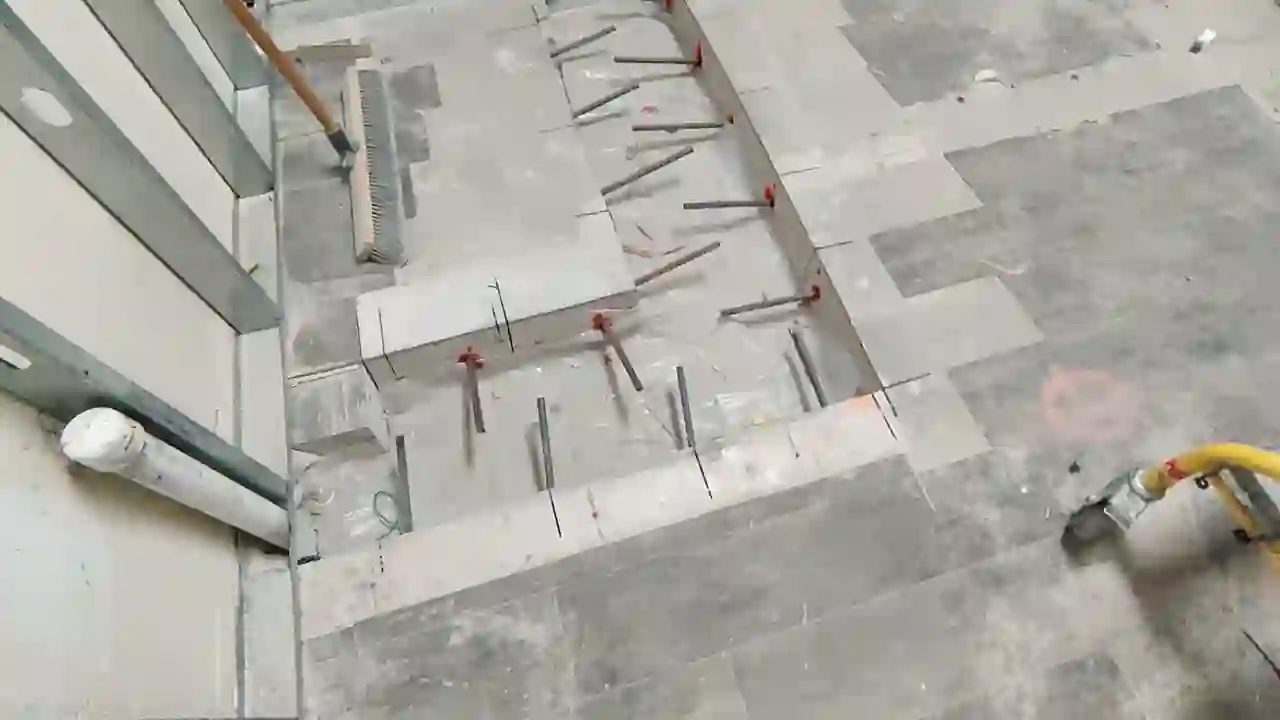
Miami-Dade County contains over 300,000 properties in FEMA-designated Special Flood Hazard Areas. If your property falls within a flood zone — and most properties east of US-1 and a surprising number west of the Turnpike do — the removal of any impervious surface triggers a stormwater retention review under Chapter 24 of the Miami-Dade Code. Removing a concrete driveway, patio, or walkway changes the site’s impervious area ratio, which in turn changes the site’s stormwater runoff profile, which in turn may require the installation of subsurface retention systems or permeable replacement surfaces at costs that can exceed the removal itself. A contractor who works regularly in South Florida concrete work will flag this before bidding. A contractor who usually works in Orlando will not think to check the flood zone map — and you will discover the issue during a code enforcement inspection triggered by your neighbor’s complaint about standing water where your patio used to be.
Access Constraints That Double the Labor Cost Without Changing the Scope
South Florida concrete removal jobs live or die on access logistics. A 40-yard driveway in a suburban Kendall cul-de-sac with a 50-foot setback and a circular drive provides more than enough room for a Bobcat, a dump truck, and a concrete pulverizer attachment to operate in sequence. The same 40-yard driveway in a zero-lot-line Coconut Grove property with a 6-foot side-yard easement, mature oak trees protected by Miami-Dade tree preservation ordinances, and an HOA that prohibits equipment staging before 8:00 AM might require hand-demolition with electric breakers and a conveyor system to move debris 60 feet from the work area to a street-parked dump truck. The scope has not changed — 40 yards of concrete is 40 yards of concrete — but the labor cost just multiplied by a factor of three. Access is not a footnote in a concrete removal bid. It is frequently the single largest cost variable on the entire project, and it is the variable that out-of-town contractors most consistently underestimate. Understanding what every site foreman needs to know about job-site constraints before any cutting begins is the difference between a project delivered on budget and a project that doubles in cost after day one of mobilization.
What a Compliant Miami Concrete Removal Bid Looks Like — Line by Line
If you take nothing else from this article, take this checklist. When you receive a concrete removal bid in Miami-Dade County, these items should be individually stated. A contractor who refuses to provide this breakdown is not protecting trade secrets. They are protecting their ability to charge you for problems they should have identified before quoting.
- Site assessment and utility locating: Sunshine 811 ticket number, GPR scan if post-tension cables are suspected, and a written access-path verification for all equipment.
- Removal method specification: Mechanical (Bobcat with breaker attachment), hydraulic (hand-held breakers), or hand-demolition (electric chipping hammers, sledge). Method determines speed, cost, and vibration risk to adjacent structures.
- Slurry management system: Containment method, disposal facility name, pH neutralization protocol, and estimated slurry volume. This line item is non-optional for any removal involving wet cutting.
- Debris disposal: Estimated tonnage, tipping fee rate per ton, facility name, and number of trips or roll-off containers included.
- Permitting: Municipal permit number for structural demolition if required, right-of-way permit for street-staged equipment, and any applicable DERM or water management district notifications.
- Site restoration: Post-removal grading, fill compaction testing if required, and surface restoration to pre-work condition — not “gravel and walk away” unless gravel was what was there before.
- Certificate of Insurance: Project-specific COI with the property address listed as additionally insured and concrete removal specifically classified under the contractor’s general liability policy.
None of these line items are negotiable in a compliant removal project. Contractors who omit them are not offering you a better deal — they are transferring the cost of compliance onto your property, your liability policy, and your relationship with the Code Enforcement officer who shows up because someone on Nextdoor reported slurry running into the street. Real Miami concrete removal is not about who can swing the biggest hammer. It is about who understands the regulatory and structural environment in which that hammer is being swung — and who prices the job accordingly before the first piece of concrete hits the ground.