Why Control Joints in Concrete Are the Most Underpriced Line Item in Flatwork Bids
Walk through any commercial parking lot, warehouse floor, or residential driveway in South Florida, and you’ll find the same mistake repeated in concrete after concrete slab — poorly planned, undercut, or completely missing control joints. Control joints in concrete aren’t decorative. They’re engineered stress-relief cuts that dictate where a slab cracks, rather than letting thermal expansion, shrinkage, and subgrade movement make that decision for you. When a contractor underestimates the scope of joint work on a bid, the project either bleeds money on rework or the client ends up with a slab that fractures randomly within 18 months. Neither outcome is acceptable. This post breaks down the real cost drivers, timeline expectations, and bidding variables that every project manager and estimator needs to understand before signing off on a concrete flatwork contract.
The Engineering Logic Behind Joint Spacing and Depth Requirements
Before you can price a control joint job accurately, you need to understand what the specs are actually demanding. The standard rule of thumb — joint spacing in feet should equal 2 to 3 times the slab thickness in inches — sounds simple until you factor in aggregate size, water-cement ratio, fiber reinforcement, and ambient cure conditions. A 5-inch slab in Miami’s humidity and heat behaves very differently than the same slab poured in a climate-controlled warehouse in Gainesville.
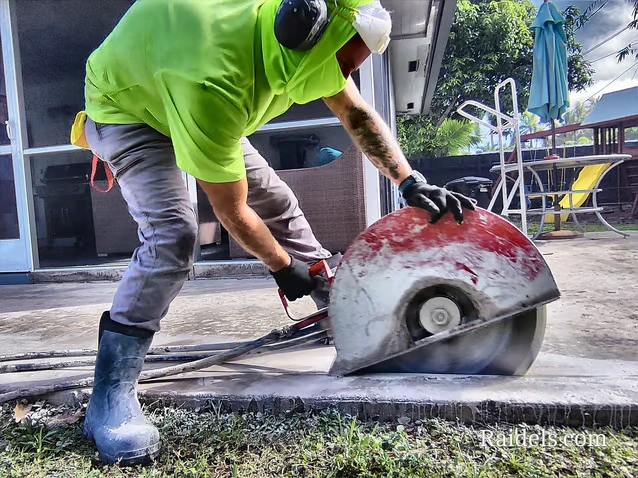
Depth is equally critical. A control joint must penetrate at least one-quarter of the slab’s total thickness to create a reliable weakened plane. On a 6-inch slab, that’s a minimum 1.5-inch cut. Under-cutting — which happens frequently when crews rush or use worn blades — means the joint doesn’t function. The slab cracks wherever it wants, usually at the worst possible location for the owner. For projects where precision depth control matters, reviewing how hydraulic sawing methods deliver zero-deviation depth control is worth your time before specifying the cutting method.
Saw-Cut Timing Windows and How They Affect Labor Scheduling
The single biggest scheduling variable in control joint work is the cutting window. Early-entry dry-cut sawing must begin within 1 to 4 hours after finishing, depending on mix design and temperature. Miss that window on a hot South Florida afternoon, and you risk raveling — the blade tears the aggregate out of the paste instead of slicing cleanly. Conventional wet sawing can wait 4 to 12 hours, but that extends your crew’s shift and changes your equipment mobilization math entirely.
On large pours — anything over 5,000 square feet — you may need two saw operators working simultaneously to hit every joint before the concrete gets too hard. That doubles your equipment rental and labor line items. Estimators who price control joints as a flat per-linear-foot number without accounting for timing constraints routinely underbid these jobs by 20 to 35 percent.

Breaking Down the Real Cost Per Linear Foot for Control Joint Sawing
Let’s get into numbers. In the Miami metro market, standard wet-cut control joint sawing on a 4- to 6-inch residential or light commercial slab runs between $1.50 and $3.25 per linear foot, depending on the following variables:
- Slab thickness: Every additional inch of depth adds blade wear, cutting time, and water usage. A 4-inch slab cuts faster than an 8-inch slab — sometimes by a factor of 2x on production rate.
- Aggregate hardness: Hard limestone or recycled concrete aggregate chews through diamond blades significantly faster than standard Miami-Dade crushed stone mixes. Blade cost per linear foot can swing from $0.08 to $0.40 depending on aggregate composition.
- Layout complexity: A simple grid pattern on a rectangular warehouse floor is the cheapest scenario. Curved joints, diagonal patterns, or complex architectural layouts add setup time and reduce production rates substantially.
- Mobilization distance: Projects outside the immediate Miami-Dade footprint carry travel and fuel surcharges. Contractors working in Broward, Collier, or Lee counties should factor this into their comparisons — similar work in Naples, FL markets carries different mobilization economics.
- Access restrictions: Tight interior spaces, low-clearance parking structures, or active job sites with pedestrian traffic require smaller equipment and slower production rates, both of which increase cost per foot.
Early-Entry Sawing Premium and When It Justifies the Upcharge
Early-entry dry-cut systems — using specialized low-horsepower, walk-behind saws with proprietary blades — typically carry a 15 to 25 percent premium over conventional wet sawing. That premium buys you three things: tighter timing control, elimination of water slurry cleanup costs, and reduced raveling risk on sensitive architectural finishes. On exposed aggregate or broom-finished slabs where joint edge quality is visible, that premium is almost always justified. On a plain broom-finish industrial pour, it’s a judgment call based on mix design and pour timing logistics.
Timeline Estimations for Common Control Joint Project Types
Experienced estimators work from production rates, not gut feel. Here are realistic benchmarks for South Florida conditions:
- Residential driveway (400–600 sq ft): Layout, sawing, and cleanup typically runs 2 to 4 hours with one operator and a walk-behind saw. Same-day completion is standard.
- Commercial parking lot (10,000–25,000 sq ft): Expect 1 to 2 full days with a two-person crew using a self-propelled wet saw. Joint layout alone on a complex lot can consume 3 to 4 hours.
- Warehouse or distribution center floor (50,000+ sq ft): These pours are typically phased. Each pour section requires its own cutting crew on a tight timing schedule. Total joint sawing across a large warehouse project may span multiple weeks of intermittent work tied to pour sequences.
- Elevated slab or post-tensioned deck: Requires engineering review before any sawing begins. Cutting depth is strictly limited to avoid tendon damage. These jobs move slower and carry significantly higher liability, which should be reflected in the bid price. See related demolition and cutting guides for post-tensioned slab protocols.
Sealant and Filler Costs That Estimators Consistently Forget
The saw cut is only half the work. A properly functioning control joint requires cleaning and filling with an appropriate sealant — either a semi-rigid polyurea for industrial floors subject to hard-wheel forklift traffic, or a flexible polyurethane for exterior flatwork exposed to thermal cycling. Material costs for joint sealant run $0.45 to $1.80 per linear foot depending on product type and joint width. Labor to clean, prime, and install backer rod plus sealant adds another $0.60 to $1.20 per linear foot. On a 10,000-linear-foot warehouse floor, that’s a $20,000 to $30,000 line item that routinely gets omitted from first-draft bids. For contractors who want a deeper look at how cutting scope translates to project financials, the breakdown in this chain saw project cost analysis applies directly to joint work bidding methodology.
Bidding Factors That Separate Competitive Proposals from Accurate Ones
There’s a difference between a low bid and a smart bid. The contractors who consistently win control joint work at sustainable margins are the ones who do the following before they submit a number:
- Review the structural drawings and spec sheets, not just the architectural plans. Joint spacing and depth requirements are specified by the engineer of record, and deviating from those specs creates liability exposure.
- Confirm the pour schedule with the GC. If the pour is happening on a Friday afternoon in July, your crew may be working through the night to hit the cutting window — that’s overtime labor, which changes your cost structure entirely.
- Identify the concrete mix design. High early-strength mixes shorten your cutting window. Fly ash or slag blends extend it. Both affect production planning.
- Walk the site for access constraints. Equipment that can’t reach a joint location on time is useless.
- Account for water disposal if wet sawing is required. Slurry containment and disposal is a real cost on environmentally sensitive sites, particularly near storm drains in Miami-Dade’s MS4 permitted areas.
For contractors newer to flatwork bidding or looking to sharpen their estimating process, the DIY and project planning guides on this site offer solid foundational frameworks before you move into commercial-scale bidding.
Why Getting Control Joints Right the First Time Is Always the Cheaper Option
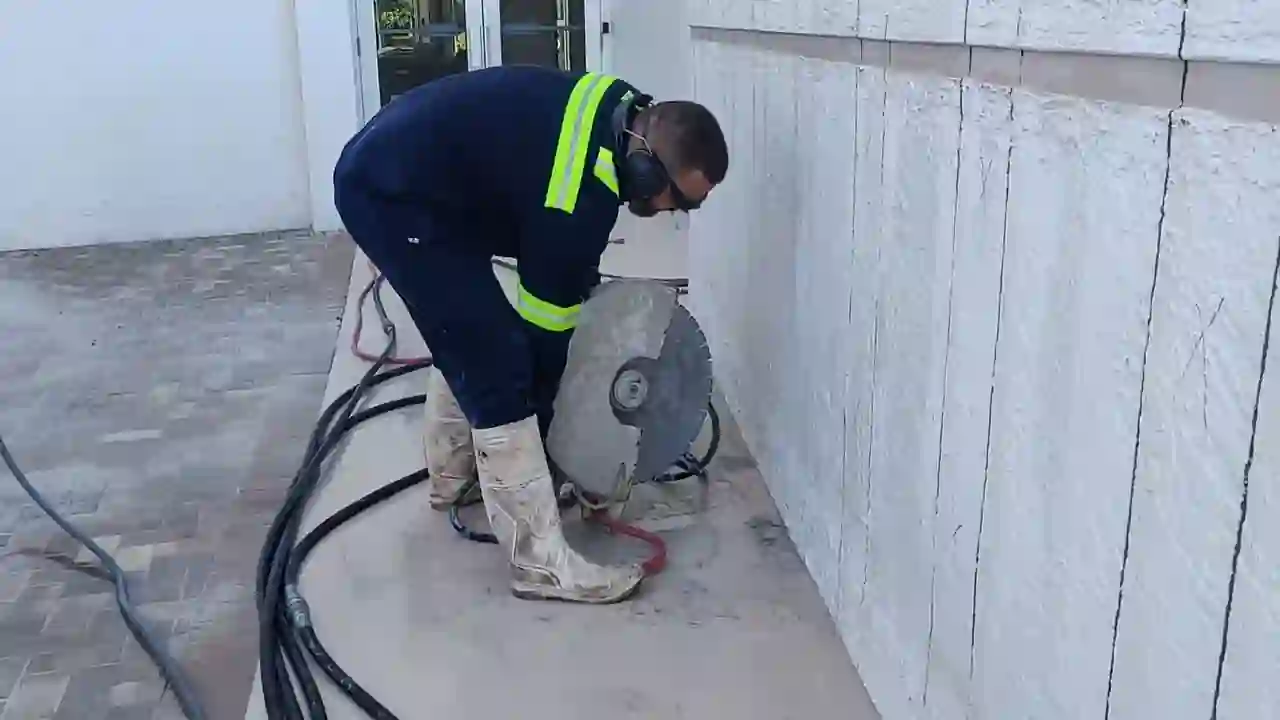
Retrofit sawing — cutting joints into an existing slab that has already cracked — is technically possible but economically painful. You’re now cutting hardened concrete, often with random cracking patterns that complicate layout, and you’re doing it without any ability to influence where the weakened plane forms. The crack is already there. Retrofit joint work typically costs 40 to 70 percent more per linear foot than timely original sawing, and it doesn’t fully restore the slab’s structural performance. The math is straightforward: investing in properly specified, correctly timed control joint sawing during original construction is always the lower total-cost option over the life of the slab. Every dollar saved by skipping or undersizing joint work tends to return as two or three dollars in repair costs within the first five years of slab service.
If you’re managing a flatwork project in South Florida and want an accurate, scope-specific bid from a crew that understands both the engineering and the economics of control joint work, Concrete Cutting Miami, LLC has the equipment, the experience, and the technical depth to deliver it right the first time.