What is actually in concrete dust that makes it dangerous
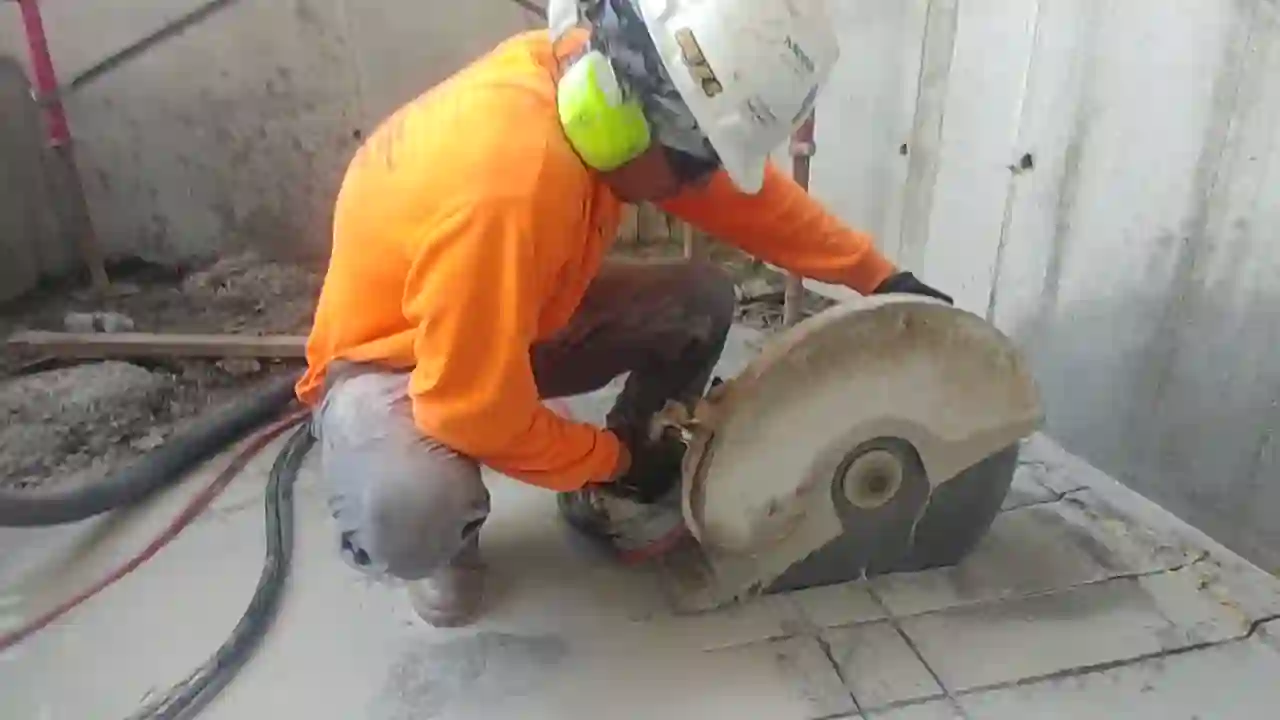
The dangers of concrete dust come from one primary constituent: crystalline silica. Concrete is approximately 25-30 percent silica by weight, derived from the sand and aggregate used in the mix. When concrete is cut, ground, drilled, or broken — with a saw, a grinder, a core drill, or a jackhammer — the mechanical action fractures the silica particles into microscopic airborne dust. These particles are small enough to bypass the body’s natural respiratory defenses — the mucus and cilia in the upper airway that trap and expel larger particles. Silica dust particles are typically less than 10 microns in diameter, with the most dangerous fraction being less than 4 microns — particles so small they are invisible and remain suspended in the air for hours after the cutting stops.
Once inhaled, silica particles reach the deepest parts of the lungs — the alveoli, where oxygen exchange occurs. The body’s immune system recognizes the silica particles as foreign invaders and sends macrophages — immune cells that engulf and attempt to destroy foreign material — to the site. But silica particles are chemically inert and physically indestructible by the body’s defenses. The macrophages die trying to engulf them, releasing enzymes and inflammatory compounds that damage lung tissue. Over time, this cycle of immune response and tissue damage causes fibrosis — scarring of the lung tissue — which is the disease known as silicosis. The scarring is permanent, progressive, and irreversible. It continues even after exposure stops.
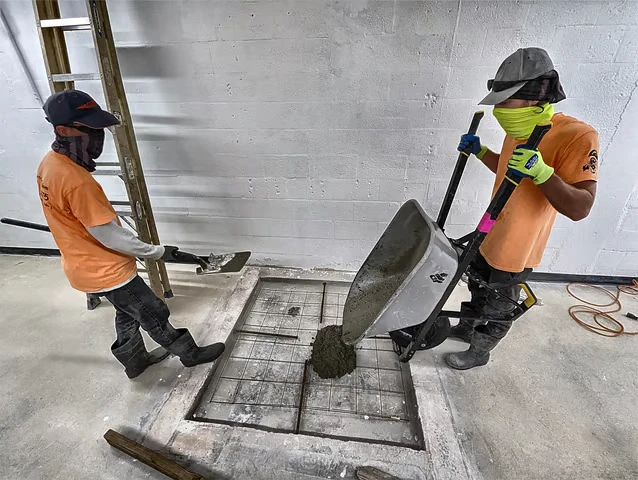
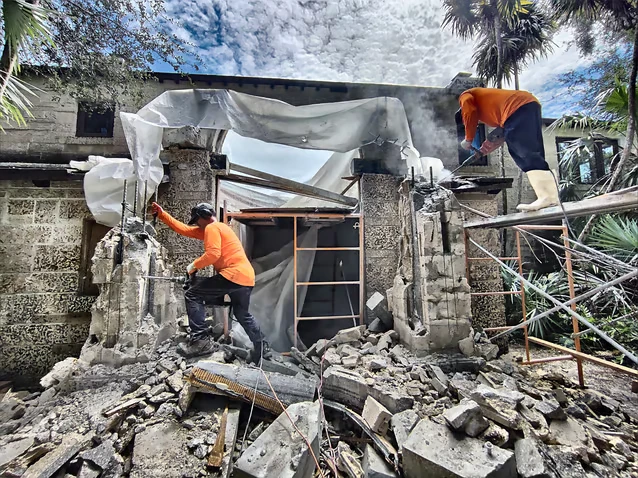
In Miami, where concrete cutting and demolition happen year-round — not just during a summer construction season — the cumulative exposure risk for workers is higher than in regions with a limited construction season. And the risk is not limited to workers. Homeowners, building occupants, and neighbors can be exposed to silica dust from uncontrolled concrete cutting, especially in interior renovation projects where dust containment is inadequate. Understanding the dangers of concrete dust is not just an OSHA compliance issue for employers — it is a health protection issue for anyone near concrete work.
The health effects of silica dust exposure
The diseases caused by inhaling concrete dust are well-documented and universally recognized by occupational health authorities including OSHA, NIOSH, and the World Health Organization:
Silicosis
Silicosis is a fibrotic lung disease — scarring of the lung tissue — caused by inhaling crystalline silica dust. It exists in three forms:
- Chronic silicosis: Develops after 10-20 years of moderate to low-level exposure. Scar tissue gradually replaces healthy lung tissue, reducing lung capacity. Symptoms — shortness of breath, chronic cough, fatigue — develop slowly and are often attributed to aging or other causes until substantial lung damage has already occurred.
- Accelerated silicosis: Develops after 5-10 years of high-level exposure. The disease progression is faster and symptoms are more pronounced. Lung function declines measurably over years rather than decades.
- Acute silicosis: Develops after weeks to months of extremely high-level exposure — the kind that occurs from dry cutting concrete without any dust control in confined spaces. The lungs fill with proteinaceous fluid, causing severe breathing difficulty, rapid weight loss, and often death within months to a few years. Acute silicosis is rare but entirely preventable — it occurs only when basic dust control measures are absent.
Lung cancer
The International Agency for Research on Cancer classifies crystalline silica as a Group 1 carcinogen — a substance known to cause cancer in humans. The risk of lung cancer increases with cumulative silica exposure. Workers who develop silicosis have a significantly elevated risk of lung cancer, but even workers without silicosis have an elevated risk if their cumulative silica exposure is high.
Chronic obstructive pulmonary disease (COPD)
Silica exposure causes chronic bronchitis and emphysema — the components of COPD — independent of smoking status. The inflammation and tissue damage from silica particles narrow the airways and destroy the alveolar walls, reducing the lungs’ ability to move air in and out and to exchange oxygen and carbon dioxide.
Kidney disease and autoimmune disorders
Epidemiological studies have linked silica exposure to chronic kidney disease and to autoimmune conditions including scleroderma, rheumatoid arthritis, and systemic lupus erythematosus. The mechanism is believed to involve the systemic inflammatory response triggered by silica particles that enter the bloodstream through the damaged lung tissue.
How professional concrete cutting eliminates the dangers of concrete dust
The engineering controls that professional concrete cutting contractors use to eliminate silica dust exposure:
Wet cutting
Wet cutting is the primary dust control method for professional concrete cutting. A continuous stream of water is directed at the blade-material interface, capturing dust particles in water droplets before they become airborne. Wet cutting reduces airborne silica concentrations by 90-99 percent compared to dry cutting with no controls. All structural concrete cutting in our operation is wet-cut unless site conditions make it impossible — for example, in electrical rooms where water is a hazard, or in occupied spaces where slurry containment creates more problems than it solves. In those cases, we use the following alternative.
Vacuum dust collection
For dry cutting applications, high-efficiency particulate air (HEPA) vacuum systems capture dust at the point of generation. The vacuum shroud surrounds the blade or bit, and the vacuum pulls air through a HEPA filter that captures 99.97 percent of particles down to 0.3 microns. OSHA requires that vacuum dust collection systems used for silica dust control have a filter cleaning mechanism, a filter with 99 percent or greater efficiency, and a dust collection bag or canister that is emptied without exposing workers to the captured dust.
Respiratory protection
When engineering controls (wet cutting, vacuum collection) cannot reduce silica exposure below the OSHA permissible exposure limit of 50 micrograms per cubic meter averaged over an 8-hour shift, respiratory protection is required. The minimum is an N95 filtering facepiece respirator. For higher exposures, a half-face elastomeric respirator with P100 filters is typical. For the highest exposures, a powered air-purifying respirator (PAPR) may be required. Our crews are fit-tested for respirators and follow a written respiratory protection program that complies with OSHA 29 CFR 1910.134.
Area isolation and containment
For interior work, the cutting area is isolated with plastic sheeting and negative air pressure to prevent dust migration to occupied areas. Air scrubbers with HEPA filters run continuously during cutting operations. The containment is maintained until all airborne dust has settled or been filtered — typically several hours after cutting stops, verified by visual inspection in good lighting.

OSHA silica standards for construction
Since 2017, OSHA has enforced a comprehensive silica standard for construction (29 CFR 1926.1153) that sets specific requirements for any work that generates silica dust:
- Permissible exposure limit (PEL): 50 micrograms of respirable crystalline silica per cubic meter of air, averaged over an 8-hour shift.
- Specified exposure control methods: OSHA provides a table (Table 1) that specifies the engineering control and respiratory protection required for common construction tasks including concrete cutting, drilling, and grinding. If the employer follows the Table 1 specifications exactly, air monitoring is not required. If they deviate from Table 1, they must perform air monitoring to demonstrate compliance.
- Written exposure control plan: Employers must have a written plan describing the tasks that generate silica exposure and the controls used to reduce it.
- Medical surveillance: Employers must offer medical examinations — including chest X-rays and pulmonary function tests — to workers who wear a respirator for 30 or more days per year for silica exposure.
- Training: Workers must be trained on the health effects of silica, the controls used, and the proper use of respiratory protection.
The dangers of concrete dust are real, serious, and preventable. Professional concrete cutting contractors eliminate the hazard through engineering controls — primarily wet cutting and vacuum dust collection — that capture silica particles before they become airborne. If your contractor is dry-cutting structural concrete without visible dust controls, the dust you see in the air is silica. The damage it causes is invisible for years. But it is happening.