What actually happens when you inhale concrete dust
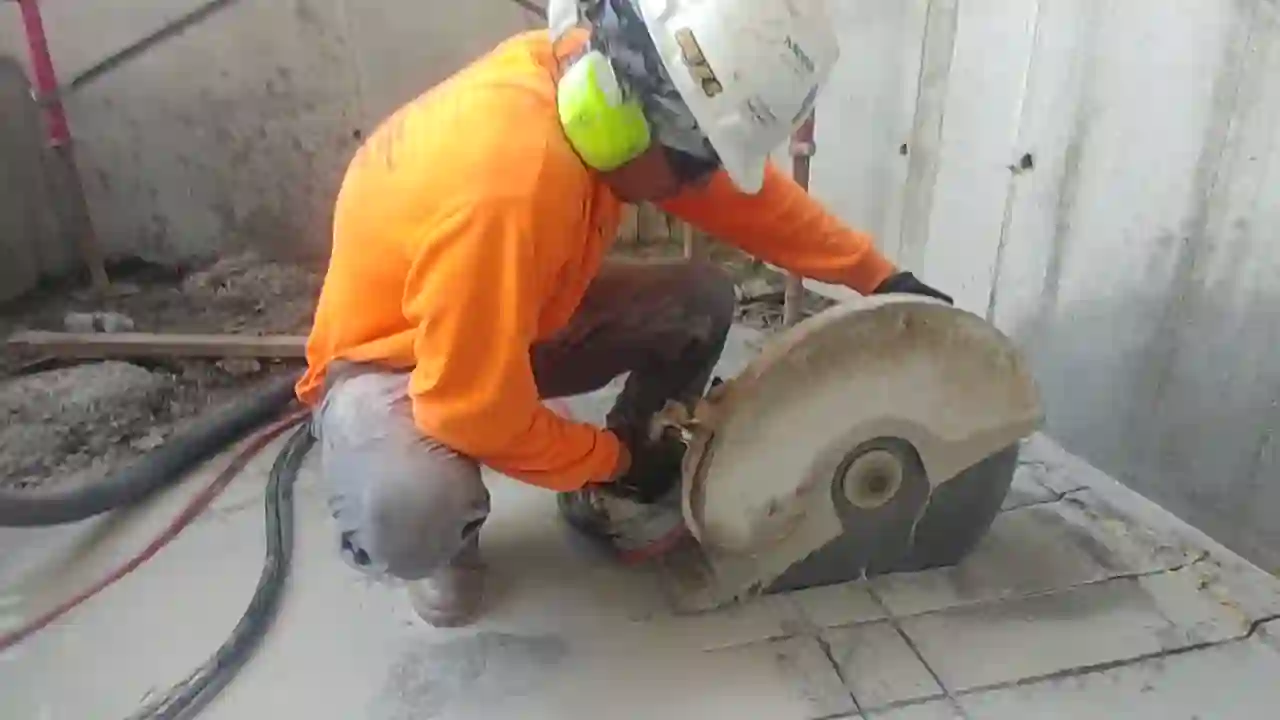
Concrete dust exposure begins the moment the dust enters your airway — and the damage begins almost as quickly. The particles responsible for the danger are not the visible dust you see settling on surfaces. They are the invisible, respirable fraction — particles smaller than 10 microns, and especially those smaller than 4 microns, which travel past the upper airway defenses and lodge deep in the lungs. A single day of dry-cutting concrete without dust controls can generate silica concentrations hundreds of times higher than the OSHA permissible exposure limit, and every breath taken in that environment deposits silica particles in lung tissue that will remain there for life.
The immediate symptoms of acute concrete dust exposure — coughing, throat irritation, eye irritation, shortness of breath — are the body’s response to the physical irritation of dust particles on mucous membranes. But these symptoms, unpleasant as they are, are not the real danger. The real danger is what happens to the silica particles that make it past the upper airway into the alveoli — the microscopic air sacs where oxygen enters the bloodstream. There, silica particles trigger an immune response that never resolves. The body’s defense cells — alveolar macrophages — attempt to engulf and destroy the silica particles and die in the process, releasing enzymes and inflammatory mediators that damage the alveolar walls and eventually cause fibrotic scarring. This process continues for years after concrete dust exposure stops. There is no treatment that reverses it. The lung tissue that scars is permanently lost.
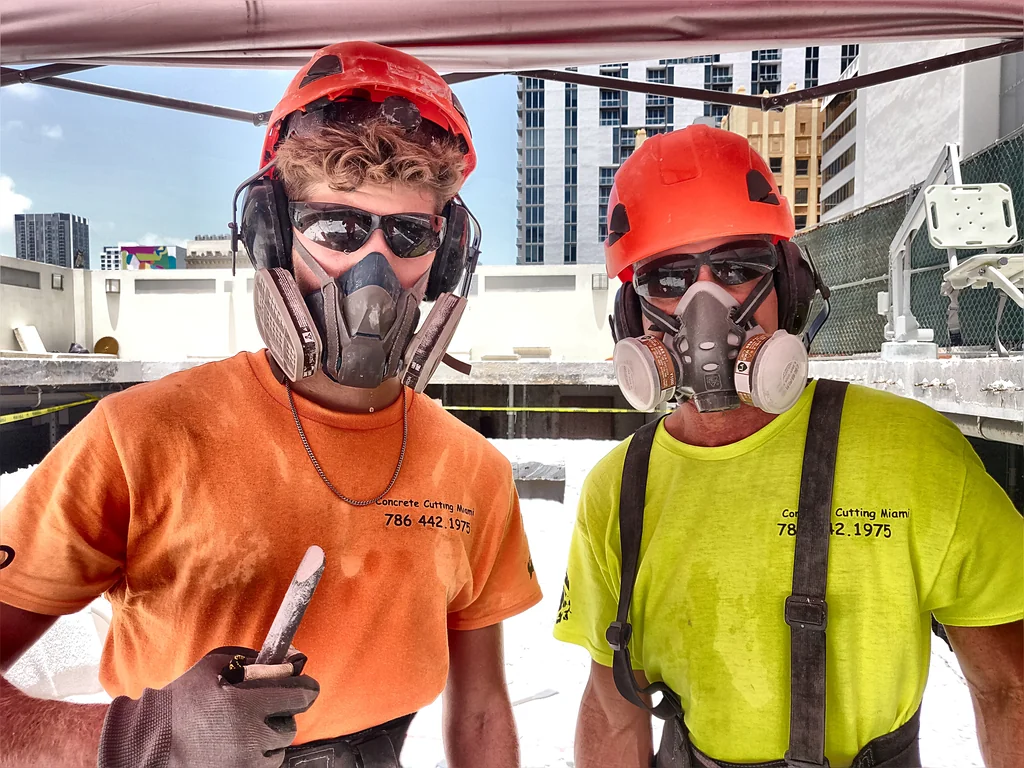
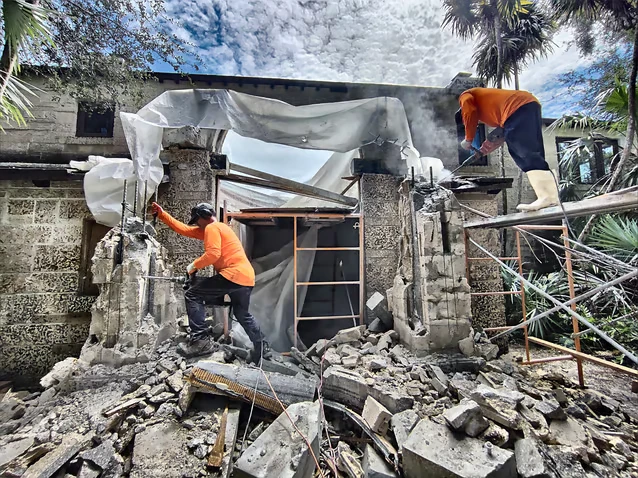
In Miami, where concrete cutting and demolition work happens in hot, humid conditions, there is a dangerous behavioral dynamic that worsens exposure risk. Workers who should be wearing respirators sometimes remove them because respirators are uncomfortable in the heat. Property owners doing DIY concrete work often skip dust protection entirely because they do not understand the long-term risk. And interior renovation projects in occupied homes sometimes proceed with inadequate containment because the contractor prioritizes speed over safety. Every one of these shortcuts trades a small convenience today for a permanent health cost that will not appear on any invoice — but will appear on a chest X-ray years later.
The timeline of concrete dust exposure health effects
The damage from concrete dust exposure follows a predictable timeline, though the exact schedule varies with exposure intensity, duration, and individual susceptibility:
Immediate effects (hours to days)
- Eye, nose, and throat irritation from dust contact with mucous membranes
- Coughing as the airway attempts to expel inhaled particles
- Increased mucus production as the respiratory system responds to irritants
- Wheezing or chest tightness in individuals with pre-existing asthma or reactive airway disease
- These effects typically resolve within a day or two after exposure stops
Subacute effects (weeks to months of repeated exposure)
- Persistent cough that does not fully resolve between exposures
- Increased frequency and severity of respiratory infections — the silica-damaged lung is less effective at clearing bacteria
- Gradual reduction in exercise tolerance as lung function begins to decline
- Symptoms that workers may attribute to aging, allergies, or being out of shape rather than to occupational silica exposure
Chronic effects (years to decades after exposure)
- Shortness of breath on exertion — first noticed climbing stairs or carrying heavy objects, eventually present even at rest
- Chronic cough with sputum production
- Fatigue from reduced blood oxygen levels
- Chest X-ray or CT scan showing nodular opacities — the radiographic hallmark of silicosis
- Pulmonary function testing showing restrictive lung disease — reduced total lung capacity and reduced ability to transfer oxygen from air to blood
- Increased risk of tuberculosis — silicosis dramatically increases susceptibility to TB infection
- Increased risk of lung cancer, independent of smoking status
How concrete dust exposure is measured and regulated
OSHA sets the permissible exposure limit (PEL) for respirable crystalline silica at 50 micrograms per cubic meter of air (50 ug/m3), averaged over an 8-hour work shift. This is an extremely small concentration — 50 micrograms distributed across a cubic meter of air is, proportionally, like one drop of water in a swimming pool. At concentrations above this level, the risk of silicosis and other silica-related diseases increases measurably.
To put the exposure levels from concrete cutting in perspective: dry cutting a 4-inch concrete slab with a handheld saw without dust controls can generate silica concentrations of 2,000-5,000 ug/m3 at the operator’s breathing zone — 40 to 100 times the OSHA PEL. Even standing 20 feet away from an uncontrolled dry cutting operation without respiratory protection can result in exposure exceeding the PEL if the work continues for several hours. This is why OSHA requires engineering controls — wet cutting or vacuum dust collection — as the primary means of reducing exposure, with respiratory protection as a secondary measure when engineering controls alone cannot reduce exposure below the PEL.
What to do if you have been exposed to concrete dust
If you have experienced significant concrete dust exposure — a renovation project with uncontrolled dry cutting, a demolition where dust filled the living space, a work history that includes years of dry cutting without respiratory protection — take these steps:
- Stop further exposure: Do not continue working in or occupying an area with airborne concrete dust. The first priority is preventing additional silica particles from entering your lungs.
- See a physician: Tell the doctor you have been exposed to crystalline silica dust. Request a chest X-ray with an ILO B-reader classification — a specialized reading protocol for pneumoconiosis (dust-induced lung disease). Request pulmonary function testing including spirometry and diffusing capacity.
- Document the exposure: Record the dates, duration, and nature of the exposure. If the exposure was occupational, file a report with your employer and with your state’s workers compensation system. Documentation matters for future medical monitoring and for any compensation claims.
- Establish a medical monitoring schedule: Even if initial tests are normal, periodic chest X-rays and pulmonary function tests can detect silicosis at an earlier stage when interventions (primarily preventing further exposure and treating complications) are more effective.
- Stop smoking: Smoking and silica exposure have a multiplicative effect on lung cancer and COPD risk. Continuing to smoke after silica exposure dramatically worsens the long-term prognosis.
How Miami property owners should evaluate concrete dust exposure risk
If you are hiring a contractor for concrete cutting, drilling, grinding, or demolition on your property, ask these questions before work begins:
- “How will you control silica dust during this job?” The answer should be specific: wet cutting with continuous water flow, vacuum dust collection with HEPA filtration, area containment with negative air pressure, or a combination. “We will clean up afterward” is not a dust control plan — by the time the dust settles, everyone in the area has already inhaled it.
- “What respiratory protection will your workers use?” They should reference specific respirator types (N95, half-face with P100, PAPR) and mention that workers are fit-tested. “They have masks” is not an adequate answer.
- “Will you isolate the work area from the rest of the property?” For interior work, the answer must be yes — plastic sheeting, negative air pressure, and air scrubbers. For exterior work, the answer should address wind direction relative to occupied areas and neighboring properties.
- “Do you have a written silica exposure control plan?” OSHA requires this for any construction employer whose workers are exposed to silica above the action level. A professional contractor will have one and will show it to you.
Concrete dust exposure is a serious occupational and environmental health hazard. It is also entirely preventable. The controls exist — wet cutting, vacuum dust collection, respiratory protection, area isolation — and have been standard practice in professional concrete cutting for decades. The only question is whether your contractor uses them. The answer to that question determines not just the cleanliness of the job site, but the long-term health of everyone who breathes the air during the work.