Why concrete slab removal is a cutting job first and a removal job second
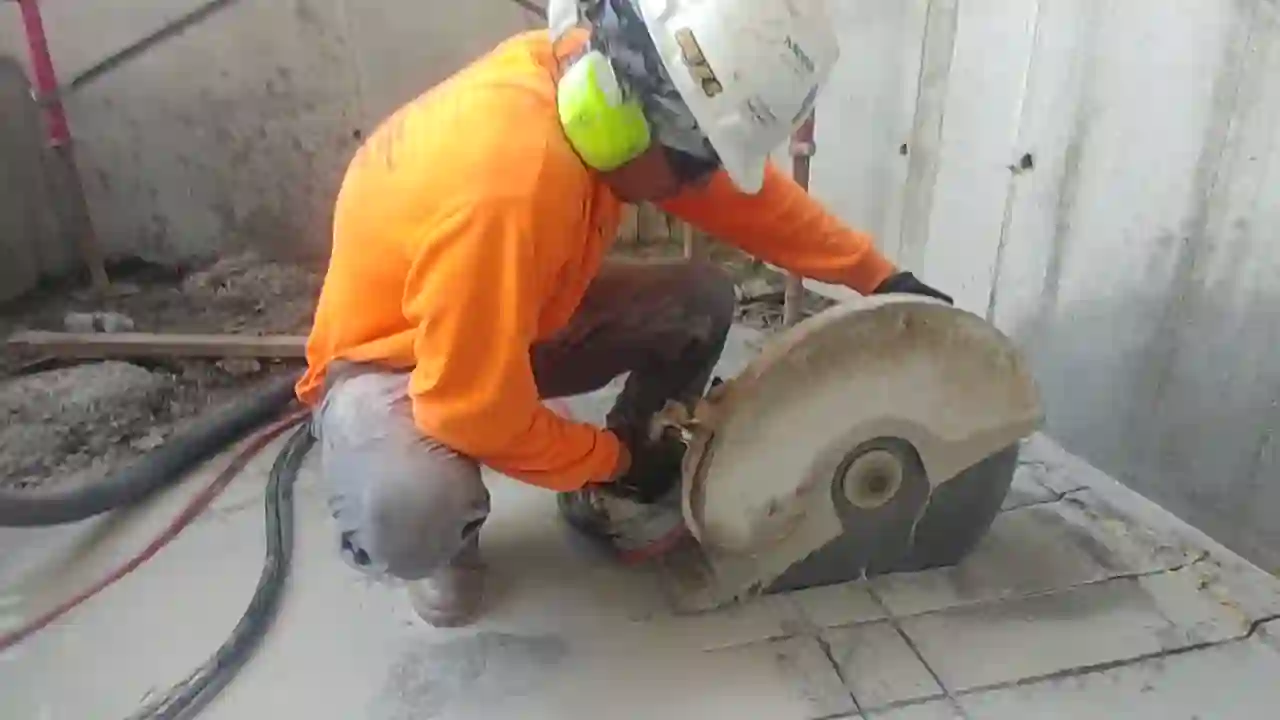
Every Miami contractor who removes concrete slabs has the same choice when they arrive at your property: cut first, then remove — or just start breaking. The difference between these two approaches is the difference between a clean job and a nightmare. Concrete slab removal done correctly is fundamentally a concrete cutting operation with removal as the second phase. The saw cuts create physical separation between the slab being removed and everything around it — the house foundation, the driveway, the walkway, the pool deck, the adjacent patio. Only after the slab is physically isolated from everything that should stay does the breaking and removal begin.
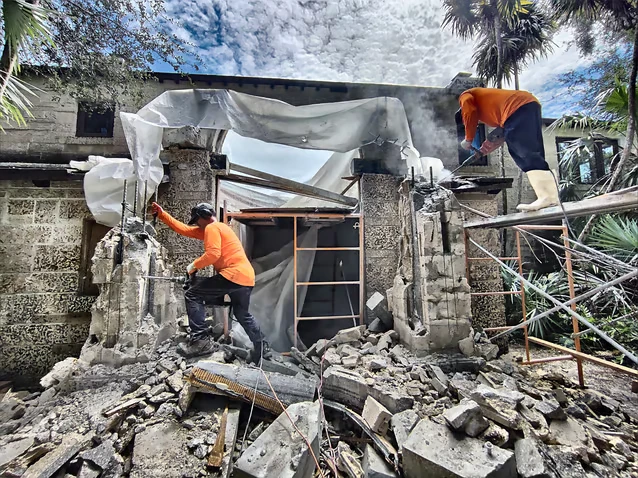
When a contractor skips the cutting step and goes straight to breaking — jackhammering the slab edge, using an excavator-mounted breaker to fracture the concrete — the impact energy does not stop at the property line you have drawn in your mind. It travels through the concrete in all directions, radiating outward from the point of impact. In a 4-inch residential slab, that impact wave can travel 20 feet or more and still carry enough energy to crack tiles in the adjacent room, separate drywall seams, or pop window glazing. We have seen it happen. A slab removal in a Kendall home that cracked the kitchen tile because the contractor jackhammered the patio slab where it abutted the house. A driveway removal in Coral Gables that separated the garage slab from the house because the excavator breaker transferred impact through the shared rebar. These are not freak accidents. They are predictable consequences of removing concrete without cutting it first.
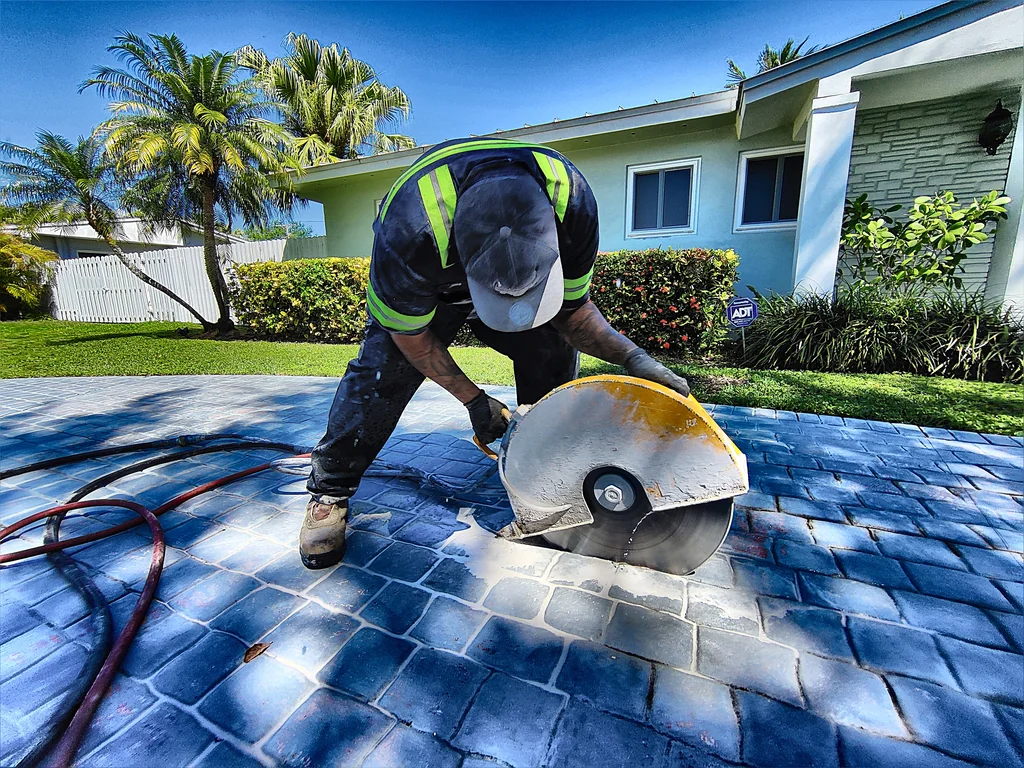
Our approach to concrete slab removal in Miami is saw-cut first, break second, remove third. This sequence protects your property from vibration damage, creates clean separation lines, and produces concrete sections that are the right size for efficient debris handling. The cutting adds a step, but that step is what prevents the phone call two days later about the crack in the living room floor.
The concrete slab removal process, step by step
Step 1: GPR scanning and utility marking
Before any saw blade touches the slab, the area is scanned with ground-penetrating radar. The scan identifies post-tension cables (common in Miami slabs built after 1970), embedded electrical conduits, plumbing lines, and any other sub-surface items that must be avoided during cutting. The scan results are marked on the slab surface. The cut pattern is designed around any conflicts. This step is non-optional for safety and liability reasons — cutting through a live electrical conduit or a tensioned PT cable can cause injury, death, or catastrophic structural damage.
Step 2: Perimeter cutting
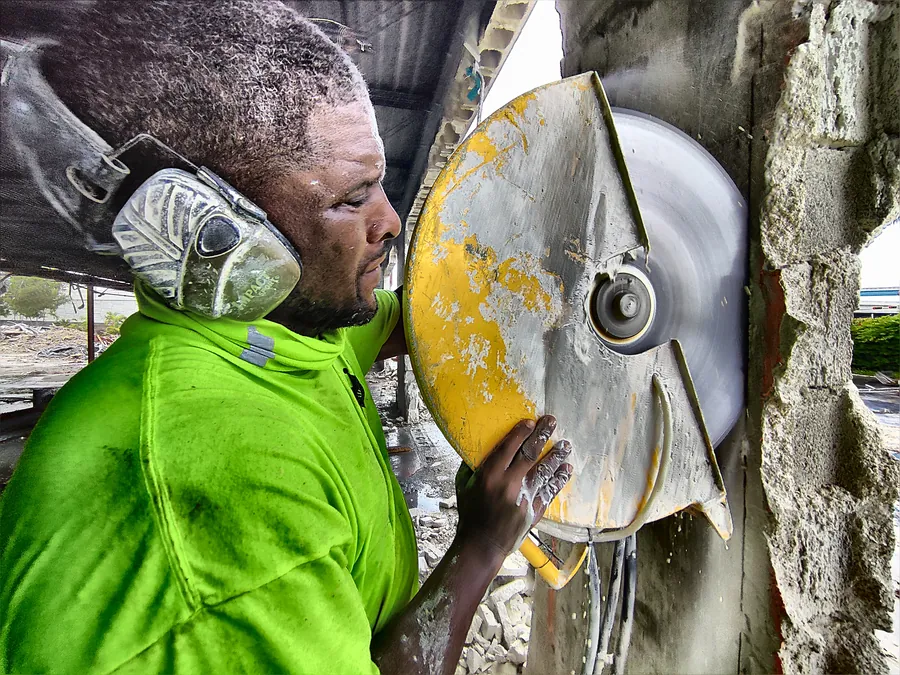
The slab to be removed is cut along its entire perimeter using a diamond flat saw. The cut is full-depth — through the entire slab thickness — creating a complete physical separation between the slab section being removed and the surrounding concrete. This cut line becomes the separation plane. After this step, the slab section is mechanically isolated — any force applied to it cannot transfer through the concrete to adjacent structures. The perimeter cut is the most important single step in the entire removal process.
Step 3: Sectioning cuts
The isolated slab section is now cut into smaller pieces — typically 2-foot by 3-foot or 3-foot by 3-foot sections, depending on slab thickness and access constraints. A 4-inch concrete slab section 3 feet by 3 feet weighs approximately 450 pounds. These sections are small enough for manual handling with pry bars and dollies, or for small equipment like a skid steer with forks. Sectioning also controls the size of debris pieces for efficient loading and transport.
Step 4: Controlled breaking and removal
With the slab fully sectioned, the pieces are pried up from the sub-grade using pry bars, lifting forks, or a small excavator. Some pieces may need additional breaking to reduce size for handling, but because they are already isolated from the surrounding concrete, there is no vibration transfer. The sections are loaded into dumpsters or directly into trucks for transport to a C&D recycling facility.
Step 5: Sub-grade preparation
After the concrete is removed, the exposed sub-grade is inspected. If the slab removal is in preparation for new concrete, the sub-grade is re-compacted and graded to the correct elevation and slope. If the area will be landscaped, the sub-grade is prepared for topsoil placement. Any plumbing or electrical lines exposed during removal are capped or protected. If rebar stubs project from adjacent slabs, they are cut flush or bent down and covered.
Concrete slab removal cost factors in Miami
What drives the cost of concrete slab removal:
- Square footage: The primary cost driver. Larger slabs mean more cutting, more sections, more debris, and more hauling.
- Slab thickness: A 4-inch residential patio slab cuts and removes faster than a 6-inch driveway slab, which is faster than an 8-inch commercial slab. Deeper cuts require larger saws and more blade consumption.
- Rebar content: Unreinforced slabs are the fastest and least expensive to remove. Slabs with wire mesh add moderate complexity. Slabs with rebar mats slow cutting and add blade wear. Post-tension slabs add significant cost because tendons must be located, avoided, and de-tensioned by a qualified contractor before cutting.
- Access conditions: A backyard slab with no equipment access requires manual handling of all concrete sections — slower and more expensive. A driveway slab with direct truck access is the most efficient removal scenario.
- Disposal distance: Closer C&D recycling facilities mean lower hauling costs. Miami-Dade has several permitted C&D facilities; the nearest one to the job site determines the hauling cost component.
- Adjacent structures: Slabs adjacent to pools, foundations, retaining walls, or mature trees require more careful perimeter cutting and smaller equipment, increasing labor time.
Common concrete slab removal scenarios in Miami
Driveway removal
Driveway slabs are typically 5-6 inches thick with wire mesh or rebar reinforcement. They connect to the garage slab at one end and the street or sidewalk at the other. The critical cut is at the garage slab interface — a full-depth separation cut prevents vibration from driveway breaking from transferring into the garage and house foundation. The street-side cut must be clean enough to not create a tripping hazard or a water intrusion point at the property line.
Patio slab removal
Patio slabs are typically 4 inches thick and may or may not have reinforcement. The most important consideration is separation from the house foundation — the perimeter cut along the house must be clean and full-depth. Many Miami patios also abut pool decks, and the cut at that interface must be planned carefully to not damage the pool coping or shell.
Interior slab removal
Removing slab sections inside a building — for plumbing access, basement lowering, or floor reconfiguration — adds dust containment, limited equipment access, and structural considerations if load-bearing walls sit on the slab section being removed. Interior slab removal almost always requires engineering review and often requires temporary shoring of adjacent structures.
What to ask a concrete slab removal contractor
- “Do you saw-cut the perimeter before any breaking?” The only acceptable answer is yes. If they plan to start breaking at the edge without cutting first, find another contractor.
- “How do you handle GPR scanning?” They should scan or subcontract scanning. Never allow cutting without knowing what is in the slab.
- “What size sections do you cut the slab into?” They should describe sections sized for the equipment they are using and the access constraints of your property. Vague answers suggest they have not thought about the logistics.
- “Where does the debris go?” The answer should be a specific C&D recycling facility. Concrete is recyclable — it should not go to a landfill.
- “What condition will the sub-grade be left in?” If the area will be built on or paved again, the sub-grade must be compacted. If it will be landscaped, the surface must be ready for topsoil. Clarify this before work begins.
Concrete slab removal is a routine job for a contractor who cuts first and breaks second. It is a property-damaging disaster for one who does not. The difference is entirely in the sequence of operations — and the sequence costs very little extra when planned properly from the start.