Is concrete dust dangerous — yes, and the danger is cumulative, invisible, and permanent
Ask is concrete dust dangerous and the answer that matters is not “yes” or “no” — it is “yes, and here is why you should treat every concrete cutting and grinding operation as a respiratory hazard control exercise.” Concrete contains crystalline silica — primarily quartz — in concentrations that typically range from 25 to 70 percent by weight. When concrete is cut, ground, drilled, or broken, the process creates airborne dust particles. The smallest of these particles — those less than 10 microns in diameter, and especially those less than 4 microns — are respirable. They are small enough to bypass the body’s upper airway defenses and lodge deep in the lungs.
Once in the lungs, silica particles trigger an inflammatory response. The body attempts to remove the particles but cannot — silica is chemically inert and biologically persistent. Over time, with repeated exposure, the inflammation causes fibrosis: scar tissue forms in the lungs, reducing their capacity to transfer oxygen to the blood. This is silicosis. It is progressive, it is irreversible, and it is entirely preventable. The concrete cutting industry in Miami has known about silica hazards for decades. Professional concrete cutting contractors manage silica exposure through wet cutting, vacuum dust collection, and respiratory protection — not because regulations require it, but because their workers’ lungs depend on it.
What makes concrete dust dangerous — the silica problem
Respirable crystalline silica — the hazard
Crystalline silica is silicon dioxide (SiO2) in crystalline form — primarily quartz. It is one of the most abundant minerals on Earth and a primary component of sand, rock, and concrete. The hazard is not the chemical itself — silica is chemically inert — but the physical form of the particles. Respirable silica particles are small enough to reach the alveoli, the tiny air sacs at the deepest part of the lungs where gas exchange occurs. The body’s defense mechanisms — coughing, mucous clearance, macrophage engulfment — cannot effectively remove particles of this size from the alveoli.
Silicosis — the disease
Silicosis is the scarring of lung tissue caused by inhaling respirable crystalline silica. There are three forms:
- Chronic silicosis: Develops after 10-30 years of low to moderate exposure. The most common form. Symptoms include shortness of breath, cough, and fatigue. Lung function declines gradually but irreversibly.
- Accelerated silicosis: Develops after 5-10 years of high exposure. Faster progression, more severe symptoms, earlier disability.
- Acute silicosis: Develops after weeks to months of extremely high exposure. Rapid onset of severe breathing difficulty, often fatal. Rare in modern construction with proper controls but historically documented in sandblasting and tunneling.
There is no cure for silicosis. Treatment is supportive — oxygen therapy, bronchodilators, and in severe cases, lung transplantation. Prevention through exposure control is the only effective medical strategy.
Other silica-related diseases
Beyond silicosis, respirable crystalline silica exposure is associated with:
- Lung cancer: The International Agency for Research on Cancer (IARC) classifies crystalline silica as a Group 1 carcinogen — known to cause cancer in humans.
- Chronic obstructive pulmonary disease (COPD): Silica exposure contributes to chronic bronchitis and emphysema.
- Kidney disease: Epidemiological studies show increased rates of kidney disease among silica-exposed workers.
- Autoimmune disorders: Silica exposure is associated with increased risk of rheumatoid arthritis, scleroderma, and systemic lupus erythematosus.
How Miami concrete cutting contractors control silica dust
Wet cutting — the primary control
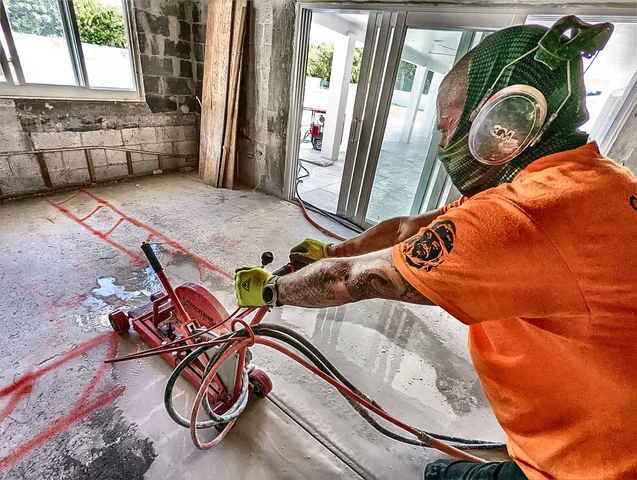
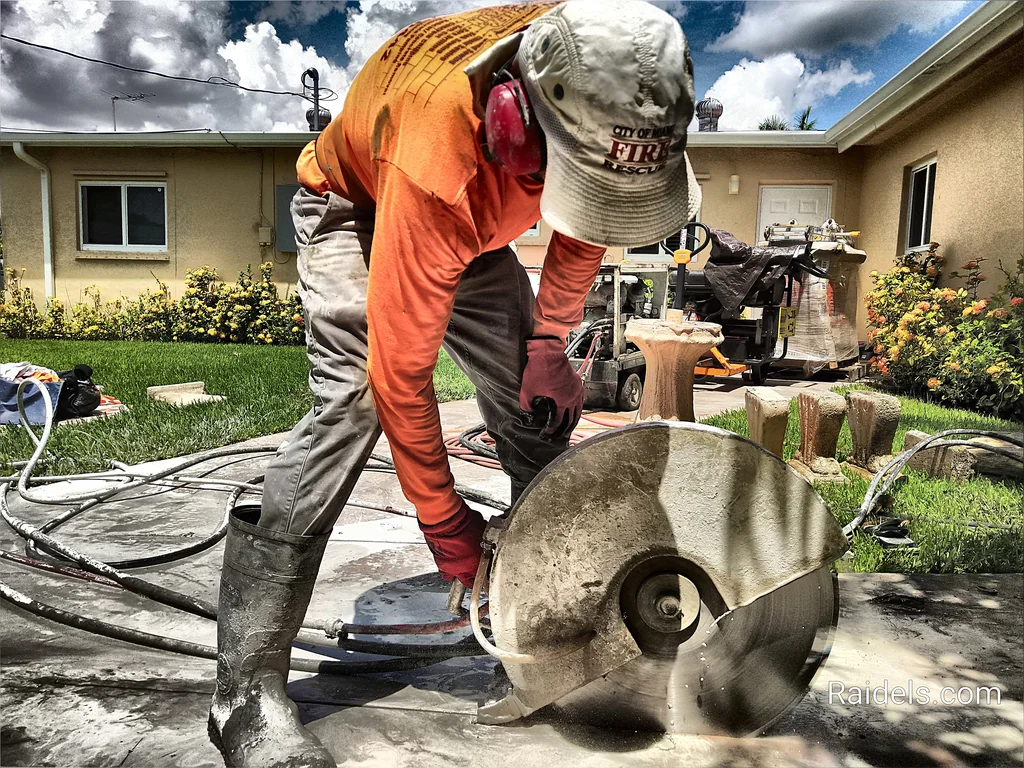
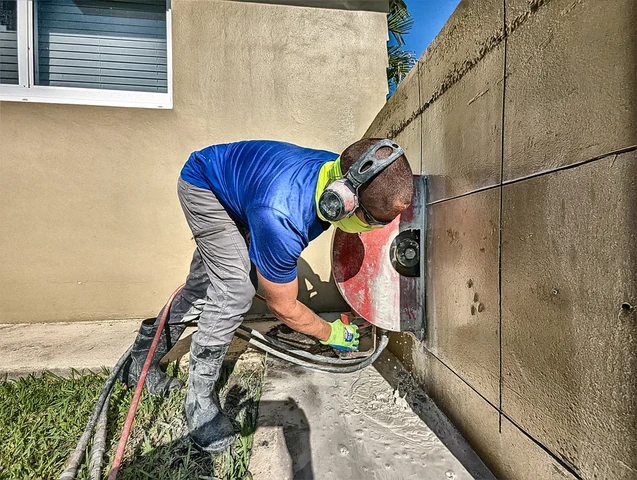
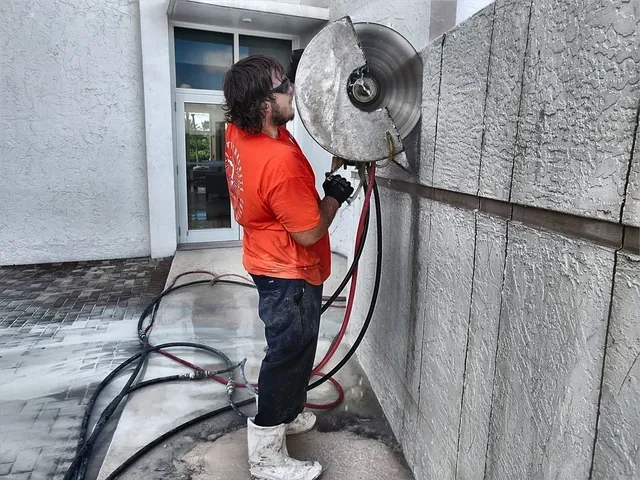
The most effective and practical silica dust control for concrete cutting is water. A continuous stream of water at the blade captures dust particles before they become airborne. The water combines with the dust to form slurry, which is then contained and collected. Wet cutting reduces respirable silica exposure by 90 percent or more compared to dry cutting with no controls.
In Miami, wet cutting is the standard for almost all concrete cutting operations. The water serves triple duty: blade cooling, dust suppression, and cut lubrication. Dry cutting is reserved for specific situations where water is prohibited — electrical rooms, data centers, areas with sensitive equipment — and in those situations, vacuum dust collection with HEPA filtration replaces water as the primary control. Professional concrete cutting services use wet cutting as the default method and switch to vacuum systems only when water is not permitted.
Vacuum dust collection
For dry cutting applications, a vacuum system attached to the saw shroud captures dust at the point of generation. The vacuum must have sufficient airflow (measured in cubic feet per minute, CFM) to capture the dust produced by the cutting operation, and the filter must be HEPA-rated (99.97 percent efficient at 0.3 microns) or better. Standard shop vacuums are not adequate for silica dust control — they lack the airflow, filtration efficiency, and filter-cleaning mechanisms needed for sustained concrete cutting.
Respiratory protection
When engineering controls (wet cutting or vacuum collection) are not sufficient to reduce silica exposure below the OSHA permissible exposure limit (PEL) of 50 micrograms per cubic meter of air over an 8-hour time-weighted average, respiratory protection is required. For most concrete cutting operations with wet methods, respiratory protection is not needed for the operator. For dry cutting, for work in confined spaces, or for extended cutting operations, a properly fitted N95 respirator is the minimum. More protective respirators — half-face or full-face with P100 filters — are used for high-exposure operations.
OSHA silica standards for construction
OSHA’s respirable crystalline silica standard for construction (29 CFR 1926.1153) requires employers to:
- Use engineering controls: Wet methods or vacuum dust collection to reduce silica exposure to below the PEL.
- Provide respiratory protection: When engineering controls cannot reduce exposure below the PEL.
- Develop a written exposure control plan: Describing the tasks that involve silica exposure, the controls used, and the procedures for ensuring controls are effective.
- Designate a competent person: To implement the exposure control plan and ensure it is followed.
- Restrict housekeeping practices: Dry sweeping and compressed air cleaning of silica-containing dust are prohibited unless wet methods or vacuum methods are not feasible.
- Provide medical surveillance: For workers required to wear a respirator for 30 or more days per year.
In Miami, compliance with the silica standard is the baseline — professional concrete cutting contractors exceed it because silica exposure accumulates over a career, and the PEL is a regulatory limit, not a safe level. There is no known safe level of respirable crystalline silica exposure. Lower is always better.
What property owners should expect from their contractor
When you hire a concrete cutting contractor in Miami, silica dust control should be part of the standard service. You should expect:
- Wet cutting as the default method for all concrete cutting and drilling.
- Vacuum dust collection for any dry cutting that is necessary.
- Containment of the work area to prevent dust migration to occupied spaces.
- Proper disposal of slurry — it contains silica and should not be washed into drains or allowed to dry and become airborne.
- Respiratory protection for workers when engineering controls are insufficient.
A contractor who arrives to cut concrete indoors without water or vacuum equipment, who plans to dry-cut with no dust controls, or who tells you concrete dust is harmless is a contractor who is exposing their workers, your family, and anyone in the building to a known occupational carcinogen. Do not accept it. Is concrete dust dangerous? Yes. Should it prevent necessary concrete cutting work? No — not when the work is done with the controls that every professional contractor uses as a matter of routine. Wet the cut, collect the slurry, protect the lungs. It is not complicated. It is just not optional.