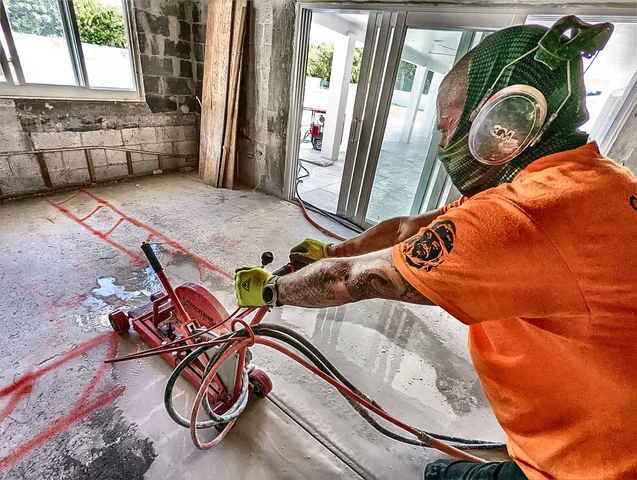
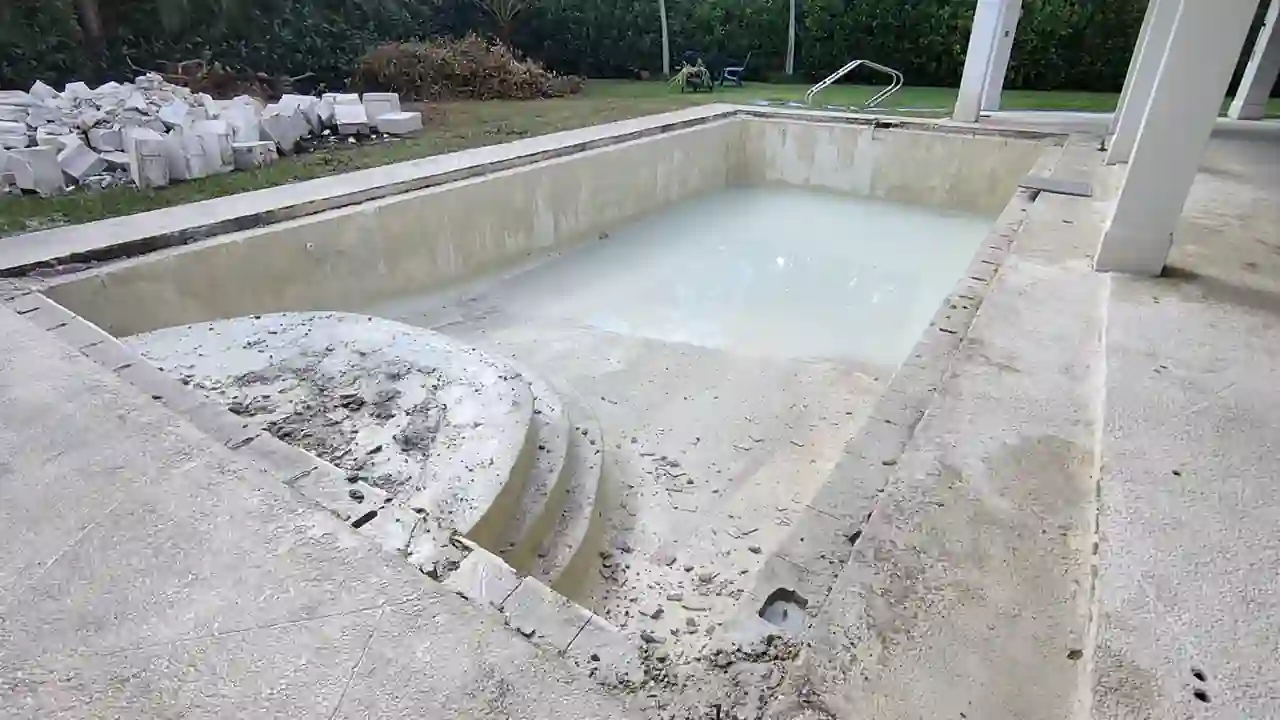
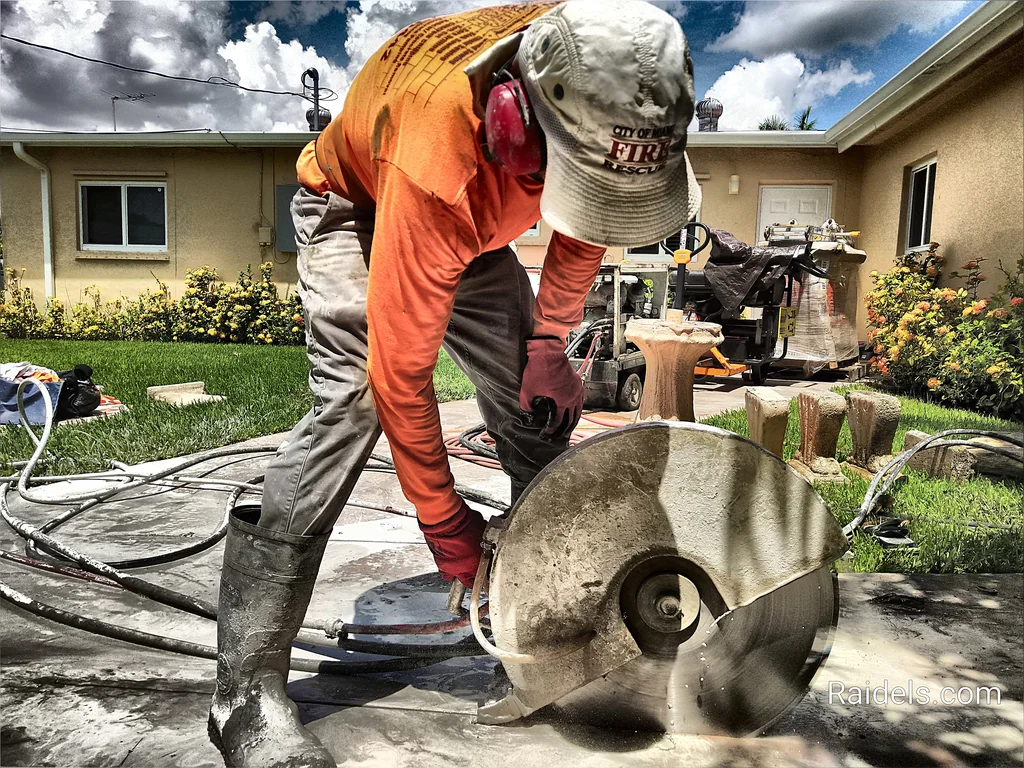
Elite concrete cutting is about what happens before and after the cut — not just during it
The term elite concrete cutting sounds like branding — a company calling themselves elite because it sounds better than average. In the concrete cutting industry, elite is a real distinction defined by equipment, training, safety protocols, and project capability. An elite concrete cutting company owns its wall saws — it does not rent them per job. An elite company scans every slab and wall before cutting — it does not guess about post-tension cables. An elite company brings slurry containment equipment to every job — not just the ones where the client specifically asks about cleanup. Elite is not about charging more. It is about having the capability to do what other companies cannot, and doing what every company should do but many skip.
In Miami, where concrete is heavily reinforced, post-tension slabs are common, and the water table complicates every below-grade operation, the gap between elite and average concrete cutting is the gap between a job that finishes on time with clean edges and a job that creates problems. Elite concrete cutting companies invest in equipment and training that average companies treat as optional or unnecessary. The difference shows up in every cut they make.
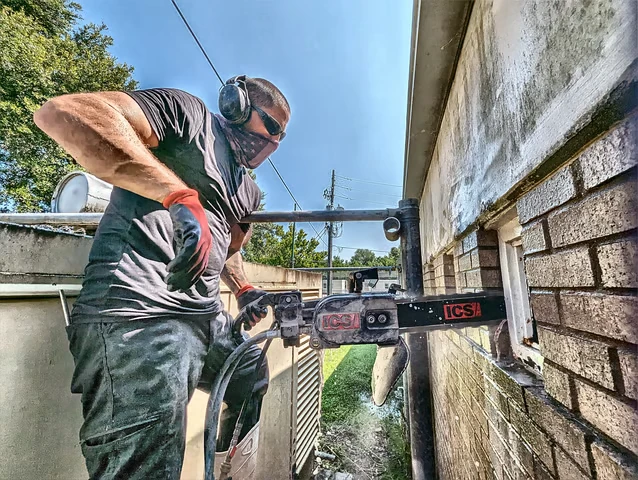
The equipment that defines elite concrete cutting
Hydraulic wall saw systems
An elite concrete cutting company owns multiple hydraulic wall saw systems with power units sized for different applications. This is a six-figure equipment investment. Average companies rent wall saws when a job requires them, and the rented saw may or may not be the right size for the specific wall thickness and rebar density. Owning the equipment means having the right tool for every job and having operators who use that tool every week, not once a quarter. Elite concrete cutting services maintain a fleet of saws that covers every application from small residential openings to large commercial structural modifications.
Ground-penetrating radar (GPR) units
GPR scanning before cutting is the clearest single indicator of whether a concrete cutting company operates at an elite level. The scanner is expensive — a professional-grade GPR unit costs as much as a wall saw. The training to interpret GPR data correctly takes time. The scanning itself adds time to every job. Elite companies absorb these costs as standard operating procedure because the alternative — hitting a post-tension cable, an electrical conduit, or a plumbing line — is not an acceptable risk. Average companies skip the scan and accept the risk.
Diamond wire saws
When concrete is too thick for a circular blade — bridge piers, massive foundations, thick shear walls — a diamond wire saw is the only tool that can cut through it. The wire saw uses a diamond-impregnated steel cable driven through the concrete by a hydraulic power unit. Elite companies own wire saws and have operators trained to use them. Average companies do not, and when a job requires wire sawing, they either decline the work or subcontract it to an elite company.
Slurry management systems
Every wet cutting job produces slurry. Elite companies arrive with the equipment to contain and collect it — vacuum systems, berms, pumps, floor protection. Slurry management is not a line item on the quote. It is part of the service. Average companies bring a hose for water and let the slurry go where it goes. In Miami-Dade, where slurry that enters storm drains is a code violation, the average approach is not just unprofessional — it is illegal.
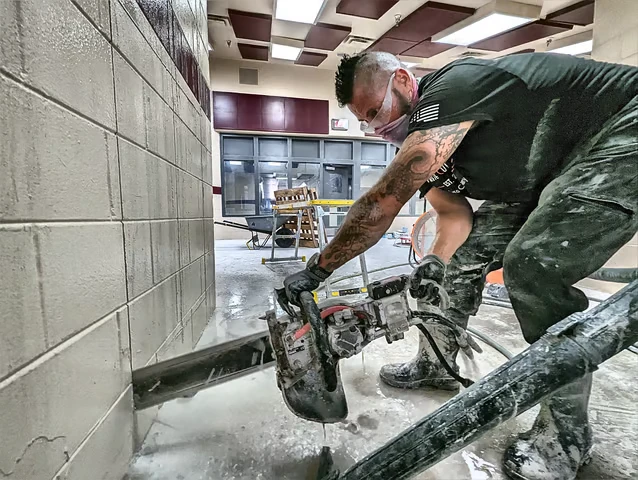
Training and certification — the human element of elite concrete cutting
Equipment is important, but the operator determines cut quality. Elite concrete cutting companies invest in operator training that covers:
- Blade selection and application: Understanding diamond concentration, bond hardness, segment geometry, and how to match the blade to the specific concrete and rebar conditions on each job.
- GPR interpretation: Reading radar scans to identify rebar patterns, PT cable locations, conduit runs, and slab thickness variations.
- Structural awareness: Understanding which walls and slabs are structural, which openings require engineering review, and how to recognize conditions that require a change in the cutting plan.
- OSHA silica compliance: Implementing wet cutting and vacuum dust collection to meet or exceed OSHA’s respirable crystalline silica standard.
- Slurry management: Containing, collecting, and properly disposing of concrete slurry in compliance with Miami-Dade environmental regulations.
- Emergency response: What to do when the blade hits something unexpected, when water supply fails, when the saw binds, or when any other unplanned condition occurs.
Elite operators are not laborers who learned to pull a saw trigger. They are tradespeople who can explain why they selected a particular blade for a particular wall, why they are cutting at a particular feed rate, and what they would do differently if the concrete conditions changed mid-cut.
What elite concrete cutting costs vs what average concrete cutting costs
Elite concrete cutting typically costs more per linear foot or per hole than average concrete cutting. The cost difference reflects the equipment investment, the training investment, the scanning that happens before every cut, and the slurry management that happens during and after every cut. The cost difference is real — and it is almost always less than the cost of fixing a problem that an average company’s shortcuts created.
A wall opening cut by an elite company: square, clean-edged, ready for door installation. The same wall opening cut by an average company: corners not square, edges requiring grinding, a slurry stain on the floor below, and maybe — if they did not scan — a nicked electrical conduit that now needs an electrician to repair before the door installation can proceed. The upfront savings from hiring the average company disappear into the cost of fixing what they left behind. Concrete cutting costs in Miami reflect the quality of equipment, training, and process — not just the time the blade spends in the concrete.
The elite concrete cutting project — what it looks like from start to finish
An elite concrete cutting project follows a consistent process:
- Site visit and assessment: The contractor visits the site, measures the concrete, assesses access, power, and water availability, and identifies any special conditions.
- GPR scanning: The concrete is scanned and the scan data is interpreted to identify hazards and inform the cutting plan.
- Engineering review (if required): For structural modifications, a licensed engineer reviews and stamps the cutting plan.
- Permit application (if required): The contractor handles the permit process for any work requiring regulatory approval.
- Cutting with full controls: The cut is made with wet methods, slurry containment, and dust control per OSHA standards.
- Cleanup and disposal: Slurry is collected, debris is removed, and the site is left clean.
- Documentation: The client receives the GPR scan report, the permit sign-off (if applicable), and any engineering documentation.
Elite concrete cutting is a process, not a price point. It describes a company that invests in the equipment, training, and procedures to do every job correctly regardless of complexity. When you hire an elite concrete cutting company in Miami, you are hiring the capability to handle whatever the concrete presents — not hoping the concrete presents nothing unexpected.