How to break concrete — the most important step happens before you pick up any tool
Type how to break concrete into a search engine and most results will tell you to rent a jackhammer and get to work. That advice is incomplete to the point of being dangerous — to your property, not to you. The most important step in breaking concrete is not choosing the right breaker or finding the right swing angle with the sledgehammer. It is saw-cutting the perimeter of the area you are breaking before you apply any impact force. That saw cut — a clean, straight, full-depth cut separating the concrete being removed from the concrete being saved — is what prevents the vibration damage that turns a simple concrete removal project into a foundation repair project.
We break concrete across Miami-Dade County as part of our demolition and cutting services. Every professional breaking job starts the same way: scan the concrete for post-tension cables, saw-cut the perimeter and section lines, then break the separated sections. The breaking tool — sledgehammer, electric breaker, pneumatic breaker, or hydraulic hammer — depends on the concrete thickness and rebar content. But the sequence never changes. Cut first, break second. Breaking concrete without cutting first is the most expensive shortcut in residential demolition.
Step 1: Scan before you do anything
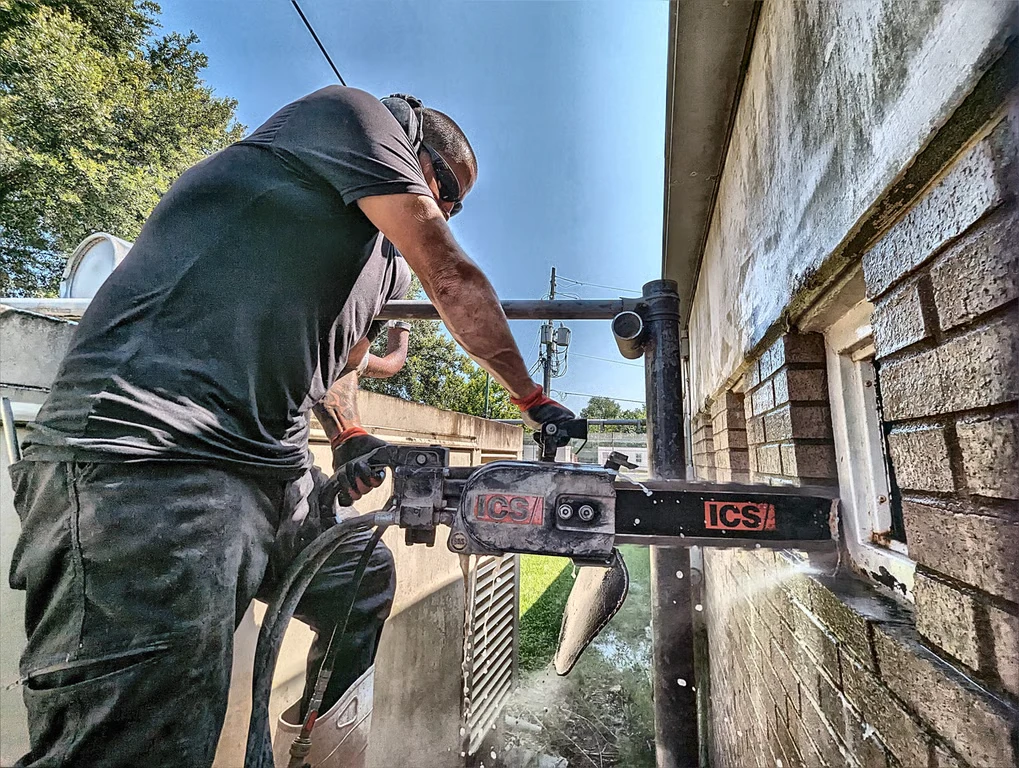
Many Miami slabs built since the 1970s contain post-tension cables. Breaking into a PT cable with a jackhammer can cause the cable to release tension violently. The damage is immediate and expensive. Before any cutting or breaking, the concrete should be scanned with ground-penetrating radar to identify PT cables, electrical conduits, and plumbing lines. If PT cables are present, the breaking plan must be adjusted to avoid them — or the project scope must change to include engineered PT cable repairs, which are expensive and should be understood before work begins.
Step 2: Saw-cut the perimeter and sections
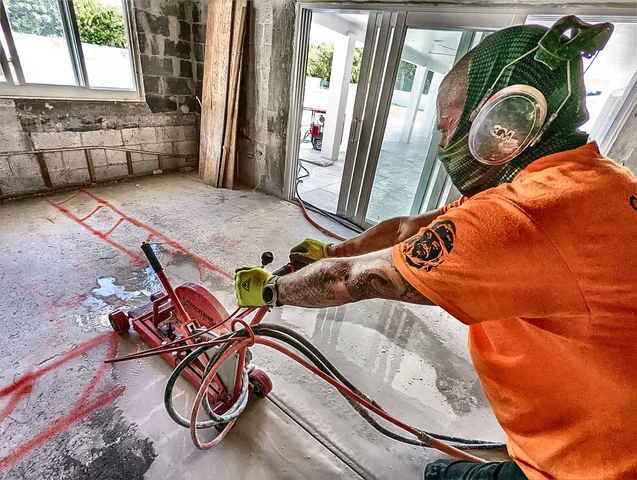
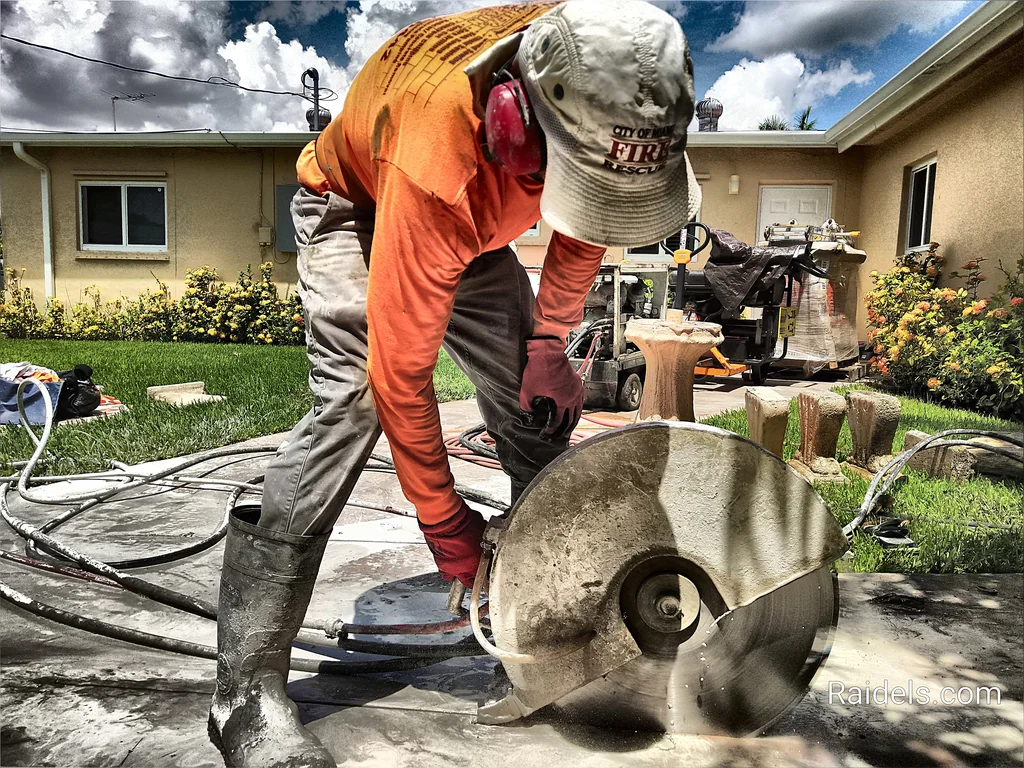
Using a walk-behind flat saw with a diamond blade, cut the perimeter of the area to be removed. The cut must go through the full depth of the concrete — not a score line, not a partial cut, but a full-depth separation. For large areas, additional saw cuts divide the area into manageable sections — typically 2-foot by 2-foot or 3-foot by 3-foot. Professional slab sawing services provide the perimeter and section cutting before any breaking force is applied.
Step 3: Choose the right breaking tool
The right tool depends on the concrete you are breaking:
- Sledgehammer (10-16 lbs): For thin, unreinforced concrete — 4-inch slabs, small sections, concrete separated from rebar. Swing from the shoulders, let the hammer weight do the work, aim for the edges of sections where the concrete is weakest.
- Electric breaker (15-30 lbs): For 4-6 inch residential slabs. Start at a free edge. Maintain near-vertical angle. Move systematically across the section. Do not pry with the tool — it is a hammer, not a lever.
- Pneumatic breaker (30-60 lbs): For 6-8 inch slabs with moderate rebar. Requires an air compressor. More powerful than electric breakers but louder and requires more setup.
- Hydraulic breaker (excavator-mounted): For slabs over 8 inches, heavily reinforced concrete, and large-scale demolition. Not a handheld tool — requires an excavator or skid steer. Professional demolition services use hydraulic breakers for heavy concrete removal.
Step 4: Break in the right sequence
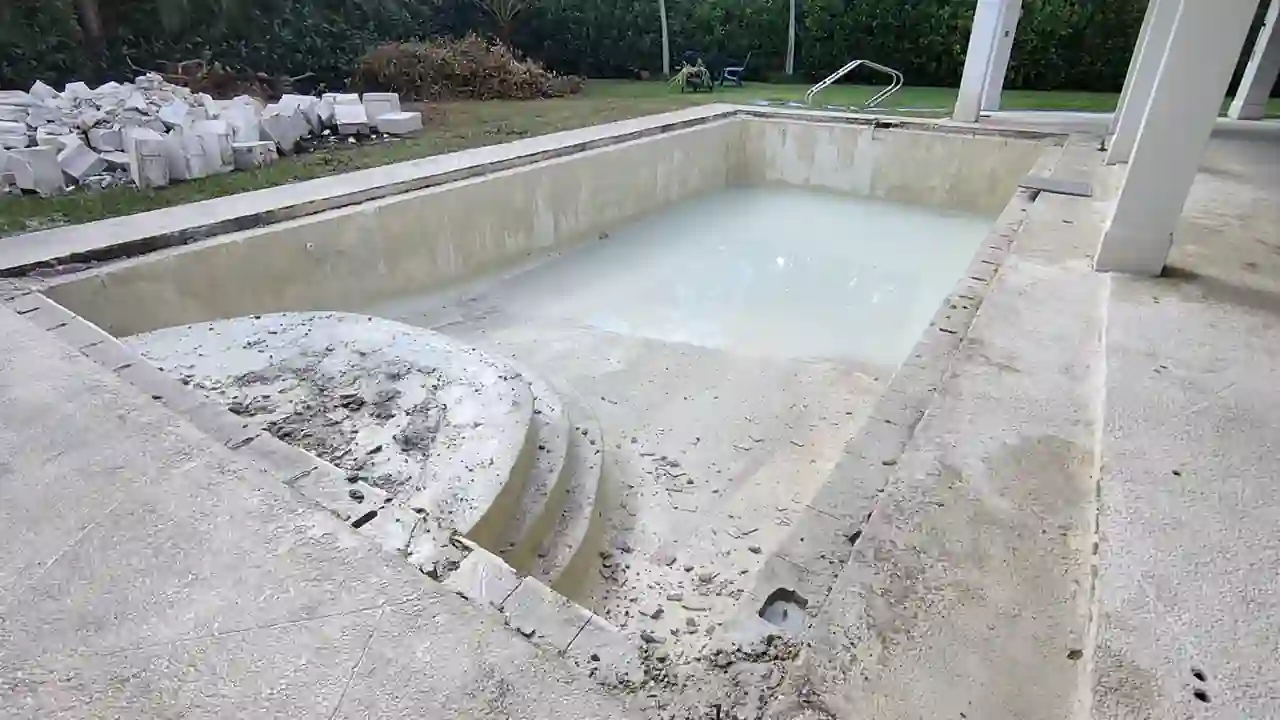
Start breaking at the edge of the removal area that is farthest from any sensitive structure — the house foundation, a pool coping, a retaining wall. Work toward the sensitive area. By the time the breaker reaches concrete near the sensitive structure, the concrete is already partially detached and the impact energy has less opportunity to travel into adjacent concrete. Do not start in the middle of a section — always start at an edge where the concrete has room to fracture toward an open face.
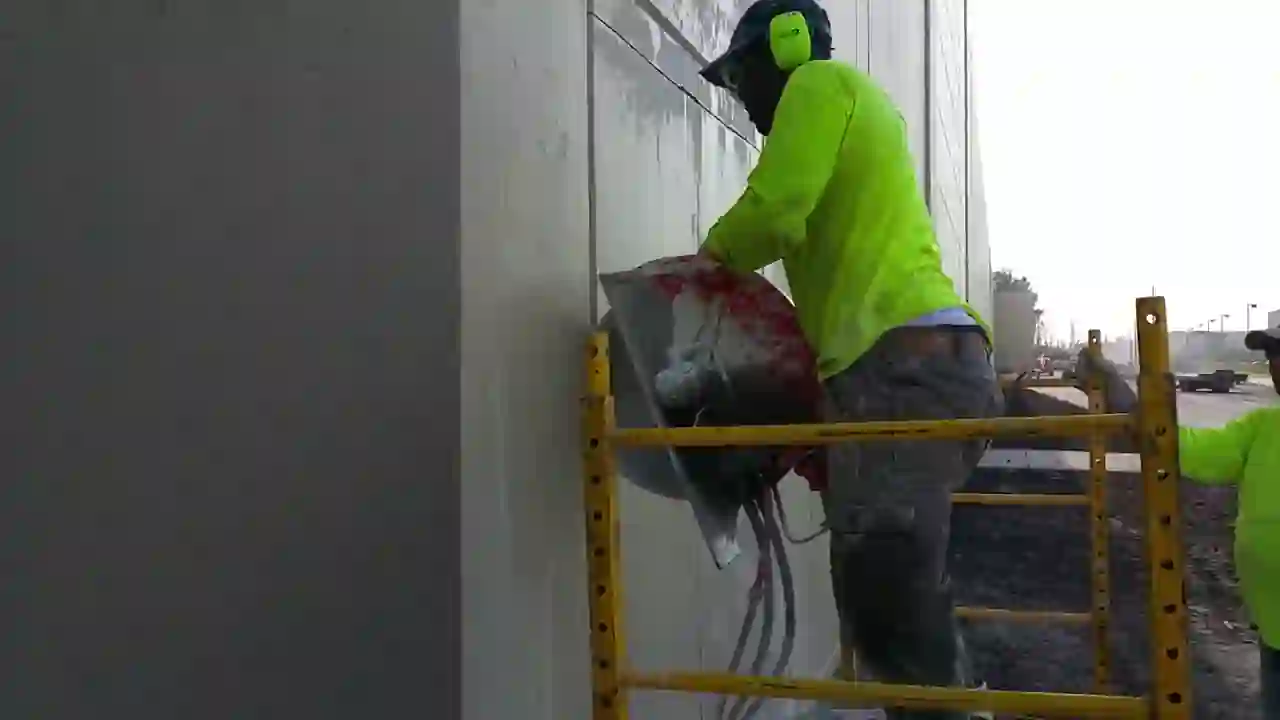
Step 5: Deal with the rebar
Concrete breaks, but rebar holds. After the concrete around it is broken away, the rebar remains, often still connecting to the surrounding slab. The rebar must be cut before the concrete section can be fully removed. Use a grinder with a cutoff wheel or a rebar cutter to cut the rebar flush with the saw-cut edge. Do not try to break rebar with a sledgehammer — you cannot. Do not try to bend it out of the way — bent rebar creates a tripping hazard and interferes with new concrete or flooring.
Safety equipment for breaking concrete
Breaking concrete produces three hazards: flying debris, silica dust, and noise. Safety equipment for each is mandatory:
- Eye and face protection: Safety glasses are the minimum. A face shield over safety glasses is recommended because breaking produces larger, faster fragments than cutting.
- Respiratory protection: Dry breaking produces silica dust. Use water suppression (spray the breaking area with a fine mist) and wear an N95 respirator at minimum.
- Hearing protection: Pneumatic breakers exceed 100 decibels. Earplugs or earmuffs are mandatory.
- Steel-toe boots: Broken concrete is heavy and sharp. Steel-toe boots protect against dropped pieces and sharp edges.
- Work gloves: Concrete fragments are abrasive. Gloves protect hands during material handling and cleanup.
When breaking concrete is a job for professionals
Some breaking jobs are appropriate for DIY — a small patio section, a single sidewalk square, a small area of thin, unreinforced concrete. Others are not. Hire a professional when:
- The concrete is thicker than 4 inches — the tools available for rental are undersized for thick concrete.
- The concrete contains rebar — breaking rebar-reinforced concrete without proper tools is slow and frustrating.
- The concrete is post-tensioned — breaking into a PT cable is dangerous and expensive.
- The removal area is adjacent to sensitive structures — the risk of vibration damage is high.
- The removal area is large — breaking more than 50 square feet of concrete by hand is a multi-day ordeal.
- The work is indoors — dust control in enclosed spaces requires specialized equipment.
How to break concrete is a question with a simple answer: saw-cut the perimeter first, then break the separated sections with the right tool for the concrete thickness. Skip the cutting step and the breaking will cost you more in collateral damage than hiring a professional would have cost for the entire job. The sequence is not negotiable. Cut first, break second. Every time.