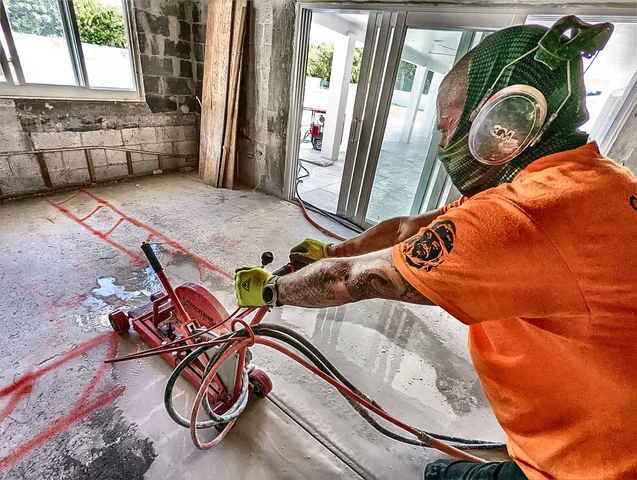
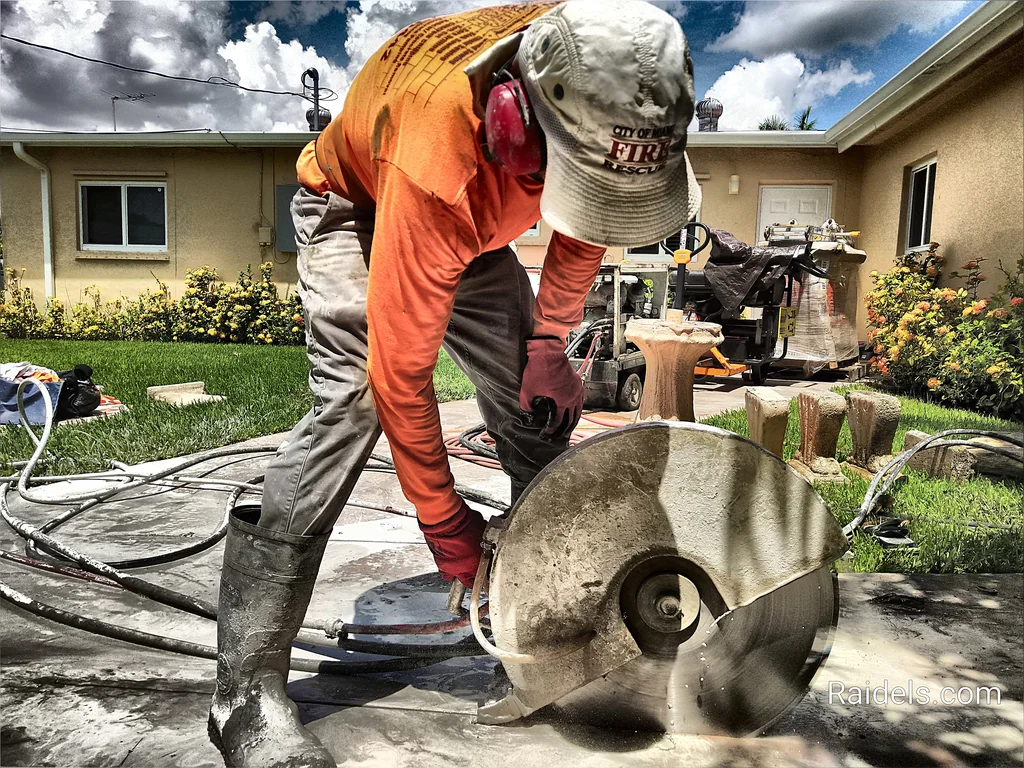
Why Hydraulic Chain Saws Belong in Every Serious Concrete Cutting Rig
When a wall saw can’t reach a recessed pocket, a core drill won’t produce a rectangular opening fast enough, and a handheld angle grinder is simply undersized for the task, a hydraulic chain saw becomes the most efficient tool on the job site. These machines use a hydraulic motor — typically driven by a dedicated power pack or a skid-steer auxiliary circuit — to spin a diamond-segment or carbide-tipped chain around a guide bar at cutting speeds that chew through 24-inch-thick reinforced concrete walls in a single, controlled pass. Understanding how to deploy them correctly is the difference between a clean, on-spec opening and a costly, dangerous mistake. This guide walks through every operational step, from power pack sizing to final plunge-cut technique, so your crew gets it right the first time.
Hydraulic Power Pack Sizing — Getting the Flow Rate and Pressure Right
The single most common field failure with hydraulic chain saws is running them on an undersized power pack. Every manufacturer publishes a required hydraulic flow rate (measured in GPM) and a maximum operating pressure (measured in PSI or bar). A professional-grade hydraulic chain saw for concrete cutting typically demands 6–10 GPM at 2,000–2,500 PSI continuous. Running at 4 GPM starves the motor, causes chain stall under load, and generates excess heat that degrades hydraulic seals within hours.
- Match flow rate precisely: Use the tool manufacturer’s spec sheet — not the power pack’s rated output — as your baseline. Factor in line losses over long hose runs (every 50 feet of ½-inch hose costs roughly 0.3 GPM at operating pressure).
- Check return-line back pressure: Back pressure above 150 PSI on the return port will overheat the motor. Always route the return line through a low-restriction circuit.
- Use a flow meter during commissioning: Clip-on ultrasonic flow meters cost under $300 and eliminate all guesswork on new power pack pairings.
- Thermal management in Miami heat: Ambient temperatures above 90°F accelerate hydraulic fluid breakdown. Use ISO VG 46 anti-wear hydraulic fluid rated for high-temperature service and verify the power pack’s cooler is functioning before starting a long cutting session.
For crews running slab sawing equipment alongside a hydraulic chain saw on the same job, a dedicated secondary power pack for the chain saw prevents pressure fluctuations that degrade cut quality on both tools simultaneously.
Bar Length and Chain Segment Selection for Reinforced Concrete
Guide bar length determines your maximum single-pass cut depth. Standard bars for concrete work run 12 inches, 16 inches, and 25 inches. The 25-inch bar is the workhorse for thick structural walls, but it requires a more powerful motor and demands exceptional operator stability. Chain selection is equally critical and is often overlooked by operators transitioning from timber chain saws.
Concrete-specific chains use diamond-impregnated segments bonded to drive links. The segment grit and bond hardness must be matched to the concrete’s aggregate hardness and compressive strength. As a field rule:
- Soft to medium aggregate (limestone, river gravel) at 3,000–5,000 PSI compressive strength: Use a hard-bond segment (low diamond concentration) to prevent premature segment wear.
- Hard aggregate (granite, quartzite, recycled concrete) at 6,000+ PSI: Use a soft-bond segment (higher diamond concentration) that allows constant self-sharpening under abrasive conditions.
- Heavily reinforced concrete with #8 rebar or larger: Select a chain rated for rebar cutting. These chains feature reinforced drive links and a segment geometry that dissipates heat at rebar contact points. See our full breakdown of reinforced concrete cutting methods for complementary tool pairings.
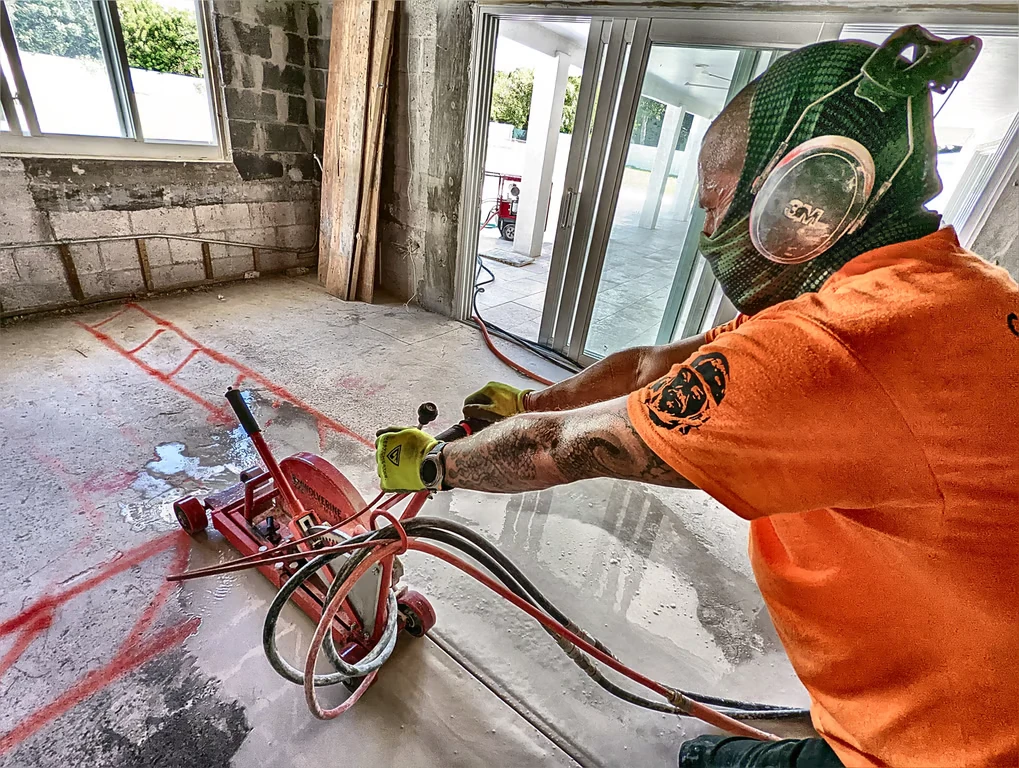
Step-by-Step Plunge Cut Execution in Structural Concrete Walls
Plunge cutting — driving the bar tip directly into a flat concrete surface to initiate a pocket or opening — is the highest-risk operation with a hydraulic chain saw. Kickback at the bar tip can throw the saw violently if the chain catches on rebar or aggregate at an unfavorable angle. Follow this sequence on every cut:
Step 1 — Mark, Score, and Verify Rebar Layout
Use a cover meter or GPR scan to map rebar before committing to your cut line. Knowing rebar spacing lets you position the plunge entry point between bars where possible, reducing chain impact loads. Mark the full perimeter of the opening with chalk line or paint, then score the surface with a 4-inch angle grinder along all four lines to a depth of ¼ inch. This scoring prevents surface spalling outside your cut boundary.
Step 2 — Secure the Work Surface and Set Up Water Supply
Hydraulic chain saws for concrete require continuous water flow to the chain and bar for cooling and dust suppression. Connect a dedicated water line delivering a minimum of 1 GPM to the bar’s water ports. In Miami, OSHA’s silica standard (29 CFR 1926.1153) mandates engineering controls — water suppression qualifies as an engineering control when flow rate is verified and documented. Anchor any loose sections of the wall being cut to prevent slab movement during the cut that could pinch the bar.
Step 3 — Plunge Entry Technique
Position the bar at a 15-degree angle to the surface — never perpendicular on first contact. Start the hydraulic flow, bring the chain to full operating speed, and contact the surface at the lower edge of the bar tip. Gradually rotate the bar to vertical as the chain bites into the concrete. Apply steady, firm feed pressure — do not force the bar. If chain speed drops audibly, reduce feed pressure immediately. A stalled chain in a deep plunge cut requires hydraulic pressure reversal to extract safely.
Step 4 — Through-Cut and Corner Management
Once the bar penetrates fully, advance along your scored line using smooth, even strokes. At corners, do not attempt to pivot the running chain. Stop the cut 2 inches before each corner, withdraw the bar, reposition, and plunge from the adjacent side to meet the first cut. This prevents bar binding and maintains square corners on the finished opening.
Personal Protective Equipment Requirements for Hydraulic Chain Saw Operations
The hazard profile of hydraulic chain saws is distinct from electric or pneumatic tools. High-pressure hydraulic injection injuries, chain kickback, and respirable silica are the three primary threats. Every operator and ground worker within 15 feet must be equipped per the PPE standards applicable to concrete cutting operations:
- Cut-resistant chaps or trousers: Rated to EN ISO 11393 Class 3 or equivalent — not standard work pants.
- Face shield plus safety glasses: The face shield handles aggregate projectiles; safety glasses provide backup protection if the shield is raised momentarily.
- Half-face respirator with P100 + OV cartridges: Required when water suppression is insufficient to keep airborne silica below the OSHA action level of 25 µg/m³.
- Anti-vibration gloves: Prolonged hydraulic chain saw operation exceeds OSHA’s hand-arm vibration daily exposure threshold. Rotate operators every 45 minutes on extended cuts.
- Steel-toed, cut-resistant boots: ASTM F2413 with cut protection rating.
Hydraulic hose inspection is a pre-operation requirement, not an optional check. A high-pressure hydraulic injection injury from a pinhole leak in a 2,500 PSI line is a medical emergency requiring immediate surgery. Inspect all hoses for abrasion, kinking, and fitting corrosion before every shift. Review the full concrete cutting technology safety library for hydraulic system maintenance intervals.
Troubleshooting the Five Most Common Field Problems
Even experienced operators encounter these issues. Knowing the root cause saves hours of downtime:
- Chain stalls mid-cut: Insufficient hydraulic flow. Check power pack output under load with a flow meter. Also inspect for kinked supply hoses restricting flow.
- Bar overheating and discoloration: Water supply failure or inadequate flow rate to bar ports. Clean clogged water ports with a thin wire probe before each use.
- Excessive chain wear after fewer than 10 cuts: Chain-to-aggregate mismatch. Re-evaluate aggregate hardness and switch to the appropriate bond hardness.
- Hydraulic fluid temperature alarm triggering: Ambient heat load exceeding cooler capacity. Add an auxiliary oil cooler or reduce duty cycle to 20 minutes on, 10 minutes off until ambient temperature drops.
- Bar deflection producing non-square cuts: Feed pressure applied laterally rather than axially. Retrain operator stance — both hands must maintain bar alignment perpendicular to the cut face throughout the stroke.
For crews managing multiple concrete cutting equipment assets on a single site, hydraulic chain saws benefit from a dedicated daily inspection log that tracks chain wear, bar straightness, and hydraulic fluid condition. A worn bar with a 0.015-inch lateral deflection will produce a cut that fails dimensional tolerances on precision structural openings.
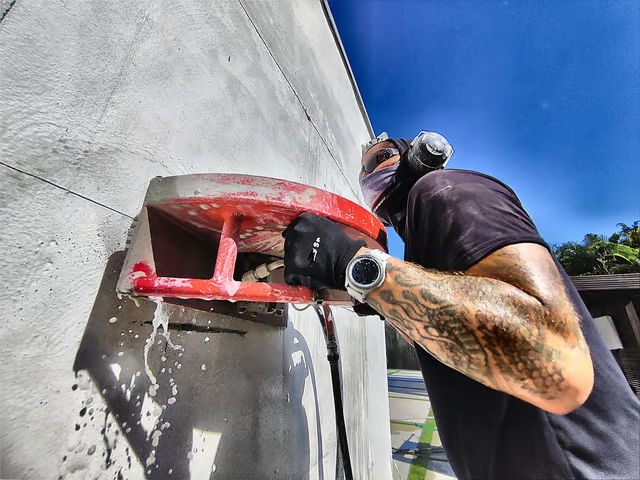
When a Hydraulic Chain Saw Outperforms Every Other Tool on Site
The hydraulic chain saw earns its place on the truck for a specific set of conditions that no other concrete cutting tool handles as efficiently. Confined-space wall penetrations where a wall saw track cannot be mounted, irregular-shaped openings requiring freehand cutting, and emergency structural breach operations where speed outweighs setup time — these are the scenarios where a skilled operator with a properly configured hydraulic chain saw delivers results that would take twice as long with alternative methods. Pair it with a solid understanding of your power pack’s hydraulic output, the correct chain specification for your aggregate, and rigorous PPE compliance, and this tool becomes one of the most versatile assets in a professional concrete cutting operation. For Miami contractors dealing with high-strength post-tensioned slabs and heavily reinforced tilt-wall panels, mastering the hydraulic chain saw is not optional — it is a competitive necessity.